You walk into your living room. Something feels… off. The sofa is fine. It works. But it’s not *you*. It doesn’t make you want to flop down at the end of a long day and just breathe. It doesn’t make guests go “oh wow, where did you get that?”
Sound familiar? You’re not alone.
Millions of people pick a sofa the same way they pick a toothbrush — fast, functional, and without much thought. Then they live with that decision for the next 10 years and quietly regret it every single day.
Here’s the thing though: **sofa design is not as complicated as it seems.** Once you understand a few key things — size, shape, fabric, style — you’ll walk into any furniture store with actual confidence. No more standing there guessing. No more buying something that looks amazing in the showroom but feels all wrong at home.
Let’s dig in.
—
## Why Sofa Design Matters More Than You Think
Okay, real talk. Your sofa is the emotional center of your living room. Think about it — movie nights, lazy Sunday mornings, serious conversations with people you love, that one nap that felt like it fixed everything. All of that happens on your couch.
And yet, most people spend more time choosing a phone case than they do picking sofa design elements that actually matter.
**The right sofa design does three things at once:**
– It makes the room *look* pulled together
– It makes you and your family genuinely comfortable
– It works for your actual lifestyle (kids, pets, guests — you name it)
A good sofa isn’t just furniture. It’s a daily experience. So yeah, it matters.
—
## The Big Sofa Styles — Explained Like You’re Talking to a Friend
Let’s go through the main types of sofa designs out there. No fancy jargon. Just honest descriptions of what each one is and who it’s best for.
### 1. The Classic Chesterfield
You’ve definitely seen this one. It’s the tufted sofa — the kind with those little buttons all over the cushions and the rolled arms that curve up elegantly at the sides. Usually comes in deep leather or velvet.
**Who it’s for:** If you want your living room to feel a little grand, a little vintage, a little “yes I have taste and I know it” — this is your sofa. It looks incredible in darker rooms with warm lighting.
**The catch:** It’s not the most family-friendly choice. Those tufts are a pain to clean. One spilled juice box and you’ll understand what I mean.
—
### 2. The Mid-Century Modern Sofa
Sleek legs. Clean lines. Usually low to the ground. This sofa design looks like it belongs in a magazine — because it does. It became hugely popular in the 1950s-60s and never really went out of style.
**Who it’s for:** People who love a clean, uncluttered look. This style works beautifully in smaller apartments because the exposed legs make the room feel more open and airy.
**The catch:** The cushions tend to be firmer. If you’re someone who likes to fully sink into a sofa like you’re being swallowed by it — this might not be your match.
—
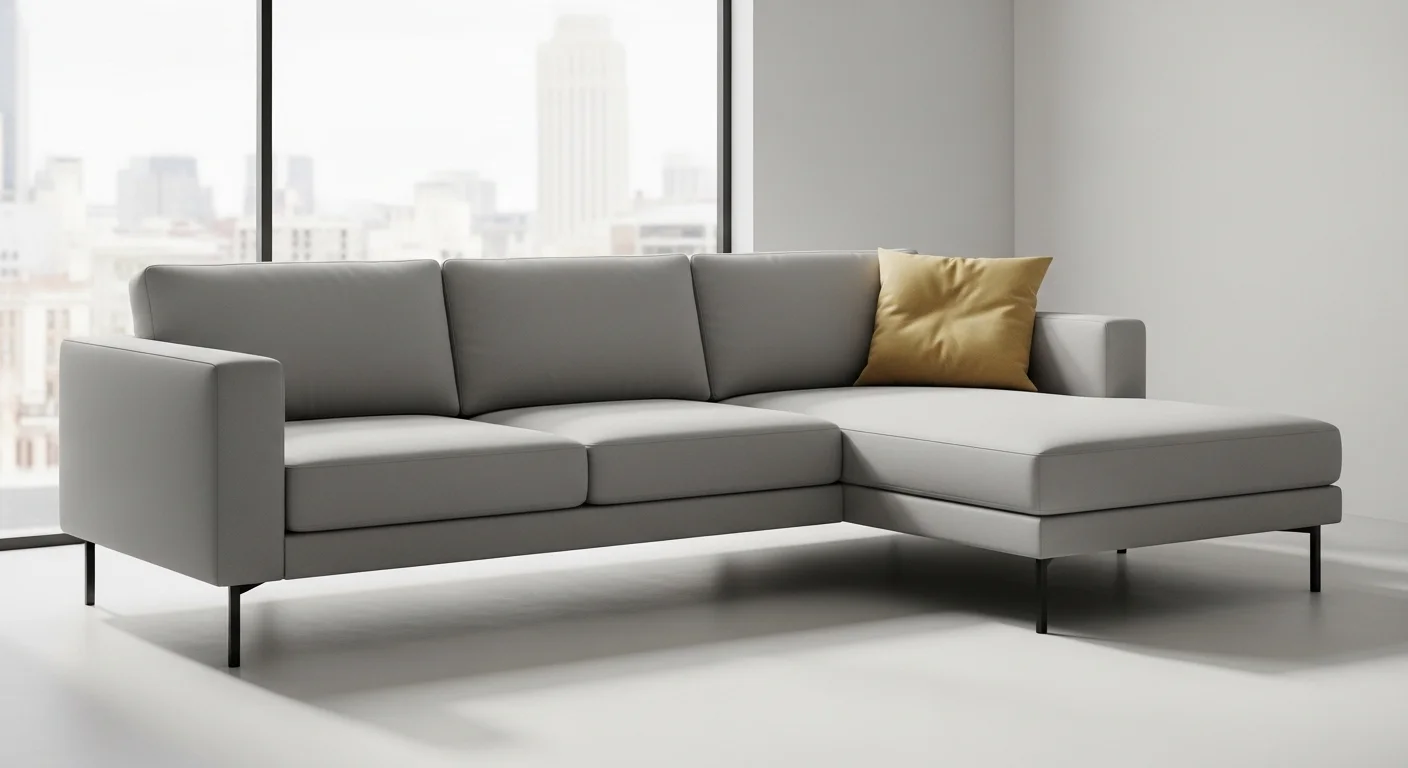
### 3. The Sectional Sofa
The big one. The “let’s all fit on this together” sofa. Sectionals usually come in an L-shape or U-shape and they basically take over a room — in the best way possible.
**Who it’s for:** Families. Large households. Anyone who hosts a lot. Anyone who just wants maximum lounging surface area at all times.
**The catch:** Size matters here more than anywhere else. A sectional in the wrong room makes the space feel suffocating. Measure twice. Then measure again.
—
### 4. The Lawson Sofa
This is probably what you picture when someone says “sofa.” Overstuffed cushions, simple boxy shape, comfy arms at a medium height. It’s not trying to be fancy. It’s just trying to be extremely comfortable.
**Who it’s for:** Honestly? Almost everyone. It’s versatile, it’s comfortable, and it works in casual and semi-formal spaces alike.
**The catch:** It can look a little plain if you don’t style it well. Throw pillows and a blanket go a long way with this one.
—
### 5. The Camelback Sofa
This one has a distinctive arched back — like a camel’s hump, hence the name. It’s a more formal, traditional sofa design that immediately adds elegance to a space.
**Who it’s for:** Traditional or transitional home styles. If your home has ornate details, crown molding, or a more classic feel — the camelback fits right in.
**The catch:** Not great for lounging or lying down. This is a “sit upright and have a proper conversation” kind of sofa.
—
### 6. The Sleeper Sofa
Part sofa, part guest bed. The sleeper sofa opens up into a mattress so your guests have somewhere to sleep without you needing an extra bedroom.
**Who it’s for:** Anyone in a smaller home who still wants to be a great host. City apartment people, this one’s for you.
**The catch:** Sleeper sofas are heavier and often harder to move. The mattress inside them is usually not the most comfortable either — though better models have come a long way.
—
### 7. The Curved Sofa
This is the design world’s current darling. The curved sofa — with its rounded back and soft, organic shape — has been all over interior design trends for the past few years.
**Who it’s for:** Anyone who wants their living room to feel warm, welcoming, and distinctly different from the sea of straight-edged furniture everyone else has.
**The catch:** It can be tricky to pair with other furniture. It also takes up more visual space than it might seem in photos.
—
## How to Choose the Right Sofa Design for Your Space
Here’s where a lot of people go wrong. They fall in love with a sofa online, order it, wait three weeks for delivery, and then watch the delivery guys struggle to get it through their front door. Or worse — it fits through the door but looks completely ridiculous in the room.
Don’t be that person.
### Step 1: Measure Everything (For Real)
Before you even start looking at sofa designs, grab a measuring tape. You need:
– The length and width of the room
– The distance from the wall where the sofa will go
– The height of your ceilings (affects visual proportions)
– The width of your doorway, hallway, and any tight corners the sofa needs to pass through
**A general rule:** Leave at least 18 inches between your sofa and the coffee table. You need space to walk, to cross your legs, to exist comfortably.
—
### Step 2: Think About Traffic Flow
Where do people walk in your living room? A sofa design that looks perfect on paper might completely block the natural flow of foot traffic in real life. Lay out your space on paper first — or use a free room planning app. It saves a lot of headaches.
—
### Step 3: Match the Sofa Style to the Room’s Personality
Every room has a vibe, whether you’ve thought about it consciously or not. A sleek mid-century modern sofa in a room with ornate traditional furniture is going to feel like a mistake. A big tufted Chesterfield in a minimalist white room is going to feel like someone crashed a wedding.
**Ask yourself:** What kind of room is this trying to be? Cozy and casual? Sleek and modern? Warm and traditional? Your sofa design should be speaking the same visual language as everything else in the room.
—
### Step 4: Fabric and Finish — The Decision That Affects Everything
This is probably the most underrated part of choosing a sofa design. The fabric you pick determines how the sofa feels, how it ages, and how hard it is to maintain.
Let’s break it down:
**Leather:**
– Looks incredibly good for years
– Easy to wipe clean
– Gets better with age (real leather, anyway)
– Can feel hot in summer, cold in winter
– Not the best choice if you have pets who like to scratch
**Velvet:**
– Luxurious feel and stunning look
– Shows marks and indentations easily
– Requires a bit more care
– Absolutely gorgeous when it works
**Linen:**
– Light, breathable, and looks effortlessly casual
– Wrinkles easily and stains are a concern
– Best for homes without kids or pets
**Microfiber:**
– Extremely durable and easy to clean
– Good for families and pet owners
– Doesn’t quite have the luxe look of natural fabrics
**Performance Fabrics (like Crypton or Sunbrella):**
– The new gold standard for practical families
– Stain-resistant, fade-resistant, and often antimicrobial
– Looks way better than it did a decade ago
**My honest recommendation?** If you have kids or pets, go with a performance fabric or genuine leather. If your home is more adult-only and you’re willing to put in a little maintenance, velvet or linen can be genuinely stunning.
—
## Sofa Design Trends That Are Actually Worth Paying Attention To
Okay, so trends come and go. But some stick around because they’re genuinely good ideas, not just Instagram-worthy for 6 months.
### Earth Tones Are Not Going Away
Terracotta. Warm beige. Olive green. Rust. These colors have dominated sofa design for a few years now, and honestly they deserve to. They’re warm, versatile, and they don’t show every piece of lint and pet hair the way black and grey do. If you’re picking a sofa color right now, something in the earthy spectrum is a smart long-term choice.
—
### Modular Sofas Are Having Their Moment
This is a trend that actually makes sense from a lifestyle perspective. A modular sofa comes in individual pieces that you can arrange however you like — and then rearrange when you move, when your family grows, or just when you’re bored of the current layout.
**For renters especially**, modular furniture is a game changer. You’re not locked into one configuration forever.
—
### Low-Profile Sofas Make Rooms Feel Bigger
Interior designers have known this for ages, but it’s becoming more mainstream now: **lower sofas make rooms feel more open and spacious.** The eye travels along the sofa, hits the wall, and the room seems to expand. If your living room feels cramped, swapping a tall, bulky sofa for a lower-profile design might fix the problem immediately.
—
### Mixing Textures, Not Just Colors
People used to coordinate sofas with the rest of the room by matching colors. Now the more interesting approach is **mixing textures**. A linen sofa with a velvet armchair. A leather sectional with a bouclé throw. The contrast creates depth and makes the room feel layered and intentional.
—
## Common Sofa Design Mistakes (And How to Avoid Them)
Let’s be real for a second. Here are the mistakes I see most often:
**1. Buying too big**
The sofa looks fine in the store. At home, it eats the entire room. Always visualize the sofa in your actual space before buying.
**2. Ignoring the arm height**
This matters so much more than people realize. High arms can make a sofa feel cramped if you’re someone who likes to lie down. Low arms mean you’re constantly sliding off when you try to nap. Test the arms in the store — seriously, lie down on the floor model.
**3. Going all-white when you have kids or pets**
Listen, I get it. White sofas look ethereal. But you will spend the next decade of your life in a state of constant anxiety. Either choose a white sofa when your life genuinely supports it, or go with a very light neutral that has a little more forgiving tone.
**4. Skimping on quality to get a trend piece**
A trendy sofa at a low price point is a trap. In 18 months, the trend is over and the sofa is falling apart. **Invest in quality, pick a classic silhouette, and accessorize with trends through cheaper items like cushions.**
**5. Forgetting the back of the sofa**
If your sofa will be floating in the middle of the room rather than against a wall, the back matters. Some sofas have beautiful backs that are designed to be seen from all angles. Some have cheap-looking fabric stapled over a frame. Check the back before you buy.
—
## How to Style Around Your Sofa
Getting the sofa design right is half the battle. The other half is what you do around it.
### Coffee Table Proportions
Your coffee table should be about two-thirds the length of your sofa. Too small and it looks like a mistake. Too big and you lose the comfortable leg space.
### Rug Placement
Here’s the classic rule: the front legs of the sofa should sit on the rug. That’s it. All legs on the rug works too. All legs off the rug looks like an island of furniture floating in space.
### Throw Pillows — The Quick Character Injection
This is where you can afford to take risks. Your sofa is your foundation — maybe a reliable neutral. Your throw pillows? Go wild. Mix patterns. Add texture. Play with color. If you get bored of them, they’re cheap to swap out.
### Lighting
Side tables with lamps on either end of a sofa look polished and functional. A floor lamp behind one end adds depth. Don’t rely on overhead lighting alone — it flattens the whole room.
—
## Sofa Design for Small Spaces: The Specific Advice You Need
Small space living is genuinely difficult. But the right sofa design can make a tiny living room feel intentional and complete rather than cramped and chaotic.
**Pick a sofa with exposed legs.** Legs let light pass under the sofa and make the room feel more open. A sofa that goes all the way to the floor visually fills more space than it actually takes up.
**Go lighter in color.** Light-colored sofas reflect more light and feel less heavy in the room. Not necessarily white — but a warm cream, light grey, or blush can open up a small space beautifully.
**Consider a two-seater or apartment sofa.** You don’t have to squeeze a three-seater into a tiny room just because that’s “normal.” A well-proportioned two-seater often looks far more elegant in a small space.
**Skip the sectional.** I know they’re tempting. But a sectional in a small room is almost always too much. Save it for when you have the space to pull it off properly.
—
## When to Invest vs. When to Save
Not all parts of a sofa are created equal. Here’s where to put your money — and where you can cut corners if you need to.
**Invest in:**
– The frame (solid wood, no shortcuts here)
– The cushion fill (high-density foam lasts far longer than cheap alternatives)
– The fabric (especially if you have heavy daily use)
**Save on:**
– Decorative throw pillows (swap these out every couple of years)
– Side tables (these don’t need to be expensive to look good)
– Rugs (great options exist at every price point)
A sofa with a solid frame and good cushions, even in a modest fabric, will outlast a beautiful-looking sofa built on a cheap frame every single time.
—
## The Sofa Shopping Checklist (Before You Buy Anything)
Print this. Seriously.
– [ ] Measured the room length and width
– [ ] Measured all doorways the sofa needs to pass through
– [ ] Decided on the sofa style that fits the room’s personality
– [ ] Chosen a fabric appropriate for my lifestyle
– [ ] Checked the back of the sofa (if it’ll be floating in the room)
– [ ] Sat in the sofa for at least 10 minutes in the store
– [ ] Tested lying down on the sofa (yes, do this)
– [ ] Confirmed the cushion fill type (ask the salesperson)
– [ ] Checked the leg material and height
– [ ] Asked about the warranty
—
## Finding Your Sofa’s Perfect Match in the Room
Here’s a thought that changed how I think about sofa design: **your sofa doesn’t have to do all the heavy lifting alone.**
The best living rooms are ones where the sofa is clearly the anchor, but everything around it supports it without competing. An armchair that complements but doesn’t match exactly. A coffee table that grounds the seating area. A rug that ties the colors together. Some greenery. A lamp that says “someone thought about this.”
When all of those elements work together, the result is a living room that feels genuinely designed — not just furnished.
That’s the goal. Not perfection. Not Instagram. Just a room that feels like home.
—
## Conclusion: Your Sofa, Your Rules
Look, at the end of the day, **the best sofa design is the one that works for your actual life** — not some imaginary version of your life where you never eat on the couch and your kids don’t exist.
Think about how you really use your living room. Think about who shares that space with you. Think about what makes you feel genuinely at home.
Then pick accordingly.
A well-chosen sofa is one of the best investments you can make in your home. Not just for how it looks — but for how it makes you feel every single day.
Take your time. Measure twice. Sit in it in the store for longer than feels reasonable. And trust your gut.
You’ve got this.
—
## FAQ: Sofa Design Questions People Actually Ask
**Q1: What is the most popular sofa style right now?**
Curved sofas and modular sectionals are probably the two biggest trends right now. Curved sofas bring a soft, organic warmth to living rooms that straighter styles can’t match. Modular designs are popular because they’re flexible — perfect for people who move or rearrange their space often.
Q2: How do I choose the right sofa size for my living room?
Start by measuring your room. A good general guide: your sofa should occupy about two-thirds of the room’s width. Leave at least 3 feet of walking space on either side or in front. For small rooms, a two-seater or compact three-seater often works better than a full-size sectional.
Q3: What sofa fabric is easiest to clean?
Performance fabrics (like Crypton or Sunbrella), genuine leather, and microfiber are the easiest to clean and maintain. If you have kids or pets, these are your best options. Velvet and linen look beautiful but require more careful handling.
Q4: How long should a good sofa last?
A well-made sofa with a solid hardwood frame and high-density foam cushions should last 10-15 years with proper care. Lower-quality sofas with particleboard frames and cheap foam might start showing wear in as little as 3-5 years. It really comes down to what’s inside.
—
Q5: Can I mix different sofa styles in the same room?
Absolutely — and honestly, rooms that mix styles thoughtfully often look more interesting than rooms where everything matches perfectly. The key is finding a common thread: it could be color, material, leg style, or overall vibe. For example, a mid-century modern sofa paired with a more traditional armchair works if they share a warm wood tone or similar color palette.