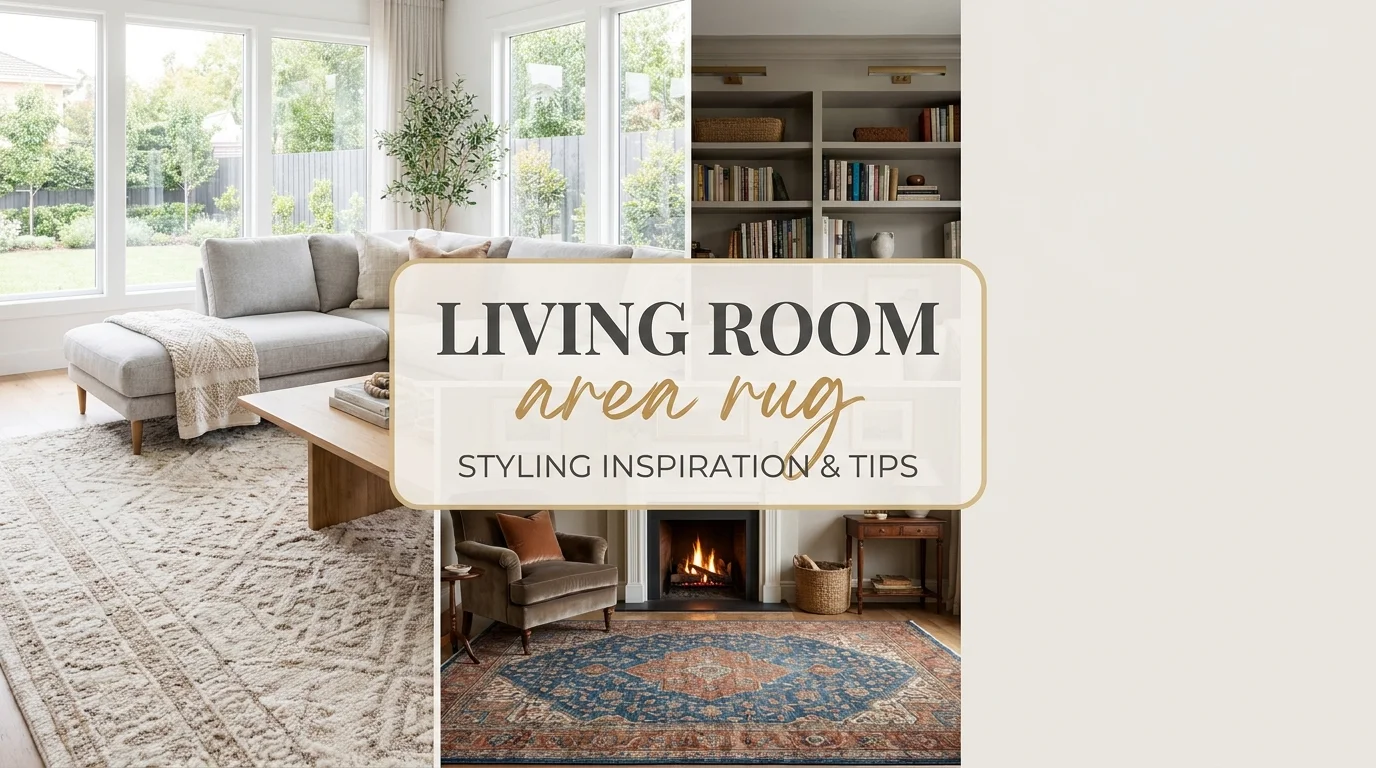
You know that feeling when you walk into someone’s living room and think, “Wow, this place just feels right”?
Nine times out of ten, there’s a good-looking area rug sitting right in the middle of it all. And you know what? That rug is doing a LOT of heavy lifting — tying the furniture together, adding warmth underfoot, and making the whole space feel pulled-together.
But here’s the problem most people run into: they pick the wrong rug. Too small. Wrong color. Wrong material. And suddenly that gorgeous rug they fell in love with at the store looks completely awkward in their living room.
So let’s fix that. Right now.
Why Your Living Room Actually Needs an Area Rug
Before we get into the how, let’s talk about the why — because some folks think rugs are just decorative fluff. They’re not.
A living room area rug does several real jobs at once:
- Defines the seating area — especially in open floor plans where rooms flow into each other
- Adds acoustic comfort — hard floors bounce sound around like crazy; a rug absorbs it
- Protects your flooring — furniture legs and heavy foot traffic scratch hardwood over time
- Creates warmth — both literally (cold floors in winter, ugh) and visually
I remember helping my cousin furnish her first apartment. She had this beautiful sectional sofa, a nice coffee table, and a big empty hardwood floor that made the whole setup feel like a furniture showroom. The moment we laid down a chunky jute rug underneath everything? The room suddenly had a soul. Same furniture. Completely different vibe.
That’s what a good rug does.
The #1 Mistake People Make With Living Room Area Rugs
They go too small.
Seriously, this is the most common decorating mistake out there. People see a rug they love, they think “that’s big enough,” and then they go home and place it under only the coffee table while the sofa legs float awkwardly on the bare floor.
The result? The room looks choppy and disconnected.
Here’s the rule you need to burn into your brain: your rug should be big enough so that at least the front legs of every major piece of furniture can rest on it.
That’s the minimum. Ideally? All four legs of every sofa and chair should sit on the rug. That creates a cohesive, intentional look.
How to Choose the Right Size Living Room Area Rug
Okay, so how do you actually figure out what size you need? It’s simpler than you think.
Step 1: Measure Your Seating Area
Grab a tape measure and note the dimensions of the space your furniture occupies. You want about 12 to 18 inches of bare floor showing between the rug’s edge and your walls. That “breathing room” keeps the rug from looking like wall-to-wall carpet.
Step 2: Pick a Standard Rug Size That Fits
Here are the most common living room rug sizes and who they work for:
5×8 feet — Good for small living rooms or apartments. Works well if only the coffee table sits on it, but honestly, this is usually too small for most setups.
8×10 feet — The sweet spot for most average-sized living rooms. Fits nicely under a standard sofa, two armchairs, and a coffee table with room to spare.
9×12 feet — Ideal for larger living rooms or open-concept spaces. This one makes a serious statement.
10×14 feet — For the really grand living spaces. If you have high ceilings and a big sectional, go this route.
Step 3: Test It Before You Commit
Here’s a pro trick: use painter’s tape or old newspapers to map out the rug’s footprint on your floor before you buy. Seriously, take 10 minutes and do this. You’ll immediately see if your chosen size is right or if you need to go bigger.
Living Room Rug Shapes: More Than Just Rectangles
Most people default to rectangular rugs, and that’s fine — but it’s not your only option.
Rectangular rugs are the classic choice. They work in almost every layout and are available in the widest range of sizes.
Round rugs are having a major moment right now. They work beautifully in smaller seating areas, under a circular coffee table, or in rooms where you want to soften lots of sharp angles. Great for apartments.
Square rugs work well in square rooms or under a square sectional. Not super common but very effective when they fit.
Runner rugs — while more common in hallways, long narrow rugs can work in uniquely shaped living spaces or to separate zones in an open floor plan.
The shape should echo the shape of your furniture arrangement. Got a long, rectangular sofa setup? Go rectangular. Got a round conversation pit? Try a round rug.
Rug Materials: What’s Actually Worth Your Money?
This part matters more than most people realize. The material determines how the rug feels, how long it lasts, and how easy it is to clean. And with a living room area rug, you need something that can handle real life — kids, pets, spilled drinks, and years of foot traffic.
Wool Rugs
The gold standard. Wool is naturally durable, naturally stain-resistant to a degree, and feels incredibly soft underfoot. It holds color well and lasts for decades if cared for properly.
Downside? It costs more upfront. But when you do the math over 15-20 years of use, wool is often the better investment.
Cotton Rugs
Lightweight, casual, and affordable. Cotton rugs are easy to clean — many are even machine washable. But they flatten out over time and don’t have the luxurious feel of wool.
Best for: casual spaces, kids’ areas, or rooms where you want the option to swap rugs seasonally.
Jute and Sisal Rugs
Natural fiber rugs that bring a beautiful earthy, textured look. They’re great for adding that organic, boho-meets-coastal feel.
Here’s the honest truth though: they’re rough underfoot and terrible at handling moisture. If someone spills a drink on a jute rug? You’re going to have a bad time. Keep them in low-traffic, dry areas.
Synthetic Rugs (Polypropylene, Nylon, Polyester)
The workhorses of the rug world. Synthetic rugs are:
- Affordable
- Stain-resistant
- Fade-resistant
- Easy to clean
Modern synthetic rugs have come a long way and can mimic the look of wool or natural fibers surprisingly well. For families with kids and pets, a high-quality polypropylene rug might honestly be your best friend.
How to Pick the Right Color and Pattern
This is where a lot of people get paralyzed. There are SO many options. So here’s how to simplify the decision:
If Your Furniture Is Bold or Patterned…
Go neutral with the rug. A solid cream, warm gray, or natural beige rug will let your furniture be the star without the room feeling visually chaotic.
If Your Furniture Is Neutral or Simple…
Use the rug to add personality. A geometric pattern, a Persian-inspired design, or a bold color can make the whole room feel more alive.
Thinking About Color? Start with Your Undertones
Cool-toned rooms (lots of blues, grays, whites) pair well with rugs in blues, greens, or cool neutrals. Warm-toned rooms (creams, browns, terracottas) love warm rugs in rust, gold, or earthy tones.
Pro tip: Pull one color from an existing item in your room — a throw pillow, an artwork, even the color of your curtains — and look for rugs that echo that color. That’s how designers create cohesion without making everything “match matchy.”
Rug Placement: The Three Most Common Layouts
Once you’ve got your rug, placement is everything. Here are the three standard approaches:
All Legs On the Rug
Every piece of furniture in the seating area has all four legs sitting on the rug. This is the most cohesive, “designer” look. Requires a larger rug, but it’s worth it.
Front Legs On the Rug
The front two legs of the sofa and chairs rest on the rug, while the back legs are on the bare floor. This is the most popular approach for a reason — it creates connection between furniture while requiring a slightly smaller rug.
No Legs On the Rug
Only the coffee table sits on the rug. This can work in very small spaces where an 8×10 just won’t fit, but it tends to look like the rug is floating randomly in the room. Use this as a last resort.
Don’t Forget the Rug Pad
Okay, this is the thing everyone forgets and then regrets.
A rug pad goes underneath your area rug and it does three important things:
- Keeps the rug from sliding (safety win)
- Protects your floor from dye transfer
- Adds cushioning so the rug feels even softer underfoot
Get a rug pad that’s about 1-2 inches smaller than your rug on all sides. That way it stays invisible but does its job perfectly.
Living Room Rug Styles That Are Trending Right Now
Interior design moves in cycles, but some styles have serious staying power. Here are the looks that are working really well in living rooms right now:
Moroccan and Beni Ourain style rugs — Those beautiful handwoven rugs with geometric patterns? Still going strong. They add warmth and cultural richness without being overwhelming.
Abstract and painterly rugs — Rugs that look like abstract art pieces. Bold, interesting, and conversation-starting.
Vintage and distressed looks — Rugs that appear slightly worn or faded have a collected, lived-in feel that’s very popular in modern and transitional homes.
Striped rugs — Simple, classic, and works in almost any style. Horizontal stripes can even make a room feel wider.
Solid bouclé or textured neutrals — As furniture gets more sculptural, simple textured rugs in cream, oatmeal, or warm white are having a real moment.
How to Clean and Care for Your Living Room Area Rug
A good rug is an investment. Treat it like one.
Weekly: Vacuum regularly. Go with the pile, not against it, to avoid damaging the fibers.
Immediately: Blot spills — don’t rub. Rubbing pushes the stain deeper into the fibers. Use a clean cloth and work from the outside of the stain inward.
Every 12-18 months: Professionally clean wool and high-pile rugs. For synthetics and cotton, follow the manufacturer’s care instructions — many can be cleaned with a rug shampoo and a garden hose.
Every 6 months: Rotate your rug 180 degrees. This evens out wear and sun fade, dramatically extending the rug’s life.
How Much Should You Spend on a Living Room Area Rug?
Honest answer? It depends on your budget and priorities. But here’s a rough framework:
- Under $100: You can find decent synthetic rugs in smaller sizes. Don’t expect longevity.
- $100-$400: The sweet spot for most people. Good quality synthetic and cotton rugs, entry-level wool.
- $400-$1,000: Quality wool rugs, handloomed options, designer looks with better construction.
- $1,000+: Handknotted rugs, high-quality Persian and Oriental styles, heirloom-level pieces.
Here’s the mindset shift that helped me: think cost-per-year, not just sticker price. A $600 wool rug that lasts 20 years costs you $30 a year. A $150 synthetic rug that needs replacing every 3-4 years costs more in the long run — and generates more waste.
Quick Checklist Before You Buy
Use this before clicking “add to cart” or heading to checkout:
- [ ] Did I measure my seating area?
- [ ] Is this rug large enough for at least front legs on all furniture?
- [ ] Does the material suit my lifestyle (pets, kids, traffic level)?
- [ ] Does the color work with my existing furniture’s undertones?
- [ ] Did I leave 12-18 inches from the rug edge to the wall?
- [ ] Did I add a rug pad to my cart?
If you can check all six boxes, you’re good to go.
Final Thoughts: Your Room Deserves a Rug That Works
A living room area rug isn’t just a piece of fabric on your floor. It’s the foundation of your room’s design. Get it right, and everything else in the room starts to make sense. The furniture looks intentional. The space feels warm. The room finally feels like home.
Don’t rush the decision. Measure twice, visualize with tape on your floor, think about how you actually live in that room — and then pick the rug that fits your real life, not just the one that looked great on Instagram.
Your perfect rug is out there. And now you have everything you need to find it.
Frequently Asked Questions (FAQ)
Q1: What size area rug is best for a living room?
For most living rooms, an 8×10 foot rug is the most versatile choice. It comfortably fits under a standard sofa and two chairs with the front legs of each piece resting on the rug. Larger rooms benefit from a 9×12 rug, while smaller apartments might work with a 5×7 or 6×9.
Q2: Should all furniture legs be on the area rug?
Ideally, yes — having all legs on the rug creates the most cohesive, designer look. However, having just the front legs of sofas and chairs on the rug is also widely accepted and practical when you can’t fit a larger rug. What you want to avoid is having no furniture legs on the rug, which makes the rug look disconnected from the seating area.
Q3: What is the best material for a living room rug with pets or kids?
For households with pets and children, synthetic rugs made from polypropylene or nylon are excellent choices. They’re stain-resistant, easy to clean, durable, and affordable. If you prefer natural fibers, wool is naturally resilient and moderately stain-resistant, though it requires more careful cleaning.
Q4: How do I keep my living room rug from sliding?
Always use a rug pad underneath your area rug. A quality non-slip rug pad prevents movement, protects your floor, and adds extra cushioning. Choose a pad that’s slightly smaller than your rug — about 1 inch less on each side — so it remains hidden while doing its job.
Q5: How often should I replace a living room area rug?
It depends on the material and how well you maintain it. A quality wool rug can last 20-30 years with proper care. High-quality synthetic rugs typically last 5-10 years. Low-cost synthetic rugs may need replacing every 3-5 years. Regular vacuuming, prompt stain treatment, and periodic professional cleaning will significantly extend any rug’s lifespan.
Still not sure which rug is right for your space? Drop your room dimensions and style in the comments — happy to help you narrow it down.