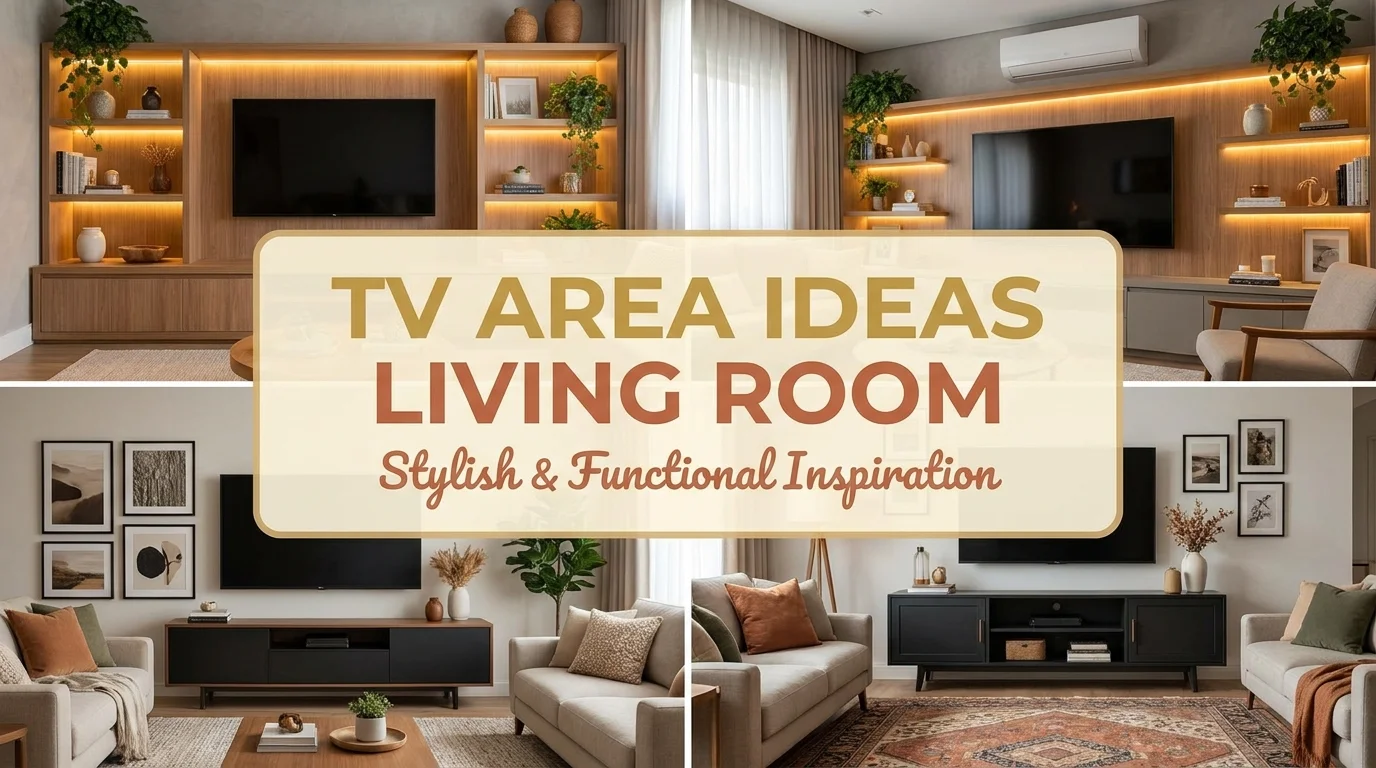
Let me be honest with you.
Most living rooms have the same setup — a TV slapped on a white wall, a random stand underneath, maybe a cable box sitting awkwardly to the side. It works. But does it feel good? Does it make you want to actually sit down, relax, and enjoy the space?
Probably not.
And that’s exactly the problem we’re fixing today.
Whether you’ve got a tiny apartment or a decent-sized family room, your tv area ideas living room game can be totally transformed with the right layout, the right furniture, and a few clever tricks. Let’s get into it — no fluff, no nonsense.
Why Your TV Area Matters More Than You Think
Think about how much time you actually spend in front of your TV. A few hours every evening? Weekend movie marathons? Gaming sessions that go way too late?
That corner of your room is basically your home’s control center.
When your TV area looks good, the whole room feels good. It sets the vibe. It anchors the space. And honestly, it just makes you feel better walking into the room after a long day.
So yeah — it’s worth putting some thought into.
The Biggest Mistake People Make With Their TV Setup
Here’s what I see all the time: people buy a big beautiful TV, mount it on the wall, and then… stop. They don’t think about what’s around it. No shelving, no accent wall, no cable management — just a glowing rectangle floating in space like it belongs in an office cubicle.
The TV should be the focal point — not an afterthought.
Everything around it matters. The stand or console it sits on. The wall treatment behind it. The lighting around it. The decorative objects nearby. All of it works together to create something that actually looks designed, not just functional.
15 TV Area Ideas for Your Living Room That Actually Work
Let’s break this down by style, budget, and space size — so you can find what fits your situation.
1. The Classic TV Console + Gallery Wall Combo
This one never goes out of style. A solid TV console (wood looks best — walnut, oak, or even painted MDF) with a gallery wall arrangement around the TV.
Mix frames of different sizes. Throw in some art prints, a family photo or two, maybe a small mirror. The key is keeping a consistent color palette so it doesn’t look chaotic.
Pro tip: Leave at least 6–8 inches of breathing room between the TV screen and the nearest frame. You want the TV to feel like it’s part of the gallery, not fighting against it.
2. The Floating Shelves Look
Floating shelves on either side of the TV? Absolute game changer.
This works especially well if you mount your TV on the wall. Add symmetrical shelves on each side and style them with books, small plants, candles, and a few meaningful objects.
The beauty of this setup is the balance. It makes the TV feel intentional — like the whole wall was designed around it.
Don’t overload the shelves. Less is more. Leave empty space on each shelf — it actually makes the displayed items look more valuable.
3. The Built-In Entertainment Wall
Okay, this one requires a bit more investment, but the payoff is massive.
Built-in shelving units that wrap around the TV create a custom, high-end look that most people associate with expensive interior design. The thing is — you don’t have to spend a fortune. IKEA’s BILLY or KALLAX units can be hacked into stunning built-in setups with some crown molding and paint.
Look up “IKEA built-in hack” and prepare to be inspired.
This is honestly one of the best tv area ideas living room upgrades you can do if you’re staying in your place long-term.
4. The Shiplap or Accent Wall Approach
Want your TV wall to immediately look like it came out of a design magazine? Put some texture behind it.
Shiplap (horizontal wood planks) gives you that warm, farmhouse-meets-modern vibe. Paint it a deep color — forest green, navy blue, charcoal — and suddenly your TV wall is the most interesting thing in the room.
You can also go with:
- Beadboard paneling for a cottage feel
- Large-format wallpaper with a subtle pattern
- Stone or brick veneer for a raw, industrial look
- Fluted wood panels for something contemporary and textured
The accent wall approach works for literally every budget. Peel-and-stick options exist if you’re renting.
5. The Minimalist Floating TV Stand
If you hate clutter and love clean lines, this is your move.
A floating TV stand — basically a wall-mounted console with no legs — gives the room an airy, modern feel. Everything looks lighter. The floor is more visible. The whole room breathes better.
Pair it with a simple, low-profile sofa and some open space, and you’ve got something that looks seriously intentional.
6. The Fireplace + TV Combo
This is a classic design dilemma — and a beautiful solution when done right.
Some people mount the TV above the fireplace (not always ideal for neck comfort, but it works visually). Others put the TV beside the fireplace with a shared console or media unit connecting them.
The key with this layout is making both elements feel unified. A single long console that extends past the fireplace, or built-in units on both sides, makes the wall feel like one cohesive design rather than two separate things fighting for attention.
7. The Low TV Stand With Floor Cushions
This is a vibe — and if you’ve got kids or just love a relaxed, casual atmosphere, it’s perfect.
A low-profile TV stand (think Japanese or Scandinavian-inspired) paired with large floor cushions, a low coffee table, and soft rugs creates a chill, informal living area that feels cozy without being sloppy.
Great for: Small apartments, studio spaces, or homes with a casual aesthetic.
8. The “Hidden TV” Trick
Not a fan of seeing your TV all the time? Fair enough.
There are a few ways to hide it:
- A sliding barn door panel that covers the TV when not in use
- A lift cabinet that hides the TV inside furniture — press a button and it rises up
- Framed art that flips to reveal a TV (Samsung The Frame does this brilliantly)
- Curtain panels on a ceiling track that draw closed over the TV area
The hidden TV approach is incredible for spaces that double as formal living rooms or dining areas. It gives you flexibility without sacrificing aesthetics.
9. The Corner TV Setup
Working with a weird room layout? The corner is your friend.
Corner TV stands or corner mounting brackets let you use that often-wasted space effectively. Pair it with a sectional sofa that wraps around to face the corner, and suddenly your room layout makes total sense.
This setup also works great in bedrooms or smaller living rooms where straight-wall mounting isn’t practical.
10. The Dark and Moody Media Room Look
This is for the movie lovers and the night owls.
Dark walls (deep charcoal, midnight navy, or even matte black) + a wall-mounted TV + warm Edison lighting + plush seating = an incredibly cinematic feel without building an actual home theater.
Add some LED strip lighting behind the TV (this is called bias lighting — it actually reduces eye strain, not just looks cool) and you’ve got something that feels genuinely luxurious.
11. Styling With Plants Around the TV
Plants. Everywhere.
Okay, not everywhere — but strategically placed around your TV area, trailing plants on shelves, a tall leafy plant in the corner beside the TV, some small succulents on the console… it adds life to what would otherwise be a tech-heavy, lifeless corner.
The contrast of organic, living greenery against the sleek screen is genuinely one of the most underrated design moves for tv area ideas living room setups.
12. The Cable Management Glow-Up
This one isn’t glamorous, but it makes a massive visual difference.
Tangled cables hanging down from a wall-mounted TV immediately make the whole setup look cheap — no matter how expensive your equipment is.
Fix it with:
- In-wall cable conduit kits (you can get these for under $30)
- Cord covers that paint to match your wall color
- Cable raceways along baseboards
- Furniture with built-in cable management holes
Seriously. Clean up the cables. Everything looks 10x better instantly.
13. The Reading Nook + TV Area Hybrid
Why not have both?
If your living room is on the larger side, you can create a TV watching zone on one side and a cozy reading corner on the other. Use area rugs, different lighting zones, and furniture arrangement to visually separate the two areas without any walls.
This works beautifully in open-plan homes where you want the space to feel purposeful and multi-functional.
14. Using Lighting to Transform Your TV Area
Most people get this wrong. They either have one overhead light blazing (terrible for watching TV) or they watch in total darkness (bad for your eyes).
The sweet spot is layered lighting:
- Ambient: Soft overhead or recessed lighting dimmed during TV time
- Accent: Wall sconces or picture lights that add warm glow around the TV
- Bias lighting: LED strips behind the TV that reduce contrast and eye strain
- Task lighting: A floor lamp near a reading chair
Get your lighting right and the whole room transforms — day or night.
15. The Personal Touch — Making It Yours
Here’s the thing about all these tv area ideas living room setups: none of them work unless they feel like you.
Add the things that make you happy. Your favorite books. A plant you’ve been growing for years. A piece of art that means something. A photo from a trip you loved.
The best-looking rooms aren’t just styled — they’re lived in. They tell a story. And that’s what makes people stop and say, “Wow, I love this space.”
How to Plan Your TV Area Setup: A Simple Step-by-Step
Before you start buying anything, do this:
- Measure your wall and your TV. The TV should ideally be no wider than two-thirds of the wall width.
- Decide: mount or stand? Wall mounting looks cleaner. A stand gives you more flexibility.
- Pick your style direction. Minimalist? Cozy and eclectic? Dark and moody? Commit to one.
- Sort out cable management first. This is the boring part everyone skips. Don’t skip it.
- Layer in the decor. Shelves, art, plants, lighting — add these after the functional stuff is sorted.
- Live with it for a week. See what feels off. Adjust. Iterate.
What to Avoid in Your TV Area
Just as important as what to do — here’s what NOT to do:
- Don’t mount the TV too high. Eye level when seated is the golden rule. Neck pain is real.
- Don’t overload the console. It looks cluttered, not collected.
- Don’t use mismatched metals. Pick a finish (gold, black, silver) and stick with it across hardware and accessories.
- Don’t skip the rug. An area rug anchors the seating area and makes the TV zone feel defined.
- Don’t neglect the sides. The space beside and around the TV needs attention too — not just the wall directly behind it.
Budget Breakdown: What You Can Do at Every Price Point
Under $100:
- Rearrange existing furniture for better flow
- Add peel-and-stick wallpaper to the TV wall
- Clean up cables with cord covers
- Add a few plants and new throw pillows
$100–$500:
- Get a new TV console or floating shelf unit
- Install floating shelves and style them
- Add proper lighting (bias lights, a floor lamp)
- Mount the TV properly with a good bracket
$500–$2000:
- Build or buy a proper media unit with storage
- Do an accent wall (shiplap, paneling, or professional wallpaper)
- Upgrade seating to match the new look
- Get smart lighting with dimmers and ambiance control
$2000+:
- Full built-in entertainment wall
- Professional installation of everything
- Samsung Frame TV or high-end display upgrade
- Custom furniture pieces
Real Talk: My Favorite Setup for Most Living Rooms
If someone asked me to pick one setup that works for 90% of living rooms, it would be this:
A mid-height wood TV console + TV wall-mounted above it + two floating shelves on either side + an accent wall in a deep, moody color + plants and warm lighting.
It’s not the cheapest option. But it photographs beautifully, it functions well, and it looks like someone actually cared about the space.
That’s the goal, right?
Wrapping Up: Your TV Area Can Be Your Room’s Best Feature
Your TV area doesn’t have to be an eyesore or an afterthought. With the right tv area ideas living room approach — whether you go minimal, cozy, dramatic, or somewhere in between — this part of your home can become the feature everyone notices when they walk in.
Start with one change. Maybe it’s cleaning up the cables. Maybe it’s adding a plant. Maybe it’s painting that back wall.
Small steps. Big difference.
You’ve got this.
FAQ: TV Area Ideas for the Living Room
Q1: What’s the ideal height to mount a TV in a living room? The center of the screen should be roughly at eye level when you’re seated — usually around 42 to 48 inches from the floor, depending on your sofa height. If it’s too high, you’ll end up with neck strain after long viewing sessions.
Q2: How do I hide cables from a wall-mounted TV? The cleanest option is an in-wall cable management kit, which lets you run cables through the wall. If that’s not possible (like in rentals), use paintable cord covers or raceways that blend into the wall color. Either way, hidden cables make a massive visual difference.
Q3: Can I put a TV in a small living room without it looking overwhelming? Absolutely. The key is choosing the right TV size for the room (don’t go bigger than your space needs), keeping the surrounding decor simple and uncluttered, and using a floating console or low stand that doesn’t take up too much visual weight. Mirrors nearby can also make the room feel bigger.
Q4: What’s the best color for a TV accent wall? Deep, moody tones work incredibly well — think charcoal grey, forest green, navy blue, or terracotta. They make the TV “disappear” into the wall during the day and create a dramatic, cinematic atmosphere at night. Avoid stark white walls behind TVs — the contrast is too harsh.
Q5: How do I style shelves next to my TV without it looking messy? Use the rule of three — group items in odd numbers. Mix textures (wood, ceramic, metal, greenery). Vary heights. Leave breathing room between objects — don’t pack shelves full. Stick to a limited color palette (2–3 colors max) to keep things cohesive.