Let me ask you something honestly.
Have you ever walked into your living room, looked at your sofa, and felt… nothing? Like it’s just there — taking up space, collecting crumbs, and somehow looking wrong no matter where you put it?
Yeah. Most people feel that way. And the crazy part? It’s usually not the room that’s the problem. It’s the sofa.
Your living room sofa design is the single most powerful thing that sets the whole vibe of the room. Get it right, and everything else falls into place. Get it wrong, and even expensive curtains and fancy lighting can’t save you.
So let’s fix that today. No fluff, no filler — just real, honest advice about picking and styling the sofa that makes your living room feel like home.
Why the Sofa Is More Important Than You Think
Here’s the thing most interior designers won’t tell you upfront: the sofa isn’t just furniture. It’s the emotional anchor of your living room.
Think about it. Where does everyone sit when they come over? Where do you collapse after a long day? Where do the kids pile up on movie night?
The sofa.
It’s the center of every story that happens in your home. So it deserves way more thought than just picking whatever fits your budget or whatever was on sale at the furniture store.
A good sofa design can make a small room feel bigger, a boring room feel exciting, and a cold room feel warm. That’s a lot of power in one piece of furniture.
The Big Question First: What’s Your Living Room’s Personality?
Before you even look at sofa styles, you need to figure out what your room is actually like.
Ask yourself:
- Is it a formal space where you entertain guests, or a casual hangout spot?
- Is it small and cozy, or large and open?
- Do you have kids or pets who’ll be all over the furniture?
- Do you love a clean, minimal look — or does more texture and color make you happy?
Your answers will narrow down your options faster than any online quiz. Let’s get into the styles.
Popular Living Room Sofa Design Styles (And Who They’re Actually For)
1. Modern Sectional Sofas — The Statement Maker
Sectionals are having a serious moment right now, and honestly? They deserve it.
A modern L-shaped or U-shaped sectional does two things brilliantly: it fills up large rooms without making them look bare, and it creates a natural gathering zone. Everyone has a spot. There’s room for everyone.
Best for: Large living rooms, open-plan spaces, families who love to lounge together.
The key with sectionals is proportion. A chunky sectional in a tiny room looks like a whale beached in a bathtub. Make sure your room can breathe around it. Leave at least 18 inches of walking space on all open sides.
Colors that work incredibly well? Deep charcoal grey, warm caramel, dusty sage green. These tones are forgiving, trendy, and they photograph beautifully — which, let’s be real, matters in the age of Instagram.
2. Mid-Century Modern Sofas — The Effortlessly Cool One
You know that sofa with the low profile, wooden legs, and slightly retro shape? That’s the mid-century modern style, and it has been popular since the 1950s for a reason.
It’s timeless without being boring. It looks expensive even when it isn’t. And it fits into almost any room — whether your home leans traditional or contemporary.
Best for: People who like a clean, curated look. Works beautifully in smaller living rooms because the exposed legs create a sense of visual space.
Go for mustard yellow, burnt orange, deep teal, or classic cream. Pair it with a wooden coffee table and a simple area rug, and you’ve got a room that looks like it came straight out of an architecture magazine.
3. Chesterfield Sofas — Old Money Energy
If you want your living room to feel like a private library in an English manor house (in the best possible way), the Chesterfield is your answer.
Deep button-tufting, rolled arms, and a high back. It’s dramatic, it’s bold, and it makes a room feel instantly more sophisticated.
Best for: Traditional or eclectic homes. Surprisingly great in industrial-style spaces too — a leather Chesterfield against exposed brick walls is chef’s kiss.
Dark leather is the classic choice, but velvet Chesterfields in jewel tones like emerald, sapphire, or burgundy are absolutely gorgeous and very popular right now.
4. Scandinavian Sofas — The “Less is More” Champion
Clean lines. Neutral colors. Simple shapes. No fuss.
Scandinavian living room sofa design is built on the idea that a room should feel peaceful, not cluttered. These sofas are typically low-profile, with slim arms and legs in light wood tones.
Best for: Minimalist homes, apartment living rooms, people who love a calm, airy aesthetic.
Stick to white, light grey, warm beige, or soft blush. Keep the rest of the room just as simple — a few plants, a neutral rug, and you’re done. No overthinking required.
5. Curved Sofas — The Unexpected Conversation Starter
Okay, this one is for the brave. But hear me out.
Curved sofas are showing up everywhere in 2025 and 2026 — in interior design magazines, in luxury hotels, in homes of people who are absolutely done with boring straight lines.
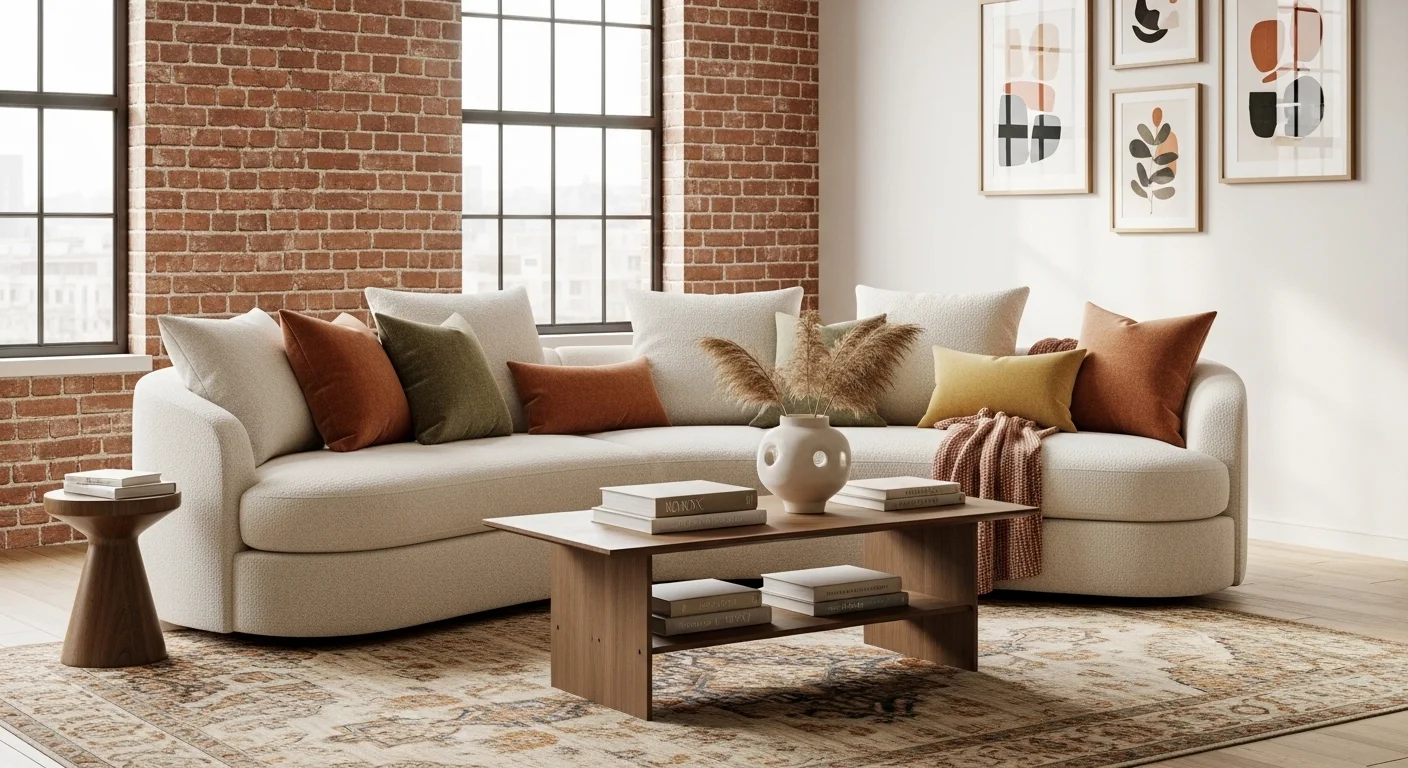
A curved or semi-circular sofa changes the energy of a room completely. It feels organic, soft, almost sculptural. It invites people to sit together rather than sit in a row.
Best for: Round or square rooms, open living areas, anyone who wants a truly unique look.
Go for warm earthy tones — terracotta, warm ivory, caramel brown. These softer hues make the curved shape feel natural rather than jarring.
Fabric vs. Leather: The Eternal Debate
This comes up constantly. Let’s just settle it.
When to Choose Fabric
Fabric sofas are warmer. They’re cozier. They come in about a million colors and textures. If you want a sofa that feels like a hug, fabric is your answer.
But here’s the honest truth: not all fabrics are equal. For everyday use — especially with kids or pets — you want performance fabrics. Think velvet with a tightly woven pile, microfiber, or anything labeled stain-resistant.
Avoid light-colored linen if you have a dog. I’m not saying this to be dramatic. I’m saying this because I’ve seen what a muddy paw does to a cream linen sofa. It’s not pretty.
When to Choose Leather
Leather ages beautifully. A real leather sofa that gets used and loved develops a patina — a richness that actually looks better over time. That’s rare in furniture.
It’s also easier to wipe clean than most people expect. Spill something? Quick wipe and done.
The downside? Leather can feel cold in winter and slightly sticky in summer. And it doesn’t always work with every design style — it leans more traditional or industrial than, say, Scandinavian or boho.
The short answer: For families with kids and pets, go with a performance fabric or leather. For people who value aesthetics over practicality (and that’s totally valid), go with whatever your heart wants.
Living Room Sofa Design Tips That Actually Work
Alright, here’s where I give you the practical stuff — the things that separate a sofa that looks great in a showroom from one that actually works in your home.
Tip 1: Measure Twice, Buy Once
I cannot stress this enough. Take your tape measure and mark out the sofa’s footprint on your floor with painter’s tape before you buy anything. Walk around it. Sit in the spot where it’ll be. Make sure you can still open doors and navigate the room comfortably.
A 9-foot sectional might look perfect online. In your 12×14 foot living room? It’ll be a nightmare.
Tip 2: Sofa Height Matters More Than You Think
The sofa’s back height affects how your room feels. High-back sofas create a sense of enclosure and privacy. They’re great for rooms where you want to define a “conversation zone.” Low-back sofas make a room feel open and airy — perfect for smaller spaces.
Tip 3: The Sofa-to-Rug Relationship
If you’re putting a rug under or near your sofa, there’s a rule: the front legs of the sofa should sit on the rug. Not behind it, not floating in front of it. This anchors the seating area and ties everything together visually.
Tip 4: Don’t Match Everything
This is old-school thinking that needs to go. Your sofa doesn’t need to match your curtains, your pillows don’t need to match each other, and your rug doesn’t need to match any of it.
What should match? The feeling. Warm tones with warm tones. Cool tones with cool tones. Textures that complement each other.
Mix a velvet sofa with linen pillows. Put a patterned rug under a solid-colored sofa. That’s how real designers think, and that’s how real homes look interesting rather than looking like a catalog page.
Tip 5: Cushion Count Is a Real Thing
Too few cushions and your sofa looks bare. Too many and it looks like a pillow factory exploded. The sweet spot for a 3-seater sofa? Three to five cushions in varying sizes. Use an odd number — it’s a design trick that sounds silly but actually works.
Colors That Are Dominating Living Room Sofa Design in 2026
Let’s talk trends — but the smart kind, not the kind that’ll look outdated in two years.
Warm Neutrals are everywhere. Think warm beige, soft camel, and creamy off-white. These aren’t boring — they’re sophisticated. They make every other element in the room pop.
Deep Greens are having a moment. Forest green, olive, hunter green — these earthy tones feel luxurious and grounding at the same time. Pair with natural wood and brass accents for a look that’s genuinely stunning.
Terracotta and Rust tones bring warmth into any space. Perfect for rooms that get a lot of natural light.
Navy Blue remains a timeless choice. It’s rich, it’s classic, and it works with both light and dark flooring.
And if you’re feeling bold? Burnt orange or deep mauve on a statement sofa can turn an ordinary room into something extraordinary. Just keep the rest of the room calm if you go this route.
Small Living Room? Here’s Your Sofa Game Plan
Small rooms need smart choices. Here’s what actually works:
Go for a loveseat or compact two-seater instead of squeezing in a full three-seater. You’ll have more floor space and the room will breathe.
Light colors make rooms feel larger. A cream or soft grey sofa in a small room creates the illusion of more space.
Choose sofas with visible legs. When light can pass under the sofa, the floor looks continuous and the room feels bigger. Low-slung sofas that sit directly on the ground do the opposite.
Avoid sectionals in small rooms unless they’re specifically designed as compact sectionals. Most standard sectionals will overwhelm a small space.
A Lawson-style sofa — simple, clean-lined, with slightly flared arms — is one of the most versatile options for small living rooms. It’s not trendy, but it’s incredibly practical.
Living Room Sofa Design for Different Budgets
Let’s be real — budget matters.
Under $500: You can find decent sofas in this range, but you need to be selective. Look for solid wood frames (not particle board), tightly woven fabric, and cushions with a foam-plus-fiber fill. Avoid anything with plastic components in the frame. IKEA’s KIVIK and EKTORP lines are genuine workhorses in this budget.
$500–$1500: This is where you start getting real quality. Brands like Article, West Elm (during sales), and Joybird offer sofas in this range that look great and hold up well over time. You’ll find better fabric options, sturdier frames, and more style variety.
$1500–$3000: Now you’re in premium territory. Crate & Barrel, Pottery Barn, and Room & Board have excellent options. These sofas are built to last a decade or more with proper care.
Above $3000: Custom or luxury territory. This is where you get exactly what you want — your choice of fabric, cushion firmness, dimensions, and finish. If you’re staying in your home long-term, this investment genuinely pays off.
Real Talk: Mistakes People Make When Choosing a Sofa
These come up again and again, so let’s just get them out of the way.
Buying online without sitting in it first. If there’s any way to feel the cushion firmness and back support in person, do it. Photos lie. Descriptions lie. Your body doesn’t.
Ignoring the back of the sofa. If your sofa will be visible from multiple angles — like in an open-plan home — make sure the back looks good too. Some sofas have a beautiful front and a very ugly, bare back.
Buying too fast. Take your time. Live with paint swatches and fabric samples in your room before committing. The sofa is going to be there for years.
Forgetting about delivery logistics. Will it actually fit through your door? Your hallway? Up your staircase? Measure those spaces too. More than a few people have had to watch a brand-new sofa get turned away at the front door.
How to Style Your Sofa Once It’s In the Room
Getting the sofa is step one. Styling it is where the magic actually happens.
Layer your throws. A casually draped throw blanket adds warmth, texture, and that “lived-in” feeling that makes a room feel like home rather than a showroom.
Play with pillow textures. Mix smooth velvet with chunky knit. Pair linen with something with a geometric pattern. Keep the color palette tight — two or three colors max — and vary the texture.
Add a coffee table at the right distance. Eighteen inches between your sofa and coffee table is the sweet spot. Close enough to reach your drink without getting up, far enough that you’re not banging your shins.
Position a floor lamp nearby. Overhead lighting is harsh and unflattering. A warm floor lamp near one end of the sofa creates a cozy reading nook and makes the whole space feel warmer in the evenings.
Consider an accent chair on the opposite side of the coffee table. It creates conversation-friendly seating and breaks up the visual monotony of just a sofa facing a TV.
Caring for Your Sofa (So It Lasts for Years)
Quick, practical care tips:
- Rotate and fluff cushions weekly to maintain their shape
- Vacuum fabric sofas monthly to prevent dust buildup
- Treat spills immediately — the longer you wait, the worse it gets
- Keep sofas out of direct sunlight to prevent fading
- For leather sofas, use a leather conditioner every 6–12 months
A well-cared-for sofa can last 15–20 years. A neglected one looks old in five. That’s a big difference.
Putting It All Together: Finding Your Perfect Sofa
Here’s the thing nobody tells you: there’s no single “best” living room sofa design. There’s only the best sofa for your life, your room, your family, and your taste.
A curved velvet sofa in deep green might be perfect for one person and completely wrong for another. A simple Scandinavian two-seater might feel like home to someone and feel cold and empty to someone else.
The goal is to find the sofa that you’ll love walking past every morning. The one that makes your room feel genuinely yours.
Start with your room’s size and layout. Layer in your style preference. Filter by fabric and budget. Then trust your gut when you see the one that makes you stop scrolling.
You’ll know it when you see it.
FAQ: Living Room Sofa Design
Q1: What size sofa is best for a standard living room?
For a typical living room (roughly 12×18 feet), a 3-seater sofa between 84–90 inches wide works well. Always leave at least 18 inches of clearance around the sofa for comfortable movement.
Q2: Which sofa fabric is most durable for families with kids?
Performance velvet, microfiber, and synthetic blends labeled “stain-resistant” or “pet-friendly” are your best bets. They’re easy to clean and hold up well to daily use. Avoid delicate fabrics like silk or loosely woven linen in high-traffic areas.
Q3: How do I choose a sofa color that won’t go out of style?
Stick to neutral tones — warm beige, grey, navy, forest green — as your sofa color, and add personality through easily changeable elements like pillows and throws. Neutral sofas have staying power because you can restyle them as trends change.
Q4: Should my sofa face the TV or the center of the room?
It depends on how you use the space. If TV-watching is the primary activity, face it toward the screen. But if you use the room mainly for conversation and entertaining, facing the sofa toward the center of the room (with the TV slightly to the side) creates a more inviting atmosphere.
Q5: How do I make a cheap sofa look more expensive?
Three things: good throw pillows in quality fabrics, a well-chosen throw blanket draped over one arm, and legs (if the sofa has them) in a metallic or contrasting finish. These small details dramatically elevate the look of even a budget sofa.
Final Thoughts
Your living room is where life happens — late-night conversations, lazy Sunday mornings, movie marathons, kids’ forts, and quiet evenings after a long day. The sofa sits right in the middle of all of it.
So take this decision seriously, but don’t overthink it. You know what your family needs. You know what makes you comfortable. You know what makes you happy when you walk into a room.
Use that as your guide, keep the practical stuff in mind, and pick the sofa that feels right. The rest will come together around it.
Go find your sofa. Your living room is waiting.