The Hidden Stress of a Worn-Out Living Room
Your living room is the heart of your home. It is where you relax after a long day, where your kids play, and where your friends gather. But if you have a busy house, your sofa takes a beating every single day.
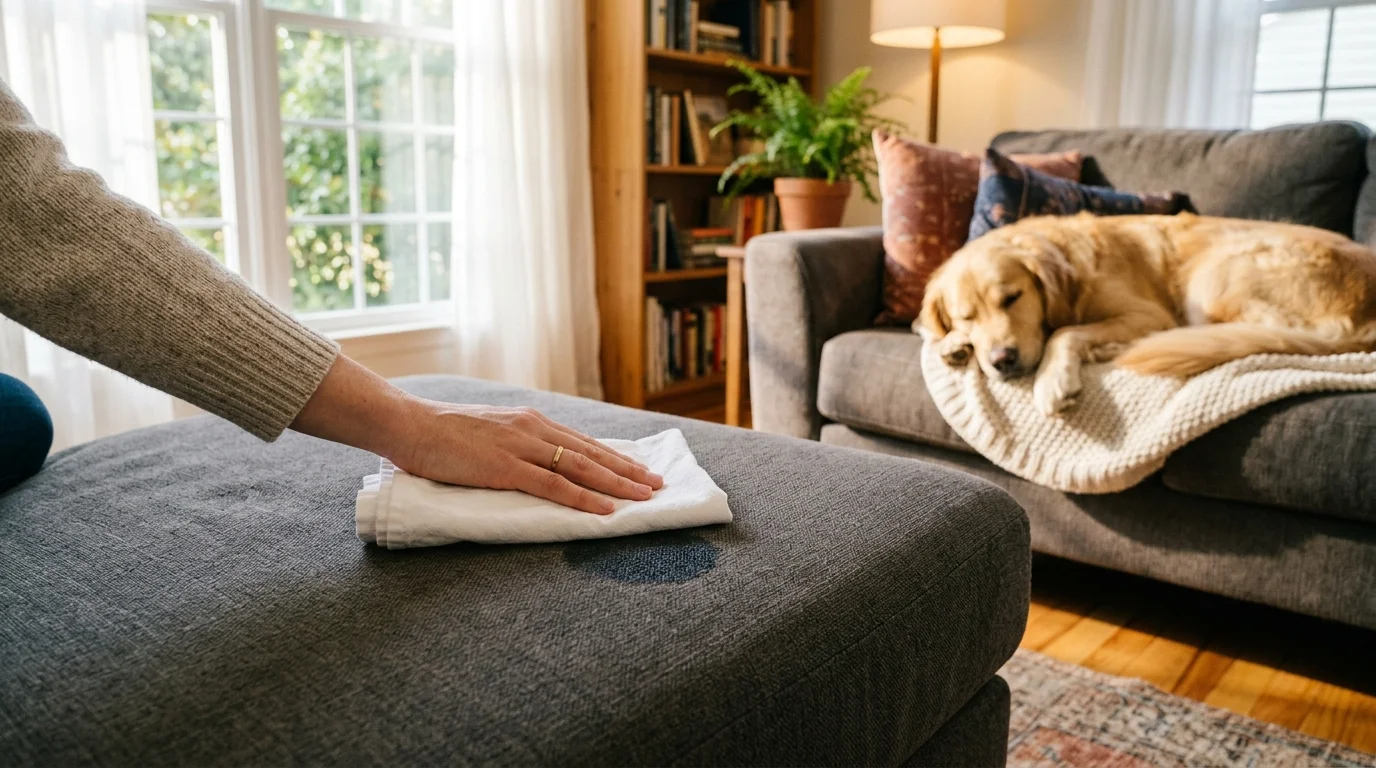
Imagine coming home and seeing a giant juice stain on your brand-new couch. Or maybe you notice the fabric is starting to thin and tear after only a few months. It feels like you are throwing your hard-earned money away.
This constant worry about spills, pet hair, and wear and tear creates a lot of stress. You want a beautiful home, but you feel like you are fighting a losing battle against your own furniture.
Why Most People Fail to Find the Right Sofa Fabric:
-
Buying for Looks Only: Many people pick a fabric because it looks pretty in the showroom light without thinking about daily life.
-
Trusting Cheap Labels: A “heavy-duty” tag does not always mean it can handle a 70-pound dog or a toddler with crayons.
-
Ignoring the Rub Count: Most buyers have no idea what a Martindale rating is or why it matters for their living room.
-
Following Trends: People often buy trendy fabrics like thin linen that are not meant for high-traffic areas.
-
Wrong Material Choice: Choosing natural fibers for a sunny room can lead to fast fading and brittle threads.
The Impact on Your Peace of Mind and Home Life:
-
Social Anxiety: You might feel embarrassed to invite guests over because your sofa looks dirty or “shabby” in a bad way.
-
Financial Guilt: Buying a sofa is a big investment, and seeing it fall apart early makes you feel like you made a poor choice.
-
Constant Cleaning Cycle: You spend your weekends scrubbing stains instead of actually relaxing on your furniture.
-
Lack of Comfort: Once a fabric wears down, it often becomes itchy or uncomfortable, making your “relaxation spot” a place of annoyance.
-
Wasted Time: Looking for specialized cleaners or repair kits takes up hours that you could spend with your family.
Choosing the wrong fabric is not just a style mistake. It affects how you feel in your own home. When you are always worried about the “health” of your sofa, you cannot truly enjoy your space.
You deserve a sofa that works for you, not the other way around. You need a material that can handle the chaos of a happy, busy life without losing its charm.
The Science of Picking a Fabric That Never Quits
To find the perfect fabric, you have to look beyond the color. You need to understand how the fabric is made and how it reacts to pressure. This is the only way to ensure your living room stays looking great for years.
Understand the Strength of the Double Rub Count
The first thing you should ask about is the “double rub” test. This is a scientific way to measure how much wear a fabric can take before it breaks. A machine rubs a piece of fabric back and forth until the threads start to snap.
For a high-traffic living room, you should look for a “heavy-duty” rating. This usually means the fabric passed 15,000 to 30,000 double rubs. If you have a very busy house, aim for even higher, like 50,000 rubs.
Think of it like the tread on a car tire. The higher the number, the more “miles” you can get out of your sofa before it looks old. Always check the manufacturer specifications for this number.
Choosing Synthetic Over Natural for Tough Jobs
While 100% cotton or linen sounds nice and eco-friendly, they often struggle in busy rooms. Natural fibers are beautiful, but they stain easily and can wrinkle or stretch over time. They are like a fancy silk shirt—great for special times, but not for everyday chores.
Synthetic fibers, like Polyester, Nylon, and Acrylic, are the champions of high-traffic areas. These materials are engineered in a lab to be strong. They are often “color-fast,” which means they won’t fade quickly in the sun.
Microfiber is a type of synthetic polyester that is amazing for families. The threads are so tightly woven that liquid often sits on top instead of soaking in. This gives you those precious few seconds to grab a paper towel and soak up a spill.
The Power of the Tight Weave
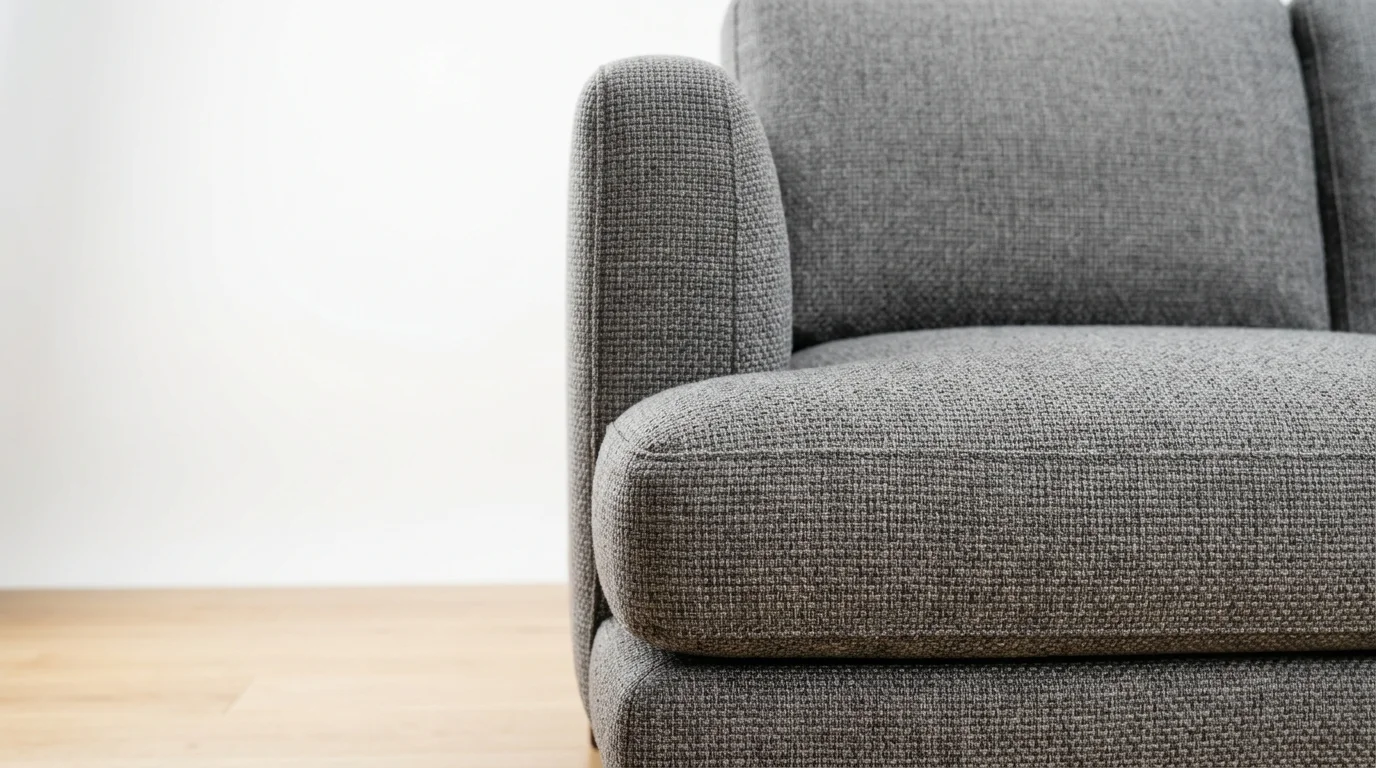
If you can see the individual threads easily, the weave is likely too loose. A loose weave is a nightmare for pet owners. A cat’s claw or a dog’s nail can easily snag a loose thread and pull it out, ruining the look of the sofa.
You want a fabric with a tight, dense weave. Think about the difference between a sweater and a pair of denim jeans. The jeans are much harder to snag because the threads are packed closely together.
Hold the fabric sample up to the light. If a lot of light passes through, it might be too thin for your busy living room. You want a fabric that feels solid and substantial in your hand.
Why “Performance Fabrics” are a Game Changer
In recent years, “performance fabrics” have changed the home decor world. Brands like Sunbrella or Crypton were once only for outdoor furniture. Now, they are soft enough for your indoor living room.
These fabrics are treated at the fiber level to resist stains, odors, and bacteria. It is not just a spray-on coating that wears off. The protection is built into the fabric itself.
If you have pets that like to sleep on the couch, performance fabrics are a life-saver. They don’t trap smells as much as traditional fabrics do. You can often clean them with just a little soap and water.
Evaluating the “Pilling” Factor
Have you ever noticed little balls of fuzz on an old sweater or couch? That is called pilling. It happens when fibers break and tangle together. It makes a sofa look old and cheap very quickly.
Man-made fibers that are made of short threads tend to pill more. To avoid this, look for high-quality “long-staple” fibers. When you touch a fabric sample, rub it hard with your thumb for a few seconds.
If you see tiny bits of fuzz immediately, move on to a different option. A smooth surface is usually a sign of a fabric that will stay looking new.
Dealing with Pet Hair and Dander
If you have a golden retriever or a cat that sheds, the fabric texture is everything. Avoid fabrics with a “loop” texture, like some types of tweed. These loops act like a magnet for pet hair and are very hard to vacuum.
Instead, go for smooth fabrics like leather or high-quality faux leather. Hair simply slides off these surfaces. If you prefer a soft fabric, go back to the microfiber mentioned earlier.
Microfiber has a very short “pile,” so hair doesn’t get trapped deep inside. A quick wipe with a damp cloth or a lint roller is usually all you need to keep it clean.
The Role of Color and Pattern in Hiding Wear
Even the best fabric will eventually get a small mark. This is where your design choice can help you out. A solid, very light-colored fabric (like white or cream) is like a blank canvas for dirt.
On the other hand, a very dark fabric (like black or navy) can show every bit of lint and light-colored pet hair. The “sweet spot” for high-traffic rooms is mid-tone colors like grey, taupe, or denim blue.
Fabrics with a small, subtle pattern or a “heathered” look are even better. These visual textures help hide small imperfections and dust between cleanings. It gives you a little more “grace” in your daily life.
Testing for “Sit-Ability” and Stretch
When you sit on a sofa, the fabric stretches. When you get up, it should snap back into place. If the fabric stays wrinkled or “puddles” after you stand up, it will eventually look sagging and tired.
This is often caused by a lack of backing on the fabric. Check if the fabric has a “latex” or “knit” backing. This extra layer adds strength and helps the fabric keep its shape.
In a store, sit on the sofa for at least five minutes. When you stand up, watch how fast the fabric recovers. High-resiliency materials are a must for any sofa that gets used for hours every day.
The Truth About Leather in High-Traffic Areas
Many people think leather is too delicate, but the right kind of leather is actually one of the most durable choices. You want to look for “Top Grain” or “Protected” leather.
Avoid “Aniline” leather if you have kids. It feels amazing, but it has no protective coating and will soak up every drop of oil or water. Protected leather has a pigment and a topcoat that acts as a shield.
Leather is great because it doesn’t trap dust mites or pet dander. This makes it a top choice for families with allergies. Plus, a good leather sofa often looks better as it ages, developing a “patina” that adds character.
Practical Cleaning: Can You Actually Wash It?
Before you buy, look at the cleaning code. Most fabrics have a code like “W” (water-based cleaner), “S” (solvent-based), or “WS” (both). For a busy home, you almost always want a “W” or “WS” code.
This means you can use a simple mixture of water and a drop of dish soap to clean most messes. If a fabric is “S” only, you have to buy special chemicals, which is a big hassle for daily spills.
Ask the salesperson if the cushion covers are removable. Even if the manufacturer says not to put them in the washing machine, having removable covers makes professional cleaning much easier and more effective.
Protecting Your Investment from Sun Damage
If your living room has big windows, the sun is a silent enemy. UV rays can weaken fabric fibers and fade colors in just one summer. This makes the fabric brittle and prone to tearing.
Synthetic fabrics like Acrylic and Polyester handle the sun much better than silk or cotton. Some performance fabrics are even UV-resistant, meaning they are designed to sit in the sun without losing their strength.
If you love the look of a natural fabric but have a sunny room, consider adding a UV-protective film to your windows. This protects your sofa and your skin at the same time.
Final Check: The “Sniff and Touch” Test
When you find a fabric you like, don’t be afraid to get close to it. Some cheap synthetic fabrics have a strong chemical smell that can last for weeks. This is called “off-gassing” and can be annoying if you have a sensitive nose.
Also, check the “hand” of the fabric. This is just a fancy way of saying how it feels against your skin. A durable fabric doesn’t have to be scratchy.
Modern technology allows for fabrics that are as tough as nails but feel as soft as velvet. Never sacrifice comfort for durability when you can have both.
Maintaining Your Sofa’s Strength for the Long Run
Now that you know how to pick the right material, you need to know how to keep it looking fresh. Many people think the work is done once the sofa is in their living room. But the truth is, a high-traffic sofa needs a bit of regular care to stay strong.
Mastering the Art of Friction Management
Even the toughest fabrics can wear out if they face constant friction in the exact same spot. Think about your favorite spot on the couch where you sit every single evening. Over time, that specific area gets more pressure and heat than the rest of the sofa.
To prevent this, you should practice a “Rotate and Flip” routine. If your sofa has loose cushions, swap them around every two weeks. Move the left cushion to the right and flip them over so both sides get equal use.
This simple habit stops one cushion from becoming flat or “puddled” while the others stay firm. It also spreads out the wear on the fabric surface. It is like rotating the tires on your car to make sure they all last as long as possible.
The Secret of the Weekly Vacuum Ritual
It might sound boring, but a vacuum cleaner is your sofa’s best friend. In a high-traffic home, tiny bits of dust, crumbs, and outdoor dirt act like microscopic sandpaper. When you sit down, these particles rub against the fabric fibers and slowly cut them.
You should use a soft brush attachment to gently vacuum your sofa once a week. Make sure to get deep into the crevices and under the cushions. Removing these abrasive particles can double the life of your upholstery.
If you have a pet, this step is even more important. Pet dander and hair can get trapped in the weave and cause the fabric to smell. A quick vacuum keeps the air in your living room cleaner and your fabric looking bright.
Understanding the “Dye Lot” Mystery for Future Repairs
Here is a pro-level secret that most furniture stores won’t tell you. Fabric colors can change slightly between different batches of production. These batches are called “dye lots.”
If you ever need to replace a single cushion cover or repair a small section, the new fabric might not match perfectly. To avoid this headache, always ask for a large fabric swatch or buy a little extra fabric when you first get your sofa.
Store this extra piece in a dark, dry place. If a major accident happens years later, you will have the exact color and texture needed for a seamless fix. This small step can save you from having to replace the entire sofa just because of one bad stain.
The “Water Drop Test” for Protection Checks
If your sofa came with a factory-applied stain guard, it will eventually wear off. You can check the status of your protection with a simple water drop test. Just place a single drop of water on an inconspicuous area of the fabric.
If the water beads up and stays on the surface, your protection is still working great. But if the water soaks into the fabric within a few seconds, it is time to re-apply a fabric protector.
You can find high-quality fabric protector sprays that are safe for indoor use. Always look for a non-toxic and PFC-free version to keep your home healthy. Re-applying this shield once a year will keep your high-traffic sofa looking brand new.

Common Mistakes That Shorten Your Sofa’s Life
Even with the best intentions, it is easy to make mistakes that ruin your beautiful furniture. Most people learn these the hard way, but you can avoid them by being aware of these common pitfalls.
Using the Wrong Cleaning Tools
One of the biggest mistakes is using a heavy-duty scrub brush on a delicate or even a medium-duty fabric. Scrubbing too hard can break the fibers and cause “fuzzing” or permanent pilling.
Always use a soft, white microfiber cloth for cleaning spills. Never use a colored sponge or cloth, as the dye from the sponge can actually transfer onto your sofa. This creates a new stain that is often impossible to remove.
Ignoring the “Sunlight Trap”
We all love a bright, sunny living room, but direct sunlight is a silent killer for sofa fabrics. Over time, UV rays break down the chemical bonds in the fabric. This leads to fading and makes the material very brittle.
If your sofa sits right under a window, you might notice the back of it feels “crunchy” or looks lighter than the front. To avoid this, use UV-blocking curtains or blinds during the hottest parts of the day. Even a light sheer curtain can make a huge difference in protecting the fabric’s integrity.
Over-Wetting the Fabric During Cleaning
When a spill happens, the instinct is to soak the area with water or cleaner. This is a dangerous move. If water gets deep into the internal foam of the sofa, it can lead to mold and mildew growth.
The foam inside is hard to dry out once it gets wet. Always use a damp cloth rather than a soaking wet one. If you must use a lot of water, use a hair dryer on a “cool” setting to help the area dry as fast as possible.
Relying Solely on “Home Remedies”
You might see tips online suggesting vinegar or baking soda for every stain. While these can work sometimes, they are not universal solutions. Some fabrics react poorly to the acidity of vinegar, which can actually weaken the fibers.
Before trying a home remedy, always test it on a tiny, hidden spot at the back of the sofa. Wait for it to dry completely to see if it changes the color or texture. It is better to be safe than to end up with a giant bleached spot in the middle of your seat.
Skipping the Professional Deep Clean
Many homeowners wait until the sofa looks visibly filthy before calling a professional. By then, the dirt has often settled deep into the fibers and the backing.
Think of a professional clean like a deep health checkup. Having a professional steam clean or dry clean your sofa once every 12 to 18 months removes deep-seated allergens and dust. This keeps the fabric supple and prevents it from becoming stiff or uncomfortable.
Your Path to a Stress-Free Living Room
Choosing the right sofa fabric is a gift you give to your future self. It is about creating a space where you don’t have to say “be careful” every time someone sits down. When you pick a material that matches your actual lifestyle, your home becomes a true place of rest.
Take your time when looking at samples. Touch them, pull them, and ask the tough questions about rub counts and cleaning codes. You have the knowledge now to see past the pretty colors and find the true quality underneath.