You’re Probably Drinking the Wrong Amount of Water
Be honest. Do you actually know how to determine how much water to drink every day, or are you just guessing?
Most people are guessing.
Some of us chug a gallon because we saw it on social media. Others sip a few glasses and call it done. Neither one is really based on anything solid.
Here’s the good news. Figuring out how much water you need isn’t complicated once you know the right approach. This guide walks you through it, step by step, in plain language.
No fancy science jargon. No confusing charts. Just simple, real advice you can use today.
Table of Contents
- You’re Probably Drinking the Wrong Amount of Water
- Why “8 Glasses a Day” Isn’t the Full Answer
- Step 1: Start With Your Body Weight
- Step 2: Factor In Your Activity Level
- Step 3: Consider the Climate You Live In
- Step 4: Watch Your Body’s Own Signals
- Step 5: Adjust for What You Eat
- Step 6: Use a Simple Daily Tracking Method
- Step 7: Know When You’re Drinking Too Much
- What Counts as “Water” Anyway?
- Building a Hydration Routine That Actually Sticks
- A Real Example to Put It All Together
- Simple Habits That Make Hitting Your Goal Easier
- Frequently Asked Questions
- Final Thoughts
Drop this right under the intro, before the “Why 8 Glasses a Day” section, and it’ll work as clickable jump links wherever markdown anchors are supported (most CMS platforms and static site generators handle this automatically — WordPress may need a TOC plugin or manual anchor IDs added to each heading).
Why “8 Glasses a Day” Isn’t the Full Answer
You’ve heard it a thousand times. Drink 8 glasses of water a day. Done.
Except that’s not really how your body works.
The “8×8 rule” is a rough guideline, not a rule carved in stone. Your actual needs depend on your body size, your activity level, the weather, and even what you eat.
According to the Mayo Clinic, fluid needs vary quite a bit from person to person, and there’s no single number that fits everyone perfectly. That single sentence alone explains why so many people feel confused about hydration.
A 250-pound construction worker in Texas summer heat needs way more water than a 110-pound office worker sitting in an air-conditioned room. That’s just common sense.
So instead of memorizing a fixed number, let’s talk about how to determine how much water to drink based on your own body and your own day.
Step 1: Start With Your Body Weight
This is the easiest starting point, and it actually makes sense.
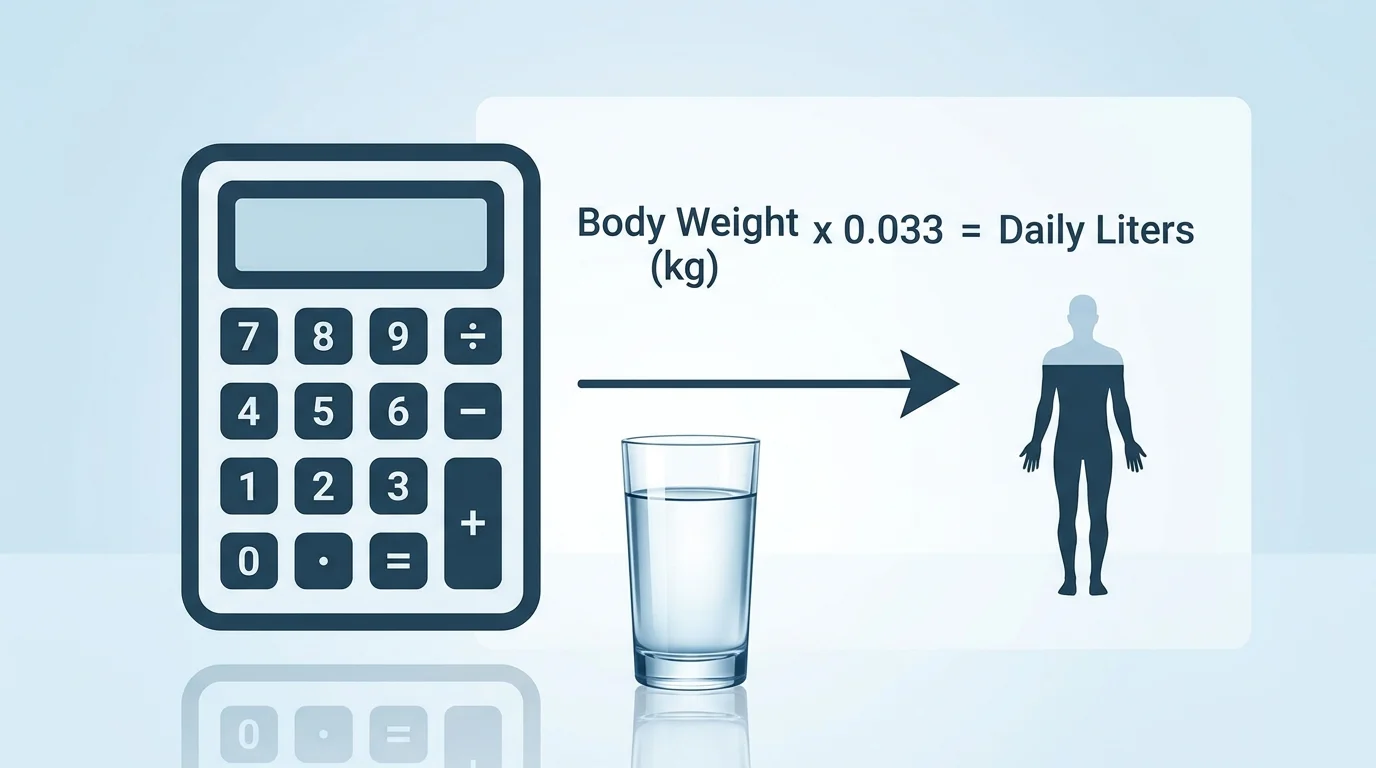
A simple formula many nutritionists use looks like this:
- Take your body weight in pounds
- Divide it by 2
- That number is roughly how many ounces of water you should drink daily
So if you weigh 160 pounds, that’s about 80 ounces of water a day. That’s roughly 10 cups.
This isn’t a perfect science. It’s a starting point. Think of it like a rough map before you fine-tune the route.
If you’re curious about exact ounce targets for your specific weight, this breakdown on how many ounces should I drink a day walks through it in more detail.
Step 2: Factor In Your Activity Level
Do you sit at a desk all day, or are you moving around, lifting things, walking a lot, or working out?
This matters. A lot.
When you sweat, you lose water. Simple as that. And you need to replace what you lose.
General rule of thumb:
- Light activity (mostly sitting): Stick close to your baseline number
- Moderate activity (walking, light exercise): Add 12–16 extra ounces
- Heavy activity (intense workouts, manual labor): Add 20–40 extra ounces, or more
The Harvard T.H. Chan School of Public Health notes that people who exercise or work in hot conditions need noticeably more fluid than those with a sedentary routine. That tracks with what most trainers will tell you too.
Think about a runner finishing a 5K on a hot morning. Their body has been working hard, sweating buckets, losing electrolytes. A single glass of water won’t cut it. They need real replenishment.
Step 3: Consider the Climate You Live In
Here’s something people forget.
Where you live changes how much water you need.
Live somewhere hot and humid? Your body sweats more, even when you’re not exercising. Live somewhere cold and dry? You might not feel thirsty, but dry air actually pulls moisture from your skin and lungs too.
Quick examples:
- Living in Dhaka during a humid summer? Expect to need more water than someone in a mild, dry climate.
- Spending time in high altitude areas? Your body loses fluid faster through breathing.
- Working near AC units all day? Indoor air can be surprisingly dehydrating.
Your environment is basically talking to your body all day. Learn to listen to it.
Step 4: Watch Your Body’s Own Signals
Numbers and formulas are helpful. But your body already gives you clues, all the time.
You just need to know what to look for.
Check Your Urine Color
This sounds a little awkward to talk about. But it’s genuinely one of the best hydration indicators there is.
Pale yellow, almost clear? You’re doing great.
Dark yellow or amber? Time to drink more water.
The CDC points out that staying properly hydrated supports nearly every basic function in your body, from digestion to temperature control.
Notice How Often You Feel Thirsty
Thirst isn’t a weakness. It’s your body’s alarm system.
If you’re thirsty a lot, that’s a sign you’re behind on fluids. Don’t wait until you’re parched to drink. By the time you feel really thirsty, you’re already a bit dehydrated.
Pay Attention to Energy and Focus
Ever feel foggy, tired, or get a random headache in the afternoon?
Sometimes that’s not lack of sleep. It’s simple dehydration. Your brain is about 75% water, so even mild fluid loss can mess with concentration.
Step 5: Adjust for What You Eat
Food matters more than people realize when it comes to hydration.
Fruits and vegetables like cucumber, watermelon, oranges, and spinach are loaded with water. If your diet is packed with these, you might need slightly less from your water bottle.
On the flip side, if you eat a lot of salty, processed, or dry food, your body will need more water to balance things out.
A quick real-life example:
Imagine two coworkers eating lunch. One has a fresh salad with cucumber and tomatoes. The other has salty fried snacks and chips.
The second person is going to feel thirstier within an hour. Their body is asking for more water to process all that sodium.
Small choices like this add up across a whole day.
Step 6: Use a Simple Daily Tracking Method
Here’s where a lot of people get stuck. They know they should drink more water, but they forget or lose track.
Try one of these simple systems:
- Marked water bottle – Buy a bottle with time markers on the side so you know if you’re on pace by noon, 3 PM, and evening.
- Phone reminders – Set a hydration alarm every 2 hours.
- Habit stacking – Drink a glass of water every time you do something you already do daily, like brushing your teeth or checking your phone.
- Hydration apps – Many free apps let you log cups and track your streaks.
Pick whichever one fits your personality. The goal isn’t perfection, it’s consistency.
If your main goal right now is weight management, this guide on how much water to drink daily to lose weight breaks down the connection between hydration and fat loss in a really practical way.
Step 7: Know When You’re Drinking Too Much
Yes, this is actually a real thing.
Drinking too much water too fast can dilute the sodium levels in your blood, a condition called hyponatremia. It’s rare for the average person, but it can happen, especially to endurance athletes chugging huge amounts of water in a short window.
Signs you might be overdoing it:
- Nausea or headache after drinking a lot at once
- Clear urine almost constantly, way beyond “well hydrated”
- Confusion or swelling in hands and feet (rare, but serious)
The takeaway here isn’t to fear water. It’s to drink steadily throughout the day instead of forcing huge amounts all at once.
What Counts as “Water” Anyway?
Good question. You don’t need to chug plain water 100% of the time to hit your hydration goals.
Things that count toward your daily fluid intake:
- Herbal tea
- Milk
- Fruit-infused water
- Soups and broths
- Water-rich fruits and vegetables
Things that work against you:
- Alcohol (dehydrates you)
- Excess caffeine (mild diuretic effect)
- Sugary sodas (not ideal, though they do contain water)
If you’re picky about taste or trying to drink more bottled water specifically, this comparison of the best bottled water to drink is worth a look, especially if mineral content matters to you.
Building a Hydration Routine That Actually Sticks
Knowing the numbers is one thing. Actually doing it every day is another.
Here’s a simple daily rhythm you can copy:
Morning: Drink a full glass right after waking up. Your body has gone hours without fluid overnight.
Before meals: Have a glass 20–30 minutes before eating. It helps digestion and controls portion sizes too.
During exercise: Sip steadily, don’t gulp. Small amounts every 15–20 minutes work better than one big chug.
Evening: Taper off a bit before bed so you’re not up all night running to the bathroom.
This rhythm isn’t rigid. Adjust it to your schedule. The point is building a pattern your body can count on.
A Real Example to Put It All Together
Let’s say you’re a 30-year-old woman, weighing 140 pounds, living in a warm climate, working a desk job but going for a 30-minute walk most evenings.
Here’s how you’d figure out your number:
- Baseline from body weight: 140 ÷ 2 = 70 ounces
- Add for moderate activity: +14 ounces
- Add a little for the warm climate: +10 ounces
Total: roughly 94 ounces, or about 11–12 cups a day.
That’s your personalized target, not some generic number pulled from a random chart online.
Simple Habits That Make Hitting Your Goal Easier
- Keep water visible. Out of sight really does mean out of mind.
- Add flavor if plain water bores you. Lemon, cucumber, or mint slices make a difference.
- Use a straw. Weirdly, people tend to drink faster and more with a straw.
- Pair drinking with existing habits. Water with every meal, water after every bathroom break, whatever works.
- Track for just one week. After that, it usually becomes second nature.
None of these are complicated. That’s the whole point. Small, boring habits win over flashy ones every time.
Frequently Asked Questions
1. How do I know exactly how much water my body needs?
Start with your body weight divided by two, that gives you a baseline in ounces. Then adjust upward for activity level, hot weather, and your diet.
2. Does coffee count against my daily water intake?
Not really, in moderate amounts. Coffee has a mild diuretic effect, but the water in your cup still contributes to hydration overall.
3. Is it possible to drink too much water in a day?
Yes, though it’s uncommon for most people. Drinking excessive amounts very quickly can dilute your sodium levels. Spread your intake evenly through the day instead of all at once.
4. What’s the fastest way to tell if I’m dehydrated?
Check your urine color. Pale yellow usually means you’re fine. Dark yellow or amber is your body asking for more fluids.
5. Do I need more water on days I don’t exercise?
You still need your baseline amount, but you can skip the extra “activity boost.” Climate and diet still matter, even on rest days.
Final Thoughts
Figuring out your ideal water intake really isn’t about memorizing some perfect number.
It’s about paying attention. Your weight, your activity, your climate, even your lunch, all of it plays a role.
Start with the simple formula. Watch your body’s signals. Adjust as you go.
Give it one week of real effort, and you’ll probably notice better energy, clearer focus, and honestly, just feeling a bit more like yourself.
That’s really the whole goal here.