How Much Water Should You Drink a Day? 7 Real Numbers That Actually Work
You’ve heard it a hundred times. “Drink more water.” Your doctor says it. Your mom says it. That fitness influencer on your phone says it every single morning.
But nobody ever tells you the actual number.
So here’s the real question: how much water should a person drink each day to actually feel good, think clearly, and stop getting that afternoon headache?
Let’s get into it. No lectures. Just the numbers and the “why” behind them.
Why This Question Is Harder Than It Looks
Here’s the thing nobody mentions.
There is no single magic number that fits every person on the planet. Your neighbor’s water needs are not your water needs.
A 25-year-old runner in Texas needs more water than a 70-year-old office worker in a cool climate. That’s just biology.
But you still need a starting point. And that’s exactly what this guide gives you.
According to Mayo Clinic, your body is made up of roughly 50% to 70% water. That’s not a small detail. Water runs almost everything you do, from digesting your lunch to keeping your brain sharp during a work meeting.
The Old 8×8 Rule: Where It Came From (And Why It’s Not Enough)
You know the rule. Eight glasses. Eight ounces each. Done.
It’s catchy. It’s easy to remember. But it’s also kind of a myth.
This idea traces back to a 1945 recommendation, long before anyone had solid science behind daily hydration needs. It never accounted for your body size, your activity level, or the fact that food itself gives you water too.
So while 8×8 isn’t a terrible starting point, it’s not a real answer either. Think of it as training wheels, not the finish line.
So, How Much Water Should a Person Drink? The Real Numbers
Let’s break this down by what actual health institutions recommend, not what a random wellness blog made up.
The National Academies’ Numbers
Research from the U.S. National Academies of Sciences, Engineering, and Medicine suggests:
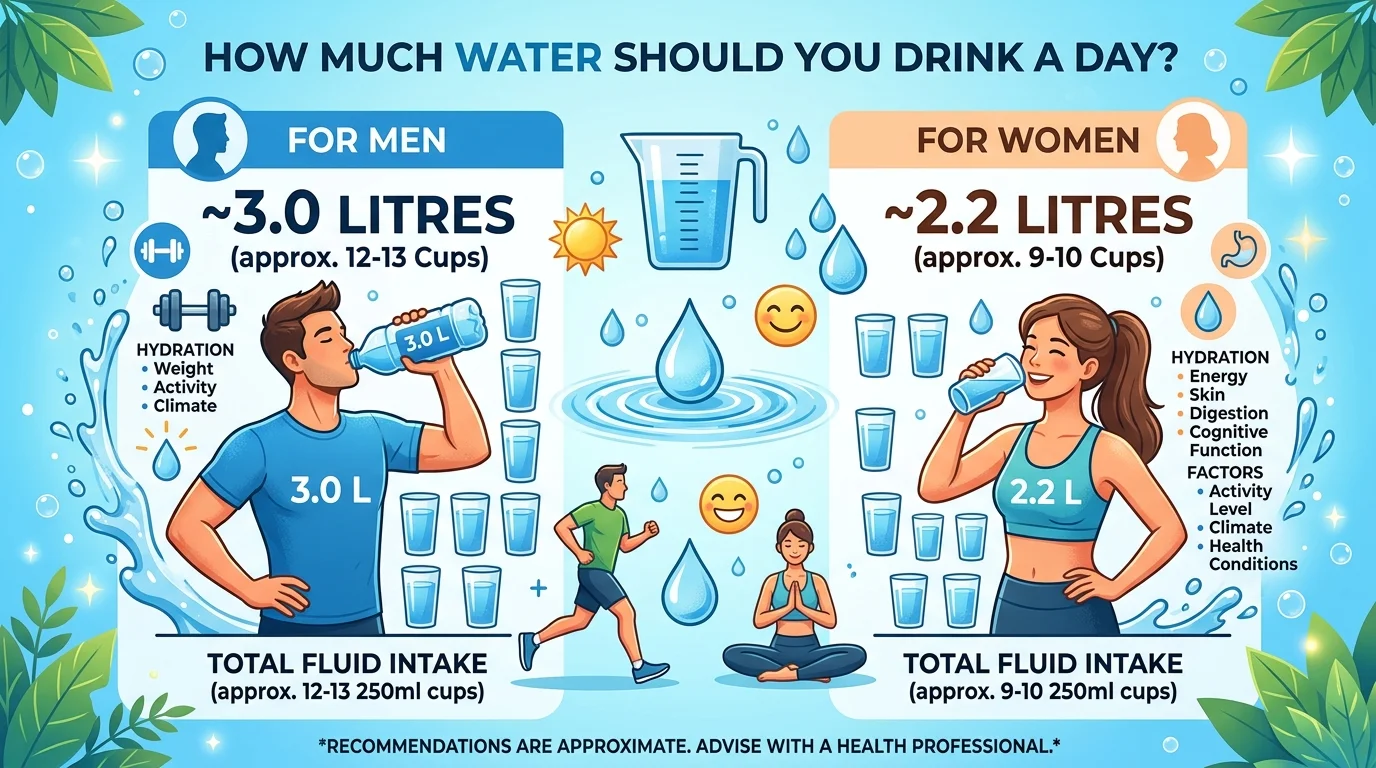
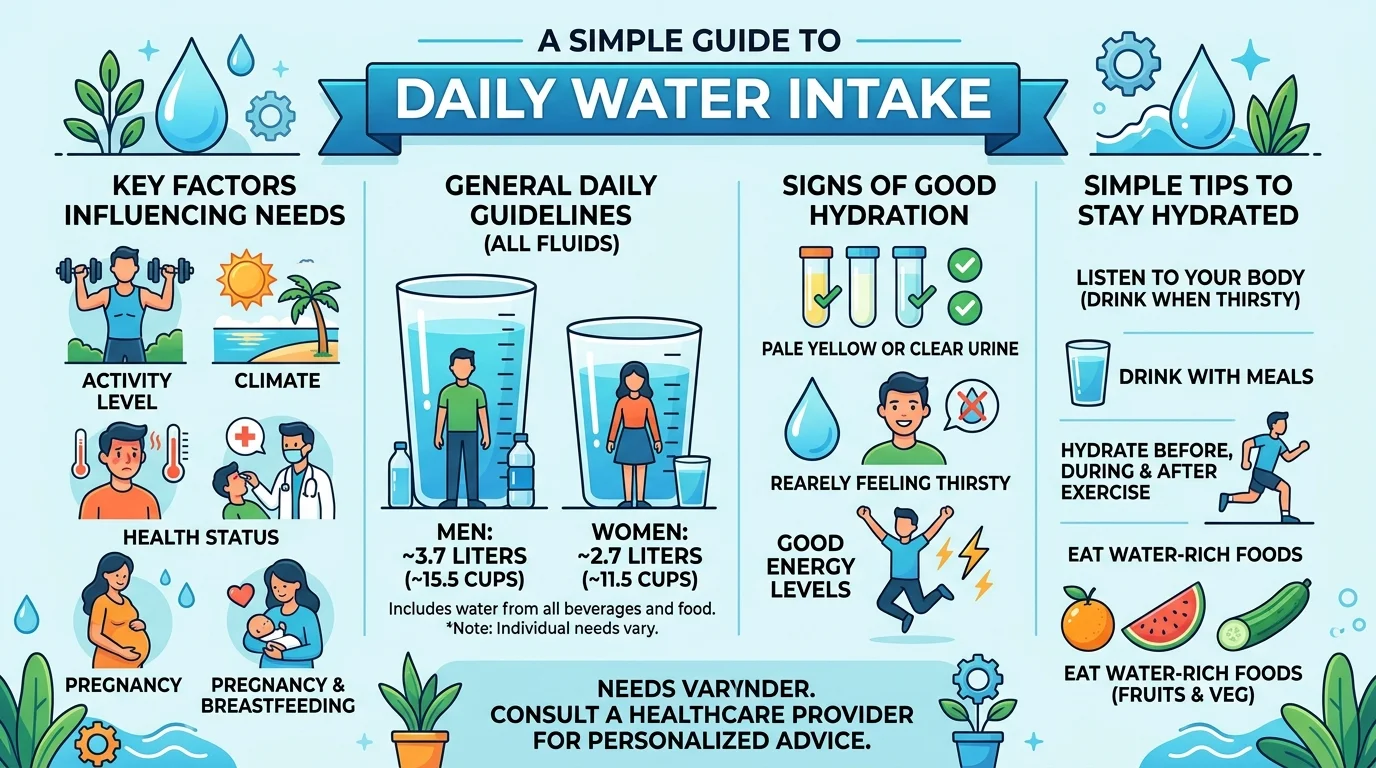
- About 15.5 cups (3.7 liters) of fluids a day for men
- About 11.5 cups (2.7 liters) of fluids a day for women
Now don’t panic. That number includes all fluids. Not just plain water.
Coffee counts. Tea counts. Soup counts. Even the water inside a juicy watermelon slice counts.
Roughly 20% of your daily fluid intake comes from food alone. The rest comes from what you drink throughout the day.
The Cleveland Clinic Range
Cleveland Clinic points to a slightly different but overlapping range, generally landing between 73 and 104 ounces of water per day for most healthy adults, depending on activity and body size.
The Harvard Health Take
Harvard Health offers a more relaxed number for plain water specifically, suggesting most healthy people need around four to six cups of plain water a day, with the rest of your fluid needs covered by food and other drinks.
See the pattern? None of these numbers fight each other. They’re just looking at hydration from slightly different angles.
Here’s the simple takeaway: if you’re drinking somewhere between 8 and 13 cups of total fluids a day, spread out, you’re probably doing just fine.
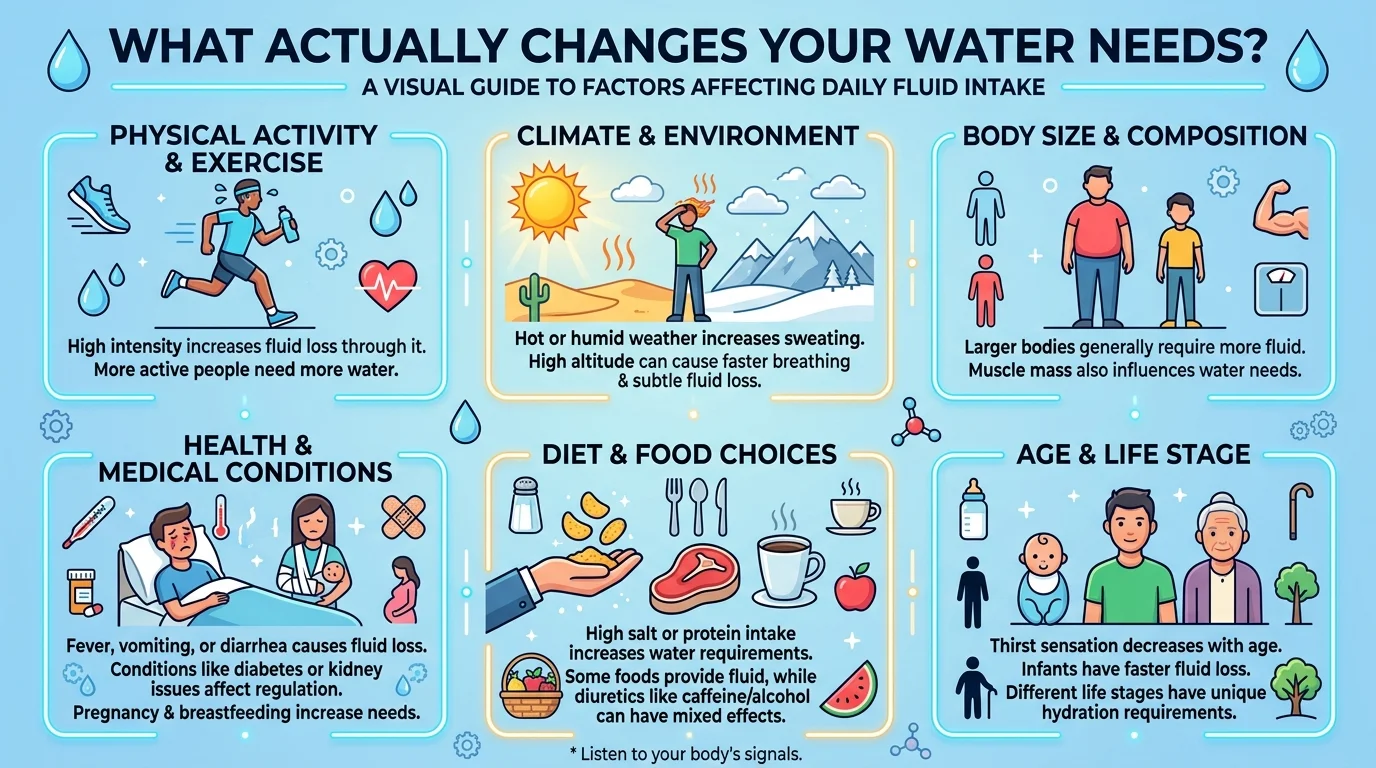
What Actually Changes Your Water Needs
Your best friend and your grandmother do not need the same amount of water. Here’s why.
Your Body Size
A bigger body carries more water weight and burns more energy just existing. More mass usually means more fluid needed to keep things running.
How Active You Are
If you sweat during a workout, a bike ride, or even a long walk in summer heat, you’re losing fluid fast. That fluid has to come back somehow.
A good rule of thumb: for every hour of moderate exercise, add an extra 1.5 to 2.5 cups of water on top of your normal intake.
The Weather Where You Live
Hot, humid climates pull water out of your body through sweat, even if you’re just sitting on your porch. Dry, cold climates can be sneaky too, since your body loses moisture through breath in cold air.
Your Overall Health
Fever, vomiting, diarrhea, or certain medical conditions can drain your fluid levels fast. If you’re sick, your water needs go up, not down.
Some conditions, like kidney or heart issues, actually require you to limit fluids. If you have a chronic condition, always check with your doctor before chasing a hydration goal you read online.
Pregnancy and Breastfeeding
If you’re pregnant, your body is building another human being. That takes water. A lot of it.
Experts generally recommend pregnant women aim for around 10 cups of fluids a day, while breastfeeding mothers may need closer to 12 to 13 cups, since milk production itself uses up fluid.
Water Needs by Age: A Quick Breakdown
Age changes everything about hydration, and most articles skip right past this part.
Babies and Toddlers
Infants under six months should not be given plain water at all. Their main fluid source is breast milk or formula, and that’s already enough.
Once a baby passes the six-month mark, small sips of water can be introduced alongside meals, especially on hot days. Toddlers over 12 months can start drinking water as a regular part of their routine.
Kids and Teens
Children need less total fluid than adults, simply because their bodies are smaller. Still, kids lose water fast when they’re running around outside or playing sports, so a reusable water bottle at school genuinely helps.
Teenagers, especially active ones, start approaching adult-level water needs as their bodies grow closer to full size.
Adults (18–50)
This is the range most hydration guidelines are built around. The 8 to 13 cup range mentioned earlier applies most directly here, with adjustments for activity and climate.
Older Adults (50+)
Here’s something most people don’t expect: your thirst signal actually gets weaker as you age.
That means older adults can be dehydrated without ever feeling particularly thirsty. This is one reason doctors often recommend older adults drink water on a schedule rather than waiting for thirst to strike.
Medications commonly used later in life, like certain blood pressure drugs, can also increase fluid loss, making regular water intake even more important.
A Simple Story to Make This Click
Picture this. You’re at your desk around 3 PM. Your head feels foggy. You can’t focus on the email in front of you.
You assume it’s just a slow afternoon. But it’s often something much simpler: mild dehydration.
Even losing as little as 1% to 2% of your body’s water can mess with your focus, your mood, and your energy. You don’t have to be desert-lost-hiker dehydrated to feel the effects.
This is exactly the trap a lot of people fall into with restrictive eating too. If you’re already tracking how much water to drink daily to lose weight, skipping water on top of cutting calories is a fast way to feel drained and give up early.
What Water Actually Does Inside Your Body
We touched on this earlier, but it deserves a closer look, because “staying hydrated” sounds vague until you see the specifics.
Your Brain
Your brain is nearly 75% water. Even mild fluid loss has been linked to shorter attention spans and slower reaction times. That 3 PM fog you blame on lunch? Sometimes it’s just your brain running low on fluid.
Your Skin
Water alone won’t erase wrinkles, no matter what a skincare ad tells you. But chronic dehydration does make skin look duller and less plump, simply because skin cells need water to function properly.
Your Digestion
Water helps break down food and keeps things moving through your digestive system. Low water intake is one of the most common, and most overlooked, causes of constipation.
Your Joints
Water cushions your joints, acting almost like a shock absorber every time you walk, run, or climb stairs. This matters more as you get older and joint wear becomes more noticeable.
Your Kidneys
Your kidneys filter waste out of your blood, and they need enough fluid to do that job well. Chronic low water intake is a known risk factor for kidney stones.
Electrolytes: The Part of Hydration People Forget
Water alone isn’t the whole story. Your body also needs a balance of electrolytes, like sodium, potassium, and magnesium, to actually use that water properly.
Think of electrolytes as the traffic signals that direct water in and out of your cells. Without them, water just sits in the wrong place.
This is exactly why athletes sometimes reach for a sports drink instead of plain water during long, sweaty workouts. Sweat carries sodium out of your body, and replacing only the water without the sodium can actually throw things further off balance.
For a normal day of light activity, food alone usually covers your electrolyte needs. You only need to think about electrolyte drinks during intense exercise, extreme heat, or illness involving vomiting or diarrhea.
Hydration Myths You Can Stop Believing
A few ideas about water refuse to die, even though they’ve been debunked repeatedly.
Myth: You need exactly eight glasses, no more, no less. Reality: This number was never based on solid science for every individual. Your real number depends on your body and lifestyle.
Myth: Clear urine is the goal. Reality: Completely clear urine can actually mean you’re overhydrating. Pale yellow is the real target.
Myth: Drinking ice-cold water burns extra calories. Reality: The calorie difference is so small it’s basically meaningless for weight loss.
Myth: Coffee and tea don’t count as hydration. Reality: They absolutely count, just don’t make them your only fluid source.
Myth: If you’re not thirsty, you’re not dehydrated. Reality: Thirst is a lagging signal, especially for older adults, so waiting for it isn’t a reliable strategy.
Best Times of Day to Drink Water
Timing isn’t everything, but a little strategy goes a long way.
- Right after waking up: You’ve gone six to eight hours without fluid overnight, so a glass first thing helps you start the day ahead instead of behind.
- Before meals: A glass 20 to 30 minutes before eating can help with digestion and also curb overeating.
- Before and after exercise: Replacing fluid before you’re already dehydrated works better than trying to catch up afterward.
- Before bed, in moderation: A small glass is fine, but chugging a large amount right before sleep usually just means a 2 AM bathroom trip.
Climate-by-Climate Hydration Tips
Where you live genuinely changes your hydration math.
Hot, Humid Climates
Sweat evaporates slower in humidity, which tricks your body into sweating even more to try to cool down. Add an extra 2 to 4 cups on especially hot, sticky days.
Hot, Dry Climates
Sweat evaporates almost instantly here, so it’s easy to underestimate how much fluid you’re actually losing. If you live somewhere like a desert region, don’t trust how “not sweaty” you feel as your guide.
Cold Climates
Cold air is dry air, and your body loses moisture through breathing more than people realize. Combine that with bulky layers that hide sweat, and dehydration sneaks up quietly in winter too.
High Altitude
Higher elevations mean faster breathing and more fluid loss through respiration, plus increased urination as your body adjusts. Travelers heading to mountain destinations often need noticeably more water in the first few days.
Signs You’re Not Drinking Enough
Your body actually tells you when it’s running low. You just have to know what to look for.
- Dark yellow urine (pale yellow or clear is the goal)
- Dry mouth or chapped lips
- Headaches that show up in the afternoon
- Feeling unusually tired
- Dizziness when you stand up too fast
- Constipation
If you’re noticing two or three of these regularly, that’s your body waving a small flag.
Signs You’re Drinking Too Much
Yes, this is real too, even though it gets way less attention.
Drinking extreme amounts of water in a short window can dilute the sodium in your blood. This is called hyponatremia, and in rare, severe cases, it can be dangerous.
This mostly happens to endurance athletes chugging gallons during a race, not to someone sipping water throughout a normal day. Still, more is not automatically better.
The goal isn’t maximum water. It’s the right amount for your body.
Quick Ways to Track Your Water Without Obsessing
You don’t need a fancy app or a color-coded chart taped to your fridge. Simple works.
- Keep a bottle with you wherever you go, ideally one with visible measurement lines.
- Drink a glass with every meal. That alone covers three to four cups a day.
- Check your urine color once or twice a day. Pale yellow means you’re on track.
- Set two or three phone reminders if you tend to forget, especially during busy workdays.
- Eat water-rich foods like cucumber, watermelon, oranges, and soup.
If plain water genuinely bores you, that’s fine. Herbal tea, sparkling water, or fruit-infused water all count toward your total.
Does Coffee Count Against Your Water Goal?
This one causes so much confusion, so let’s clear it up.
Yes, caffeine has a mild diuretic effect. But research shows that for regular coffee or tea drinkers, this effect is small and doesn’t cancel out the hydration benefit of the drink itself.
In plain terms? Your morning coffee still counts toward your daily fluid total. Just don’t rely on it as your only source of fluid.
How Much Water Per Body Weight? A Simple Formula
If cups and liters feel abstract, try this instead.
A commonly used formula: divide your body weight (in pounds) by two. That gives you a rough number in ounces to aim for daily.
So someone weighing 160 pounds would aim for around 80 ounces of water, which is roughly 10 cups.
This isn’t a perfect science, but it’s an easy mental shortcut when you don’t want to do complicated math or check how many ounces should I drink a day every single time.
What Kind of Water Actually Matters?
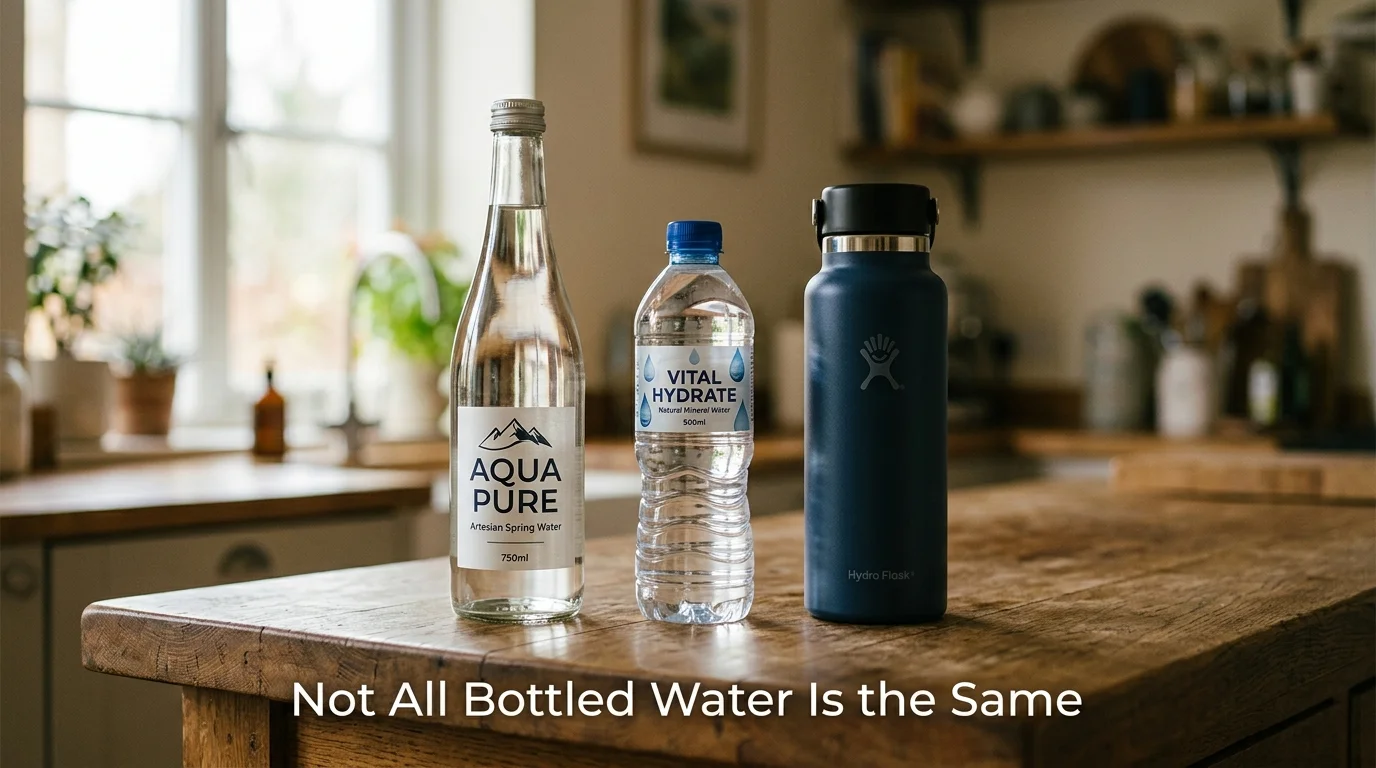
Not all water is created equal, and this surprises a lot of people.
Tap water, filtered water, and bottled water all hydrate you the same way. The difference usually comes down to taste, mineral content, and what’s actually filtered out.
If you’re picky about taste or worried about your local tap water quality, it’s worth reading up on the best bottled water to drink so you’re not just grabbing whatever’s cheapest at the store.
A Day-by-Day Example
Let’s make this real instead of theoretical.
Morning: One glass of water right after waking up, plus your coffee with breakfast. That’s already two cups down.
Midday: A glass with lunch, plus a refill during the afternoon slump instead of reaching for a soda. Two more cups.
Afternoon workout: If you hit the gym or go for a run, add another two cups to replace sweat loss.
Evening: A glass with dinner, plus water sipped while winding down. Two more cups.
Add it up and you’re already at eight to nine cups without forcing anything. That’s the whole trick. Small, consistent sips beat one giant chug at the end of the day.
Hydration and Exercise Performance
If you work out regularly, this section matters more than any other number on this page.
Even a small drop in hydration, as little as 2% of your body weight in fluid, can noticeably reduce endurance and strength during a workout. That’s the difference between finishing strong and feeling like your legs gave up halfway through.
Before a workout: Aim for one to two cups of water about 20 to 30 minutes beforehand.
During a workout: For sessions under an hour, plain water is usually enough. For anything longer, especially in heat, an electrolyte drink can help maintain performance.
After a workout: Weigh yourself before and after intense exercise if you want to get precise. For every pound lost through sweat, aim to replace it with roughly two cups of fluid.
This doesn’t need to be complicated. Most casual gym-goers do fine simply drinking when thirsty and keeping a bottle nearby during their session.
Common Mistakes People Make With Hydration
Let’s talk about where people usually go wrong, because avoiding these matters more than chasing a perfect number.
Mistake one: Waiting until you’re thirsty. Thirst is a delayed signal. By the time you feel it, you’re often already a little behind.
Mistake two: Chugging water all at once. Your kidneys can only process so much fluid per hour. Spreading it out works better than one massive glass.
Mistake three: Ignoring food. Soups, fruits, and vegetables genuinely count. You’re not starting from zero every morning.
Mistake four: Copying someone else’s number. Your coworker’s one-gallon jug might be overkill for your body size and activity level.
Frequently Asked Questions
How much water should a person drink per day on average?
Most healthy adults do well somewhere between 8 and 13 cups of total fluids daily, adjusting up for activity, heat, or pregnancy.
Is it possible to drink too much water?
Yes, though it’s rare in everyday situations. Extreme water intake in a short period can dilute sodium levels in the blood, so balance matters more than volume alone.
Does tea or coffee count toward daily water intake?
Yes. Caffeinated drinks still contribute fluid to your body, even though they have a mild diuretic effect.
What’s the fastest way to tell if I’m dehydrated?
Check your urine color. Pale yellow usually means you’re well hydrated, while dark yellow is a sign to drink more.
Do I need more water when I exercise?
Yes. A good starting point is an extra 1.5 to 2.5 cups of water for every hour of moderate exercise, more if you’re sweating heavily.
The Bottom Line
Forget the pressure of hitting a “perfect” number every single day. Your body isn’t a spreadsheet.
Start with a solid baseline, somewhere around 8 to 13 cups of fluids depending on your size and activity level. Adjust for heat, workouts, and how you actually feel.
Keep a bottle nearby. Sip through the day instead of chugging at night. Check your urine color when in doubt.
That’s really it. Your body will thank you in ways you’ll actually feel by tomorrow afternoon.