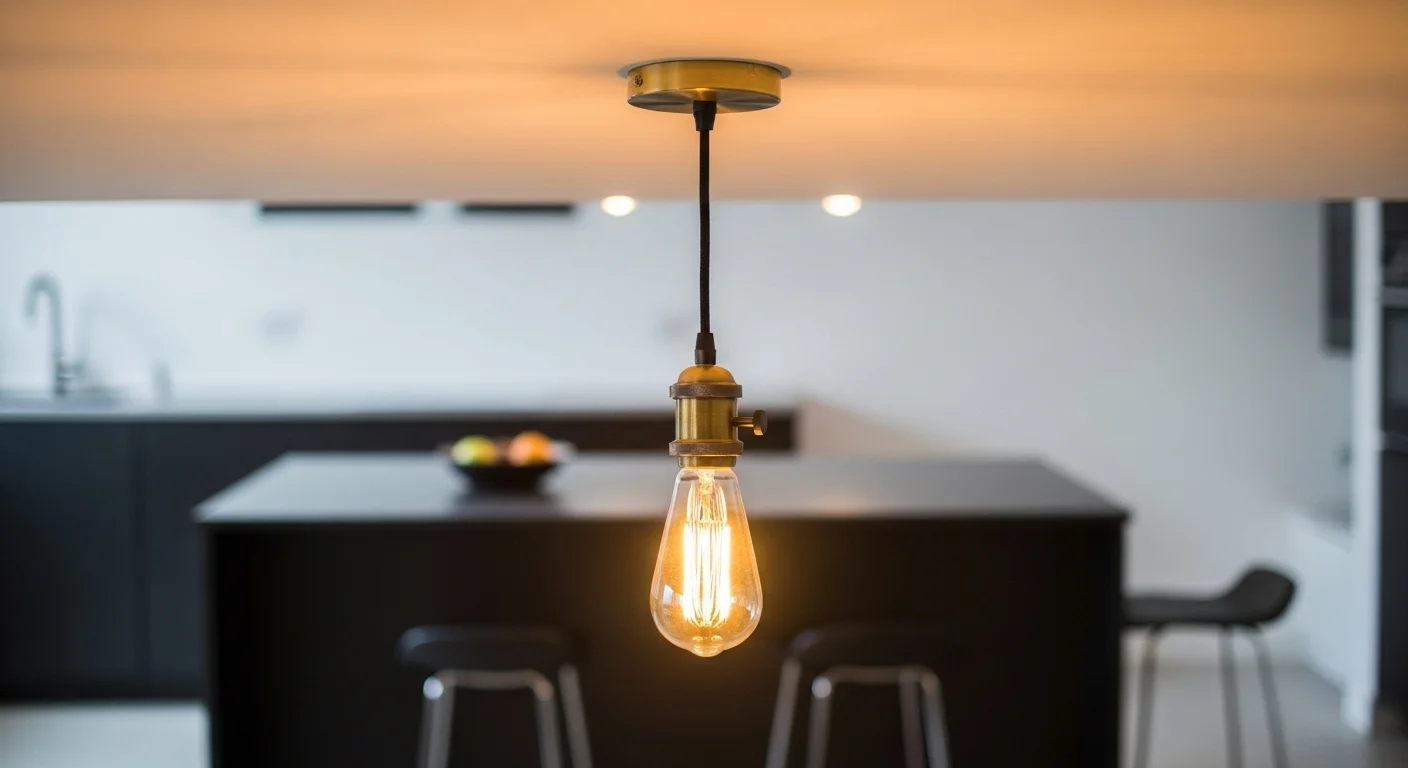
You walk into someone’s house. The walls are plain. The furniture is nothing special. But something about that room just feels right. Warm. Cozy. Like it belongs in a magazine.
Nine times out of ten? It’s the lighting.
And more specifically — it’s the pendant light hanging above the kitchen island, or glowing softly over the dining table, or making that dark reading corner suddenly look like a scene from a movie.
A pendant light isn’t just a bulb hanging from the ceiling. It’s the personality of your room. It’s the thing that ties everything together. And if you’ve been ignoring it, you’ve been missing out on one of the easiest, most affordable ways to completely change how your home looks and feels.
Let’s talk about everything — what they are, how to pick the right one, where to hang them, and why they might just be the best home upgrade you’ll ever make.
So… What Exactly Is a Pendant Light?
Simple. A pendant light is a light fixture that hangs from the ceiling — suspended by a cord, chain, or metal rod.
That’s it. That’s the basics.
But here’s where it gets interesting. That simple hanging structure comes in literally hundreds of styles. Mini pendants. Cluster pendants. Industrial metal shades. Soft fabric drums. Blown glass globes that catch the light like tiny suns.
The variety is wild. And that’s exactly what makes them so versatile.
Unlike recessed lights (those boring holes in the ceiling) or overhead flush mounts (flat, functional, forgettable), a pendant light is visible. It’s a design statement. It does two jobs at once — it lights up the space AND it looks beautiful doing it.
Why Are Pendant Lights So Popular Right Now?
Because they work in every style of home. That’s the short answer.
Modern farmhouse? Rattan and woven fiber pendants are everywhere right now — they bring that organic, earthy texture without looking too rustic.
Industrial loft? Black iron cage pendants with Edison bulbs are basically the uniform.
Minimalist Scandinavian space? A single frosted glass globe on a thin brass rod is chef’s kiss.
Maximalist eclectic? Go wild. Colored glass, sculptural ceramics, hand-blown amber shades — more is more.
No matter what your interior design vibe is, there’s a pendant light out there that fits it perfectly. That’s honestly rare for any single product category.
And from an SEO standpoint — pendant lights are one of the most searched lighting categories online because people are actively renovating, decorating, and designing their spaces. This isn’t a trend. This is a staple.
The Types of Pendant Lights You Need to Know
Let’s break this down so you actually know what you’re shopping for.
1. Mini Pendant Lights
These are small, usually with a shade that’s 6 inches or less in diameter. They look great in groups of three over a kitchen island, or as bedside reading lights.
Best for: Kitchens, bedrooms, hallways
2. Drum Pendant Lights
Shaped like a drum — round, with fabric or metal wrapping the sides. They spread light wide and soft, making them perfect for dining rooms and living spaces.
Best for: Dining tables, living rooms, home offices
3. Globe Pendant Lights
Clear or frosted glass globes. Super clean, super versatile. The clear ones are dramatic (you see the bulb, which is part of the look). The frosted ones are softer.
Best for: Modern, minimalist, and contemporary spaces
4. Industrial Pendant Lights
Think exposed metal, cage designs, Edison bulbs, matte black or brushed steel finishes. Heavy, bold, and unapologetically cool.
Best for: Kitchens, workshops, lofts, dining areas
5. Cluster or Multi-Light Pendants
Multiple lights hanging from a single canopy, at different heights. Dramatic. Eye-catching. A little chaotic in the best possible way.
Best for: High ceilings, entryways, above large dining tables
6. Lantern Pendants
These have an enclosed, cage-like frame — often inspired by traditional outdoor lanterns but designed for indoor use. They feel warm and classic.
Best for: Entryways, staircases, traditional or transitional-style homes
Where Should You Hang a Pendant Light?
This is the question everyone asks. And the answer is: almost anywhere. But here are the spots where they genuinely shine (pun absolutely intended).
Over the Kitchen Island
This is the #1 use case for pendant lights in most homes. A row of two or three pendants over a kitchen island transforms the whole room.
The rule of thumb: Hang them 30–36 inches above the countertop surface. Space them evenly, about 24–30 inches apart from center to center.
Don’t go too small — in a kitchen, you want pendants that can hold their own visually. Anything under 8 inches in diameter will look like it’s trying too hard to disappear.
Over the Dining Table
A statement pendant light above a dining table is basically a requirement if you want your dining area to look intentional and not like an afterthought.
The rule: Bottom of the fixture should hang about 30–36 inches above the tabletop for an 8-foot ceiling. Add 3 inches for every foot of ceiling height beyond 8 feet.
In the Bedroom
Pendant lights as bedside lights are a game-changer. Instead of a table lamp eating up your nightstand space, hang a pendant on either side of the bed. Instant hotel vibes.
Hang them so the bottom sits about 18–24 inches above your mattress level when you’re sitting up.
In the Entryway
The entryway is the first impression of your home. A beautiful pendant light — or a dramatic lantern — makes people stop and notice. A single bold fixture works great here.
In the Bathroom
Over a vanity mirror? Yes, absolutely. A pair of mini pendants flanking the mirror (instead of the traditional bar light) looks elevated and incredibly stylish.
How to Choose the Right Pendant Light (Without Losing Your Mind)
Okay, so you’re convinced. You want a pendant light. But now you’re on a website with 400 options and your brain is melting.
Here’s a simple framework:
Step 1: Know Your Ceiling Height
Standard 8-foot ceiling? Stick with smaller pendants and hang them at the right height so they don’t feel too close.
9–10-foot ceilings? You have more room to play. Larger fixtures, longer drops — go for it.
Higher than 10 feet? You can pull off dramatic, oversized pendants or multi-light clusters that fill the vertical space beautifully.
Step 2: Match the Style of Your Space
Look at your furniture. What finish is most dominant — warm wood, cool metal, painted white, dark walnut?
Your pendant should either match the metal finishes already in your room (cabinet hardware, faucets, etc.) or intentionally contrast for a designer look. Just don’t let it be a random orphan that has no visual relationship to anything else.
Step 3: Get the Scale Right
The biggest rookie mistake with pendant lights? Going too small.
A quick sizing trick: Add the length and width of your room in feet. That number in inches is roughly the right diameter for a single overhead light. For example, a 12×14 foot room = 26-inch diameter fixture.
For kitchen islands, divide the length of the island by the number of pendants you want. Each pendant should be roughly that width.
Step 4: Think About the Bulb
This is where most people completely forget to think. The bulb matters.
- Edison bulbs (warm, amber glow): Perfect for industrial and rustic styles
- Frosted globe bulbs: Soft, diffused — great for kitchens and dining rooms
- LED filament bulbs: Energy-efficient AND beautiful in clear glass pendants
- Smart bulbs: If you want to control brightness and color temperature, go for it
Check the fixture’s wattage rating before you buy a bulb. This is just safety, not optional.
Step 5: Check the Cord/Rod Length
Some pendants come with only 12 inches of cord. Others give you 6 feet. Know your ceiling height and do the math before you order — returning a pendant light because the cord is too short is a pain nobody needs.
The Materials Matter More Than You Think
The material of a pendant light isn’t just about looks — it affects the quality of light, the ambiance, and how the fixture ages.
Glass: Transparent glass shows the bulb and creates bright, crisp light. Frosted or seeded glass softens everything and looks more timeless.
Metal: Brass ages beautifully (we’re in a brass renaissance, honestly). Matte black is bold and graphic. Brushed nickel is safe and versatile. Chrome is a bit dated now.
Rattan/Wicker/Natural Fiber: Warm, textural, organic. Incredibly popular in boho and coastal spaces. The weave pattern casts beautiful shadow patterns on walls and ceilings.
Ceramic: Unexpected and gorgeous. Handmade ceramic pendants feel artisanal and one-of-a-kind.
Concrete: Industrial, heavy, cool. Not for everyone but absolutely a statement for the right space.
Common Mistakes People Make With Pendant Lights
Let’s just save you the trouble.
Hanging them too high. The light is useless if it’s 6 feet above the table. It won’t provide task lighting or visual warmth at that height.
Going too small. One tiny pendant over a large dining table looks like you forgot to buy the real light. Go bigger than you think you need.
Mixing too many metals randomly. Two or three metals can work beautifully together if intentional. Random mixing just looks like accidents.
Ignoring the electrical box position. The light comes down from wherever the ceiling box is. Make sure that box is actually centered over your table or island before you buy the fixture. If it’s not, you’ll need an electrically extender or a new box installed.
Forgetting a dimmer switch. Pendant lights over dining tables should always be on a dimmer. Bright light during dinner = bad vibes. A dimmer switch costs $15 and changes everything.
How Much Should You Spend on a Pendant Light?
Real talk — you don’t need to spend thousands. But you also shouldn’t buy the cheapest thing you find.
Here’s a rough guide:
- $30–$80: Budget territory. You can find decent options here, especially for smaller spaces or secondary rooms. Quality control can be hit or miss.
- $80–$200: The sweet spot for most people. Solid construction, good design variety, plenty of options in every style.
- $200–$500: Designer-adjacent. Better materials, more interesting designs, often from smaller brands with more craftsmanship.
- $500+: True designer pieces. Handmade, artisan, custom — these are investments and centerpieces.
For a kitchen island or dining table in a main living area, spend at least $100–$150 per pendant. You’ll use this thing every day. It’s worth it.
Pendant Lights and Energy Efficiency — What You Should Know
Modern pendant lights are way more energy-efficient than they used to be.
Most fixtures today are compatible with LED bulbs, which use up to 80% less energy than traditional incandescent bulbs and last 15–25 times longer.
If your pendant uses an E26 (standard) bulb base, you can use pretty much any LED bulb on the market. If it uses a specialty base or is hardwired with integrated LEDs, check the specs carefully.
Tip: Look for fixtures with a dimmable LED compatibility note if you’re pairing with a dimmer switch. Not all LEDs dim smoothly — some flicker or buzz on incompatible dimmers.
Styling Tips That Interior Designers Actually Use
Here’s what separates a room that just has pendant lights from a room that uses pendant lights well.
Layer your lighting. Pendant lights should never be the only light source in a room. Combine them with recessed lights, floor lamps, and under-cabinet lighting. Each layer serves a different purpose.
Let the pendant be the star. If you choose a bold, sculptural pendant, keep the rest of the room simple. A statement fixture in a cluttered room just adds to the chaos.
Use odd numbers. Three pendants over an island almost always looks better than two or four. There’s something about odd numbers that feels more dynamic and less rigid.
Vary the heights in a cluster. If you’re doing a multi-pendant cluster, stagger the heights intentionally. It creates visual movement and feels more designed.
Match warm tones. Warm white LED bulbs (2700K–3000K) work in almost every pendant and almost every room. Cool white (4000K+) is better for task areas like workshops or offices but feels harsh in living spaces.
A Quick Word on Installation
Most pendant lights are DIY-friendly if you have basic electrical knowledge. Turn off the breaker, connect the wires (typically black to black, white to white, ground to ground), and you’re done.
But if you’re not comfortable with electrical work — or if you’re installing in a high ceiling, over a bathtub, or in a location that requires a new electrical box — hire an electrician. It’s worth the $100–$150 to have it done safely and correctly.
Conclusion: The Right Pendant Light Will Change Your Room Forever
Here’s the honest truth. People spend thousands on furniture, paint, rugs, and decor — and then they put a $20 builder-grade flush mount on the ceiling and wonder why the room still feels flat.
Lighting is the most underrated element of interior design. And pendant lights are the most impactful, most versatile, most accessible way to upgrade your lighting instantly.
Pick the right style. Get the scale right. Hang it at the right height. Put it on a dimmer. Use a warm LED bulb.
That’s it. That’s the formula. Your room will look better than it ever has — and you’ll wonder why you waited so long.
Frequently Asked Questions (FAQ)
Q1: How low should a pendant light hang over a kitchen island? The bottom of the pendant should hang about 30–36 inches above the countertop surface. This gives you enough clearance to work comfortably while still providing focused task lighting.
Q2: How many pendant lights do I need over a 6-foot kitchen island? Three pendants work best for a 6-foot island. Space them evenly, about 24 inches apart from center to center, with equal margins on each end.
Q3: Can I use pendant lights in a low-ceiling room? Yes — but choose pendants with short cords or flush-mounted pendants (called semi-flush mounts) that sit closer to the ceiling. Avoid anything that hangs more than 8–12 inches from the ceiling in rooms under 8 feet.
Q4: What’s the best bulb to use in a pendant light? For most home settings, a warm white LED (2700K–3000K) with a filament or globe shape looks best. Check your fixture’s wattage limit and whether it supports dimmable bulbs if you plan to use a dimmer switch.
Q5: Are pendant lights hard to install? Not usually. If there’s already an electrical box in the right location, replacing an existing fixture with a pendant light is a straightforward DIY job — typically 30–60 minutes. If you need to move an electrical box or run new wiring, it’s best to call a licensed electrician.