You know that feeling when you walk into a room and something just feels off? The furniture’s fine. The paint’s okay. But the lighting? It’s doing absolutely nothing for the vibe.
That’s the problem most people don’t even realize they have — until they fix it.
A plug in pendant light is honestly one of the most underrated home upgrades out there. You hang it, you plug it in, and suddenly your boring corner looks like it came straight out of an interior design magazine. No electrician. No drilling into ceilings for wiring. No weekend project that turns into a two-week nightmare.
Sound too good to be true? It’s not. Let me walk you through everything.
What Even Is a Plug In Pendant Light?
Okay, let’s get this straight first.
A regular pendant light hangs from the ceiling and needs hardwired electrical connections — meaning you need a junction box, electrical knowledge, and usually a licensed electrician. That’s expensive, invasive, and honestly kind of overkill if you’re renting or just want to refresh a space.
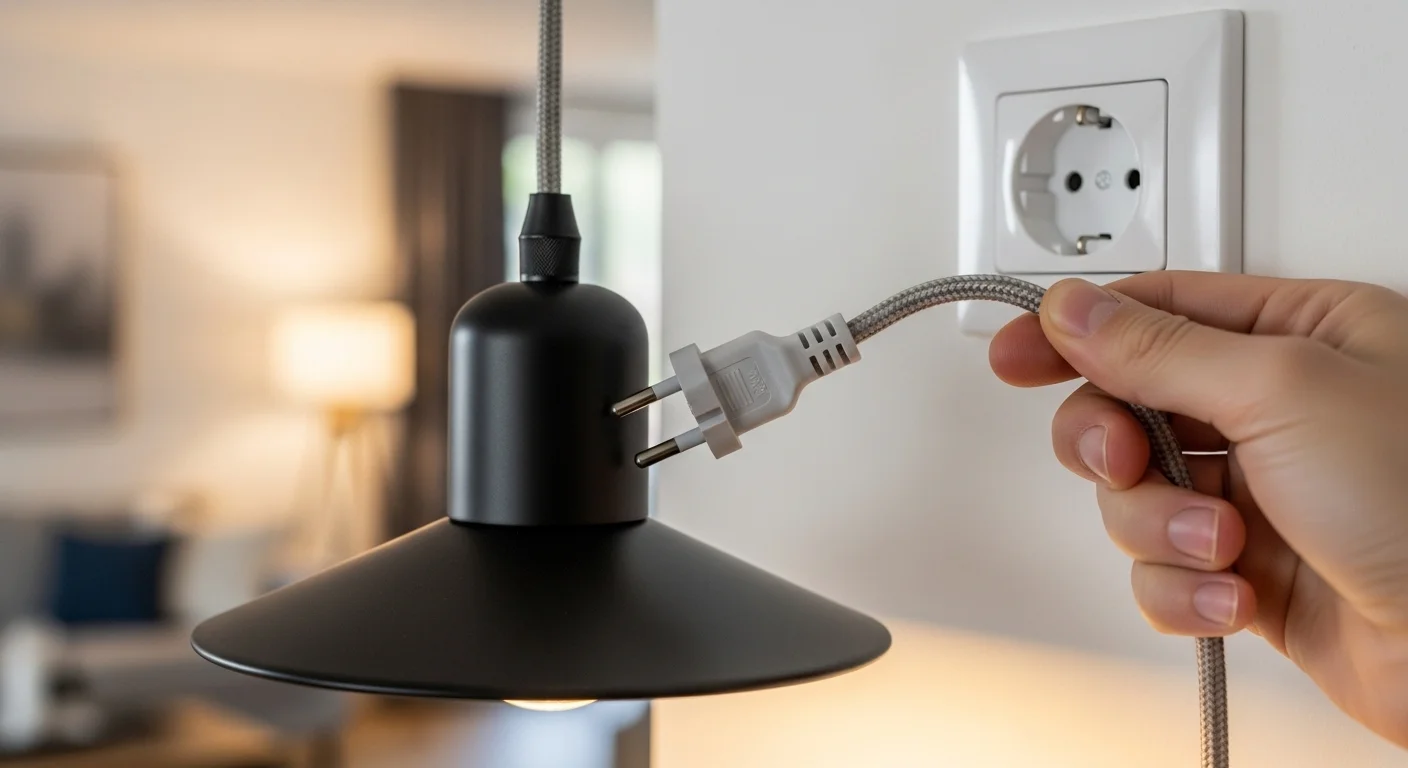
A plug in pendant light does the exact same job visually — it hangs, it glows, it looks stunning — but instead of connecting to hardwired ceiling circuits, it has a cord that simply plugs into a standard wall outlet.
The cord runs up to the ceiling, through a hook or canopy, and then down to the pendant shade. That’s it. The whole setup.
It’s like having all the aesthetic payoff of a high-end light fixture with basically zero installation headache. And yes, it actually looks good — the cord becomes part of the design when you style it right.
Why People Are Obsessed With These Right Now
Here’s the thing: plug in pendant lights aren’t a new concept, but they’ve exploded in popularity recently, and there are good reasons for it.
Renters are a huge part of the market. If you’re renting, you can’t rip out ceiling boxes or mess with electrical. A plug-in pendant gives you that “I decorated my space like an adult” energy without violating your lease.
Interior designers have started using them intentionally, not just as a workaround. The cord? They style it. They run it along crown molding, drape it artistically, or choose cords in brass or fabric that complement the room’s palette.
They’re incredibly affordable compared to hardwired setups. You can get a beautiful, quality plug in pendant light for anywhere between $30 and $200 depending on the style and brand — versus potentially $300–$800+ when you factor in hardwired fixtures plus installation.
And honestly? People are tired of ceiling lighting that looks like it came with the apartment. That flat, overhead fluorescent situation flatters no one and nothing.
Where Can You Actually Use a Plug In Pendant Light?
More places than you’d think. Here’s where they work especially well:
Over a Bedside Table or Nightstand
This is the most popular use case, and for good reason. Hanging a pendant light on either side of the bed replaces bulky table lamps, frees up nightstand space, and creates that boutique hotel bedroom look you’ve been pinning on every mood board.
You get directional, cozy light right where you need it for reading — without the harsh overhead blaze that jolts you awake every time you need to turn it on at night.
In a Reading Nook or Corner Chair
Got a chair in the corner that just sits there? Add a plug in pendant above it, drape a throw, stack a few books — suddenly it’s the spot in your home. The pendant creates a circle of warm light that makes the corner feel intentional and inviting.
Over a Dining Table
This one surprises people, but it works brilliantly. If your dining table isn’t directly under a ceiling fixture (super common in open-plan layouts), a plug-in pendant gives you that intimate over-table glow. The cord runs to the nearest wall outlet, and styled right, nobody thinks twice about it.
In a Kids’ Room or Nursery
Parents love these because they’re easy to install, easy to remove, and can be swapped as the kid grows up and outgrows their unicorn phase. No permanent ceiling damage. And because they’re lower voltage options, many work with dimmer switches for bedtime routines.
As Studio or Office Lighting
If you work from home and you’re tired of staring at the ceiling light reflected in your monitor, a pendant hung to the side of your desk changes everything. It gives you soft, flattering light that makes video calls look infinitely better.
How to Actually Install One (It’s So Easy)
I want to be real with you — this is not an installation guide that requires skill. Here’s what you’re actually doing:
Step 1: Choose your spot. Decide where you want the pendant to hang. Most people install a small ceiling hook directly above where they want the light to hang.
Step 2: Install the ceiling hook. This is just a screw hook, the kind you can find at any hardware store for under $5. Most plug in pendant light kits include one. You screw it into the ceiling — ideally into a joist for stability, but small lightweight pendants can use a drywall anchor.
Step 3: Attach the canopy (if your fixture has one). Many plug in pendants come with a small ceiling canopy — a disc that sits flush against the ceiling and hides the hook. It slides onto the cord. Looks clean, looks intentional.
Step 4: Run the cord. Let the cord drape down to your pendant shade. You want it taut enough to look intentional but with enough slack that the pendant hangs at your desired height. Most cords are 10–15 feet long, giving you flexibility.
Step 5: Plug it in. That’s it. Seriously.
The whole process takes maybe 20 minutes if you’re being slow about it.
Choosing the Right Plug In Pendant Light: What to Actually Look For
There are so many options out there that it can feel overwhelming. Let’s break down what actually matters.
The Shade Style and Material
The shade is doing most of the visual heavy lifting. Think about the mood you want:
- Rattan or wicker shades cast gorgeous dappled shadows and work beautifully in bohemian, coastal, or natural-feel spaces
- Glass globe shades — especially smoked or amber glass — feel modern and sophisticated, great for dining spaces and bedrooms
- Linen or fabric shades diffuse light softly, perfect for reading nooks and bedrooms where you want warmth
- Metal shades (dome or cone style) give an industrial or mid-century modern look, great in studios and kitchens
- Concrete or ceramic shades are trending hard right now — heavy, tactile, beautifully textural
Cord Length and Color
Never buy a pendant without checking the cord length. Standard cords are usually 10–15 feet, but if you’re hanging over a tall bed or in a room with high ceilings, you might need more. Some brands sell extension cords designed specifically to match.
The cord color matters more than people realize. A black cord against a white ceiling? Fine if you’re styling it as a deliberate contrast. A white cord? Disappears beautifully. A fabric-wrapped cord in gold, burgundy, or forest green? Actually becomes a design feature.
The Bulb Type
Most plug in pendant lights use standard E26 base bulbs, which is great because you have total flexibility. A few things to keep in mind:
- Edison bulbs (the vintage filament style) look incredible in open, exposed sockets — they’re the go-to for that warm, amber glow
- LED options exist in warm and cool tones; look for 2700K–3000K for that cozy, warm light effect
- Smart bulbs work in most pendants if the socket is compatible, giving you dimming and color control right from your phone
Weight and Ceiling Type
Lightweight pendants (under 5 lbs) can hang from simple drywall anchors. Anything heavier needs to go into a ceiling joist. Check the product weight before you buy, especially if you’re eyeing those gorgeous heavy ceramic or concrete shades.
The Cord Situation: Making It Look Good, Not Like an Afterthought
This is the thing most people worry about: “Won’t the cord look messy?”
Honestly? Only if you ignore it.
Here are the ways people style cords beautifully:
The Clean Drop — Let the cord run straight down from the ceiling hook to the pendant. If the cord matches your wall or ceiling color, it practically disappears. Works best with white or off-white walls.
Crown Molding Run — Route the cord along the top of the wall where the crown molding meets the ceiling. Use small adhesive cord clips (no holes required) to keep it neat. From a normal viewing angle, you don’t see it at all.
The Intentional Drape — Some people literally just let the cord drape in a loose swag from the hook point across to where it meets the wall. When you use a beautiful fabric-wrapped cord, this looks deliberate and artistic. It’s a vibe.
Cord Covers — Flat adhesive raceway channels in white or wood tones hide the cord completely as it runs down the wall to the outlet. Available at hardware stores, super cheap, look completely professional when painted to match the wall.
Plug In Pendant Lights vs. Hardwired Pendant Lights: The Real Comparison
Let’s be honest about where each one wins.
Plug In wins when:
- You’re renting and can’t make permanent changes
- You want the flexibility to move things around
- Budget is a consideration (no electrician fees)
- You want same-day installation
- You’re experimenting with a new look before committing
Hardwired wins when:
- You own your home and it’s a forever situation
- You want a truly seamless, cord-free look
- The pendant is very heavy
- You’re doing a full renovation anyway
- You need multiple lights on a single circuit with one switch
For most people reading this? The plug-in version is the smarter starting point. You can always go hardwired later if you fall in love with the placement.
Real Talk: My Honest Experience With These
I had a bedroom corner that was basically a sad pile of laundry. No natural light, just an overhead fixture that made everything look like a hospital waiting room.
I grabbed a rattan plug in pendant light — one of those round ball-style shades — hung it over my reading chair with a warm 2700K Edison bulb, ran the cord along the baseboard with a couple of cord clips, and plugged it into the outlet behind the chair.
The whole thing cost me under $60 and took 25 minutes.
The change was genuinely shocking. That corner went from depressing dead zone to the spot where I actually want to sit and read. The shadows the rattan shade throws on the walls are honestly beautiful. People who visit my place now ask about it.
That’s the power of good lighting — and the beauty of how simple a plug in pendant light makes achieving it.
Top Styles Trending Right Now
If you’re shopping and want to know what’s actually popular and aesthetically strong right now:
- Japandi-style pendants — minimal, often in natural materials like bamboo or matte ceramic, very clean
- Vintage industrial pendants — exposed bulb, dark metal cage, exposed filament bulb, very popular for studios and lofts
- Seagrass or rattan globes — coastal, natural, incredibly versatile, work in almost every aesthetic
- Smoked glass globes — moody and modern, great for dining tables and bedside
- Paper lantern style — affordable, lightweight, diffuses light beautifully, works especially well in nurseries and kids’ rooms
What to Avoid When Buying
Quick list of the things that trip people up:
- Buying without checking cord length — you might end up 3 feet short of the outlet
- Ignoring the bulb base type — most are E26, but some are E12 (candelabra) — different bulbs entirely
- Getting a shade that’s too large for the space — a giant pendant in a small nook overwhelms everything
- Skipping cord clips — leaving the cord loose against the wall looks sloppy; clips cost almost nothing
- Forgetting to check the maximum wattage — every socket has a wattage limit; going over it is a fire hazard
A Quick Word on Safety
Plug in pendant lights are genuinely safe when used correctly. A few things to keep in mind:
Never exceed the recommended wattage listed on the fixture. This is usually printed inside the socket or in the product specs.
Use LED bulbs — they run much cooler than incandescent and significantly reduce any heat risk near fabric or rattan shades.
Don’t use in wet or damp locations unless the fixture is specifically rated for it. Bathrooms and outdoor covered porches need weather-rated fixtures.
Check the plug periodically — it should never feel hot to the touch. If it does, something’s wrong.
Otherwise? These are plug-and-play safe. That’s kind of the whole point.
Final Thoughts: Just Go For It
If you’ve been on the fence about pendant lighting because you thought it was too complicated, too expensive, or too permanent — a plug in pendant light just removed every single one of those barriers.
You can have beautiful, intentional lighting in your home today. Not after a renovation. Not after hiring an electrician. Today, for under $100 in most cases.
Start with one — maybe the bedroom corner, maybe the dining area, maybe that sad entryway that greets you every time you come home. Pick a shade that excites you. Choose a warm bulb. Hang it, plug it in, and see how different a room can feel.
Lighting isn’t decoration. It’s the mood of a space. And you deserve a mood that actually feels good.
Frequently Asked Questions (FAQ)
Q1: Can I use a plug in pendant light in a rented apartment? Absolutely — this is actually one of the top reasons people choose plug-in pendants. All you’re doing is putting a small screw hook in the ceiling, which most landlords consider acceptable, and many can be filled with a dab of spackle when you leave. No electrical work, no lease violations.
Q2: How do I keep the cord from looking messy? Use adhesive cord clips to route it along the ceiling or down the wall neatly. Choosing a cord color that matches your walls helps it disappear visually. Some people also run it along crown molding or baseboards for a totally clean look.
Q3: Can I put a dimmer switch on a plug in pendant light? Yes! The easiest way is to use a smart LED bulb that dims via app or voice control. Alternatively, inline cord dimmers are available for about $10–$15 — they plug into the cord itself and let you dim without any electrical work.
Q4: How high should a plug in pendant light hang? Over a dining table, aim for 28–36 inches above the tabletop. For a bedside pendant, about 24–30 inches above the mattress surface works well for most people. For a reading nook, hang it so the bottom of the shade is roughly at shoulder height when seated — that keeps the light at a comfortable reading angle.
Q5: Are plug in pendant lights safe to leave on overnight? With LED bulbs, yes — they produce very little heat compared to incandescent bulbs. That said, it’s always a good habit to turn off any light you don’t need on overnight. If you want to leave a pendant on as a nightlight, use a low-wattage warm LED and make sure the shade material isn’t touching the bulb directly.
Ready to transform your space? A plug in pendant light is waiting — and your room will thank you for it.