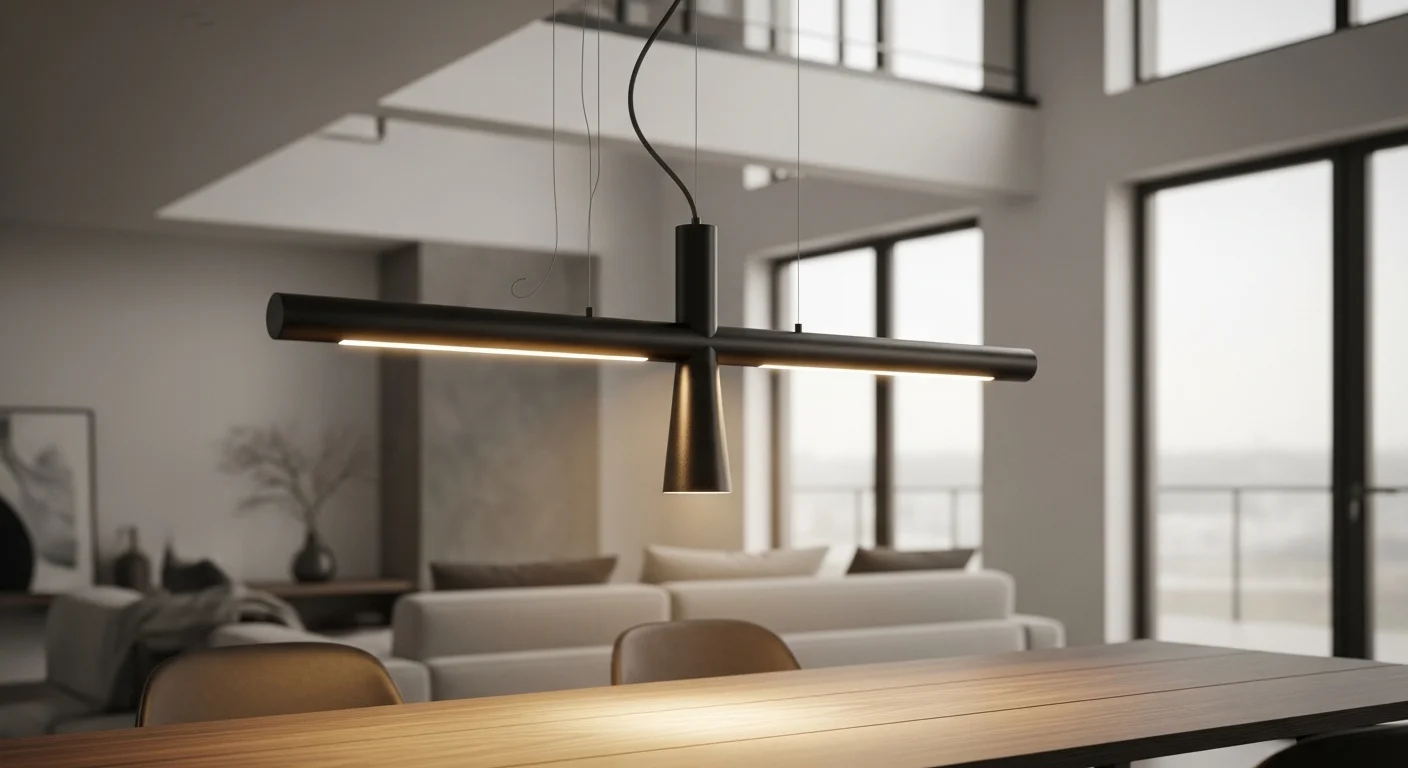
You know that moment when you walk into someone’s house and you just stop?
You can’t figure out why at first. The sofa looks fine. The walls are nice. But something is pulling your eyes upward. And then you see it — a stunning pendant light hanging right there, looking like it belongs in an interior design magazine.
That’s the power of lighting. And specifically, that’s the power of a modern pendant light.
Most people spend thousands of dollars on furniture and barely think about lighting. Big mistake. Lighting is what makes a room feel alive. Get it wrong and even the most expensive couch looks dull. Get it right? Your whole home looks like it was designed by a professional.
Let’s talk about everything you need to know — from what makes a pendant light “modern,” to how to pick the perfect one for your space. No fluff, just the good stuff.
What Even Is a Modern Pendant Light?
Let’s clear this up first because people confuse this all the time.
A pendant light is simply a light fixture that hangs from the ceiling — usually by a cord, chain, or metal rod. Simple enough.
But a modern pendant light? That’s where it gets interesting.
Modern pendant lights are defined by clean lines, minimal ornamentation, and a focus on both form and function. They don’t try too hard. No excessive curls, no heavy Victorian-style shades. Instead, you get sleek shapes — cylinders, cones, globes, geometric forms — made from materials like brushed brass, matte black metal, frosted glass, or even concrete.
The “modern” aesthetic started picking up steam in the mid-20th century with movements like Bauhaus and Scandinavian design. The idea was simple: a beautiful object should also be useful. Nothing extra. Nothing wasted.
Today’s modern pendant lights carry that same DNA — but with the added bonus of LED technology, smart home compatibility, and materials we couldn’t even dream of back then.
Why Pendant Lights Are the Secret Weapon of Interior Design
Here’s something most homeowners don’t realize:
Furniture takes up floor space. Art takes up wall space. But the ceiling? That’s completely untouched real estate.
A well-chosen modern pendant light literally draws the eye up — which makes rooms feel taller, more open, and more dynamic. Interior designers call this “vertical emphasis,” and it’s one of the oldest tricks in the book.
But it’s not just about looks. Pendant lights serve real, practical purposes:
- Task lighting — Hang one over a kitchen island and you’ve got perfect light exactly where you need it when chopping vegetables or reading a recipe.
- Ambient lighting — A frosted glass pendant diffuses soft, warm light throughout a room, making it feel cozy and inviting.
- Accent lighting — Use a sculptural pendant as a statement piece to anchor a dining table or living room corner.
One pendant light can do all three, depending on how you use it. That’s value for money that a floor lamp simply can’t compete with.
The Different Types of Modern Pendant Lights (And Where Each One Works Best)
Walk into any lighting showroom and you’ll be overwhelmed. So let me break it down for you.
1. Single Pendant Lights
This is the classic. One fixture, one bulb, one impact.
Single pendants work brilliantly over a kitchen sink, a bathroom vanity, a reading nook, or a bedside table. They’re intimate, focused, and incredibly easy to style.
Best for: Smaller spaces, targeted task lighting, minimalist aesthetics.
2. Multi-Light Pendant Clusters
Think of these as a constellation of lights — multiple pendants grouped together on a single canopy or at varying heights.
They create incredible visual drama. Over a dining table with eight chairs, a cluster of three or five pendants feels generous and artistic without being overwhelming.
Best for: Large dining rooms, open-concept spaces, high ceilings where a single pendant would look lonely.
3. Linear Pendant Lights
Long, horizontal fixtures that run the length of a surface. Usually rectangular or bar-shaped.
These are the go-to choice for long kitchen islands, conference room tables, or dining tables with a rectangular footprint. They light the entire surface evenly and look incredibly sleek.
Best for: Kitchen islands, long dining tables, commercial spaces.
4. Globe Pendant Lights
Spherical glass shades — either clear, smoked, or frosted. Simple, timeless, and endlessly versatile.
A clear globe pendant with an Edison bulb? That’s warm, industrial-chic perfection. A frosted globe? Soft and Scandinavian. A smoked grey globe? Moody and modern.
Best for: Pretty much everywhere — bedrooms, dining rooms, entryways, bathrooms.
5. Drum Pendant Lights
Fabric or metal drum shades that diffuse light softly in all directions.
These feel the most “traditional” of the modern pendant styles — but pair them with the right materials (linen, natural textures, warm metals) and they look fresh and current.
Best for: Bedrooms, living rooms, spaces where soft, ambient light is the priority.
6. Geometric Pendant Lights
Angular, structured shapes — hexagons, tetrahedrons, diamond forms, abstract sculptural pieces.
These are statement pieces. They say something about the person who lives there. You don’t just buy a geometric pendant light, you choose one. They work best as the star of the room rather than one of many elements.
Best for: Entryways, above dining tables, living rooms with minimal furniture where the light becomes the focal point.
How to Pick the Right Modern Pendant Light: A Step-by-Step Guide
This is where most people get stuck. There are thousands of options, and choosing feels overwhelming.
Don’t worry. Follow this process and you’ll get it right every time.
Step 1: Know Your Ceiling Height
This is non-negotiable. Get this wrong and the whole thing falls apart — sometimes literally dangerously so.
General rule: The bottom of a pendant light should hang about 7 feet from the floor in a room you walk through. Over a table or island, aim for 28–34 inches above the surface.
Got high ceilings (10 feet or more)? Lucky you — you can hang pendants lower or choose taller fixtures without things feeling cramped.
Low ceilings (8 feet or under)? Stick to smaller, flush-hanging pendants and avoid anything too bulky.
Step 2: Match the Size to the Space
A pendant light that’s too small for the room looks like it got lost. Too big and it becomes suffocating.
Quick sizing formula for dining tables: Add the room’s length and width in feet, then convert to inches. That’s roughly the ideal pendant diameter. So a 12×14 foot room suggests a pendant around 26 inches wide.
For a single pendant over a kitchen sink, 6–10 inches wide is usually perfect.
Step 3: Decide on Your Vibe First
What does the room feel like right now? What do you want it to feel like?
- Warm and cozy? Go for brass, copper, or gold tones with warm bulbs.
- Clean and minimal? Matte black or white with crisp geometric forms.
- Natural and earthy? Rattan, wood, or woven materials.
- Industrial chic? Raw metals, exposed bulbs, cage-style pendants.
- Luxurious? Smoked glass, polished chrome, sculptural designer pieces.
Don’t try to fit all of these at once. Pick one lane and commit.
Step 4: Think About the Light Output
Beautiful pendant? Great. Does it actually light the room? That matters too.
- For task lighting (kitchen, workspace), you want bright, focused light — look for downward-facing shades or clear glass.
- For mood lighting (bedroom, dining room), you want warm, diffused light — frosted glass, opaque shades, or upward-facing designs.
- Check lumen output, not just wattage. For a dining table pendant, 400–800 lumens per light source is usually ideal. For a kitchen island, go higher.
Step 5: Match Your Existing Hardware and Fixtures
This is a detail that separates a polished room from a chaotic one.
If you’ve got chrome faucets in your kitchen, a chrome or brushed nickel pendant ties the space together. If you’ve got matte black cabinet handles, a matte black pendant creates satisfying visual consistency.
You don’t need to be matchy-matchy across every single thing — but having a consistent metal family (warm metals together, cool metals together) makes everything look intentional.
Where to Use Modern Pendant Lights: Room by Room
Kitchen
The kitchen island is the most popular spot for a reason. You spend a lot of time there, and good lighting makes cooking genuinely more enjoyable.
Pro tip: Hang two or three pendants evenly spaced above an island rather than one large one. It looks more dynamic and lights the surface more evenly.
Dining Room
The pendant light over the dining table is the one that gets the most attention at dinner parties. It sets the mood for the entire meal.
Choose something with some presence — not so big it overpowers the table, but substantial enough to anchor the space. Dimmable pendants are a game-changer here; soft light at dinner, brighter when you’re doing a puzzle at the table.
Bedroom
Replace that dated overhead ceiling light with a pendant — or better yet, two matching pendants as bedside lights. It frees up your nightstand, looks incredibly sophisticated, and creates the perfect reading light.
Entryway
The first thing people see when they walk into your home. A striking modern pendant light here immediately signals your taste and sets expectations for the rest of the house.
Go bold. This is the place for that sculptural geometric piece or the dramatic oversized globe.
Bathroom
Over a bathroom vanity, two small pendants (one on either side of the mirror) give flattering, even light that overhead fixtures simply can’t match. Very hotel-chic.
Common Mistakes to Avoid
People make these mistakes all the time. Now you won’t.
Hanging it too high. The most common mistake. A pendant that floats near the ceiling loses all its impact. Bring it down where people can actually appreciate it.
Going too small. Especially in dining rooms. A tiny pendant over a big table looks apologetic. Size up more than you think you need to.
Ignoring the bulb. You can have the most beautiful pendant in the world and ruin it with a harsh, cool-white LED bulb. Always match the bulb temperature to the mood you want (2700K–3000K for warm, cozy light).
Forgetting a dimmer switch. Install a dimmer. Always. It costs almost nothing extra and completely transforms how you use the light.
Following trends too closely. Trends change. Choose something you genuinely love rather than whatever’s popular on Instagram right now.
Modern Pendant Lights and Smart Home Tech
Here’s where things get exciting if you’re into technology.
Most modern pendant lights are now compatible with smart bulbs (Philips Hue, LIFX, etc.) — meaning you can control brightness, color temperature, and even color right from your phone or through Alexa/Google Home.
Want warm, golden light for dinner? Done. Need bright, cool light when you’re working? One tap. Set it to slowly dim as the evening goes on? Yes, that’s a thing.
Some premium pendants also come with built-in smart capabilities and integrated dimmers. If you’re renovating or building new, it’s worth considering from the start.
Budget Guide: What to Expect at Every Price Point
You don’t have to spend a fortune to get something great. But it helps to know what you’re buying at each level.
Under $50: Basic shapes, plastic or thin metal construction, limited finish options. Fine for rental apartments or temporary situations.
$50–$150: This is where it gets good. Solid metal construction, quality glass options, plenty of stylish choices. Most people hit the sweet spot in this range.
$150–$400: Designer-adjacent quality. Better materials, more refined finishing, unique shapes. These are pieces you’ll keep for 10+ years.
$400–$1000+: Actual designer pieces, bespoke materials, artisan craftsmanship. Worth it if you’re serious about your space and want something truly special.
Final Thoughts: Don’t Overthink It
Here’s the honest truth — choosing a modern pendant light shouldn’t be stressful.
Trust your gut. When you see the right one, you’ll know. It’ll feel like it was made for your room.
Start with your ceiling height and table/surface measurements. Pick a finish that matches what you already have. Choose a shape that excites you. And remember: the light you actually buy and hang beats the perfect light you’re still researching six months from now.
Your room is waiting.
FAQ
Q1: How low should a modern pendant light hang over a dining table?
A: The standard recommendation is 28–34 inches above the table surface. This puts the light close enough to illuminate the table beautifully without blocking sightlines across it. For taller ceilings, you can go a bit higher — up to 36 inches — without losing impact.
Q2: Can I use a modern pendant light in a low-ceiling room?
A: Yes, but you need to be careful. For ceilings under 8 feet, choose pendants that hang no more than 12–18 inches below the ceiling. Semi-flush or flush-mount pendants (sometimes called “close-to-ceiling” pendants) are specifically designed for this. Avoid anything with a long drop cord or rod.
Q3: How many pendant lights should I hang over a kitchen island?
A: It depends on the island’s length. As a general rule, one pendant per 2 feet of island works well. So a 4-foot island gets 2 pendants, a 6-foot island gets 3. Space them evenly and center the group over the island.
Q4: What’s the best bulb for a modern pendant light?
A: For most living spaces, a warm white LED bulb rated at 2700K–3000K color temperature is ideal. It’s warm enough to feel cozy without being too yellow. For task-heavy areas like kitchen islands, 3000K–3500K gives a slightly crisper light that makes food prep easier. Always pair with a dimmable bulb and dimmer switch for maximum flexibility.
Q5: Is it hard to install a pendant light yourself?
A: If you’re replacing an existing ceiling light fixture, it’s a pretty straightforward DIY job — typically taking 30–60 minutes with basic tools. You’re essentially disconnecting old wires and connecting new ones. If you’re adding a new electrical circuit or cutting into drywall for a new junction box, hire an electrician. Safety first, always.