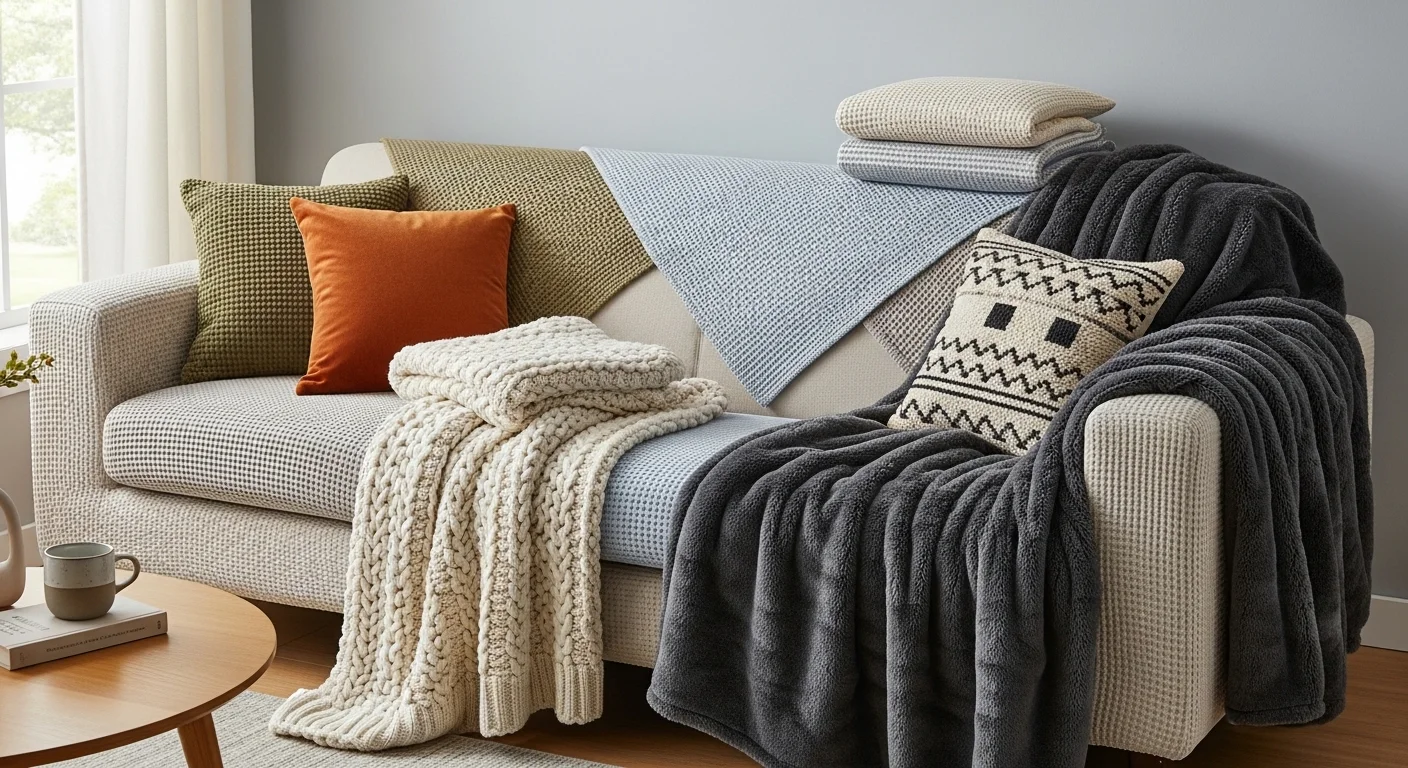
You walk into your living room. Your sofa — the centerpiece of the whole space — looks like it’s been through a war. Dog scratches on one armrest. A mystery stain from that movie night three years ago. Cushions that have lost all their shape.
And the worst part? You can’t afford a new sofa right now.
Here’s the thing though. You don’t need one.
Sofa covers are one of the most underrated home solutions out there. And once you know how to choose the right one? Your living room will look like you hired an interior designer.
Let’s talk about everything — what to look for, what to avoid, and how to get the most out of your money.
Why Are Sofa Covers Such a Big Deal?
Think about this. A decent sofa costs anywhere from $500 to $3,000. A quality sofa cover? Maybe $30 to $150.
That’s a massive difference.
But it’s not just about saving money. Sofa covers protect your investment. If you’ve got kids, pets, or you’re just someone who loves eating on the couch (no judgment), your sofa takes a beating every single day.
A good cover acts like a shield. It absorbs spills before they become permanent stains. It takes the scratches so your actual upholstery doesn’t have to. And when it gets dirty, you just throw it in the washing machine.
Simple. Clean. Genius.
There’s also something else people don’t talk about enough — flexibility. Seasons change. Trends change. Your mood changes. With sofa covers, you can switch up the look of your entire living room without spending a fortune. Put on a warm, textured cover in winter. Switch to something light and breezy in summer.
Your sofa stays the same. Your vibe can change anytime.
Types of Sofa Covers: What’s Actually Out There?
Not all sofa covers are created equal. Let’s break this down so you’re not just buying whatever shows up first in a search.
1. Stretch Fit Sofa Covers
These are the most popular type right now, and for good reason.
Stretch fit covers use elastic fabric that hugs the shape of your sofa. It doesn’t look like you threw a bedsheet over your couch — it actually looks like a tailored piece. The elastic bands go under the cushions and around the base, holding everything snugly in place.
Great for: Modern sofas with clean lines, people who want a neat, furniture-store look.
2. Loose Fit or Drape-Style Covers
These are exactly what they sound like. You drape the cover over the sofa and tuck the excess fabric into the cushion gaps and around the sides.
They’re less structured. Some people love that relaxed, casual look — it gives off cozy cottage vibes. Others find it messy.
Great for: Vintage or rustic-style rooms, people who want something quick and low-maintenance.
3. Separate Piece Covers (Sectional Sofa Covers)
Got an L-shaped sectional? This one’s for you.
Sectional sofa covers come in multiple pieces — one for each section — so you can cover the whole thing without it looking awkward. They usually come with ties or velcro to connect the pieces together.
Great for: Large sectionals, open-plan living areas.
4. Armchair and Loveseat Covers
Sometimes your full sofa is fine but the armchair next to it is falling apart. These smaller covers let you match the whole seating arrangement without replacing everything.
Great for: Matching sets, covering worn armrests or single chairs.
5. Slipcovers vs. Sofa Covers — Is There a Difference?
People use these terms interchangeably, but technically there is a difference.
A slipcover is usually tailored to fit a specific sofa — it goes on more like a clothing item. A sofa cover is more of a universal, one-size-fits-many solution. Slipcovers look more polished. Sofa covers are easier to find and usually more affordable.
For most people, a good universal stretch cover does the job perfectly.
What Fabric Should You Choose?
This is where a lot of people get confused. Here’s the honest breakdown.
Spandex or Polyester Blend
This is the go-to for stretch fit covers. Super elastic, washable, and pretty durable. The downside is it can look a bit shiny if the quality is low. Always check the fabric composition — you want at least 85% polyester with some spandex mixed in for that stretch factor.
Cotton or Cotton-Linen Blend
Breathable, natural-feeling, and they age beautifully. These are great if you live in a warm climate or if you run hot. The texture feels premium. The downside? They wrinkle more easily and need more frequent ironing or smoothing.
If comfort is your top priority, go for cotton.
Velvet or Chenille
Want to make your living room look instantly luxurious? Velvet sofa covers are incredible for that plush, rich look. They’re thicker, which means better protection too. But they’re a bit harder to clean and some aren’t machine washable, so check the label.
Waterproof or Pet-Proof Fabric
Do you have a dog that thinks the sofa belongs to him? Or kids who treat every surface like a canvas for juice spills?
Waterproof sofa covers are made with a treated outer layer that repels liquids before they soak in. These are game-changers for pet owners. They’re not the most glamorous-looking option, but function beats form when your golden retriever is involved.
How to Measure Your Sofa for a Cover
This is the step people skip — and then they’re annoyed when their cover doesn’t fit. Spend three minutes on this. It’s worth it.
Here’s what you need to measure:
- Length — From the outside of one armrest to the outside of the other. Measure across the widest point.
- Depth (seat depth) — From the very back of the sofa to the front edge of the seat.
- Height — From the floor to the very top of the back cushions.
- Width of the seat — The actual sitting area, not including armrests.
Write these down before you buy anything. Most cover listings will give you the range of sofa sizes they fit. Match your measurements to that range, not the other way around.
If you’re between two sizes, go larger. A slightly big cover is much easier to tuck and adjust than one that’s too tight and keeps popping off.
Top Features to Look For When Buying Sofa Covers
You’re about to spend money. Let’s make sure you spend it right.
Non-Slip Bottom or Grip Strips
A cover that slides around is one of the most annoying things in the world. Look for covers that come with foam strips, grip pads, or elastic straps that keep the cover anchored in place. Some covers also have loops that attach directly to the sofa legs.
Machine Washable
This should be non-negotiable. If a cover isn’t machine washable, what’s the point? You’re going to need to wash it. A lot. Make sure the label says it can go in the washing machine — and ideally, confirm it can handle a warm wash cycle.
Zipper or Velcro Fasteners
These small details matter. Covers with zipper closures or velcro tabs at the back look neater and stay in place better than ones that rely entirely on tucking.
Color Consistency
Cheap covers often have color that fades after just a few washes. If you’re buying online, read the reviews specifically for comments about fading. A good cover should maintain its color after at least 20-30 washes without going patchy.
How to Style Sofa Covers in Your Room
A cover can either elevate your space or clash with everything. Here’s how to nail it.
Match your undertones, not just the color. If your walls are warm-toned (creamy whites, yellows, tans), go for covers with warm undertones — camel, terracotta, forest green. Cool-toned rooms (greys, blues, whites) look great with covers in charcoal, navy, or muted sage.
Use texture to add depth. If your room is minimalist and a bit flat, a textured cover — ribbed, knitted, or chenille — instantly adds visual interest without being overwhelming.
Don’t overthink it. Sometimes the simplest choice is the best one. A neutral cover in grey, beige, or off-white goes with almost everything and gives you maximum flexibility when you redecorate.
Throw pillows are your best friend. Once the cover is on, add two or three throw pillows in contrasting colors or patterns. They pull the look together and make the whole thing feel intentional rather than like you’re just hiding your sofa.
Sofa Covers for Pets: A Real Talk Section
If you have pets, this section is specifically for you.
Dogs and cats are basically sofa destruction machines. Claws, fur, drool, and the occasional accident — your sofa absorbs all of it. And normal fabric covers aren’t always enough.
Here’s what actually works:
- Look for covers with a “pet-proof” or “scratch-resistant” label. These are woven tighter, so claws don’t hook into the fabric as easily.
- Waterproof backing is essential if your pet has any history of accidents on the furniture. Regular fabric will soak through to the actual sofa cushions.
- Dark colors are your friend. If you have a light-colored pet, go dark. If your pet is dark, go lighter. Match the cover to your pet’s fur color and you’ll barely see the shedding.
- Wash the cover once a week. Pet fur and dander builds up fast. A weekly wash keeps it fresh and reduces allergens in the room.
One real tip from experience: if your dog is a serious chewer or scratcher, no cover in the world will survive without some training on your end. Covers help, but they’re not magical.
How to Keep Your Sofa Cover Looking Fresh Longer
You bought it. You put it on. Now how do you keep it looking good?
Tuck it in regularly. Every few days, spend two minutes pushing the fabric back into the crevices. This prevents that baggy, disheveled look.
Wash in cold water when possible. Hot water can shrink fabric and cause colors to fade faster. Cold wash, gentle cycle, air dry when you can.
Steam it. A quick once-over with a handheld steamer every week or two removes wrinkles and keeps the fabric looking tight and fresh. This single habit makes a massive difference.
Rotate it. If you have two covers, rotate them. This gives each one time to recover its shape and extends the life of both.
Common Mistakes People Make With Sofa Covers
Let’s save you from the most common headaches.
Buying without measuring. It seems obvious but so many people eyeball it. Don’t. Measure first.
Choosing style over function. That beautiful white velvet cover looks incredible in the product photo. But if you have three kids and a labrador, it’s going to look like a disaster within a week. Be honest about your lifestyle.
Ignoring the washing instructions. Some covers are dry-clean only or require cold water only. If you throw them in a hot wash without checking, you’ll end up with a shrunken, warped cover that no longer fits.
Buying the cheapest option. A $15 cover from an unknown brand will probably last about two months before it starts pilling, fading, or refusing to stay in place. Spend a little more. A decent cover in the $40–$80 range will last years and actually look good.
Quick Buying Checklist Before You Hit “Add to Cart”
Before you buy, run through this:
- [ ] Have I measured my sofa (length, depth, height)?
- [ ] Does this cover come in my sofa’s size range?
- [ ] Is the fabric machine washable?
- [ ] Does it have non-slip features?
- [ ] Have I read recent reviews, especially about fit and durability?
- [ ] Does the color/texture work with my existing room decor?
- [ ] If I have pets, is the fabric pet-appropriate?
If you can check all of these boxes, you’re good to go.
The Best Times to Buy Sofa Covers (Save Some Money)
Here’s a little insider tip. Sofa covers go on sale pretty predictably throughout the year:
- January — Post-holiday clearance sales. Massive discounts.
- Black Friday / Cyber Monday — The biggest discounts of the year on home goods.
- Spring — Many retailers launch new collections and discount old stock.
- Back-to-school season (August) — Lots of “home refresh” sales happen around this time.
If you’re not in a rush, wait for one of these windows. You can often get the same cover for 30–50% less.
Final Thoughts: Don’t Wait Until Your Sofa Looks Like a Disaster
Here’s the honest truth — the best time to get a sofa cover is before your sofa needs one.
Prevention beats repair every single time. If you put a cover on now, your sofa stays protected and you have the option to remove the cover years later and find a sofa that still looks almost new underneath.
But if you’re already dealing with stains, scratches, and general wear? A sofa cover is genuinely the most cost-effective way to breathe new life into your living room without spending thousands.
Pick your fabric. Measure your sofa. Choose a color that makes you happy every time you walk in the room.
Your living room will thank you.
Frequently Asked Questions (FAQ)
Q1: Do sofa covers actually stay in place?
Yes, if you buy the right ones. Look for covers with elastic bands, grip strips, or foam inserts that anchor the cover under the cushions and around the base. Cheap covers without these features will slide around. Covers with proper anchoring systems stay in place even with daily use.
Q2: Can I use a sofa cover on a leather sofa?
Absolutely. In fact, sofa covers work really well on leather sofas because leather can be uncomfortable in extreme temperatures — cold in winter, sticky in summer. A fabric cover makes it much more comfortable and also protects the leather from scratches.
Q3: How often should I wash my sofa cover?
For most households, once every 2–4 weeks is fine. If you have pets or young kids, bump that up to once a week. Always follow the specific washing instructions on the label to keep the fabric in good condition.
Q4: Are sofa covers one-size-fits-all?
No, and be careful of listings that claim this. Most good covers come in multiple sizes (2-seater, 3-seater, L-shape, etc.) and specify the sofa dimensions they’re designed to fit. Always check the measurements before buying.
Q5: Will a sofa cover damage my sofa?
A properly fitting, breathable cover will not damage your sofa. However, if you use a cover that traps moisture (especially non-breathable waterproof covers) for extended periods without washing, it can create conditions for mold or mildew on the sofa fabric underneath. Air out your sofa regularly and wash the cover frequently to avoid this.
Got questions about choosing the right sofa cover for your specific situation? Drop them in the comments — happy to help you figure out the best option.