How Much Water Should You Drink a Day in Litres?
You’ve typed it into Google a dozen times. How much water should you drink a day in litres? You want a real number, not a vague “just drink more water” answer.
Good news. You’re about to get one.
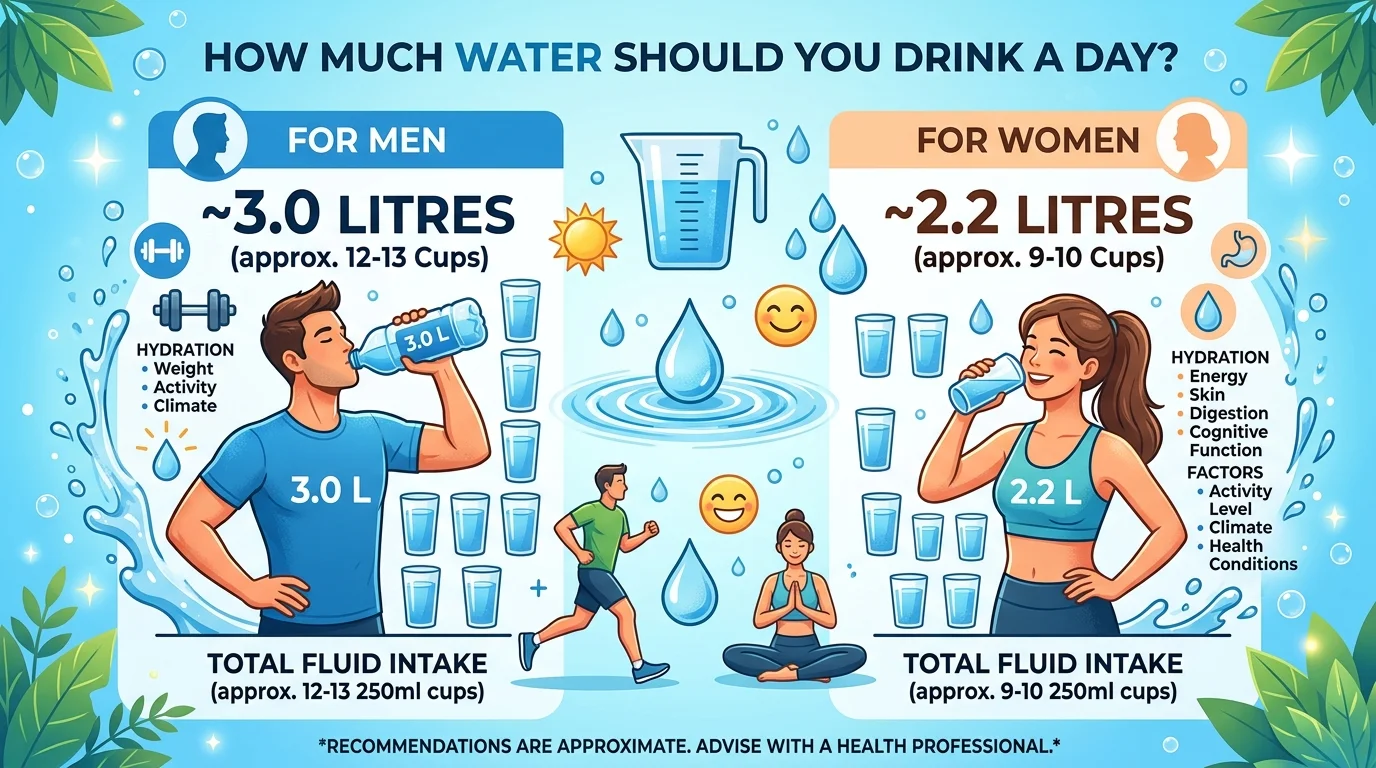
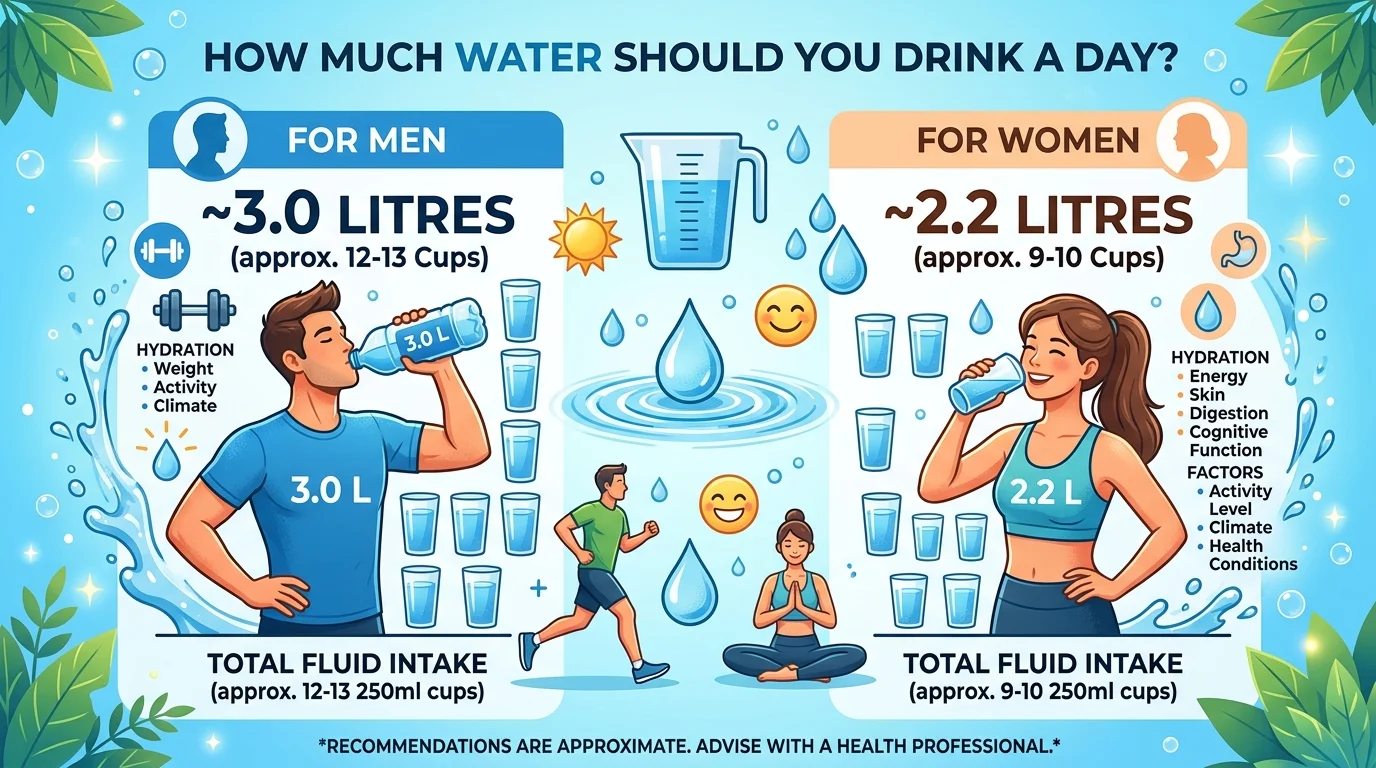
Most healthy adults need somewhere between 2 and 3.7 litres of water a day, depending on your body, your activity, and where you live. Women usually land closer to 2.7 litres. Men usually need closer to 3.7 litres. The Mayo Clinic cites U.S. National Academies of Sciences, Engineering, and Medicine figures that put an adequate daily fluid intake at roughly 3.7 litres for men and 2.7 litres for women, and that total includes fluid from food, not just from your water bottle.
That’s the short answer. But your body isn’t a spreadsheet, so a flat number only gets you so far.
Stick around. We’re going to break this down into something you can actually use today, with a simple formula, real-life examples, and tips that don’t feel like homework.
Table of Contents
- Why Water Actually Matters
- How Much Water Should You Drink a Day in Litres?
- What About the 8 Glasses a Day Rule?
- Factors That Change Your Daily Water Needs
- A Simple Formula to Find Your Own Number
- How to Track Your Water Intake Without Losing Your Mind
- What Kind of Water Should You Actually Drink?
- Water and Weight Loss: Is There a Real Link?
- Signs You’re Not Drinking Enough
- Can You Drink Too Much Water?
- Easy Tips to Hit Your Daily Goal
- FAQ
- Final Thoughts
Why Water Actually Matters
Let’s start simple. Your body is roughly 60% water.
Every system you have runs on it. Your brain, your heart, your kidneys, your skin. All of it.
Water carries nutrients to your cells. It flushes out waste. It keeps your joints cushioned and your temperature steady, even on a hot afternoon.
Skip enough of it, and you feel it fast. Headaches. Low energy. That foggy feeling where you read the same sentence three times and none of it sticks.
Dehydration doesn’t announce itself with a warning label. It sneaks up as tiredness, a bad mood, or a headache you blame on stress. Often, it’s just thirst your body already lost the ability to signal clearly.
Here’s a small story. A reader once told me she used to get “3pm headaches” almost every single day at work. She tried coffee, she tried snacks, nothing worked for long.
Turned out she was drinking maybe half a litre of water in an entire workday. Once she pushed that to around 2 litres, spread across her shift, the headaches mostly disappeared within a week.
That’s not magic. That’s just her body finally getting what it needed.
You don’t need to overhaul your whole day to feel this kind of difference. Most people notice a change within a few days of hitting a realistic target, not weeks.
Think about your own last “off” day. Low energy, a bit irritable, maybe a dull headache by mid-afternoon. Before blaming stress or sleep, it’s worth asking a much simpler question first: how much water have you actually had today?

How Much Water Should You Drink a Day in Litres?
Here’s where we get specific.
The most commonly cited guideline, based on the National Academies of Medicine’s work, breaks down like this:
- Men: around 3.7 litres of total fluid a day
- Women: around 2.7 litres of total fluid a day
That’s total fluid, not only from a water bottle. It includes tea, coffee, milk, soup, fruit, and vegetables. Roughly 20% of your daily fluid usually comes from food alone.
So if you eat a normal diet with some fruit and vegetables, your actual “drink this much water” target is a bit lower than the full number above, often somewhere around 2 to 2.7 litres for women and 2.5 to 3.2 litres for men.
Mayo Clinic’s own guidance backs this up too. Most healthy people can stay hydrated just by drinking whenever they feel thirsty, and some people genuinely need less than eight glasses a day while others need more. In other words, this number is a starting point, not a strict rule carved in stone.
If you’d rather work from a simpler daily target, many nutrition experts suggest a plain 2 to 3 litres a day for the average adult, and then adjusting up from there based on your size, activity, and climate. We’ll show you exactly how to adjust it in a minute.
It also helps to picture this in everyday terms instead of just numbers on a page. A standard water bottle usually holds about 500 ml, so 2 litres is roughly four full bottles across your whole day. Spread over 12 to 16 waking hours, that’s really just one bottle every three or four hours. Written out like that, it stops feeling like a huge ask.
What About the “8 Glasses a Day” Rule?
You’ve definitely heard this one. Eight glasses, eight ounces each, about 2 litres total. Easy to remember, easy to repeat.
Here’s the catch. As Healthline explains, nutrition experts don’t fully agree on a single daily number, and the classic 8×8 rule, while easy to remember, was never really built on strong scientific evidence in the first place.
It’s not wrong exactly. It’s just a rough average that ignores your body weight, your job, your climate, and whether you just ran 5 kilometers or sat at a desk all day.
Think of it like a shoe size chart that only lists “medium.” Useful as a starting point. Not useful as your final answer.
Factors That Change Your Daily Water Needs
This is the part most articles skip. Your real number in litres depends on a handful of things that are unique to you.
Body Weight and Size
Bigger bodies carry more water and lose more of it through daily function. A 90 kg person and a 55 kg person are simply not going to need the same amount.
A common and simple rule many dietitians use: multiply your body weight in kilograms by 0.033. That gives you a rough daily litre target.
So a 70 kg person would land around 2.3 litres a day. A 90 kg person would land closer to 3 litres a day.
Activity Level and Exercise
Sweat is water leaving your body, plain and simple. The more you move, the more you need to replace.
If you do a light 30-minute walk, add maybe 300 to 500 ml on top of your baseline. If you train hard for an hour, especially in the heat, you could lose 1 to 2 litres through sweat alone.
Picture two coworkers. One sits at a desk all day. The other works construction outside. Same body weight, completely different water needs. The construction worker could easily need an extra litre or more, just from the physical demand of the job.
Weather and Climate
Hot, humid days push your body to sweat more, even if you’re barely moving. Dry heat and high altitude do something similar, just less obviously, because you don’t always feel yourself sweating in dry air.
If you live somewhere with real summers, or you’re heading on a trip somewhere hotter than home, plan to add roughly 500 ml to 1 litre on top of your normal target.
Pregnancy and Breastfeeding
Pregnant women generally need more fluid to support the extra blood volume and amniotic fluid their body is building. Many guidelines suggest around 2.3 to 2.5 litres a day during pregnancy.
Breastfeeding pushes that number even higher, often close to 3 to 3.1 litres a day, since your body is producing milk on top of everything else it’s already doing.
Health Conditions
Fevers, vomiting, and diarrhea all drain your fluid levels fast. In these cases, doctors often recommend more water, sometimes alongside an oral rehydration solution.
On the flip side, some conditions, like certain kidney or heart issues, require you to actually limit fluid intake. If you have a diagnosed condition like this, your doctor’s specific number always overrides any general guideline, including this one.
Age
Older adults often feel thirsty less often, even when their body genuinely needs more fluid. That weaker thirst signal is one reason dehydration shows up more often in seniors than in younger adults.
If you’re caring for an older parent or relative, don’t wait for them to say they’re thirsty. Offer water on a regular schedule instead, the same way you’d remind someone to take medication at set times during the day.
Caffeine and Alcohol
Coffee, energy drinks, and alcohol all have a mild diuretic effect, meaning they push your body to lose a bit more fluid through urination. This doesn’t cancel out their hydrating value entirely, but it does mean a day full of coffee and cocktails needs extra plain water on top to balance things out.
A simple habit that works well here: for every cup of coffee or alcoholic drink, add an extra glass of water alongside it. It’s an easy rule to remember, and it keeps your overall fluid balance steady.

A Simple Formula to Find Your Own Number
Let’s turn all of that into one easy calculation you can do right now.
Step 1: Take your body weight in kilograms.
Step 2: Multiply it by 0.033.
Step 3: Add 350–500 ml if you exercise regularly, live somewhere hot, or work a physically demanding job.
Example: A 65 kg woman who walks daily and lives in a warm climate.
65 x 0.033 = 2.14 litres, plus roughly 400 ml for activity and heat = around 2.5 litres a day.
Another example: An 80 kg man who trains at the gym four times a week.
80 x 0.033 = 2.64 litres, plus roughly 500 ml for training = around 3.1 litres a day.
This won’t be a perfect, lab-tested number. But it’s far more personal than a flat “drink 2 litres” rule that ignores who you actually are.
If crunching numbers isn’t your thing, a good hydration calculator or app can do this math instantly, using your weight, activity, and climate as inputs.
One more thing worth mentioning: this formula gives you a solid starting point, not a medical prescription. Your own thirst, your urine color, and how you feel day to day still matter just as much as the math. Treat the number as a target to aim for, then let your body fine-tune it from there.
How to Track Your Water Intake Without Losing Your Mind
Knowing your number is one thing. Actually hitting it is the real challenge.
Here’s what tends to work, without turning hydration into a chore.
- Use a marked bottle. A 1-litre bottle with time markers on the side (“finish by 12pm,” “finish by 4pm”) does most of the thinking for you.
- Track in cups, not just litres. If litres feel abstract, remember 1 litre is about 4 regular cups. It’s easier to picture “4 cups” than “1000 ml.”
- Pair it with habits you already have. Drink a glass when you wake up, one with each meal, and one before bed. That alone covers a big chunk of most people’s target.
If you’re someone who tracks things by ounces instead of litres, it can help to see your daily target laid out both ways so nothing gets lost in the conversion — our guide on how many ounces you should drink a day breaks that down side by side with litres.
A lot of people give up on tracking after a few days simply because it feels like extra admin on top of an already busy schedule. The fix isn’t more discipline, it’s a simpler system. Pick one method from the list above, stick with just that one for a full week, and only then decide if you need something more precise, like an app.
What Kind of Water Should You Actually Drink?
Quick note here, because this question comes up constantly.
Plain water is always your safest, cheapest, calorie-free option. Tap water, filtered water, or bottled water all count toward your daily total, as long as it’s clean and safe where you live.
The NHS makes a similar point: water is a cheap, healthy way to stay hydrated, but lower-fat milk and sugar-free drinks like tea and coffee also count toward your daily fluid total. So no, you don’t need to chug only plain water from a glass to “count” it properly.
That said, sugary drinks like soda and sweetened juice technically add fluid too, but they bring extra sugar and calories you probably don’t need. Treat those as extras, not your main source.
Sparkling water is another common question. Plain sparkling water, with no added sugar, hydrates you just as well as still water. The bubbles don’t change how your body absorbs it, so if fizzy water is what gets you to actually drink more, that’s a completely fine substitution.
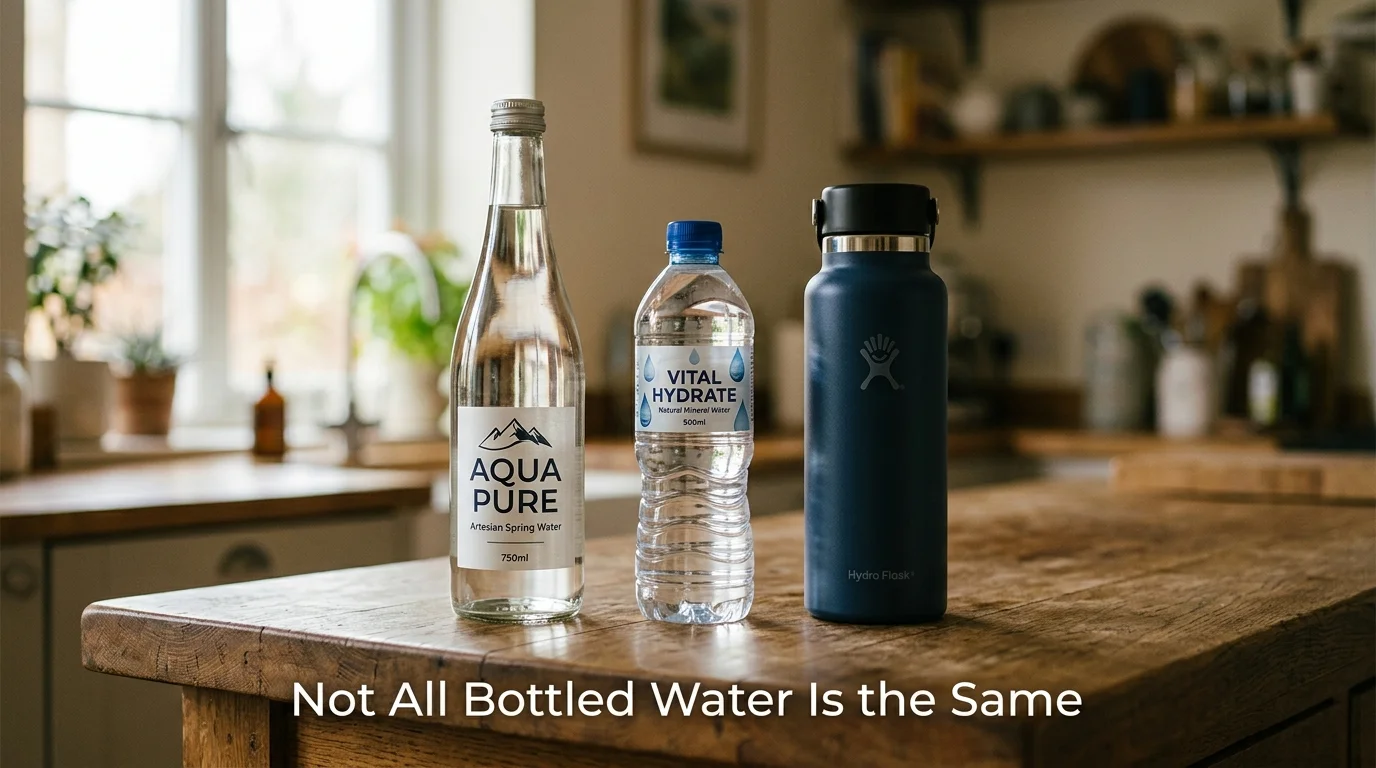
If you travel a lot or you’re picky about taste and mineral content, it’s worth knowing what actually separates a good bottled water from an average one. We cover exactly that in our breakdown of the best bottled water to drink, including what those mineral labels on the bottle actually mean.
Water and Weight Loss: Is There a Real Link?
Short answer: yes, but it’s not magic.
Drinking water before a meal can genuinely help you eat a bit less, mostly because it takes up space in your stomach and can dull hunger signals slightly. It also has zero calories, so swapping soda or juice for water is an easy calorie cut with no real downside.
Water also supports your metabolism working properly, which matters more than people think when you’re trying to lose fat instead of just losing weight on the scale.
There’s also a simpler, less obvious benefit here. Thirst and hunger signals can feel almost identical in your brain. A lot of “snack cravings” in the middle of the afternoon are actually your body asking for fluid, not food. Next time a craving hits between meals, try a glass of water first and wait ten minutes before reaching for a snack.
If weight loss is part of why you’re asking about your daily water number, it’s worth pairing your hydration goal with a plan built specifically around that. Our detailed guide on how much water to drink daily to lose weight walks through the exact timing and amounts that tend to work best.
Signs You’re Not Drinking Enough
Your body is actually pretty good at telling you when something’s off, if you know what to look for.
- Dark yellow urine. Pale, light yellow is the target. Dark yellow or amber usually means drink more, now.
- Dry mouth or lips. Simple, but often ignored until it’s uncomfortable.
- Headaches with no obvious cause. Especially ones that show up in the afternoon.
- Fatigue that coffee doesn’t fix. If caffeine stops working the way it used to, check your water intake first.
- Constipation. Water plays a bigger role in digestion than most people realize.
None of these are dramatic on their own. But if you’re hitting two or three of them regularly, your daily litre number is probably too low.
Can You Drink Too Much Water?
Yes, though it’s rare and usually only happens in extreme situations, like drinking multiple litres in a very short window during intense exercise or a competition.
Drinking too much too fast can dilute the sodium in your blood, a condition called hyponatremia. It’s uncommon for everyday people just trying to stay hydrated, but it’s real, so “more is always better” isn’t quite true.
The simple fix: spread your water out across the day instead of chugging large amounts in one sitting. Your body handles steady, spaced-out intake far better than a sudden flood.
Easy Tips to Hit Your Daily Goal
- Start your morning with a full glass, before coffee, before anything else.
- Keep your bottle somewhere you’ll actually see it. Desk, car, kitchen counter, wherever you spend the most time.
- Add flavor if plain water bores you. A slice of lemon, cucumber, or a few mint leaves makes a real difference for a lot of people.
- Set two or three phone reminders, especially during busy work hours when it’s easy to forget.
- Eat water-rich foods. Cucumber, watermelon, oranges, and soups all count toward your total, not just what’s in your glass.
- Drink a glass before every meal. It’s an easy habit to build, and it supports both hydration and portion control.
None of these need to feel like a strict routine. Pick two or three that fit your actual day, and build from there.
FAQ
1. How many litres of water should I drink a day to stay healthy? Most healthy adults do well with 2 to 3 litres a day. Women typically land closer to 2.7 litres, and men closer to 3.5–3.7 litres, adjusted for activity level and climate.
2. Is 2 litres of water a day enough? For many average-sized adults with a moderate activity level, yes. If you’re larger, more active, or live somewhere hot, you’ll likely need more, closer to 2.5–3.5 litres.
3. How do I convert my water intake from ounces to litres? One litre equals roughly 33.8 fluid ounces. So 2 litres is about 68 ounces, and 3 litres is about 101 ounces.
4. Does tea or coffee count toward my daily water intake? Yes. Tea, coffee, milk, and other non-alcoholic drinks all count toward your total daily fluid intake, even though plain water remains the best default choice.
5. What’s the fastest way to tell if I’m drinking enough water? Check your urine color. Light, pale yellow generally means you’re well hydrated. Dark yellow or amber usually means it’s time to drink more.
Final Thoughts
So, how much water should you drink a day in litres? For most people, somewhere between 2 and 3.7 litres, depending on your weight, activity, and climate, is a solid, realistic target.
Skip the pressure of hitting a “perfect” number every single day. Focus on steady habits instead: a glass in the morning, water with meals, and a bottle you actually keep nearby.
Do that consistently, and your body will thank you with more energy, fewer headaches, and a lot less guessing.