Why Is Water Important to Humans? 7 Surprising Reasons You Can’t Ignore
You skip breakfast some mornings. You’ve probably skipped a meal here and there without much trouble.
But try skipping water for even one full day. You’ll feel it fast — a headache, a dry mouth, that heavy, foggy feeling in your head.
Why is water important to humans? Because it isn’t just something you drink. It’s something your body is made of, and something it uses every single second, whether you’re awake, asleep, working out, or just sitting on the couch.
In this article, we’re going to break down exactly what water does for your body, what happens when you don’t get enough, and how much you actually need. No confusing science jargon. Just plain talk, like a friend explaining it over coffee.
Let’s get into it.
Table of Contents
- What Water Actually Does Inside Your Body
- Why Is Water Important to Humans? The Simple Science
- 7 Reasons Water Matters More Than You Think
- What Happens When You Don’t Drink Enough
- How Much Water Do You Really Need?
- Easy Ways to Drink More Water Without Trying Too Hard
- FAQ
- Final Thoughts
What Water Actually Does Inside Your Body
Here’s something a lot of people don’t realize. Your body is about 60% water.
That’s not a random number. It means water is in your blood, your muscles, your brain, even your bones.
Think of your body like a house. Water is the plumbing system running through every room.
Without it, nothing moves. No hot water, no flushing, no cleaning. Everything just stops.
That’s basically what happens inside you without enough water. Your “plumbing” backs up, and every system slows down.
According to Harvard’s nutrition researchers, water is involved in almost every job your body does, from digestion to keeping your organs cushioned and protected. It’s not one small task on a long list. It’s the foundation the whole list sits on.
Why Is Water Important to Humans? The Simple Science
Let’s answer the main question directly, since that’s probably why you clicked on this article.
Water is important to humans because your cells, organs, and blood cannot function without it. Every chemical reaction in your body, from digesting your lunch to sending a thought through your brain, happens in a watery environment.
No water, no reaction. It’s that simple.
Here’s an easy way to picture it. Imagine trying to bake a cake without any liquid. You could have flour, sugar, and eggs sitting right there. But without water or milk to bind everything together, you just have a pile of dry ingredients going nowhere.
Your body works the same way. All the “ingredients” — nutrients, oxygen, minerals — need water to actually get where they’re going.
The Mayo Clinic explains the daily fluid math in a way that makes this click: water flushes waste out of your organs, moves nutrients to your cells, and keeps your ears, nose, and throat tissue moist enough to work properly. That’s three separate jobs happening quietly, every minute, without you noticing.
7 Reasons Water Matters More Than You Think
You already know water is “good for you.” But here’s what that actually means in real, practical terms.
1. It Keeps Your Brain Sharp
Ever feel a little slow or foggy in the afternoon and blame it on being tired? Sometimes it’s not tiredness at all. It’s mild dehydration.
Studies have shown that losing just a small amount of your body’s water can affect your mood, your focus, and even your short-term memory.
Picture this. You’re in a meeting, and someone asks you a question you knew the answer to an hour ago. Your brain just feels slow to respond.
Before blaming your brain, check your water bottle. It might be empty.
2. It Helps Your Heart Do Less Work
Your blood is mostly water. When you’re low on fluids, your blood actually gets thicker.
Thicker blood means your heart has to push harder to move it around your body. That’s extra strain, day after day, for something completely preventable.
Staying hydrated keeps your blood flowing smoothly, like a river instead of syrup.
3. It Keeps Your Joints Moving Smoothly
Your joints have a cushion of fluid that protects the cartilage from rubbing together. Think of it like oil in a car engine.
Run an engine dry, and metal grinds on metal. Your knees and hips work the same way when you’re chronically low on water.
That’s one reason some people notice less joint stiffness once they start drinking enough water regularly.
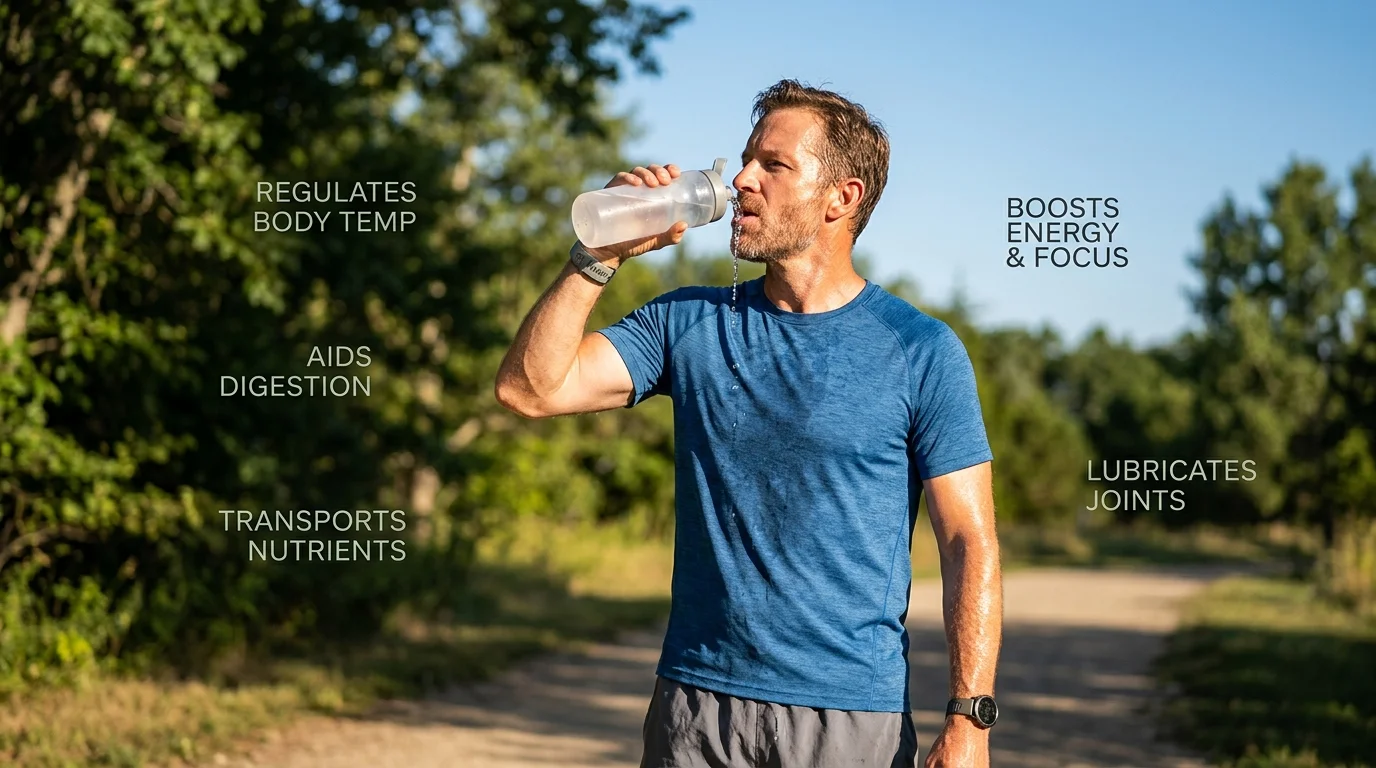
4. It Helps Control Body Temperature
When you get hot, you sweat. That sweat is your body’s built-in cooling system, and it’s made almost entirely of water.
If you’re already low on fluids, your body struggles to cool itself down. That’s part of why dehydration and heat exhaustion often show up together, especially in summer.
Next time you’re outside on a hot day, treat water like sunscreen. It’s not optional gear, it’s protection.
5. It Supports Digestion and Prevents Constipation
Water helps break down food so your body can absorb the nutrients. It also softens waste so it can move through your system comfortably.
Not drinking enough is one of the most common, and most overlooked, causes of constipation.
If you’ve ever felt bloated and uncomfortable after a few busy, low-water days, this is probably why.
6. It Helps Your Body Manage Weight
This one surprises people. Your brain sometimes mixes up thirst signals with hunger signals.
That means you might reach for a snack when what your body actually wanted was a glass of water. If weight management is part of your goals, it’s worth learning more about drinking water for weight loss and how it fits into a bigger daily routine.
Water also has zero calories, so it never competes with your food choices the way sugary drinks do.
7. It Protects Your Kidneys
Your kidneys filter waste out of your blood, and they need enough fluid to do it well. Without enough water, waste products can build up and form kidney stones.
Anyone who has had a kidney stone will tell you the same thing: drink more water than you think you need.
It’s a small daily habit that protects you from a genuinely painful problem later.

What Happens When You Don’t Drink Enough
Let’s talk about dehydration in plain terms, because the word gets thrown around a lot without much explanation.
Dehydration happens when your body loses more fluid than it takes in. It doesn’t take a desert or a marathon to cause it. A busy day where you forget to drink anything until 3 PM can do it too.
Here are common early signs:
- Dry mouth or chapped lips
- Headache that seems to come out of nowhere
- Dark yellow urine
- Feeling unusually tired
- Trouble focusing
- Dizziness when you stand up quickly
Mild dehydration is easy to fix. A glass of water, and most people start feeling better within thirty minutes.
Severe dehydration is a different story. It can cause confusion, a rapid heartbeat, and in serious cases, it needs medical attention. According to the CDC’s guide to healthy drinks, staying ahead of dehydration with regular water intake is far easier than trying to recover from it after the fact.
How Much Water Do You Really Need?
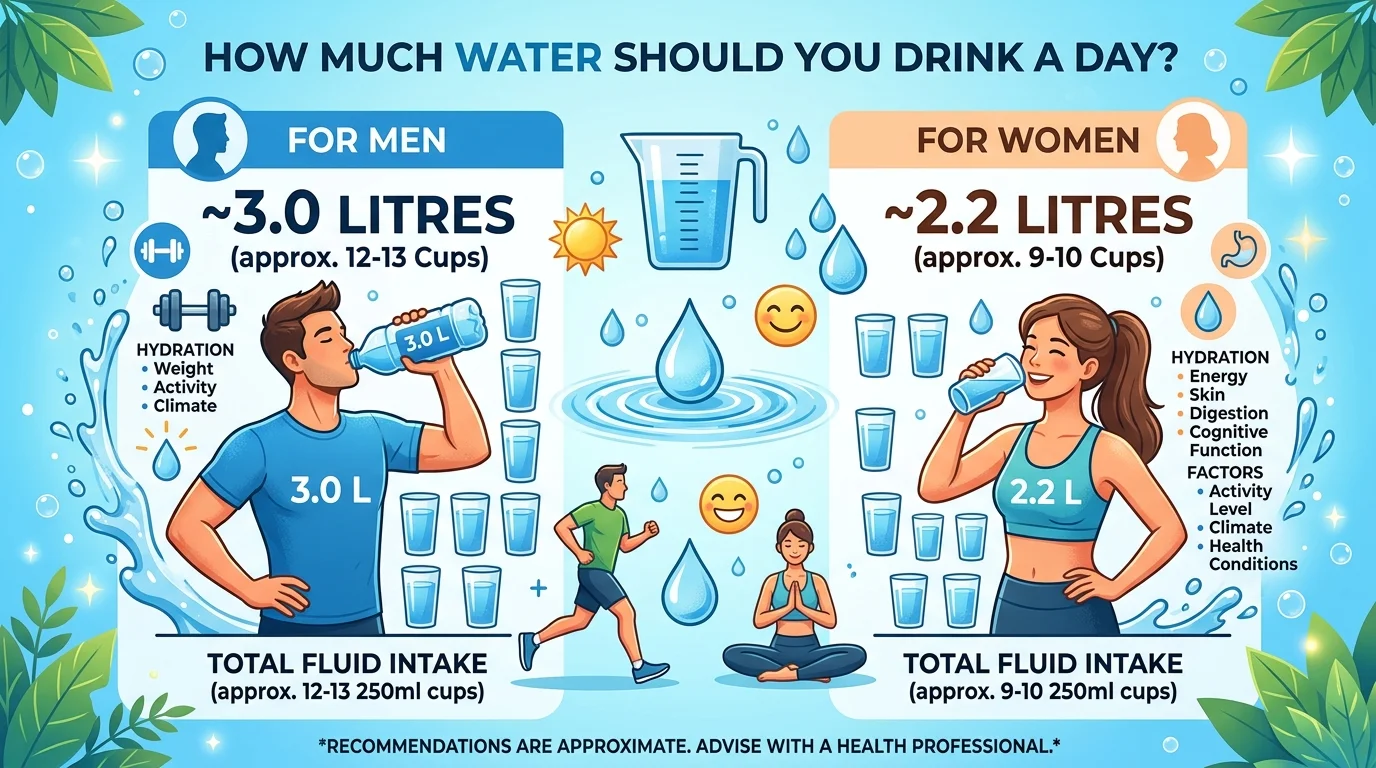
This is probably the question you actually came here for. And honestly, there’s no single perfect number for everyone.
Your needs depend on your body size, your activity level, the climate you live in, and even what you eat.
A good general starting point most doctors mention is close to 8 glasses a day, but that’s a floor, not a ceiling. If you exercise, live somewhere hot, or eat a lot of salty food, you’ll need more.
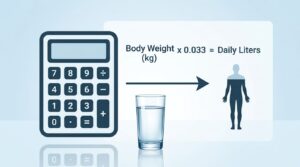
Rather than guessing, it helps to work out how many ounces you personally need based on your weight and daily activity.
Here’s a simple gut-check that works for almost everyone: look at your urine. Pale yellow means you’re doing fine. Dark yellow means it’s time to drink up.
Your body is actually pretty good at telling you what it needs, if you pay attention.
Easy Ways to Drink More Water Without Trying Too Hard
Knowing you should drink more water is one thing. Actually remembering to do it during a busy day is another.
Here are a few tricks that genuinely help:
- Keep a bottle where you’ll see it. Desk, car cup holder, bedside table. Out of sight really does mean out of mind.
- Attach it to habits you already have. Drink a glass right after you brush your teeth or right when you sit down at your desk.
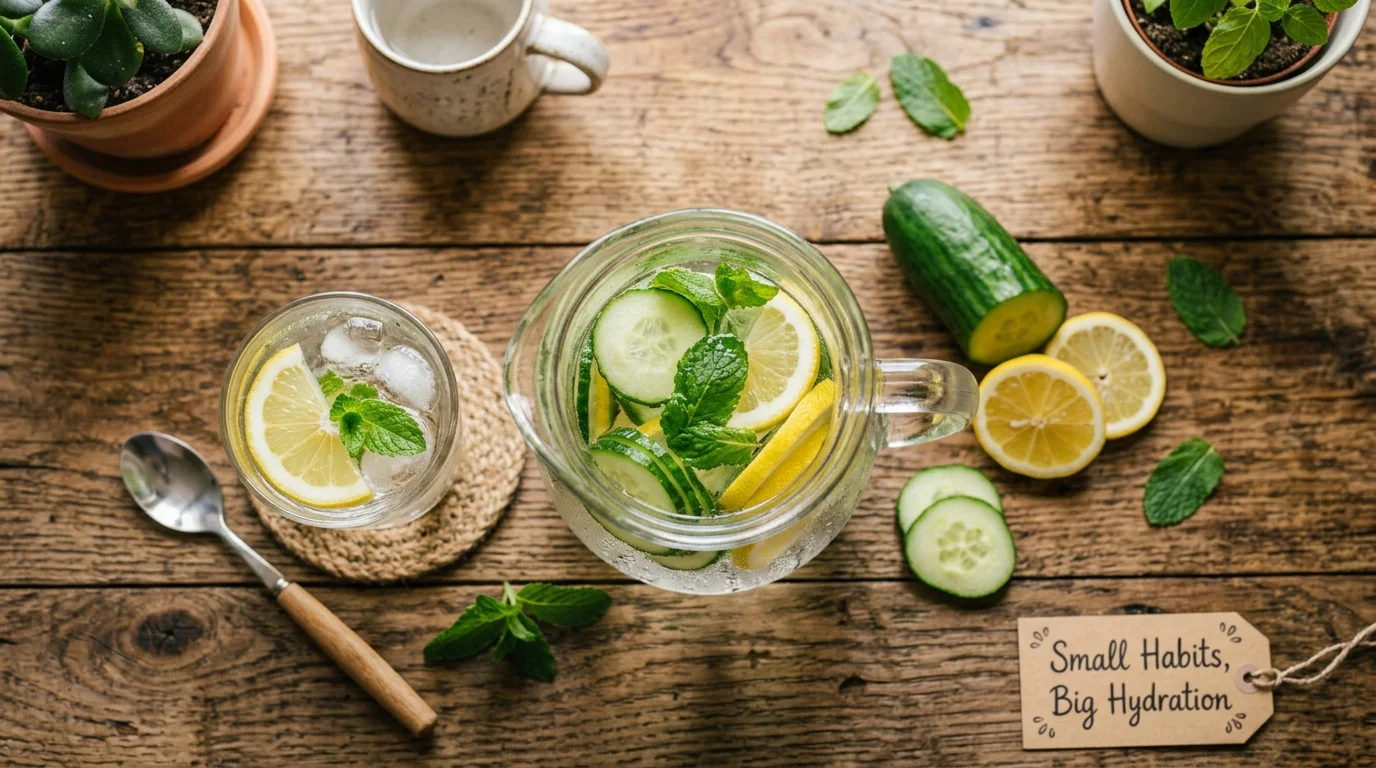
- Add flavor if plain water bores you. A few slices of lemon, cucumber, or berries can make a real difference.
- Eat water-rich foods. Watermelon, cucumbers, and oranges all count toward your daily intake.
- Track it loosely. You don’t need an app. Marking lines on your bottle works just as well.
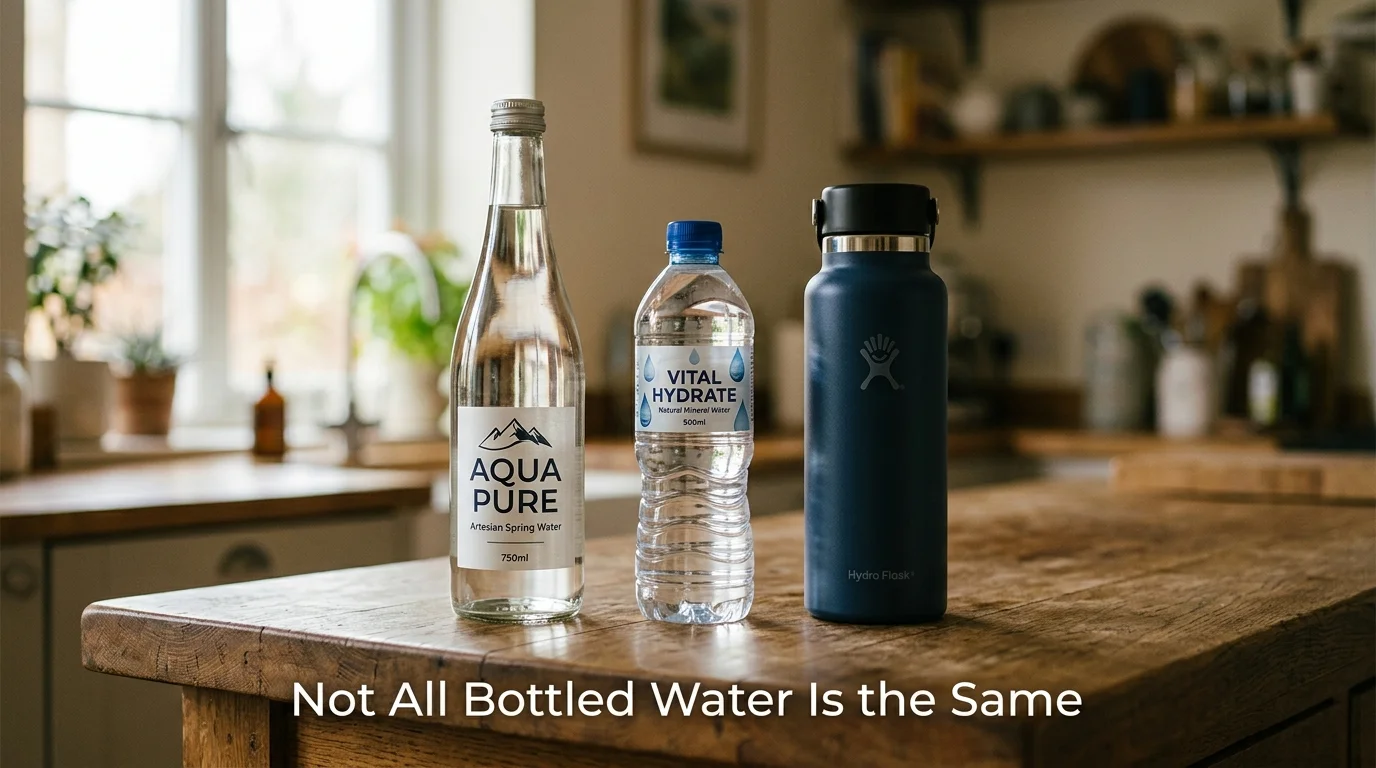
If you rely on bottled water throughout the day, it’s worth knowing what makes a good bottled water choice, since not all brands filter or mineral-balance their water the same way.
Small changes like these add up fast. Within a week or two, drinking enough water stops feeling like a chore and starts feeling automatic.
FAQ
1. Why is water important to humans on a daily basis? Water keeps your organs, brain, and blood functioning properly. Without it, your body can’t regulate temperature, digest food, or transport nutrients the way it needs to.
2. Can I get enough water from food instead of drinking it? Food contributes some of your daily fluid, especially fruits and vegetables. But most people still need to drink water directly to meet their full needs.
3. How quickly can dehydration affect me? Mild symptoms like a headache or tiredness can show up within a few hours of not drinking enough, especially in hot weather or during exercise.
4. Is it possible to drink too much water? Yes, though it’s rare. Drinking extreme amounts in a short time can dilute your body’s sodium levels. For most people, drinking when thirsty and keeping urine pale yellow is a safe guide.
5. Does coffee or tea count toward my daily water intake? Yes, in moderate amounts. They do have a mild diuretic effect, but overall they still contribute fluid to your body.
Final Thoughts
At the end of the day, water isn’t complicated. It’s the simplest health habit you have, and it’s already sitting in your kitchen.
You don’t need a fancy routine or an expensive gadget. You just need to drink a little more, a little more often, and pay attention to what your body is telling you.
Start with one extra glass today. Your brain, your heart, and your joints will thank you for it.