Why “Just Drink More Water” Never Actually Works for You
You’ve heard it a hundred times: “drink more water and the weight will come off.” So you buy the big bottle. You set reminders on your phone. And a week later, you’re still standing on the same scale, staring at the same number, wondering what you’re doing wrong.How Much Water to Drink Daily to Lose Weight?
Here’s the truth nobody tells you upfront: it’s not about drinking more water. It’s about drinking the right amount, at the right times, for your body.
Most people fail at this simple habit for reasons that have nothing to do with willpower:
- They guess a random number (usually “8 glasses”) without knowing if it fits their weight, activity level, or climate.
- They drink water randomly through the day instead of using it strategically before meals.
- They confuse thirst with hunger and end up eating when they should have been drinking.
- They quit after a few days because they don’t see the scale move fast enough.
- They drink sugary drinks alongside water and cancel out the benefit completely.
This mix-up doesn’t just stall your weight loss. It quietly wears down your motivation.
You start doubting whether “the water thing” even works, so you stop trying it consistently. You feel tired, bloated, and unsure if you’re doing anything right. That frustration is real, and it’s one of the biggest reasons people give up on healthy habits before they get a real chance to work.
The good news is that this is fixable in a single afternoon of reading. Once you know your actual number and how to use it, water becomes one of the easiest, cheapest, and most sustainable weight loss tools you’ll ever use. No supplements. No subscriptions. Just a glass and a plan.
How Much Water to Drink Daily to Lose Weight?
Let’s start with the number everyone wants first.
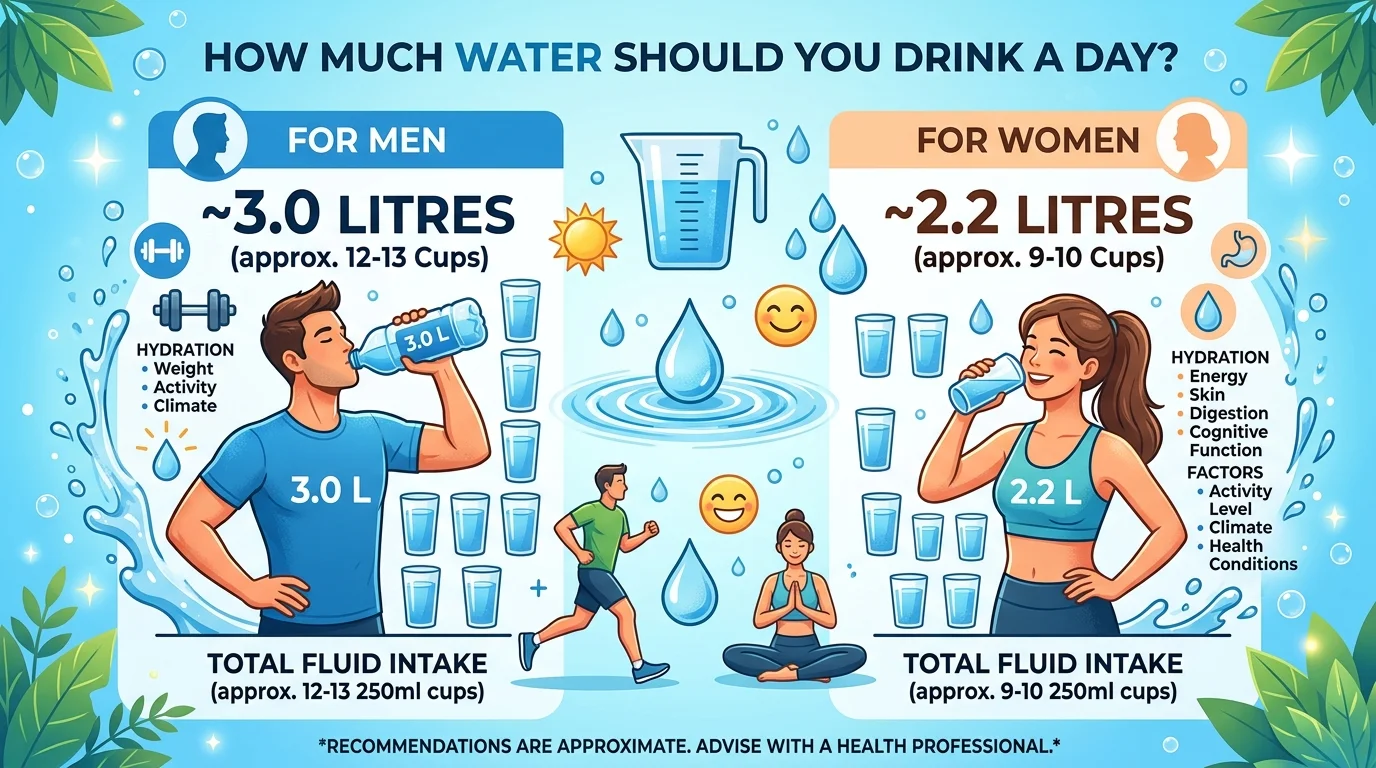
According to the Mayo Clinic, a general daily fluid target is about 15.5 cups (3.7 liters) for men and about 11.5 cups (2.7 liters) for women. That number includes water from food and other drinks, not just plain water from a bottle.
For weight loss specifically, most nutrition experts recommend starting near the lower end of that range from plain water alone, then adjusting based on your activity level, body size, and climate.
Step 1: Find Your Personal Water Number
Forget the generic “8 glasses a day” rule for a second. That number was never based on solid science, it just stuck because it’s easy to remember.
Instead, use this simple starting point:
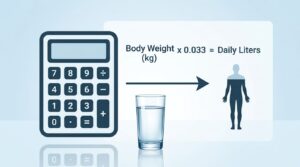
- Take your body weight in pounds and divide it by two. That’s roughly how many ounces of water your body needs daily.
- If you weigh 160 pounds, that’s about 80 ounces, or 10 cups, of water a day.
- Add another 12 ounces for every 30 minutes of exercise you do.
This isn’t a strict medical formula, but it’s a practical, personalized starting point that beats guessing.
Real-life example: Say you weigh 180 pounds and walk for 30 minutes most days. Your baseline is 90 ounces, plus 12 for your walk, landing you around 102 ounces (about 3 liters) a day. That’s your target, not some random number you saw online.
Step 2: Time Your Water Around Meals, Not Just Throughout the Day
This is the part most people skip, and it’s the part that actually connects water to weight loss.
Research on water intake and weight loss consistently points to one simple trick: drinking water before meals.
In one well-known study, adults who drank two cups of water about 30 minutes before each meal lost noticeably more weight over 12 weeks than those who didn’t, without changing anything else about their diet.
Here’s why this works:
- Water fills part of your stomach, so you naturally eat a bit less.
- It reduces the chance of mistaking thirst for hunger.
- It builds a simple, repeatable routine you don’t have to think hard about.
Try this today: Before your next meal, drink one full glass of water and wait 20 to 30 minutes before you eat. That’s it. No calorie counting required for this step.
Step 3: Replace, Don’t Just Add
Adding water without changing anything else helps a little. Replacing sugary drinks with water helps a lot more.
A can of soda or a sweetened coffee can carry 150 to 300 calories that add up fast over a week. Swap even one of those drinks a day for water, and you’re cutting real calories without touching your food plan at all.
- Swap your afternoon soda for sparkling water with lime.
- Swap sugary coffee drinks for black coffee plus a glass of water.
- Keep a reusable bottle on your desk so refilling becomes automatic, not a decision you have to make.
Quick reality check: Water alone won’t melt fat off your body. But it removes friction from every other healthy choice you’re trying to make, and that adds up more than most people expect.
Signs You’re Drinking the Right Amount
You don’t need an app or a fancy tracker to know if you’re hitting your number. Your body already tells you:
- Urine color: Pale yellow means you’re likely well hydrated. Dark yellow means drink more.
- Energy levels: Steady energy through the afternoon is a good sign. Constant fatigue can point to mild dehydration.
- Hunger patterns: If you’re hungry an hour after eating a full meal, try a glass of water first before reaching for a snack.
A Simple Daily Water Schedule You Can Actually Follow
Here’s a short, realistic schedule you can copy today:
- Morning: One glass right after waking up, before coffee.
- Before each meal: One glass, 20 to 30 minutes ahead of eating.
- Mid-afternoon: One glass to fight the usual energy dip.
- Evening: One glass with dinner, then taper off before bed.
Following this pattern alone typically covers 5 to 6 glasses, and you top up the rest with water throughout the day based on thirst and activity.
One important note: more water isn’t automatically better. Drinking far beyond your body’s needs in a short window can be genuinely dangerous. Stick to a steady, spread-out pattern rather than chugging large amounts at once.
Getting your daily water intake right isn’t a magic weight loss trick, and it was never supposed to be. It’s a small, boring, repeatable habit that makes everything else you’re doing, better meals, more movement, a bit more sleep, work a little bit better too. Start with your number, time it around your meals, and give it two weeks before you judge the results.
Smart Upgrades That Take Your Results Further
Once the basics are locked in, a few small upgrades can make a real difference in how fast and how easily you see results.
These aren’t complicated tricks. They’re small shifts that most people never think to try.
Make Temperature Work for You
Cold water forces your body to spend a little extra energy warming it up to body temperature. That process, called thermogenesis, burns a small number of extra calories throughout the day.
It’s not a massive number on its own. But stacked over weeks and months, it adds up the same way a daily walk does.
Try this: Keep your water bottle in the fridge or add ice cubes, especially during the parts of the day when you drink the most.
Track Your Water the Simple Way
Most people overestimate how much water they actually drink. It feels like a lot because you sip throughout the day, but the real total often falls short.
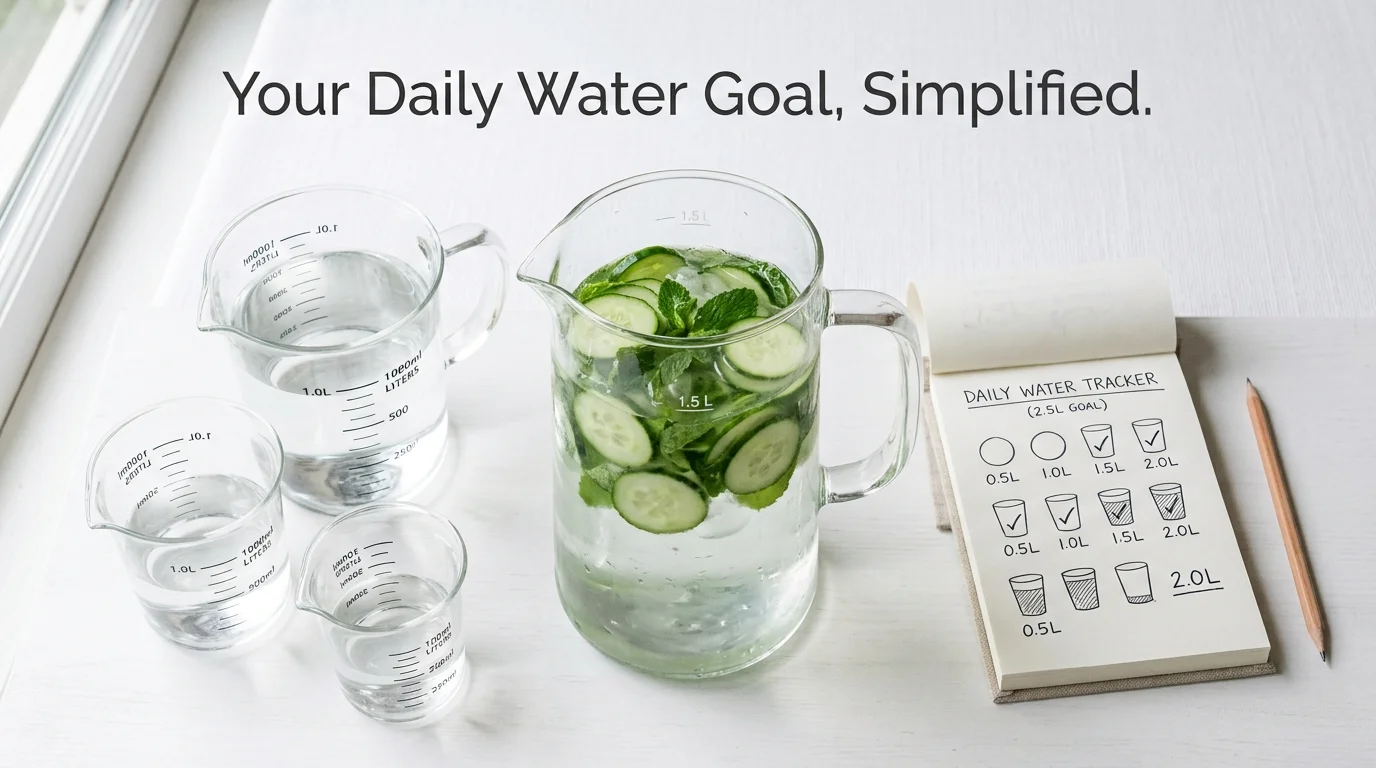
A quick way to fix this: know exactly what your container holds. If you’re not sure how many ml are in a water bottle you carry around, check the label once and do the math for your daily target.
Once you know your bottle holds, say, 750 ml, you can count refills instead of guessing. Three refills gets you to about 2.25 liters without any mental math during your day.
If you’re planning around a full gallon a day, it also helps to know how many water bottles make up a gallon so you’re not overshooting or falling short without realizing it.
Pair Water With Fiber-Rich Meals
Here’s a connection most people miss completely.
Fiber absorbs water as it moves through your digestive system. Without enough water, fiber can actually slow digestion down instead of helping it.
- Add water any time you increase vegetables, beans, or whole grains in a meal.
- This combo keeps you full longer, which naturally cuts down on snacking.
- Skipping this step is a common reason people feel bloated when they “eat healthy.”
A simple example: you add a big salad to lunch to eat healthier, but skip your usual glass of water. An hour later you feel heavy and sluggish, and the salad gets blamed. The real issue was often just a missing glass of water alongside it.
Build a Routine That Survives Busy Weeks
The plan that works isn’t the perfect one. It’s the one you can still follow on a bad day.
- Keep a bottle in your bag, car, or desk so drinking water doesn’t depend on remembering.
- Set two or three phone alarms instead of relying on willpower alone.
- Pair water breaks with things you already do, like right after brushing your teeth or before each meal.
If you’re setting this habit up for kids too, starting with a bottle they actually like using makes a bigger difference than any reminder app. A quick look at good water bottle options for kids can help the whole family build this habit together, not just you.
This is what turns a short-term experiment into a habit that sticks for years, not just a few weeks.

Where This Simple Habit Usually Goes Wrong
Most people don’t fail at drinking water because it’s hard. They fail because of small, avoidable mistakes that quietly cancel out the benefits.
Here are the ones to watch for.
Mistake 1: Treating All Fluids the Same
Not every drink counts the same way. Coffee, soda, and alcohol can all work against hydration instead of helping it.
The cost: you think you’re hitting your target, but you’re actually running short, which stalls your results and leaves you tired without knowing why.
Mistake 2: Drinking All Your Water at Once
Chugging a liter of water in five minutes doesn’t work the same as spreading it out. Your body can only absorb and use so much fluid at a time.
The cost: you feel uncomfortably full, need frequent bathroom breaks, and still end up under-hydrated by evening.
Mistake 3: Ignoring Activity and Weather Changes
Your water needs on a hot day or a heavy workout day are not the same as a quiet day at a desk. Sticking to one fixed number regardless of conditions leaves gaps.
The cost: on high-sweat days, you end up dehydrated without realizing it, which can show up as headaches, low energy, and stronger hunger signals.
Mistake 4: Expecting Water Alone to Replace a Real Diet
Water supports weight loss. It does not replace the need for balanced meals and regular movement.
The cost: people drink plenty of water, see no scale movement, and give up on the habit entirely, blaming water instead of looking at the full picture.
Mistake 5: Giving Up Too Early
Habits built around water take a couple of weeks to actually show up on the scale. Many people quit right before results start showing.
The cost: you lose the compound benefit of a habit that gets easier and more effective the longer you stick with it.
Small mistakes like these are the real reason “I tried drinking more water and nothing happened” is such a common complaint. Fix these, and the same simple habit starts working the way it’s supposed to.
Your Next Glass of Water Starts the Change
You don’t need a strict diet plan or an expensive program to make real progress here. You need your personal number, a habit of drinking before meals, and the patience to give it a fair two to three weeks.
Start small today. Pour one glass of water right now, before your next meal, and build from there.
Every healthy habit you’ll ever build starts with one repeatable action, and this one happens to be free, simple, and already sitting in your kitchen. Pick your target number from earlier in this guide, write it somewhere you’ll see it, and let your next glass of water be the first step toward a lighter, more energized version of yourself.