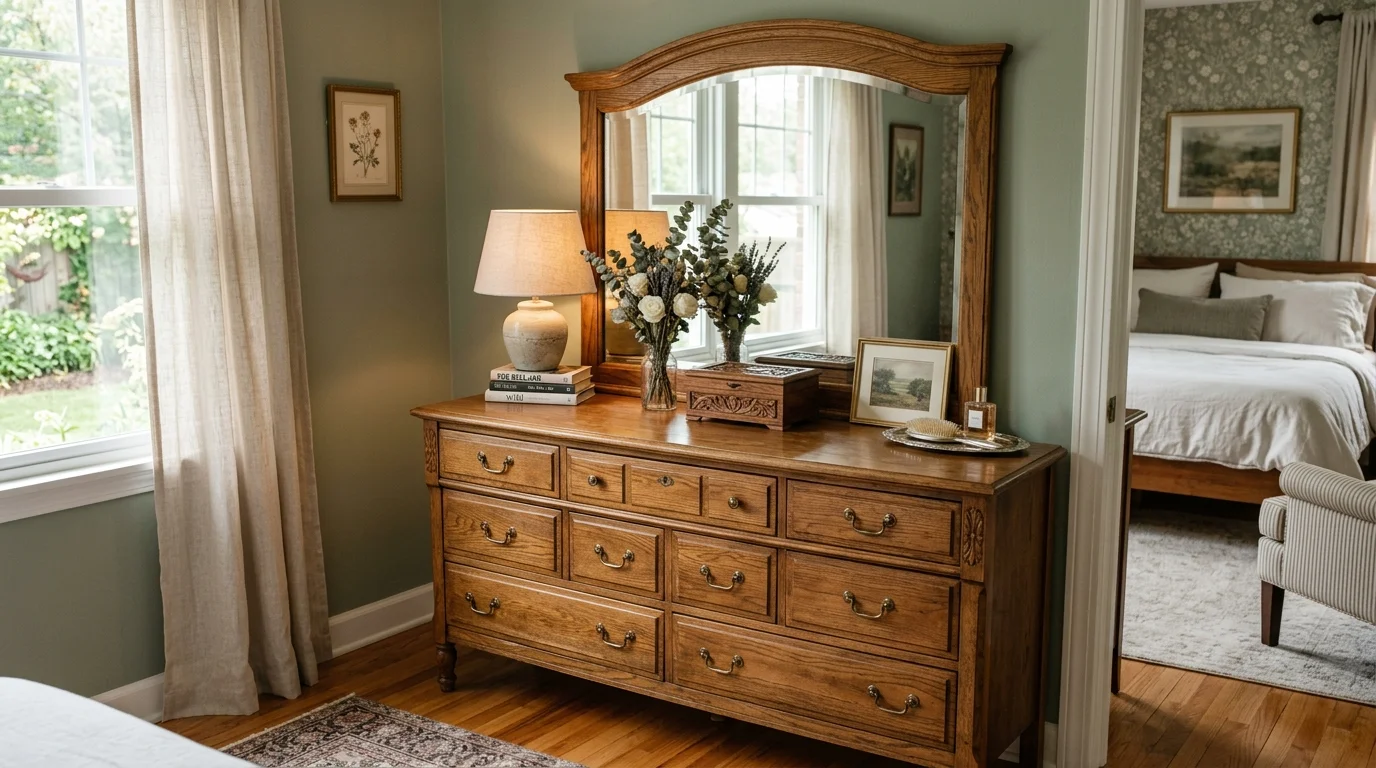
You wake up every morning, half-asleep, and you’re doing that awkward shuffle — bathroom mirror for your face, bedroom for your outfit, back again because you forgot to check your hair. Sound familiar?
Yeah. That’s the problem a dresser with mirror solves. All in one spot.
It’s not just furniture. It’s the piece of your bedroom that ties everything together — storage, style, and a full-length view of yourself before you walk out the door. And honestly? Once you have one, you’ll wonder how you ever lived without it.
Let’s dig into everything you need to know before you buy one.
What Exactly Is a Dresser With Mirror?
Simple answer: it’s a chest of drawers with a mirror attached to the top or back of it.
But the real answer is more fun. A dresser with mirror — also called a bureau with mirror or mirror dresser combo — is a bedroom staple that’s been around for centuries. Back in the Victorian era, wealthy households had massive ornate versions. Today, you’ve got everything from sleek minimalist styles to rustic farmhouse designs.
The mirror can be:
- Fixed and mounted directly to the dresser frame
- Tilting (you can angle it up or down to get the perfect view)
- Freestanding on top, which means it’s removable
Each type serves a slightly different purpose. Tilting mirrors are great if multiple people in the house use the same dresser — kids, partners, roommates. Fixed mirrors look cleaner and more intentional. Freestanding gives you flexibility.
Why You Actually Need One (Not Just Want One)
Okay, let’s be real for a second. Do you need a dresser with mirror? Technically, no. You could keep using separate furniture.
But here’s the thing — bedroom furniture that multitasks is always a win.
Think about it:
- Storage + reflection in one footprint. If your bedroom is small, a mirror dresser saves you from buying a separate full-length mirror AND a separate chest of drawers. That’s two pieces of furniture replaced by one.
- It makes the room look bigger. Mirrors bounce light around. A large mirror on a dresser can make a cramped bedroom feel twice as open. Interior designers use this trick all the time.
- Morning routines become faster. No more running between rooms. You can check your whole outfit, fix your collar, make sure that cowlick is tamed — right where your clothes already are.
- It anchors the bedroom’s style. A dresser with a mirror is often the visual centerpiece of a bedroom, especially if it’s positioned across from the bed. It gives the room a polished, “put-together” look without you having to do much.
Types of Dressers With Mirrors: Which One’s Right for You?
Not all mirror dressers are the same. Let me break down the main types so you can figure out which one fits your vibe and your room.1. Traditional/Classic Dresser With Mirror
This is the one your grandma probably had. Dark wood, ornate carvings, a big oval or rectangular mirror attached firmly to the back.
These are heavy. Built to last forever. If you’re going for that warm, heritage bedroom aesthetic — antique dresser with mirror vibes — this is your style. They pair beautifully with four-poster beds and rich fabrics.
Best for: Master bedrooms, traditional décor, people who want furniture that lasts decades.
2. Modern/Contemporary Mirror Dresser
Clean lines. Maybe a little gloss. Sometimes with metal drawer pulls and a frameless mirror or a thin sleek frame.
Modern mirror dressers often come in white, grey, or espresso finishes. The mirror sits centered and tall. Simple. Elegant. No fuss.
Best for: Minimalist or Scandinavian-style bedrooms, apartments, younger buyers.
3. Mid-Century Modern Dresser With Mirror
Tapered legs. Walnut or teak wood. Low-profile silhouette. The mirror is usually round or has a geometric shape.
Mid-century modern has made a massive comeback and it’s not going anywhere. These dressers look gorgeous — like something out of a Mad Men episode. They’re also usually a bit lighter and less bulky than traditional dressers.
Best for: Retro-inspired rooms, those who love the 1950s–60s aesthetic.
4. Farmhouse/Rustic Dresser With Mirror
Think distressed white paint, shiplap-style drawer fronts, barn door-inspired hardware. The mirror might have a chunky wooden frame.
Rustic charm. Cozy. Perfect if your bedroom feels like it belongs in a countryside cottage — or if you just love that warm, imperfect look.
Best for: Farmhouse-style homes, eclectic rooms, those who love warm textures.
5. Floating or Wall-Mounted Dresser With Mirror
These are less common but super practical in small rooms. The dresser attaches to the wall (no floor footprint for the chest) and the mirror sits above or as part of it.
Best for: Studio apartments, tiny bedrooms, ultra-modern spaces.
How to Pick the Right Size
This is where people make the most mistakes. They fall in love with a dresser online, buy it, and then it takes up half the room.
Here’s how to avoid that nightmare:
Step 1: Measure your wall space. Know exactly how wide and tall the area is where you plan to put the dresser. Leave at least 24–36 inches of clearance in front of the dresser so drawers can open fully.
Step 2: Think about drawer count vs. room size.
- Small bedroom? Go for a 4-drawer dresser with mirror — compact but still functional.
- Medium to large bedroom? A 6-drawer dresser with mirror gives you much more storage without feeling overwhelming.
- Got a huge master suite? A double dresser with mirror (wide, 8+ drawers) can be a stunning focal point.
Step 3: Consider mirror height. The mirror needs to be positioned so the person using it can actually see themselves. Standard height recommendations:
- For adults: bottom of mirror around 48 inches from the floor
- For kids’ rooms: lower, around 36 inches
Materials Matter More Than You Think
The material of your dresser with mirror affects how long it lasts, how it looks after a few years, and how easy it is to clean. Let’s break it down:
Solid Wood
The gold standard. Oak, maple, pine, walnut — solid wood dressers are heavy, durable, and age beautifully. They can be refinished if they get scratched. Expensive, yes. Worth it? Absolutely, if you’re buying furniture you want to keep for 20+ years.
Engineered Wood / MDF
Most affordable dressers use medium-density fiberboard or particleboard with a wood veneer or laminate finish. They look great when new. They’re lighter. But they’re not as durable — they can swell if they get wet and scratches are harder to fix. Fine for a guest room or starter home.
Metal Frame
Some modern dressers have metal frames with wooden drawer inserts. Very sturdy. Very industrial-modern look. Not as warm as wood but incredibly long-lasting.
Mirror Glass Quality
Don’t overlook this! The mirror glass itself varies. Look for:
- Minimum 5mm glass thickness — thinner mirrors distort your reflection
- Anti-scratch coating if you have kids
- Silver-backed vs. aluminum-backed — silver backing gives a clearer, truer reflection
The Styling Secret Nobody Tells You
A dresser with mirror is one of those pieces that actually gets better the more you style it.
The dresser top — the space between the drawers and the base of the mirror — is prime real estate. Here’s what works:
- A small tray to hold jewelry, watches, or perfume bottles (keeps things organized AND looks intentional)
- A plant or two — a small succulent or trailing pothos adds life
- One or two framed photos — keeps it personal
- A small lamp — this is a game changer at night. Soft light from beside the mirror makes your bedroom feel like a boutique hotel
What to avoid: too much stuff. Clutter on a dresser top makes the whole room feel messy. Less is more. Seriously.
Best Rooms to Place a Dresser With Mirror
You’d think this is obvious — bedroom, duh. But where in the bedroom matters a lot.
Across from the bed: Classic placement. The mirror reflects the room, makes it feel bigger, and you see it first thing in the morning. Just make sure you’re okay with catching your reflection at 2am.
Along a blank wall: Great for longer rooms. Keeps traffic flow clear. Gives you a dedicated “getting ready” zone.
In a walk-in closet: If you’re lucky enough to have a walk-in, a smaller dresser with mirror inside it creates a little private dressing room. Very functional.
Not near direct sunlight: Mirrors amplify light, which is usually good — but positioning the mirror so it reflects harsh afternoon sun directly into your eyes isn’t ideal.
Budget Breakdown: What to Expect
Let’s talk money, because nobody wants surprises.
| Price Range | What You Get |
|---|---|
| $100–$300 | Engineered wood, basic styles, limited drawer options. Fine for temporary or budget setups. |
| $300–$700 | Better construction, more styles, some solid wood elements. Most people shop in this range. |
| $700–$1,500 | Solid wood, designer styles, quality hardware, excellent mirror glass. Long-term investment. |
| $1,500+ | Heirloom quality, custom finishes, antique or artisan pieces. Built to last generations. |
Pro tip: Don’t cheap out on the mirror. A distorting or low-quality mirror is frustrating to use every single day. If budget is tight, spend more on the mirror quality and less on the number of drawers.
Assembly and Care Tips
Most dressers with mirrors sold today require some assembly. Here’s what to know:
During Assembly:
- Always have two people for the mirror attachment — it’s the most dangerous part (heavy + awkward)
- Anchor the dresser to the wall with the included anti-tip bracket. This isn’t optional. Kids have been seriously hurt by tipping dressers.
- Use a level to make sure the mirror is perfectly straight before tightening all screws
Ongoing Care:
- Clean the mirror with a microfiber cloth and a little glass cleaner — avoid spraying directly on the glass where it meets the frame
- For wood surfaces, use furniture polish 2–3 times a year
- Keep the dresser away from heating vents, which dry out wood and cause warping
- Wipe drawer interiors occasionally — dust and lint build up fast
Red Flags to Watch Out For When Shopping
Shopping online for a dresser with mirror? These are the warning signs:
- No reviews or very few reviews — established products have buyer feedback. New listings with zero reviews are risky.
- Weight is suspiciously low — solid, quality furniture is heavy. If a “6-drawer dresser” weighs 40 lbs, the materials are very thin.
- Vague material descriptions — if the listing just says “wood” without specifying solid wood vs. engineered wood, assume engineered.
- Mirror dimensions not listed — always confirm the mirror size in the specs. Some “full-length” mirrors are actually quite small.
- No anti-tip hardware included — any reputable furniture company includes this now. If it’s not mentioned, ask.
A Quick Real-Life Story
My cousin moved into her first apartment two years ago. She bought a cheap standalone mirror and a separate secondhand dresser. Within six months, the mirror fell and cracked. The dresser drawers kept jamming. Every morning was a mini-disaster.
She finally invested in a proper dresser with mirror — a mid-range solid wood piece with a tilting mirror. Her exact words: “I didn’t know getting ready could feel this easy.”
The mirror hasn’t moved. The drawers slide smoothly. And her room actually looks like a grown-up lives there now.
Sometimes the right furniture makes that much of a difference.
Conclusion: Make the Smart Buy
A dresser with mirror isn’t just a storage unit. It’s the place where your day starts. It’s the last thing you check before walking out the door. It’s a reflection — literally — of how you feel in your own space.
Pick a size that fits your room, not the room you wish you had. Choose materials based on how long you want to keep it. Style the top intentionally. Secure it to the wall.
And then enjoy getting ready every single morning in a room that actually works for you.
FAQ: Dresser With Mirror
Q1: Is a dresser with mirror worth it compared to buying them separately?
Almost always, yes. You save floor space, money (usually), and the styling is more cohesive. The only exception is if you need a very large standalone mirror for outfit checking — in that case, a floor mirror plus a separate dresser might make more sense.
Q2: How do I know if the mirror dresser will fit through my door?
Measure your door opening (both width and height) before buying. Standard interior doors are 80 inches tall and 28–32 inches wide. Most dressers are shipped disassembled, with the mirror packed separately — so door clearance is usually fine. But check the assembled dimensions of the widest single piece to be sure.
Q3: Can I add a mirror to a dresser I already own?
Yes! You can buy a separate tabletop mirror designed to sit on dresser tops, or have a mirror custom-cut and mounted to the back of an existing dresser. DIY mirror attachment kits are also widely available at hardware stores.
Q4: What type of mirror is best for a dresser — oval, rectangle, or round?
This comes down to style, not function. Rectangular mirrors show the most surface area and are most practical. Oval mirrors soften the look and suit traditional or romantic rooms. Round mirrors are trendy and work beautifully in mid-century modern setups but show less of your reflection.
Q5: How do I stop a dresser with mirror from wobbling?
First, make sure the dresser is level (use adjustable feet or furniture shims). Second, tighten all mirror mounting hardware — these can loosen over time. Third, anchor the entire dresser to the wall with an anti-tip strap. If wobbling persists, check if the floor is uneven and use furniture glides to compensate.