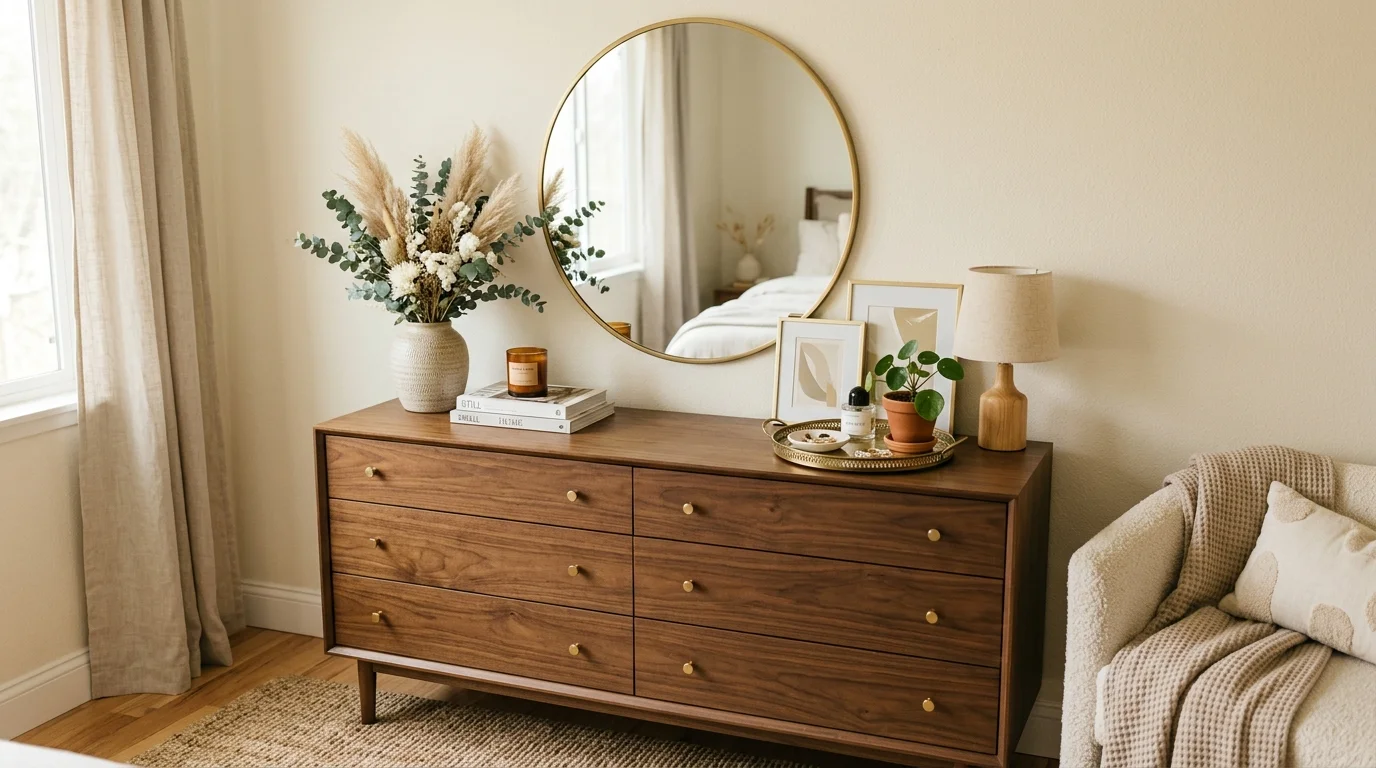
Let me guess — your bedroom dresser is either a chaotic pile of stuff you haven’t touched in six months, or it’s just a boring brown box sitting in the corner doing absolutely nothing for the vibe of your room.
Sound familiar?
Here’s the thing: your dresser doesn’t have to be just a place to shove your clothes. It can be the most stylish piece of furniture in your entire bedroom. And the best part? You don’t need to spend thousands of dollars or hire an interior designer to make it happen.
I’ve spent years obsessing over bedroom makeovers, and I’m going to walk you through the best bedroom dresser ideas that actually work in real homes — not just in magazine photoshoots.
Let’s get into it.
Why Your Dresser Is Actually the Most Underrated Piece of Furniture in Your Bedroom
Think about it. Your bed is the obvious star. Your nightstand gets all the attention. But your dresser? It quietly holds your entire wardrobe together while looking completely forgotten.
That’s a shame.
A well-styled dresser can completely transform how your bedroom feels. It creates visual balance, adds personality, and gives you a functional surface to work with every single morning when you’re getting ready.
Most people treat their dresser like a filing cabinet. The ones who treat it like a design feature? Their bedrooms look like something out of Architectural Digest.
The difference isn’t money. It’s intention.
How to Choose the Right Dresser Style for Your Bedroom
Before jumping into specific ideas, you need to figure out what style fits your space. This is where most people go wrong — they fall in love with a dresser on Instagram, buy it, and then realize it completely clashes with everything else in the room.
Ask yourself these three questions:
1. What’s my bedroom’s overall vibe?
- Clean and minimal? Go for simple lines and neutral colors.
- Warm and cozy? Think wood tones, curved edges, and earthy textures.
- Bold and dramatic? Dark finishes, brass hardware, and statement pieces are your friends.
2. How much storage do I actually need? Don’t buy a tiny 3-drawer dresser if you have a full wardrobe. And don’t buy a massive 8-drawer behemoth if you live in a studio apartment. Scale matters.
3. Where is the dresser going? A dresser against a wall needs styling from the front. A dresser under a window needs a lower profile. A dresser in a small bedroom needs to work harder with less footprint.
Once you’ve answered these, you’re ready to explore the actual bedroom dresser ideas that’ll change your space.
20+ Bedroom Dresser Ideas That Look Amazing in Real Life
1. The Minimalist White Dresser With Clean Pulls
White dressers are classics for a reason. They make small bedrooms feel bigger, they go with literally everything, and they photograph beautifully.
The secret to making a white dresser look expensive: swap out the generic pulls. Matte black bar handles instead of those little round knobs? Game changer. Suddenly your $300 dresser looks like it cost $900.
Add a simple tray on top with a candle, a small plant, and maybe one framed photo. Done. Minimal effort, maximum impact.
2. Mid-Century Modern Dresser With Tapered Legs
If you’ve spent more than five minutes on Pinterest, you’ve seen this look. The low-profile dresser with hairpin or tapered legs sitting a few inches off the ground gives any bedroom that cool, retro-modern feel.
What makes this work: the negative space under the dresser makes the room feel more open and airy. It’s a visual trick that designers use constantly.
Pair it with warm wood floors and a statement mirror above it, and you’ve basically re-created a 1960s Hollywood bedroom — in a good way.
3. Dark Wood Dresser for a Moody, Dramatic Bedroom
Dark wood dressers — think walnut, mahogany, or even painted-black wood — are having a massive moment right now.
And honestly? It makes sense.
Dark furniture grounds a room. It creates weight and drama. It makes your bedroom feel intentional rather than accidental. If you’ve been nervous about going dark, don’t be. The key is balance — pair dark furniture with lighter walls, soft textiles, and good lighting.
A dark wood dresser with warm brass hardware in a bedroom with cream or sage green walls? Absolutely stunning.
4. Floating Dresser or Wall-Mounted Storage
This one’s brilliant for small bedrooms. A floating dresser is mounted directly to the wall — no legs, no floor space wasted.
Why it works: it gives you the storage you need while making the floor feel more open. Visually, it’s clean, modern, and incredibly functional.
The surface on top becomes a display shelf. Underneath, you could even add basket storage or a small stool that tucks away.
5. Vintage Dresser From a Thrift Store (Painted and Updated)
This is honestly one of my favorite bedroom dresser ideas because it’s the highest reward for the least amount of money.
An old wooden dresser from a thrift store or estate sale, cleaned up and painted in a fresh color? You can create something absolutely unique that nobody else has.
The process is simpler than you think:
- Sand the surface lightly.
- Apply a primer coat.
- Paint in your chosen color (chalk paint is incredibly forgiving).
- Seal with a clear wax or topcoat.
- Swap the hardware.
Sage green, dusty pink, terracotta, navy blue — the possibilities are genuinely endless. And you’ll have a one-of-a-kind piece for under $100.
6. Mirrored Dresser for a Glamorous, Light-Filled Look
Mirrored dressers scream old-Hollywood glamour. If your bedroom needs a serious dose of elegance, this is the move.
The practical benefit: all those reflective surfaces bounce light around the room, making even a dark bedroom feel brighter and more spacious.
Style the top simply — overdoing it with a mirrored dresser looks chaotic. A single vase with fresh flowers, a perfume collection arranged neatly, and maybe a small lamp. Keep it curated.
7. The Double Dresser That Works as a TV Stand
This is one of the smartest bedroom dresser ideas for people who want to reduce furniture clutter.
A wide, low double dresser can absolutely double as a TV stand. Put your TV on top, route the cords down the back, and you’ve eliminated the need for a separate media console.
What to look for: make sure the dresser height works with your bed height for comfortable viewing. Generally, the center of the screen should be at eye level when you’re sitting up in bed.
Add a basket or small box for remotes and cables, and you’ve got a clean, functional setup.
8. Open Shelf Dresser With Baskets
Not every dresser needs to have closed drawers. An open-shelf dresser — essentially a dresser frame with open compartments — combined with woven baskets gives you that curated, organic look that’s all over interior design right now.
The baskets do the hiding. Your stuff stays organized inside them, but from the outside, all you see is beautiful texture and warmth.
This works especially well in bedrooms with a natural, earthy, or Japandi aesthetic.
9. Built-In Dresser for a Custom, High-End Look
If you’re doing a bedroom renovation or you have some DIY skills, a built-in dresser is the ultimate storage solution.
It looks completely custom. It maximizes every inch of available space. And because it’s built directly into the wall or a closet alcove, it visually disappears into the architecture of the room.
Cost varies wildly — from a few hundred dollars if you DIY with IKEA components, to several thousand for a fully custom carpentry job. But the payoff in both function and aesthetics is massive.
10. Dresser Styled as a Vanity Area
Got a dresser near a window or good lighting? Turn it into a vanity.
Add a mirror above it (or a freestanding mirror on top), arrange your skincare and makeup in organized trays, and suddenly your dresser is doing double duty as both storage and a dedicated getting-ready space.
This works especially well in bedrooms without a separate bathroom vanity. And it creates a morning routine that actually feels enjoyable rather than just functional.
11. Baby Blue or Sage Green Painted Dresser
Color is back in bedrooms, and it’s not going anywhere.
Soft, muted colors on a dresser — baby blue, sage green, dusty mauve, warm terracotta — add personality without overwhelming the space. It’s a commitment that’s easy to undo (just repaint), so there’s really no risk.
Pro tip: match your dresser color to your throw pillows or curtains for a cohesive, intentional look that feels professionally designed.
12. Industrial Dresser With Metal Accents
If your bedroom leans toward an urban, loft-style aesthetic, an industrial dresser is perfect. Think raw wood combined with black metal frames, exposed hardware, and a slightly rough, unfinished quality.
This style pairs beautifully with exposed brick walls, concrete floors, or deep charcoal accent walls.
The key: don’t overdo it. One industrial piece as a focal point works great. A whole room full of industrial furniture just looks cold and unwelcoming.
13. Dresser With a Gallery Wall Above It
Instead of just hanging a mirror above your dresser, create a mini gallery wall.
Mix frames of different sizes and finishes, add some art prints, a small shelf, maybe a wall-mounted plant — and your dresser becomes the anchor for a full design moment.
This works best when there’s a cohesive color palette running through all the frames and art. Random chaos just looks messy. Intentional variety looks curated and cool.
14. White Dresser With Cane or Rattan Drawer Fronts
This is one of the most popular dresser trends right now, and for good reason — it brings incredible texture to a bedroom while keeping everything light and airy.
The cane webbing on the drawer fronts has this warm, organic quality that feels both modern and slightly retro at the same time. It works beautifully in coastal, boho, Scandinavian, and even minimalist bedrooms.
Pair it with: linen textiles, natural wood accents, and warm lighting for maximum effect.
15. Low Profile Dresser for Small Bedrooms
In a small bedroom, height is everything. A low, wide dresser keeps the sight lines open, makes the ceiling feel higher, and gives you more visual breathing room.
The golden rule for small spaces: the lower your furniture, the bigger the room feels.
A low dresser under 36 inches tall can also double as a display surface that doesn’t compete with the window — perfect if you want to style it without blocking natural light.
How to Style Your Dresser Top Like an Interior Designer
This is where most people drop the ball. The dresser itself might look great, but if the top is a chaotic pile of receipts, loose change, and products you forgot you owned — it ruins everything.
Here’s a simple formula that always works:
The Rule of Three: Pick three types of items — something tall (like a lamp or plant), something medium (a tray, a candle, a small vase), and something small (a piece of jewelry, a small sculpture, a meaningful object). Arrange them asymmetrically and leave some empty space around them.
Add a tray: A decorative tray groups smaller items and makes them look intentional. Without a tray, the same items look scattered. With a tray, they look curated. It’s almost unfair how well this works.
One plant, always: A small potted plant or fresh flowers adds life to any dresser top. Even a tiny succulent works. Fake plants are fine too — just avoid the obviously plastic-looking ones.
Edit ruthlessly: If it doesn’t belong there, it doesn’t belong there. Remove the receipts, the random hair ties, the charger cables. Those can live in a drawer. The top is for style, not storage.
Dresser Organization Ideas That Make Mornings Easier
A beautiful dresser is only half the battle. What’s inside matters too.
Drawer dividers are life-changing. They cost almost nothing, and they completely transform the chaos inside your drawers into something organized and functional. You’ll actually be able to find what you’re looking for.
Fold clothes the KonMari way — vertical folding so everything stands up rather than lying flat. You can see every item at a glance, nothing gets buried, and your drawers hold more.
Assign each drawer a category:
- Top drawer: everyday basics (socks, underwear)
- Middle drawers: shirts and pants you wear regularly
- Bottom drawers: seasonal or occasional items
Add cedar blocks or small sachets to keep everything smelling fresh and to protect against moths.
The Biggest Dresser Mistakes to Avoid
I’ve seen these mistakes in dozens of bedrooms. Don’t be the person who makes them.
Buying a dresser that’s the wrong scale. A huge dresser in a tiny room looks suffocating. A tiny dresser in a large room looks lost. Measure your space first, every time.
Ignoring the hardware. Hardware is like jewelry for your furniture. Cheap, generic pulls drag down even an expensive dresser. Good hardware elevates even a budget piece.
Over-styling the top. More is not more with dresser tops. Edit down to three to five items maximum and embrace some empty space.
Forgetting about the mirror. A dresser without something on the wall above it looks unfinished. It doesn’t have to be a mirror — art, a shelf, a gallery wall — but there should be something.
Buying without measuring. Always measure the space, measure the doorway it needs to come through, and measure the drawer clearance needed to open fully. Nothing is worse than buying a beautiful dresser and discovering it doesn’t fit through your bedroom door.
Dresser Ideas by Bedroom Style
For a Scandinavian Bedroom:
Light wood with clean lines, minimal hardware, and a low profile. Style the top with a single plant and a small ceramic sculpture.
For a Bohemian Bedroom:
Vintage or thrifted dresser painted in a warm, earthy tone. Layered styling on top with plants, candles, crystals, and collected objects.
For a Modern Glam Bedroom:
Mirrored or lacquered dresser with gold or chrome hardware. Keep styling minimal and elegant — a single orchid, a perfume arrangement, clean and intentional.
For a Coastal Bedroom:
Natural wood or white-painted dresser with cane drawer fronts. Light, breezy styling with shells, a small driftwood piece, and simple white candles.
For a Japandi Bedroom:
Low-profile dresser in a natural wood finish with minimal or no visible hardware. Extremely restrained styling — one small plant, maybe a single object of meaning. Let the negative space breathe.
Budget Guide: What to Expect at Every Price Point
You don’t need to spend a fortune to get a beautiful dresser. Here’s what’s realistic at different budgets:
Under $200: IKEA’s HEMNES or MALM dressers are absolute classics. They’re not glamorous out of the box, but with a fresh coat of paint and new hardware, they can look stunning. Second-hand dressers in this price range are also worth hunting for.
$200–$500: This is the sweet spot for most people. You’ll find solid mid-range dressers from brands like IKEA’s higher tiers, Wayfair, Target’s project 62 line, and similar retailers. Quality varies, so read reviews carefully and check that the drawer construction is solid.
$500–$1,500: This is where you start getting into real furniture — solid wood construction, dovetail drawer joints, quality hardware, and finishes that last. West Elm, Pottery Barn, and Article all offer good options in this range.
Over $1,500: Heirloom territory. Custom, solid wood, hand-crafted pieces that will genuinely last a lifetime and look better with age. Worth the investment if your budget allows.
A Quick Note on Sustainability
If you care about the environmental impact of your furniture choices — and more and more people do — here’s something worth knowing:
The most sustainable dresser you can buy is one that already exists.
Thrifted, vintage, or inherited dressers already have their environmental cost sunk. Restoring and using them keeps them out of landfills and creates zero new manufacturing demand.
If you’re buying new, look for pieces made from sustainably certified wood (FSC certification is a good signal) or from companies with transparent supply chains.
Final Thoughts: Your Dresser Deserves Better
Here’s the bottom line: your dresser is one of the largest pieces of furniture in your bedroom, and it’s there every single day. It deserves to be beautiful, functional, and intentional — not an afterthought.
Whether you’re working with a $50 thrift store find or splurging on a brand-new solid wood piece, the principles are the same. Choose a style that fits your space. Swap the hardware. Style the top thoughtfully. Keep the inside organized. That’s really all it takes.
Your bedroom is where you start and end every single day. Make it a place you actually love being in.
FAQ
Q1: What size dresser do I need for my bedroom? A: It depends on your room size and storage needs. Measure the wall space where the dresser will go and leave at least 30–36 inches of clearance in front for drawers to open fully. As a general rule, a 6-drawer dresser works well for most adults, while a 3-drawer chest suits kids’ rooms or supplemental storage.
Q2: Should my dresser match my bed frame? A: Not necessarily. Matching sets can look dated and predictable. Coordinating is better than matching — choose pieces that share a color family or material quality, but don’t be afraid to mix. A walnut bed frame with a white dresser, united by warm brass hardware, often looks more sophisticated than a perfectly matched “set.”
Q3: How do I make a cheap dresser look expensive? A: The most effective upgrades are hardware replacement (high-quality pulls and knobs make a massive difference), a fresh coat of paint in a sophisticated color, and intentional styling on top. These three changes alone can make a $150 dresser look like it cost $600.
Q4: What’s the best wood for a bedroom dresser? A: Solid hardwoods like oak, walnut, maple, and cherry are the most durable and beautiful options. They’re more expensive but last for decades. Solid pine is a more affordable solid-wood option. Avoid furniture made entirely from particleboard or MDF if longevity is a priority — those materials swell and deteriorate over time, especially with humidity.
Q5: How high should a dresser be? A: Standard dresser height ranges from 26 to 44 inches. The “right” height depends on the room — lower dressers (26–36 inches) make small rooms feel more open and work well in Scandinavian or mid-century styles, while taller chests of drawers (40–44 inches) maximize vertical storage and suit larger bedrooms. Consider comfort too — you shouldn’t have to hunch over uncomfortably to access the top drawer.
Transform your bedroom one piece at a time. Start with the dresser — it might just be the upgrade that changes everything.