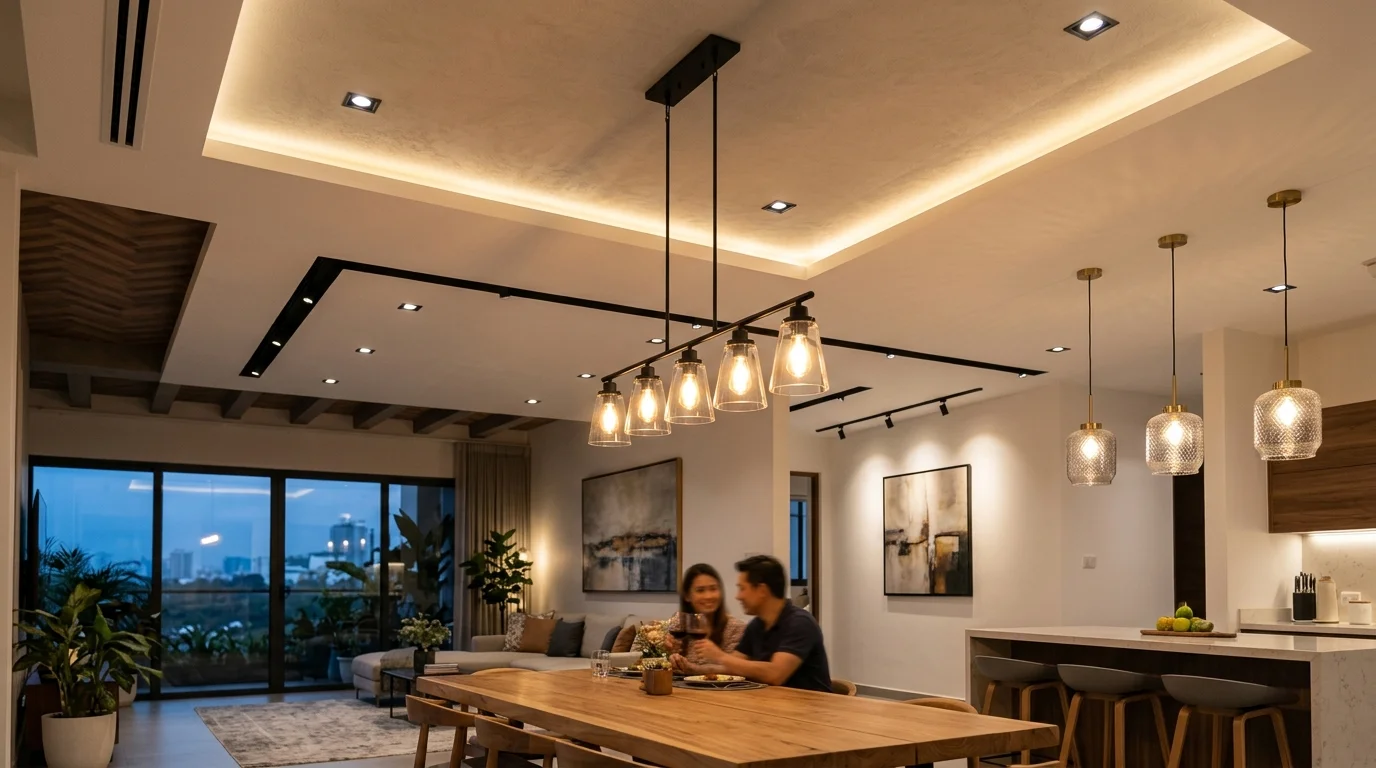
You walk into a room and something just feels off. The furniture is great. The paint color is perfect. But the whole space looks dull, flat, or somehow smaller than it actually is. Nine times out of ten? The problem is the ceiling light.
It’s wild how much a single fixture up on the ceiling can change how a room feels. Get it right, and the whole space opens up, feels warm, feels alive. Get it wrong, and even the most beautifully decorated room falls flat.
So let’s fix that.
Whether you’re renovating a whole house, just updating one room, or you’re completely clueless about where to start — this guide breaks it all down in plain, simple terms. No jargon. No fluff. Just real, practical help.
Why Ceiling Lights Matter More Than You Think
Here’s something most people don’t realize: lighting isn’t just about seeing. It’s about feeling.
Walk into a bedroom with a harsh, bright white overhead light and you’ll feel tense. Now swap that for a warm, dimmable ceiling fixture and suddenly the room feels like a place you actually want to relax in. Same room. Totally different vibe.
Proper ceiling lights do three things at once:
- Set the mood — warm vs. cool, bright vs. soft
- Define the purpose of a space — work, rest, cooking, gathering
- Complete the look of your décor — a fixture is furniture for your ceiling
And here’s the kicker: according to research from the U.S. Department of Energy, LED ceiling lights use 75% less energy than old incandescent bulbs and can last 25,000 to 50,000 hours. So choosing the right ceiling light isn’t just about aesthetics — it’s actually saving you real money.
The 6 Main Types of Ceiling Lights (And When to Use Each One)
This is the most important section. Get this right and everything else falls into place.
1. Flush Mount Lights
These sit directly flat against the ceiling with no gap. They look clean, simple, and streamlined.
Best for: Hallways, small bedrooms, closets, bathrooms, and any room where the ceiling is under 8 feet tall.
Why people love them: They don’t hang down, so they’re perfect for tight spaces. They come in all sorts of designs now — round, square, modern, farmhouse, you name it.
Pro tip: Don’t install a flush mount on a really high ceiling. It creates a weird “floating dot” effect that makes the ceiling feel even higher and emptier than it is.
2. Semi-Flush Mount Lights
These hang slightly away from the ceiling on a short stem — maybe 4 to 8 inches down. They’re a nice middle ground between the flat flush mount and a full pendant.
Best for: Dining rooms, entryways, living rooms with 8 to 10-foot ceilings.
Why people love them: They provide both upward and downward light at the same time, so you get that layered effect that makes rooms feel fuller and more interesting.
3. Pendant Lights
A pendant hangs down on a single cord, rod, or chain and provides focused light in one specific area.
Best for: Kitchen islands, dining tables, reading nooks, or anywhere you want to draw attention to a specific spot.
Why people love them: They’re incredibly versatile in style. You can find industrial pendants, minimal glass pendants, rattan pendants — whatever matches your room’s vibe. Many people use two or three pendants in a row over a kitchen island for a really polished look.
Watch out: Make sure you hang them at the right height. Over a kitchen island, 30 to 36 inches above the countertop is usually the sweet spot.
4. Chandeliers
Chandeliers are the showstoppers. Multi-armed, often adorned with crystals, glass, or metalwork, they hang from the ceiling and make a serious statement.
Best for: Dining rooms, living rooms with high ceilings, entryways, and formal spaces.
Why people love them: A well-chosen chandelier is basically wall art for your ceiling. It instantly elevates any room. And modern chandeliers in 2025 aren’t just the old crystal-ball style — you’ll find sleek linear designs, mixed metal looks, and even organic wood-and-rattan styles that feel fresh and contemporary.
Scale matters a ton here. A chandelier that’s too small in a large dining room just looks lost. A general rule: add your room’s length and width together (in feet), and that number in inches is roughly how wide your chandelier should be.
5. Recessed Lights (Can Lights)
These are installed into the ceiling itself, with only a small trim ring visible. The light source is hidden inside the ceiling.
Best for: Kitchens, living rooms, home offices, and any space where you want a super clean, uncluttered look.
Why people love them: They don’t compete with your décor at all. They just provide clean, even light across a space. Many people use them as a base layer of light and then add pendant lights or sconces on top for style.
One thing to note: Recessed lights work best when you’re doing a renovation or building from scratch, since they require cutting holes into your ceiling.
6. LED Panel Lights
These are flat, square or rectangular panels that provide super even, bright illumination.
Best for: Home offices, garages, utility rooms, and spaces where you really need bright, functional light.
Why people love them: They’re incredibly efficient and the light they produce is very consistent without shadows or bright spots. Not the most stylish option, but unbeatable for task-focused spaces.
How to Choose the Right Ceiling Light: A Room-by-Room Breakdown
Living Room
Your living room needs to do a lot of heavy lifting. It’s where you hang out, watch TV, have friends over, and sometimes just sit and read. So it needs layered lighting.
Start with a main ceiling light — a semi-flush mount, a chandelier, or a statement pendant — to provide ambient light for the whole room. Then add floor lamps or table lamps in corners for extra warmth and task lighting.
Color temperature tip: Go with warm white (2700K to 3000K) for living rooms. It feels cozy and inviting, not like a hospital waiting room.
Kitchen
Kitchens need more light than almost any other room in the house. You’re chopping vegetables, reading recipes, cleaning up — you need to actually see clearly.
Best approach: Recessed ceiling lights for overall brightness, then pendant lights over the island for both task lighting and style. This combo is popular for a reason — it genuinely works.
Color temperature tip: Neutral to slightly cool white (3000K to 4000K) works great in kitchens. It helps you see food colors accurately and keeps things feeling fresh and clean.
Bedroom
The bedroom is your sanctuary. The last thing you want is a buzzing, harsh overhead light ruining your wind-down routine.
Go for dimmable ceiling lights — this is non-negotiable for bedrooms. Being able to drop the brightness from 100% when you’re cleaning to 20% when you’re about to sleep is genuinely life-changing.
Color temperature tip: Warm white (2700K) all the way. It mimics the soft light of sunset, which signals to your brain that it’s time to relax.
Bathroom
Bathrooms have two different lighting needs happening at once: task lighting for the vanity (so you can apply makeup, shave, etc.) and ambient light for the rest of the room.
For the ceiling, a clean flush mount or recessed lights work great. For over the mirror, wall-mounted vanity lights are actually better than overhead because they reduce shadows on your face.
Safety first: Always make sure any ceiling light near a bathtub or shower is damp-rated or wet-rated. This is a real safety requirement, not optional.
Home Office
In a home office, you need bright, consistent light that reduces eye strain. Recessed lights or LED panel lights are your friend here.
If you have a desk in a specific corner, consider adding a pendant light or a task lamp right over your workspace in addition to the overhead ceiling light.
The LED Revolution: Why You Should Switch Right Now
If you still have old incandescent or fluorescent bulbs in your ceiling lights, this is your official sign to upgrade.
Modern LED ceiling lights are just better in every measurable way:
- They use 75% less electricity than old bulbs
- They last 25x longer on average
- They don’t produce as much heat
- They’re available in every color temperature from warm candlelight to cool daylight
- Many now come with smart controls you can operate from your phone or with your voice
The upfront cost is a little higher, yes. But the savings on your electricity bill make it back in months, not years.
Smart Ceiling Lights: Are They Worth It?
Short answer: yes, if your lifestyle suits it.
Smart ceiling lights connect to your home Wi-Fi and can be controlled through an app on your phone, or via voice commands through Alexa, Google Home, or Apple HomeKit. You can set schedules, adjust brightness, change color temperature, or even have them turn on automatically when you walk in the room.
Some systems even do human-centric lighting — automatically shifting from cooler light in the morning (to help you wake up) to warmer light in the evening (to help you wind down). This is genuinely cool and more people should know about it.
Are they necessary? No. But once you have them, you wonder how you lived without them.
5 Things to Always Check Before You Buy
Before you click “Add to Cart” on any ceiling light, run through this quick checklist:
- Room size vs. fixture size — Measure your space. A tiny flush mount in a large living room looks lost. An oversized chandelier in a small bedroom feels suffocating.
- Ceiling height — Pendant lights and chandeliers need enough clearance. As a rule, the bottom of a hanging fixture should be at least 7 feet above the floor.
- Color temperature — Check the Kelvin rating. 2700K = warm yellow-white. 4000K = neutral. 5000K+ = cool daylight. Match this to the room’s purpose.
- Brightness (lumens, not watts) — A general guide: 10-20 lumens per square foot for living spaces; 30-40 lumens per square foot for kitchens and workspaces.
- Dimmable or not? — Not all LED fixtures are compatible with dimmer switches. If you want dimming capability (and you should for living rooms and bedrooms), check the product specs before buying.
2025 Ceiling Light Trends Worth Knowing
Design trends are moving in some really interesting directions right now:
Sculptural and artistic forms are huge. Ceiling lights that look like abstract art pieces — flowing curves, irregular shapes, unexpected materials.
Mixed metals are everywhere. Combining brass, matte black, and brushed nickel in a single fixture adds depth and works with almost any décor style.
Biophilic designs — fixtures that incorporate natural materials like wood, rattan, stone, or organic shapes — are gaining serious momentum as people want their homes to feel more connected to nature.
Minimalist flush mounts are still going strong for rooms with lower ceilings, but they’re getting more refined and interesting in their shapes.
And of course, smart lighting integration is becoming a standard feature rather than a luxury add-on.
Common Ceiling Light Mistakes to Avoid
Let’s save you some money and regret:
Mistake #1: Only using one light source in a room. A single overhead light creates flat, unflattering illumination. Layer your lighting.
Mistake #2: Choosing the wrong size fixture. Always measure. Always.
Mistake #3: Ignoring color temperature. Buying the wrong Kelvin rating is one of the most common and most frustrating lighting mistakes. Warm light in an office where you need to focus = sleepy. Cool light in a bedroom where you’re trying to relax = restless.
Mistake #4: Not checking dimmer compatibility. You buy a dimmer switch. You install it. The LED light flickers or buzzes. Always check that your fixture and your dimmer switch are compatible before purchasing either one.
Mistake #5: Installing a chandelier at the wrong height over a dining table. Too high and it looks wrong. Too low and you’re constantly bumping your head. The standard is 30 to 36 inches above the tabletop.
Conclusion: Light Changes Everything
Here’s the honest truth: most people way overthink furniture, way overthink wall colors, and barely think about lighting at all. But lighting is the thing that ties it all together.
The right ceiling lights can make a small room feel spacious, a cold room feel warm, a cluttered room feel elegant. It’s one of the highest-return investments you can make in your home.
Start by figuring out the purpose of the room. Pick a type of ceiling light that suits the ceiling height and room size. Choose the right color temperature for the mood you want. And always, always go with LED.
Once you get this right, you’ll walk into your home and feel the difference instantly.
Frequently Asked Questions
Q1: What type of ceiling light is best for a room with low ceilings?
Flush mount lights are ideal for rooms with ceilings under 8 feet. They sit flat against the ceiling and don’t take up any headroom, keeping the space feeling open and uncluttered.
Q2: How do I know what size ceiling light to get?
Add your room’s length and width in feet, then convert that number to inches — that’s roughly the ideal diameter for a ceiling fixture. For example, a 12×14-foot room works best with a fixture about 26 inches in diameter.
Q3: What’s the difference between warm white and cool white LED lights?
Warm white (2700K-3000K) produces a soft, yellowish glow that feels cozy and relaxed — great for bedrooms and living rooms. Cool white (4000K-5000K) produces a brighter, bluer-toned light that promotes focus and alertness — better for kitchens, bathrooms, and home offices.
Q4: Do I need special ceiling lights for my bathroom?
Yes. Any ceiling light installed near a bathtub or shower must be rated for damp or wet locations. Regular ceiling lights are not safe in high-humidity or water-exposed areas. Always check the fixture’s IP rating before installing in a bathroom.
Q5: Are smart ceiling lights worth the extra cost?
For most people, yes. Smart ceiling lights let you control brightness and color temperature from your phone or with voice commands, set schedules, and even automate your lighting based on time of day. The energy savings and convenience typically justify the higher upfront price within the first year.