
Most fabric sofas are quietly on a timer. Within three to five years, the cushions sag, the weave pills, and the color fades into something that looks more like a garage sale find than a living room centerpiece. Then the cycle repeats: shop, buy, replace.
A quality leather sofa breaks that cycle entirely.
Where fabric surrenders to daily life, leather absorbs it — literally. According to Copenhagen Imports, high-quality leather furniture can last 15 to 20 years or more with proper care, a lifespan that makes the higher upfront price look less like a splurge and more like a calculated investment.
The concept of patina makes that investment even smarter. Unlike fabric, which simply wears out, full-grain leather develops a rich, personalized surface character over time — deeper tones, subtle creasing, a warmth that only accumulates through actual use. This is not deterioration. It’s appreciation. No fabric alternative can replicate it.
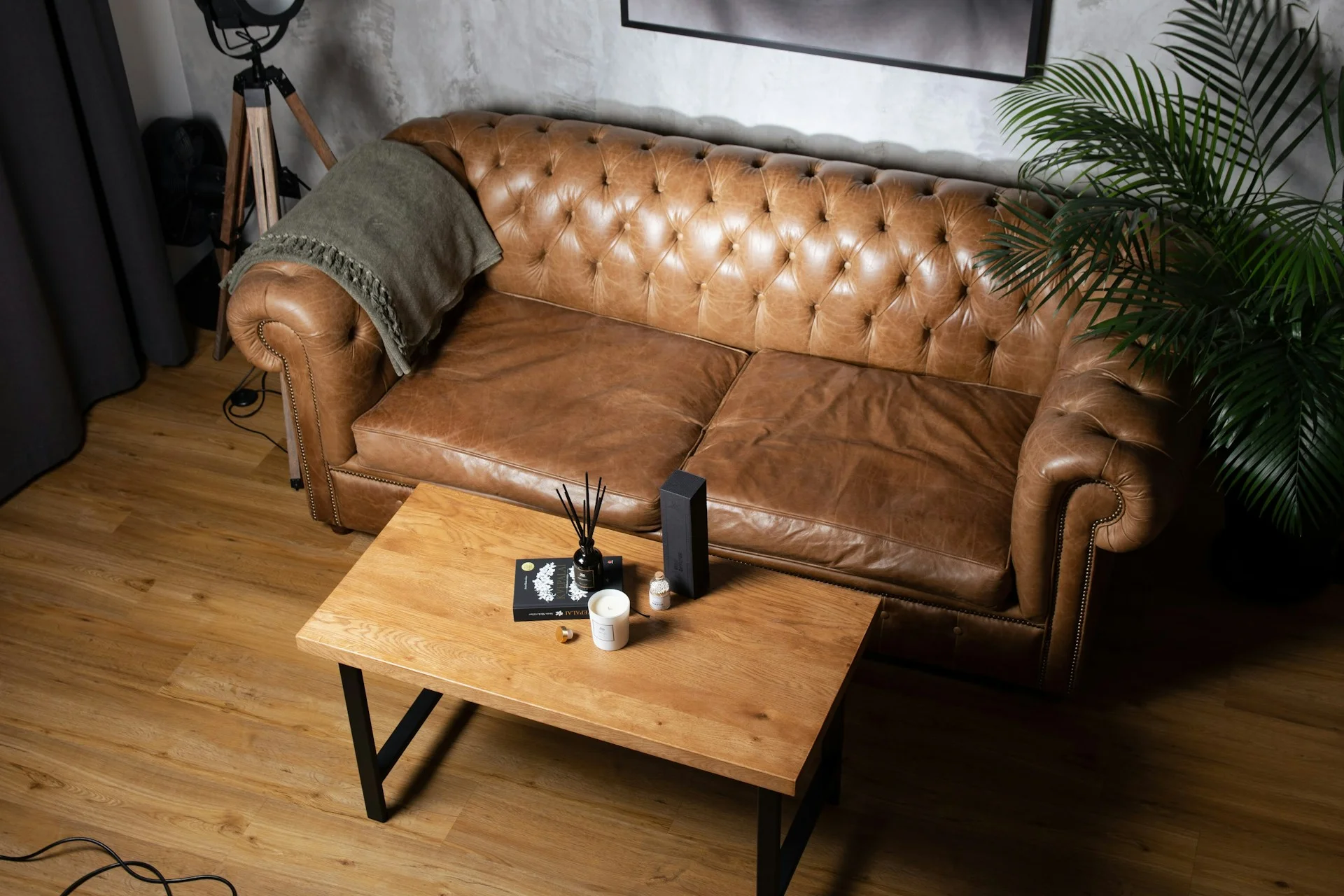
The furniture that gets more beautiful with age is the furniture worth owning — and leather is virtually alone in that category.
Shoppers researching the best leather sofa brands are increasingly recognizing this reality. The global leather furniture market continues its upward trajectory, reflecting a consumer shift away from disposable purchases toward pieces built to outlast trends.
Of course, not all leather is created equal — and that distinction matters enormously. Understanding exactly what you’re buying starts with decoding the labels.

The ‘Leather Match’ Trap: Decoding 100% Leather vs. Hybrids
Understanding why a leather couch fails often starts not with how it’s used, but with what it’s actually made of. The previous section established that quality leather delivers a 20-year return on investment — but that promise only holds if you’re buying real leather in the first place. A surprising number of shoppers never realize they didn’t.
What ‘Leather Match’ Actually Means
Leather Match is a construction method where only the most visible surfaces — the seat cushions and backrest — use genuine leather. The sides, back panels, and underneath sections are covered in vinyl or polyurethane designed to visually mimic the leather. It costs less to produce, and that savings gets passed on as a lower price tag that can look like a great deal.
The problem? Those vinyl panels are almost always the first areas to crack, peel, and separate — often within two to three years. What started as a value purchase becomes an eyesore faster than any fabric alternative would.
Grain Grades: The Quality Hierarchy You Need to Know
Not all genuine leather is equal. Here’s how the grades break down:
- Full-Grain Leather: The outermost layer of the hide, with natural markings intact. The most durable, most breathable, and most expensive grade. It develops a rich patina over time rather than deteriorating.
- Top-Grain Leather: Sanded and treated to remove surface imperfections. Still high quality and widely used in premium furniture, but slightly less durable than full-grain over decades of use.
- Bonded Leather: Scraps and fiber remnants bonded together with adhesive and coated with polyurethane. Technically contains leather, but behaves more like vinyl — cracking and peeling within a few years.
The grade of leather determines everything about long-term performance. According to Castlery’s breakdown of leather couch options, understanding these distinctions is essential before making any purchase decision.
Showroom Checklist: Spotting 100% Leather Construction
Before you commit, run through these quick checks:
- Smell it. Genuine leather has a distinct, earthy aroma. Vinyl smells chemical or plastic.
- Check the tag. Look for “100% genuine leather” or “full-grain leather.” Vague terms like “leather match” or “bonded leather seating” are red flags.
- Feel the back panels. Run your hand along the sides and rear of the sofa. If the texture shifts from soft and porous to smooth and uniform, you’re likely touching vinyl.
- Look at the edges. Cut edges on genuine leather look fibrous and uneven. Bonded leather and vinyl have clean, almost plastic-looking cuts.
One additional benefit worth noting here: full-grain and top-grain leather’s non-porous, smooth surface also makes it a natural candidate for hypoallergenic furniture setups — a point that deserves a much closer look when considering who actually lives with your sofa every day.
Clinical Comfort: Why Leather is the Best Choice for Eczema and Allergies
Once you’ve confirmed you’re buying genuine leather — not a hybrid with a vinyl-coated back panel — the health benefits of that material choice become significant. This is especially true for anyone managing allergies, asthma, or eczema.
Leather’s non-porous surface is its superpower. Unlike woven fabric, leather doesn’t have microscopic gaps where dust mites, pet dander, mold spores, and pollen can embed themselves. Those allergens simply sit on the surface and wipe away with a damp cloth. In practice, a quick wipe-down removes what would take a fabric sofa multiple vacuuming passes to address — and even then, deep-seated allergens often remain.


The Dust Mite Problem With Fabric
Fabric sofas are essentially allergen hotels. Dust mites — a primary trigger for both asthma and allergic rhinitis — thrive in the warm, fibrous environment that woven upholstery provides. A large sectional sofa in a family living room accumulates an enormous surface area of fabric, and with it, a corresponding buildup of biological debris. Leather eliminates this environment entirely.
A Meaningful Difference for Eczema Sufferers
For people with eczema, the surface they’re in contact with daily matters enormously. Rough or synthetic-blend fabrics can mechanically irritate already-sensitive skin. Leather’s smooth, consistent surface avoids this friction entirely. As Koala Living notes, leather furniture is hypoallergenic and far easier to keep clinically clean than fabric alternatives.
The caveat worth acknowledging: some leather conditioners and cleaning agents contain fragrances that could irritate sensitive skin, so checking product labels matters. With the right care routine, however, leather remains one of the most clinically practical upholstery choices available.
That health-forward practicality is just one reason leather continues to dominate interior design conversations — and the styles themselves have evolved far beyond what most people picture.


2025 Design Trends: Beyond the Boxy Brown Recliner
The stereotypical image of leather furniture — a hulking, square-edged recliner sofa in dark chocolate brown — is fading fast. In 2025, the dominant aesthetic is softer, more sculptural, and far more versatile than most buyers expect.
Curved Silhouettes Are Taking Over
Organic, rounded forms are replacing rigid boxy frames across the leather furniture market. Think low-profile sofas with gently arched backs, barrel-shaped club chairs, and sectionals with flowing, continuous curves. These silhouettes feel less furniture-store and more art-forward — and leather’s natural suppleness makes it uniquely suited to showcasing those flowing lines. Where fabric can look shapeless in a curved design, leather holds its form and highlights the structure underneath.
Rethinking the Layout: The Conversational Arrangement
Modern living rooms are moving away from the “everything faces the TV” setup toward conversational layouts — seating positioned to face each other, encouraging actual interaction. Leather sectionals work exceptionally well here. An L-shaped or U-shaped configuration creates a natural gathering space without feeling closed off. When incorporating a recliner sofa into this kind of layout, opt for a model with a slimmer profile and integrated mechanism so it doesn’t visually dominate the arrangement.


The 2/3 Rule for Scaling Leather Sofas
One practical guideline designers consistently apply: your sofa should occupy roughly two-thirds of the wall it sits against. A sofa that’s too small looks adrift; one that’s too large feels suffocating. This ratio applies equally to sectionals and standard frames.
Getting the scale right is the foundation — and choosing the right brand to deliver it is the natural next step.
Brand Spotlight: Where to Buy ‘Buy It For Life’ Quality
With a clearer picture of what makes leather the dominant choice — for health, aesthetics, and longevity — the next practical question is obvious: which brands actually deliver on that promise? Not every retailer selling “genuine leather” furniture is offering the same thing, and the gap between a $600 sofa and a $6,000 one is rarely about aesthetics alone.
Timothy Oulton: The Gold Standard
For buyers who want a sofa with genuine character, Timothy Oulton sits at the top of the market. Every piece is handcrafted, using distressed and heritage leathers that develop a richer patina over decades. These sofas aren’t designed to look pristine — they’re designed to age beautifully. The price point reflects that craft, typically starting well above $3,000, but the longevity justifies the math.
Poly & Bark: Modern Looks, Top-Grain Access
Poly & Bark occupies a smart middle position. Their furniture uses top-grain leather at price points that feel accessible — typically $800 to $1,800 — while maintaining clean, contemporary silhouettes that fit modern apartments. For buyers who want quality without the luxury markup, this is a reliable entry point.


Article & Room & Board: Mid-Range Dependability
Both Article and Room & Board have built strong reputations for modern sectionals and sofas that balance style with structural integrity. Room & Board, in particular, offers a strong selection of American-made frames, which adds a durability dimension that offshore alternatives often can’t match. If you’re shopping for a leather reclining sofa with contemporary styling, both brands offer compelling options in the $1,500 to $3,500 range.
The Leather Sofa Co.: Customization and American Craft
The Leather Sofa Co. stands apart through deep customization — buyers can select hide type, color, and configuration — combined with Made in USA construction. That combination of personalization and domestic craftsmanship makes it a strong choice for buyers treating this as a decades-long investment.
Of course, even the best leather sofa only performs as promised if it’s properly cared for — which brings us to the maintenance habits that separate a 10-year sofa from a 20-year one.
Maintenance Mastery: Protecting Your 20-Year Investment
A quality leather sofa earns its longevity — but only with consistent, informed care. Neglect is the single fastest way to turn a 20-year investment into a 5-year disappointment.
The 2/3 Rule is a practical starting point: clean your leather every 2 months and condition it every 3 months. This rhythm prevents the surface from drying out, which is the primary cause of cracking and flaking over time.
Placement matters just as much as cleaning. Direct sunlight and heat sources — radiators, vents, fireplaces — degrade leather fibers at the molecular level, causing irreversible fading and stiffness. Position your sofa at least 2 feet from any heat source.
Perhaps the most common mistake is reaching for generic household cleaners. Products containing bleach, ammonia, or alcohol strip the natural oils from top-grain leather, causing permanent damage. Always use pH-balanced, leather-specific formulas.
One final distinction worth reinforcing: if you’re weighing leather match vs 100% leather, know that bonded or split-leather sections require even more delicate handling — and are far less forgiving of cleaning missteps.
Proper care transforms a great sofa into a generational piece. Treat it right, and it returns the favor for decades.
Key Takeaways
- Top-Grain Leather: Sanded and treated to remove surface imperfections. Still high quality and widely used in premium furniture, but slightly less durable than full-grain over decades of use.
- Smell it. Genuine leather has a distinct, earthy aroma. Vinyl smells chemical or plastic.
- Check the tag. Look for “100% genuine leather” or “full-grain leather.” Vague terms like “leather match” or “bonded leather seating” are red flags.
- Feel the back panels. Run your hand along the sides and rear of the sofa. If the texture shifts from soft and porous to smooth and uniform, you’re likely touching vinyl.
- Look at the edges. Cut edges on genuine leather look fibrous and uneven. Bonded leather and vinyl have clean, almost plastic-looking cuts.


