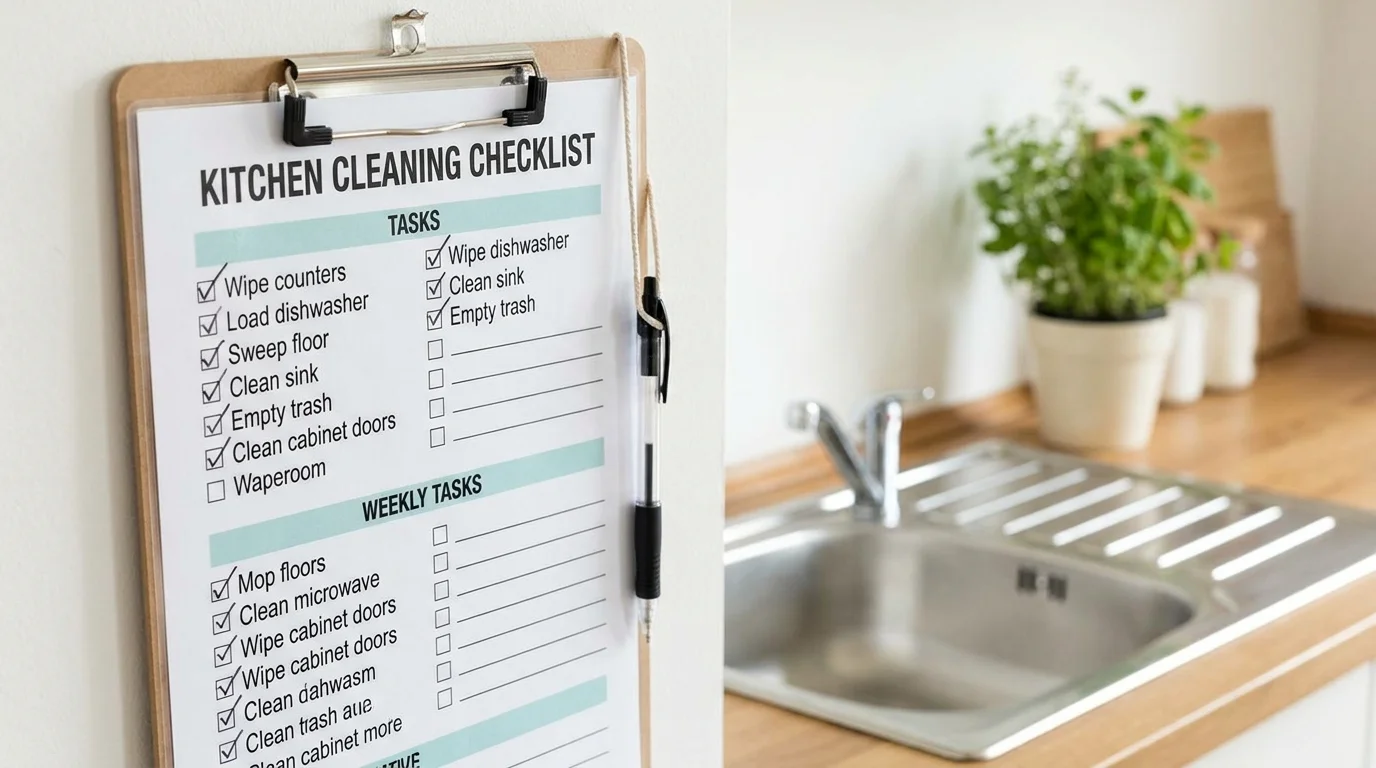
You walk into your kitchen to make breakfast. And then you see it. A sticky stovetop, greasy cabinet handles, and something suspicious near the drain that you’d rather not think about too hard. Sound familiar?
Here’s the thing — a dirty kitchen isn’t just an eyesore. It’s a health hazard. Bacteria like Salmonella and E. coli love warm, moist kitchen surfaces. They multiply fast, especially around your sink, cutting boards, and sponges. Scary, right?
But here’s the good news: You don’t need to deep-clean your entire kitchen every single day. You just need the right kitchen cleaning checklist — one that tells you exactly what to clean, how often, and in what order. That’s what this guide is.
Why Most People Clean Their Kitchen Wrong
Let’s be real. Most of us wipe the counter, wash the dishes, and call it done. But that kind of surface-level cleaning misses the spots where grime and bacteria actually hide.
The refrigerator handle. The space behind the stove. The inside of the microwave door. The forgotten crumbs stuck inside cabinet corners. These spots don’t get noticed — until your kitchen smells funky or someone gets a stomach bug.
A proper kitchen cleaning checklist is not about being obsessive. It’s about being smart. Break cleaning into daily, weekly, and monthly tasks, and your kitchen stays fresh without ever feeling overwhelming.
Your Daily Kitchen Cleaning Checklist
These are the non-negotiables. The stuff you do every day, or at minimum every evening before bed. It takes 10–15 minutes. That’s it.
Daily Tasks (Every Single Day)
- Wipe down countertops — use a clean damp cloth with a mild all-purpose cleaner
- Wash all dishes — or load the dishwasher and run it
- Clean the stovetop — wipe off spills and grease while they’re still fresh (much easier this way)
- Wipe the sink — scrub the basin, faucet handle, and surrounding area
- Empty the trash can — especially important in summer to avoid fruit flies and odors
- Sweep or vacuum the floor — crumbs attract pests fast
- Replace the dish sponge or rinse it — microwave your damp sponge for 60 seconds to kill bacteria
- Put everything back in its place — clutter makes cleaning feel 3x harder tomorrow
You don’t have to do all of these at the same time. Do the dishes right after dinner. Wipe the stovetop before the grease hardens. Sweep the floor while you’re waiting for the kettle to boil. Build it into your flow, and it won’t feel like work.
Weekly Kitchen Cleaning Checklist
Once a week, you go one level deeper. These tasks catch the things that daily wiping misses — grease buildup, appliance interiors, and the neglected corners your eyes skip over.
Pick a day — Sunday evening or Saturday morning, whatever works for you — and knock these out in about 30–45 minutes.
Weekly Tasks (Once a Week)
- Clean the inside of the microwave — heat a bowl of water with lemon for 5 minutes, then wipe easily
- Degrease the stovetop burners — remove grates if possible, soak in soapy water
- Wipe cabinet fronts and handles — especially around the oven and prep area
- Clean the kitchen sink thoroughly — use baking soda and vinegar for a deep clean and deodorize the drain
- Mop the floor — sweep first, then mop with a kitchen-safe floor cleaner
- Disinfect the trash can — spray inside with disinfectant, let sit, rinse
- Wipe appliance exteriors — toaster, coffee maker, blender, all of them
- Clean the dish rack — those slimy deposits underneath are a bacteria party
- Check and organize the fridge — toss expired items, wipe down shelves if sticky
- Wash kitchen towels and cloths — damp fabric is a breeding ground for bacteria
Monthly Kitchen Cleaning Checklist
These are the deep-clean tasks. The ones most people skip — and then wonder why their kitchen never quite feels truly clean. Once a month is all you need. Block out an hour, put on a good podcast, and get it done.
Monthly Tasks (Once a Month)
- Deep clean the oven — use the self-clean function or an oven cleaner spray; don’t forget the oven racks
- Clean behind and under the refrigerator — dust on condenser coils makes your fridge work harder and builds up fast
- Descale the kettle and coffee machine — limescale buildup affects taste and lifespan
- Wipe inside the refrigerator completely — remove every shelf and drawer, wash with warm soapy water
- Clean range hood filters — soak in hot water and dish soap, scrub the grease out
- Disinfect cutting boards — soak wooden boards in a diluted bleach solution or use coarse salt and lemon
- Declutter pantry and cabinets — toss expired dry goods, reorganize, wipe shelves
- Clean the dishwasher interior — run an empty cycle with a dishwasher cleaner tablet
- Check and clean window sills — grime accumulates near cooking steam
- Wipe light switches and outlet covers — high-touch areas that rarely get attention
Seasonal or Quarterly Kitchen Cleaning Tasks
A few times a year, you go even deeper. Think of this as your kitchen’s quarterly performance review.
- Empty and clean all cabinets — remove everything, wipe shelves and walls
- Clean tile grout — use a grout brush and baking soda paste
- Inspect and replace worn items — sponge holders, shelf liners, worn dish brushes
- Wash curtains or window covers if present in the kitchen
- Clean refrigerator coils and check door seals for cracks
- Check smoke and carbon monoxide detectors near the kitchen
Kitchen Cleaning Checklist at a Glance
Here’s the whole system in one quick-scan table:
| Frequency | Key Tasks | Time Needed |
|---|---|---|
| Daily | Counters, dishes, stovetop, sink, floor sweep, trash | 10–15 min |
| Weekly | Microwave, mop, fridge check, appliance exteriors, towels | 30–45 min |
| Monthly | Oven, inside fridge, hood filters, cutting boards, dishwasher | 60–90 min |
| Quarterly | Cabinet deep-clean, grout, coils, curtains, detector check | 2–3 hours |
The Best Cleaning Products for Your Kitchen
You don’t need a cabinet full of specialized cleaners. Honestly, a few basics cover 90% of what you need.
Must-Have Cleaning Supplies
- All-purpose cleaner — for counters, exterior surfaces, cabinet handles
- Dish soap — not just for dishes; great for degreasing stovetops and appliances
- Baking soda — gentle abrasive for sinks, cutting boards, oven interiors
- White vinegar — natural disinfectant, cuts grease, removes limescale
- Oven cleaner — for heavy-duty oven grease buildup
- Microfiber cloths — much better than paper towels; trap bacteria instead of just spreading it
- Scrub brush with stiff bristles — for grout lines, drain edges, and tough stains
Kitchen Zones: Clean by Area, Not by Impulse
One of the smartest ways to use your kitchen cleaning checklist is to think in zones. Instead of randomly wiping here and there, move systematically through the kitchen. It saves time and ensures you miss nothing.
Zone 1: Cooking Zone (Stove, Oven, Hood)
This is the highest-priority zone. Grease splatters here daily. Wipe the stovetop every time you cook something with oil. Clean the hood filter monthly without fail — a clogged filter is a fire hazard, not just a hygiene issue.
Zone 2: Prep Zone (Countertops, Cutting Boards)
This is where raw food touches surfaces. Sanitize countertops after handling raw meat. Use separate cutting boards for meat and vegetables — cross-contamination is one of the most common causes of food poisoning at home.
Zone 3: Cold Storage Zone (Refrigerator, Freezer)
Most people neglect the fridge until something starts smelling. Don’t wait for that. Check expiry dates weekly. Clean the interior monthly. Keep a small open box of baking soda inside to absorb odors between deep cleans.
Zone 4: Sink and Cleaning Zone
Your sink is ironically one of the dirtiest spots in the kitchen. Leftover food particles, standing water, and damp sponges make it a microbial hotspot. Disinfect the sink basin and faucet handles as part of your daily cleaning routine.
Zone 5: Storage Zone (Pantry, Cabinets, Drawers)
This zone gets cleaned less often, but don’t ignore it. Crumbs at the bottom of drawers attract pests. Old spice jars and expired canned goods take up space and create clutter. A quarterly purge keeps this zone manageable.
How to Make Kitchen Cleaning a Habit (Without Hating It)
The best kitchen cleaning checklist is the one you actually use. And the truth is, most people abandon cleaning routines because they feel like punishment. Here’s how to actually stick with it.
The 2-minute rule: If a kitchen task takes less than 2 minutes, do it right now. Don’t put it off. Wipe the counter? 45 seconds. Rinse a pan before food dries? 90 seconds. These micro-habits keep your kitchen from ever becoming a disaster.
Clean while you cook: Waiting for water to boil? Wipe the stove. Waiting for the oven to preheat? Load the dishwasher. Cooking naturally has idle moments. Use them.
Make it sensory-pleasant: Use a cleaning spray that smells great. Put on your favorite playlist. Light a candle after you’re done. Your brain will start associating cleaning with a reward, and it’ll feel less like a chore.
Involve everyone: If you live with others, assign kitchen cleaning zones. One person does the stovetop and counters. Another does the sink and dishes. Divide the load, and the whole kitchen cleaning checklist gets done in half the time.
Common Kitchen Cleaning Mistakes (And How to Fix Them)
Mistake 1: Using the Same Cloth for Everything
You wipe the counter, then the stove, then the sink — with the same cloth. Congratulations, you just transferred bacteria between surfaces. Use separate cloths for different zones, or use disposable paper towels for the sink and floor areas.
Mistake 2: Ignoring the Undersides
The bottom of your appliances, the underside of cabinet shelves, the space behind the trash can — these spots collect grease and dust silently. Add them to your monthly checklist or they’ll become a serious buildup problem.
Mistake 3: Washing Cutting Boards the Wrong Way
Putting wooden cutting boards in the dishwasher warps and cracks them — and it doesn’t sanitize them as well as you’d think. Hand-wash with hot soapy water, then rub with coarse salt and lemon juice for deep sanitation. Once a month, treat with mineral oil to prevent cracking.
Mistake 4: Neglecting the Fridge Door Seals
The rubber gasket around your refrigerator door collects mold and food residue. Wipe it down with a damp cloth dipped in baking soda solution at least once a month. A dirty seal also affects the fridge’s energy efficiency.
Mistake 5: Not Rinsing After Using Bleach-Based Cleaners
Bleach residue on food-contact surfaces is a health risk. If you use a bleach-based disinfectant on counters or cutting boards, always rinse thoroughly with clean water afterward and let the surface air-dry before placing food on it.
Keep It Simple. Keep It Consistent.
A clean kitchen isn’t about perfection — it’s about consistency. You don’t need to scrub every corner every day. You just need a system.
Print out this kitchen cleaning checklist, stick it inside a cabinet door, and follow the daily tasks every evening. Then knock out the weekly and monthly tasks when they come up. Before you know it, your kitchen will feel like a completely different space — one you’re actually happy to cook in.
Start with the daily list tonight. Just tonight. Ten minutes. That’s the whole deal. You’ll be surprised how much better your kitchen feels by tomorrow morning.
Frequently Asked Questions (FAQs)
Q1. How often should I clean my kitchen completely?
For a truly clean kitchen, follow a layered approach: daily tasks (counters, dishes, stovetop, sink) every day, a deeper weekly clean including mopping and appliance exteriors, a monthly deep clean covering the oven and refrigerator interior, and a quarterly full-cabinet clean. This system prevents buildup from ever getting overwhelming.
Q2. What is the most important item on a kitchen cleaning checklist?
Arguably, the sink and countertops — these are high-touch, high-contamination areas that directly contact food. Studies consistently find these to be among the most bacteria-laden surfaces in the home. Daily disinfection of these areas is the single most impactful cleaning habit you can build.
Q3. How do I deep clean a kitchen without it taking all day?
Work in zones (cooking, prep, storage, sink) and tackle one zone per session rather than trying to do everything at once. Let cleaners soak while you work on another zone — for example, spray the oven with cleaner, let it sit for 20 minutes, then wipe the fridge shelves, then come back to the oven. Soaking time is free cleaning time.
Q4. What natural products can I use in my kitchen cleaning routine?
White vinegar is excellent for cutting grease and disinfecting non-porous surfaces. Baking soda works as a gentle abrasive for sinks and cutting boards. Lemon juice is a natural antibacterial and deodorizer. A combination of these three handles most daily and weekly kitchen cleaning tasks without any chemical cleaners.
Q5. How do I stop my kitchen from smelling bad even after cleaning?
Persistent kitchen odors usually come from four sources: the drain (pour boiling water + baking soda down it weekly), the refrigerator (keep an open baking soda box inside), the trash can (disinfect and deodorize weekly), and damp cloths and sponges (wash kitchen towels at least twice a week and sanitize sponges daily). Addressing all four eliminates most persistent kitchen odors.