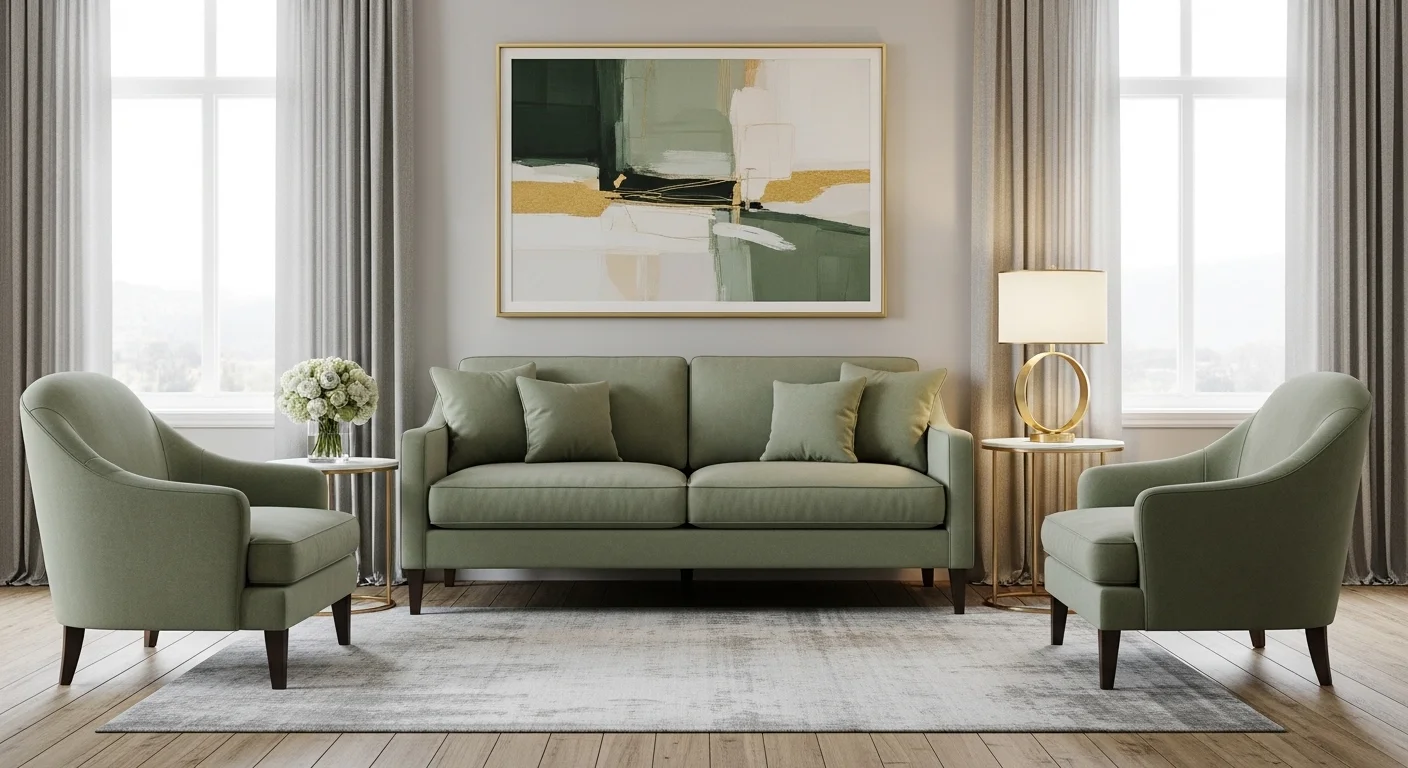
You ever walk into someone’s living room and just… stop? Like, your brain goes quiet for a second and you think, “Okay, this feels amazing. Why does mine feel like a waiting room?”
That feeling? Nine times out of ten, it’s the color on the walls.
And if we’re being totally honest, sage green is doing a LOT of the heavy lifting in those “wow” rooms right now. It’s on Pinterest. It’s on Instagram. It’s in every home makeover video. But here’s the thing — it’s not just trending. It genuinely works. And today, we’re going to talk about why, and exactly how you can pull off a sage green living room that looks intentional, cozy, and completely you.
No design degree needed. Promise.
What Even Is Sage Green? (And Why Does It Feel So Different?)
Okay, so sage green isn’t your typical bright lime green or dark forest green. Think somewhere in the middle — muted, soft, a little grey, a little earthy. Like if green and grey had a baby and that baby grew up in a Mediterranean herb garden.
It’s the color of actual sage leaves. Hence the name.
What makes it special is this weird magic trick it pulls: it feels calm without being boring. It feels natural without being too outdoorsy. And it pairs with almost everything — warm woods, white walls, navy blue, dusty pink, even black.
The technical side? Sage green sits in the “warm neutral” family, which means it works with both warm and cool-toned rooms. That’s rare. Most colors pick a lane. Sage green just strolls down the middle.
Why Is Everyone Suddenly Obsessed With Sage Green Living Rooms?
Here’s the honest answer: because we’re all exhausted.
Post-pandemic, people started craving calm. The whole “all-white minimalist everything” trend started feeling sterile. Cold. Like living inside an Apple store.
Sage green brought something back that a lot of homes had lost — warmth with subtlety. It’s not screaming at you like a bright red accent wall. It’s not begging for attention. It just sits there, looking good, making everyone feel a little more relaxed.
Designers started noticing. Then home bloggers. Then Pinterest exploded with it. And now your aunt who hasn’t repainted since 2005 is asking her husband, “What do you think about sage green for the living room?”
The reason it keeps growing in popularity? It actually works in the real world — not just in photoshoots.
Choosing the Right Shade of Sage Green for Your Living Room
This is where most people get stuck. Because there are a LOT of sage greens out there, and they don’t all look the same on your wall.
Here’s a simple breakdown:
Lighter Sage Greens
These are almost white-green — barely there. They work best if:
- Your room doesn’t get much natural light
- You want the color without committing hard
- Your furniture is already bold or dark
Try: Benjamin Moore HC-144 Tiverton or Sherwin-Williams Comfort Gray (yes, it reads as a soft sage depending on lighting).
Medium Sage Greens
This is the sweet spot. The color you actually see in most sage green living rooms. Noticeable but not aggressive.
Try: Behr Dusty Miller, Farrow & Ball Mizzle, or Sherwin-Williams Rosemary.
Deeper, Moodier Sage
More grey, more depth. Almost like a military green that went to therapy and calmed down. Incredible for evening rooms or spaces with lots of natural light.
Try: Benjamin Moore Aganthus Green or Farrow & Ball Mole’s Breath (this one leans grey-green perfectly).
Pro tip: Always — always — test the color in your actual room first. Buy the sample pot. Paint a big patch. Look at it in the morning light, afternoon light, and with your lights on at night. Sage green especially shifts depending on light, and it can go very grey or very green depending on your conditions.
What Furniture Goes With a Sage Green Living Room?
This is the fun part. Sage green is the most agreeable color in the room — it genuinely gets along with almost everything. But some combinations are just chef’s kiss.
Warm Wood Tones
Honey oak, walnut, light pine — these are a sage green room’s best friends. The warmth in the wood balances the cool-ish tone of the green. Think wooden coffee table, shelving, side tables.
Cream and Off-White
Pure white can sometimes clash and look too stark against sage. But cream? Off-white? That’s harmony right there. A cream linen sofa in a sage green room looks like it came straight from a Tuscan farmhouse.
Dusty Pink or Terracotta
Unexpected but stunning. The blush/terracotta against sage green creates this earthy, organic palette that feels very “collected over time” rather than “bought from one store on a Saturday afternoon.”
Navy Blue
If you want something more dramatic, navy blue throw pillows or an accent chair against sage green walls is genuinely striking. Deep, rich, and sophisticated.
Black Accents
Black metal light fixtures, black frames for your gallery wall, a black coffee table — these add contrast and keep the room from feeling too soft or forgettable.
Flooring Ideas That Work With Sage Green
Your floors matter more than you think when you’re planning a sage green living room.
Light wood floors — like blonde oak or whitewashed wood — keep the room airy and bright. The light bounces around and the sage green pops without overpowering.
Dark wood floors — like mahogany or dark walnut — create a grounded, luxurious feel. It’s a richer, moodier vibe. Excellent if you’re going for that “old English library but make it cozy” look.
White or grey tile? Totally fine, especially with rugs layered over them. A large jute or wool rug in an off-white or natural tone ties everything together beautifully in a sage green room.
Avoid: super orange-toned hardwood. It can clash with the green undertones and make both colors look a bit off.
Sage Green Living Room Accent Wall vs. All Four Walls — What’s Better?
Honestly? Both work. It depends on your room and your confidence level.
Accent wall: If you’re nervous, start here. Pick the wall your sofa faces or the wall behind your TV. Paint just that one. It gives you the sage green vibe without full commitment, and it’s easy to change.
All four walls: This is where the real magic happens. When all four walls are sage green, the room transforms. It feels intentional. Cocooning. Like the whole room is a single, coherent thought. If your room has decent natural light, don’t be scared — go for it.
Half and half? Sage green on the bottom half with a cream or white on the top, divided by a painted trim or chair rail molding. This is a very specific, very British look. Extremely elegant if done right.
Lighting Ideas for a Sage Green Living Room
Here’s something people overlook: the light in your room changes how the sage green looks.
Warm bulbs (2700K-3000K) will bring out the yellow-green tones in your sage, making it feel cozier and more golden. Great for evening ambiance.
Cool or daylight bulbs (4000K+) will push the grey-green tones forward. Crisper, more modern.
For a sage green living room, warm lighting usually wins. It creates that “golden hour, cozy evening” feel that makes sage green look absolutely dreamy.
Also consider:
- Rattan or wicker pendant lights — they add texture and lean into the natural, earthy theme
- Exposed bulb Edison lights — for that rustic, warm look
- Brass or gold fixtures — they complement sage green beautifully and add a touch of elegance
Plants and Greenery: Nature Calling
Look, if you’ve got sage green walls, you basically have permission to go wild with plants.
The walls are already bringing in that organic, natural energy. Add some real plants and you’ve created a living room that feels like a garden room — in the best possible way.
Great options:
- Monstera (dramatic, big leaves, low fuss)
- Pothos (practically unkillable, trails beautifully)
- Fiddle Leaf Fig (tall, architectural, a showstopper)
- Snake plants (modern, clean lines)
- Olive tree in a corner (Mediterranean vibes, absolutely gorgeous with sage green)
Put them in terracotta pots, white ceramic, or woven basket planters. All of these work beautifully with your sage green color scheme.
Textures and Textiles That Elevate a Sage Green Living Room
Color is only one piece of the puzzle. Texture is what takes a room from “okay” to “I want to live here forever.”
In a sage green living room, play with:
Linen and cotton — light, breathable, casual. Perfect for curtains, throw pillows, sofa covers.
Velvet — if you want drama. A sage green velvet sofa or a dusty pink velvet armchair in a sage room? Absolutely cinematic.
Jute and natural fiber rugs — they add that grounding, earthy element and connect the room to the natural palette of sage green.
Chunky knit throws — for the corners of sofas and armchairs. They signal “this is a room you can relax in.”
Ceramic and stone accessories — a stone vase, a ceramic bowl on the coffee table. These natural materials speak the same language as sage green.
Real Talk: A Story From a Real Home
My friend Priya spent months staring at grey walls in her apartment. She kept saying it felt “fine but cold.” One weekend, completely on a whim, she grabbed a sage green paint sample — Behr’s Dusty Miller — slapped it on the wall, and left it over the weekend.
Monday morning, she texted me: “I’m painting the whole room. Send help and snacks.”
Three weekends later, with warm wood floors she already had, a cream secondhand sofa from Facebook Marketplace, and some thrifted brass candle holders — her living room became the room everyone wants to hang out in.
She didn’t spend a fortune. She found the right color, trusted it, and let it do most of the work.
That’s the thing about a well-done sage green living room. It’s forgiving. It’s flexible. And it makes your existing things look better than you expected.
Common Mistakes to Avoid
Let’s be real — not every sage green living room works. Here’s what goes wrong:
Matching everything too perfectly. A room where every single thing is coordinated within an inch of its life feels stiff. Mix textures, mix tones, mix old and new.
Too much cool-toned white. Bright white trim and furniture can make sage green feel cold. Lean toward cream, warm white, or light beige for trim and big furniture pieces.
Ignoring the ceiling. You don’t have to paint it sage green (though that can look incredible), but a stark flat white ceiling can sometimes disconnect from your beautiful walls. Consider a very light tint of sage, or a warm white.
Cheap or overly shiny paint. Sage green looks best in matte or eggshell finish. High gloss sage green on walls? It highlights every imperfection and the color reads differently. Save the gloss for trim.
Going too dark in a dark room. If your living room barely gets sunlight, a very deep sage green will absorb the light and the room will feel heavy. Go lighter, add warm lighting, and use mirrors to bounce light around.
Quick Style Inspirations for Your Sage Green Living Room
Need a visual direction? Here are four moods to try:
1. Cozy Cottagecore
Cream linen sofa, wooden coffee table, dried flower arrangements, botanical prints in wooden frames, jute rug, and reading nook in a corner. Add a chunky knit throw. Done.
2. Modern Organic
Clean-lined sofa in off-white boucle, black metal coffee table, statement monstera, rattan pendant light, minimal art with natural themes. Simple and stunning.
3. Maximalist Vintage
Velvet sofa in a contrasting color (burgundy? dusty blue?), gallery wall with mismatched vintage frames, antique wooden side tables, Persian-style rug, and warm Edison bulb lighting.
4. Scandi-Minimal
White walls, sage green as one accent wall, very light wood furniture, clean lines, no clutter, simple ceramics, and a single perfect plant.
Budget Breakdown: How Much Does a Sage Green Living Room Cost?
You don’t have to spend a ton. Here’s a rough guide:
| Item | Budget Option | Mid-Range | Splurge |
|---|---|---|---|
| Paint (per gallon) | $25–$35 | $50–$70 | $80–$100 (Farrow & Ball) |
| Sofa | $400–$700 (secondhand, Marketplace) | $1,000–$2,500 | $3,000+ |
| Rug | $80–$200 | $300–$600 | $800+ |
| Curtains | $40–$100 | $150–$300 | $400+ |
| Lighting | $30–$80 | $120–$300 | $400+ |
| Plants + pots | $20–$50 | $100–$200 | It’s plants, go wild |
You can create a gorgeous sage green living room for under $1,000 if you’re smart about it. Paint is always the biggest bang for your buck.
Final Thoughts and Honest Advice
If you’ve been on the fence about sage green, this is your sign to just go for it.
Start with a single wall if you’re nervous. Paint it, live with it for a week, and see how it feels. Most people who take that first step end up doing the whole room.
A sage green living room isn’t a trend you’ll regret in two years. It’s rooted in nature, calm, and quiet elegance — and those things don’t go out of style. It’s the kind of color that makes your home feel like home, not just a place you sleep.
Trust the color. Trust yourself. And don’t forget the plants.
FAQs About Sage Green Living Rooms
1. Does sage green make a small living room look smaller?
Not necessarily. Lighter shades of sage green can actually make a small room feel airy and open, especially with good lighting and light-colored furniture. Avoid very dark sage in a small, low-light room — that’s when it can feel heavy.
2. What colors go best with sage green in a living room?
Cream, off-white, warm wood tones, dusty pink, terracotta, navy blue, and black are all excellent partners for sage green. The key is choosing colors with a similar earthy or muted quality — overly bright colors can clash.
3. Is sage green a good color for a north-facing living room?
North-facing rooms get cool, indirect light. Sage green can work, but lean toward warmer-toned sage greens (ones with more yellow or brown undertones) rather than cool grey-greens. Warm lighting is essential in these rooms.
4. Can I use sage green with grey furniture?
Yes, but carefully. Light grey or blue-grey furniture can blend too much with sage green walls, making the room feel flat. If you want grey furniture, go for a warm charcoal or add contrast with brighter accent pillows and warm wood accessories.
5. What is the most popular sage green paint color for living rooms in 2025?
Some of the most loved shades right now include Sherwin-Williams Rosemary, Behr Dusty Miller, Benjamin Moore Tiverton, and Farrow & Ball Mizzle. Always test samples in your own room before committing — every room is different, and lighting changes everything.
Ready to pick up a paint brush? Your sage green living room is closer than you think.