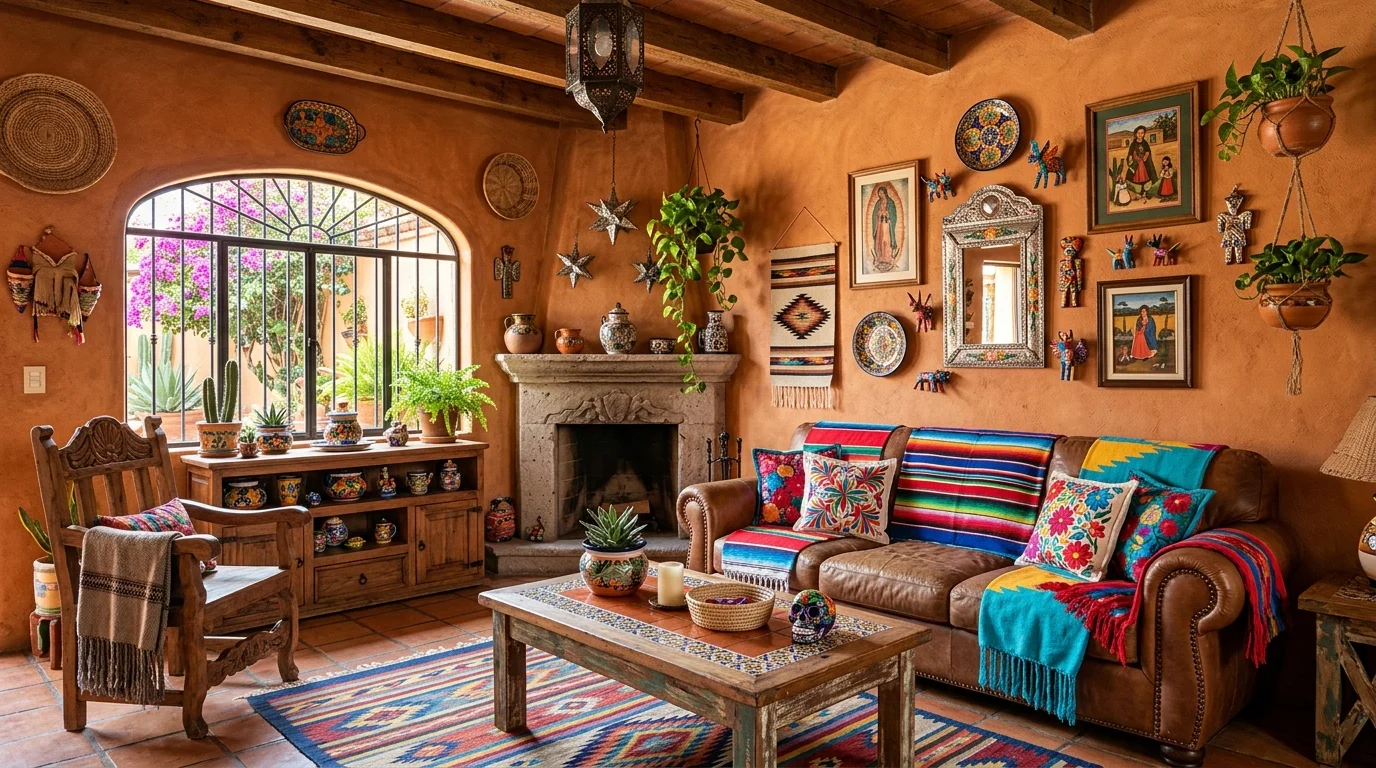
You walk into someone’s living room and something just hits you. It’s warm. It’s alive. The walls feel like they’re telling a story. Colors are bold but somehow not loud. There’s hand-painted pottery on the shelf, a woven rug on the floor, and every corner feels like it has a personality.
That’s Mexican home decor doing its thing — and honestly? Once you see it done right, nothing else feels quite the same.
But here’s the thing most people get wrong: they think it’s just about throwing a few cacti around and painting one wall orange. Nah. Real Mexican-inspired design goes way deeper than that. It’s about culture, history, texture, and a whole lot of heart.
Let’s break it all down so you can actually do this without your home looking like a tourist gift shop.
What Is Mexican Home Decor, Really?
Before we start throwing throw pillows and tiles at your walls, let’s get clear on what this style actually is.
Mexican home decor is a design style rooted in centuries of indigenous art, Spanish colonial influence, and the vibrant folk art traditions that make Mexican culture so iconic. Think of it as a mix of:
- Pre-Columbian patterns and motifs (think geometric shapes, birds, flowers)
- Spanish colonial architecture (arched doorways, wrought iron, clay tiles)
- Handcrafted folk art (Talavera pottery, Otomi embroidery, Oaxacan wood carvings)
It’s not just “colorful.” It’s intentional, layered, and deeply human.
The reason people fall in love with this style is because it feels made by someone. Not manufactured. Not cold. Every piece looks like a real person sat down and created it — because they usually did.
The Color Palette: Go Bold or Go Home
Here’s where most people either nail it or completely lose the plot.
Mexican decor is known for its fearless use of color. We’re talking deep terracotta, cobalt blue, sunshine yellow, forest green, hot pink, and burnt orange — sometimes all in the same room. And somehow it works.
Why does it work? Because these colors come from nature — the desert, the sea, tropical flowers, clay soil. They belong together even when they seem chaotic.
Here’s how to use color the right way:
Pick an Anchor Color
Choose one dominant warm tone — terracotta or adobe red work beautifully. Use this for a feature wall or your larger furniture pieces.
Layer with Jewel Tones
Add cobalt blue, deep turquoise, or forest green as accents. Cushions, ceramics, and small furniture pieces are perfect for this.
Don’t Skip the Bright Pops
A hot pink doorframe. A sunshine yellow vase. A lime green chair. These little “wow” moments are what make Mexican spaces feel alive. Just keep them small and deliberate.
Pro tip: Warm whites and natural plasters work great as a neutral base. They let the colors breathe instead of fighting each other.
Talavera Tiles: The Crown Jewel of Mexican Home Decor
If there’s one element that screams authentic mexican home decor, it’s Talavera tiles.
These hand-painted ceramic tiles originated in Puebla, Mexico, and each one is made by hand — glazed, painted, and fired individually. No two are exactly alike. That’s the whole point.
You can use Talavera tiles pretty much anywhere:
- Kitchen backsplash — This is the most popular use and honestly the most impactful. A full Talavera backsplash in blue and white transforms a basic kitchen into something extraordinary.
- Bathroom walls or floors — Pair with wooden vanities and wrought iron fixtures for a colonial feel.
- Outdoor steps or garden walls — If you have outdoor space, tiled risers on garden steps look absolutely stunning.
- Accent panels — Even just a small panel of 4-6 tiles framed and hung on a wall works as art.
Can’t afford real Talavera? No shame. There are quality ceramic alternatives that capture the look without the price tag. Just look for hand-painted details — that’s what gives it soul.
Furniture: Rustic, Carved, and Built to Last
Mexican furniture is not about sleek edges or minimalist lines. It’s chunky, carved, handcrafted, and made to feel like it’s been in the family for generations.
Wood is Everything
Dark, heavy wood — often mesquite or pine — is the backbone of this style. Think carved wooden chairs, rustic dining tables with visible grain, and bed frames that look like they came from a hacienda in Jalisco.
Wrought Iron Accents
Wrought iron shows up everywhere in Mexican design — candle holders, bed frames, curtain rods, cabinet handles, and light fixtures. It adds a slightly rough, artisan quality that feels genuinely old-world.
Hand-Painted Furniture
One of the most fun elements? Painted furniture. Bright florals and geometric patterns on wooden dressers, chairs, or side tables. You can find these at Mexican folk art markets or even DIY it if you’re feeling creative.
Look for: Equipale furniture (made with pigskin and cedar wood, super traditional), carved wooden mirrors, and painted storage chests called baúles.
Textiles: Where the Real Magic Happens
If color is the voice of Mexican decor, textiles are the soul.
Mexican weaving traditions are some of the oldest in the world. Indigenous communities in Oaxaca, Chiapas, and the Yucatán have been making intricate woven goods for thousands of years. When you bring these into your home, you’re carrying that history with you.
What to Use and Where
Otomi Embroidery: Bold, graphic animals and plants hand-stitched onto fabric. Use as throw pillow covers, wall hangings, or even framed as art. Genuinely eye-catching.
Serape Blankets: The iconic striped woven blankets in rainbow colors. Throw one over a couch or drape it on a chair. Instantly transforms a space.
Zapotec Rugs: Geometric, wool-woven rugs from Oaxaca. They’re durable, beautiful, and add texture to any floor. These are heirloom pieces.
Woven Hammocks: If you have a porch or sunny corner, a woven Mexican hammock is the perfect finishing touch. Functional and totally gorgeous.
Tip: Mix patterns. Mexican design is not afraid of layering a striped pillow with a geometric rug and a floral embroidered blanket. The key is keeping the colors in the same warm family.
Pottery and Ceramics: Handmade Beauty
No Mexican-inspired home is complete without pottery. And we’re not talking about the generic stuff from a big-box store.
Talavera pottery — the same tradition as the tiles — gives you hand-painted pitchers, bowls, vases, and planters that are works of art.
Barro negro from Oaxaca is polished black clay pottery with a burnished finish. Sleek, dramatic, and incredibly unique.
Terracotta pots are simple but essential. Use them for plants (hello, succulents and herbs), as candle holders, or as decorative objects grouped in clusters of three.
Display pottery openly on shelves, kitchen counters, or windowsills. Don’t hide it in cabinets. The whole point is to show the craftsmanship.
Plants: Bring the Outdoor In
Mexican design has deep roots in nature — literally.
Courtyards and gardens have always been central to Mexican homes. The traditional patio is a lush, plant-filled sanctuary at the heart of the house.
You can bring that energy indoors with:
- Bougainvillea (if you have outdoor space, this is non-negotiable — the colors are insane)
- Succulents and cacti — drought-tolerant, low maintenance, and perfectly on-theme
- Large tropical leaves — banana plants, bird of paradise, or monstera all add drama
- Herbs in terracotta pots — basil, cilantro, epazote right on the kitchen windowsill
Group plants together in odd numbers (3, 5, 7) for the most visually appealing arrangement. Mix heights and textures.
Lighting: Warm, Flickering, and Atmospheric
This is one of the most overlooked parts of any decor style, and it makes a massive difference.
Mexican lighting is warm, intimate, and often a little dramatic.
Punched Tin Lanterns
These are hand-crafted lanterns with patterns punched into tin that throw beautiful patterns on your walls when lit. Hang a cluster of these in a corner or above a dining table.
Wrought Iron Chandeliers
A black iron chandelier with candle-style bulbs is a statement piece in any room. Pair it with a whitewashed ceiling for maximum impact.
Clay and Terracotta Lamps
Rustic, earthy lamp bases in terracotta or hand-painted clay add warmth to bedside tables or living room corners.
Always go for warm-toned bulbs (2700K-3000K). Cool white light completely kills the cozy hacienda vibe you’re going for.
Candles are also a huge part of this aesthetic. Get some thick pillar candles in terracotta holders and scatter them around. The flickering light is everything.
Wall Decor: Art With a Story
Bare walls have no business in a Mexican-inspired home.
Hand-painted murals are a tradition dating back to Diego Rivera and the Mexican muralists. You don’t need a full mural — even a small hand-painted detail on a door or hallway wall adds authenticity.
Alebrijes — those wildly colorful, fantastical carved wood animals from Oaxaca — are incredible as wall art or shelf pieces. Each one is unique and completely wild-looking.
Woven wall hangings from traditional Mexican artisans add texture and color to any blank wall.
Framed vintage Mexican posters — old travel posters, Lotería cards, or market prints look amazing grouped together in a gallery wall arrangement.
Mirrors with carved wooden or painted frames bounce light around and add depth to smaller rooms.
The Kitchen: Heart of the Home
In Mexican culture, the kitchen isn’t just where food happens — it’s where life happens.
Give your kitchen the love it deserves:
- Talavera tile backsplash (we mentioned it, but seriously — do this)
- Open shelving to display colorful pottery and ceramics
- Woven baskets for fruit, bread, or storage
- A wooden butcher block or rough-hewn wooden countertop section
- Copper pots and pans hung on a rack (copper cookware is huge in traditional Mexican kitchens)
- Hand-painted trivets and pot holders
Even small touches matter. A set of painted Mexican mugs. A hand-embroidered dish towel. A terracotta bowl of limes on the counter. These things cost almost nothing but completely change the feel of the space.
Bedroom: Cozy, Colorful, and Deeply Restful
A Mexican-inspired bedroom should feel like a warm hug.
The bed: Go for a dark wooden headboard — carved if possible. Layer with textured bedding in warm tones: terracotta, deep red, cream, and burnt orange.
Throw blankets: A serape or woven blanket folded at the foot of the bed adds instant warmth and color.
Nightstands: Painted wooden side tables with a small punched tin lamp and a piece of pottery or a small plant.
The floor: A Zapotec rug beside the bed means your first step in the morning lands on something beautiful.
Walls: One statement wall in adobe or deep terracotta. A woven wall hanging or hand-painted art above the headboard.
Keep it layered but not cluttered. The goal is cozy abundance, not chaos.
How to Start Without Spending a Fortune
Real talk — you don’t need to renovate your entire house to get this look.
Start small:
- One key textile — A serape throw or Otomi pillow cover. Under $30, huge impact.
- A cluster of terracotta pots with plants. Cheap, beautiful, on-theme.
- Two or three pieces of Talavera pottery on a shelf or counter.
- Change your light bulbs to warm-toned ones. Free if you already have them, cheap if you don’t.
- One piece of folk art — an alebrije, a painted wooden frame, anything handmade.
Build from there. This style rewards gradual layering. The more you add over time (especially pieces you pick up from travels or artisan markets), the more authentic it looks.
Common Mistakes to Avoid
Going too matchy-matchy. Real Mexican decor doesn’t match. It harmonizes. Mix different patterns, textures, and shades.
Buying all mass-produced items. The soul of this style is in the handmade. Even one or two genuine artisan pieces make everything look more real.
Overdoing the clichés. Sombreros, Day of the Dead skulls on every surface, fake cacti everywhere — this tips into costume territory fast. Be selective.
Ignoring texture. Color is what you see first, but texture is what you feel. Rough plaster walls, woven textiles, carved wood, hammered copper — these layers are what make the space genuinely interesting.
Using cool-toned lighting. Seriously. Warm lights only.
Final Thoughts: Make It Yours
Here’s the thing about mexican home decor — it’s not a formula. It’s a feeling.
The best Mexican-inspired spaces feel personal. They feel like someone actually lives there, actually collected those things, actually loves that color. The goal isn’t to recreate a museum of Mexican culture. It’s to bring that warmth, that color, that handmade spirit into your everyday space.
Start with one corner. One shelf. One wall. Layer in pieces that speak to you. Buy from artisans when you can. Don’t be afraid of color.
Your home should feel alive. And Mexican design — done with heart — makes that happen like almost nothing else can.
FAQ
1. What are the key elements of Mexican home decor? The core elements include Talavera tiles, hand-painted pottery, woven textiles like serape blankets and Zapotec rugs, wrought iron fixtures, dark carved wood furniture, and a bold warm color palette with terracotta, cobalt blue, and deep greens.
2. Is Mexican home decor expensive to achieve? Not necessarily. You can start with affordable items like terracotta pots, woven throw blankets, and a few pieces of hand-painted pottery. Bigger investments like Talavera tile backsplashes or hand-carved furniture can come later as budget allows.
3. Can I mix Mexican decor with other styles? Absolutely. Mexican decor blends beautifully with bohemian, rustic, and Mediterranean styles. The key is keeping the warm color palette consistent and making sure the handmade, textured elements stay prominent.
4. Where can I find authentic Mexican home decor items? Look for artisan markets, Mexican folk art shops, fair trade retailers, and online platforms like Etsy where independent artisans sell genuine handmade goods. If you travel to Mexico, markets in Oaxaca, Puebla, and Mexico City are incredible sources.
5. How do I keep Mexican decor from looking cluttered? Group items intentionally (clusters of three work well), leave some negative space on walls and shelves, and stick to a consistent warm color family. Layering is the goal — not piling things randomly. Every piece should have a reason to be there.