
Imagine waking up on a busy Monday morning. You are already running late for work. You open your wardrobe, and a mountain of clothes falls on you.
You search for that one blue shirt, but it is buried under a pile of jeans you haven’t worn in two years. This is not just a messy closet problem. This is a daily struggle that eats your time and energy.
Many people feel trapped in their own homes because of a small wardrobe. You might feel that your room is too tiny or that you simply have too much stuff. The truth is, the size of the closet is rarely the main issue.
The real problem is how we use that space. A small wardrobe can feel like a prison for your favorite outfits. It makes getting dressed a chore instead of a joy.
Most people try to solve this by buying more plastic bins. They see a cool storage box at the store and think it will fix everything. But without a plan, those boxes just become more clutter on the floor.
They look for quick tips online but often find complicated systems that don’t work for real life. This leads to a cycle of cleaning and then returning to a mess within a week.
The frustration builds up every time you can’t find your favorite scarf. You end up wearing the same three outfits because they are the only ones you can see. This leaves you feeling uninspired and bored with your style.
Living with a messy small wardrobe affects your mind more than you think. It creates a sense of “visual noise” that makes it hard to relax in your bedroom.
-
Your morning starts with a fight. Instead of a calm routine, you start your day with a hunt for clean socks.
-
You lose money. You buy new clothes because you forgot you already owned a similar pair hidden in the back.
-
Your clothes get ruined. Cramming too many items together causes wrinkles and damages delicate fabrics.
-
You feel overwhelmed. A cluttered closet often mirrors a cluttered mind, making you feel less in control of your life.
-
Social anxiety kicks in. You might turn down an invite because you “have nothing to wear,” even though your closet is full.
The reality is that a small space requires a big strategy. You don’t need a walk-in closet to feel organized. You need to change how you see your storage.
Most people think they need more room, but they actually need less “stuff” and better tools. When you have a small wardrobe, every inch must earn its place.
When you fail to organize correctly, you waste minutes every single day. Those minutes add up to hours every month. Imagine what you could do with that extra time.
You deserve a bedroom that feels like a sanctuary. A place where every item has a home and you can see everything you own at a glance. It is possible to turn your tiny closet into a highly efficient storage machine.
Let’s look at how we can fix this together. We will use simple steps that anyone can follow. You don’t need to be a professional designer to get great results.
Step 1: The Honest Decluttering Process
The first step to a perfect wardrobe is not buying new hangers. It is getting rid of what you do not use. You cannot organize a mess; you can only remove it.
Take everything out of your wardrobe. Yes, every single item. Lay them on your bed so you can see the full scale of what you own.
This part can feel scary. You might see clothes you spent a lot of money on but never wore. That is okay.
Use the simple “One Year Rule.” If you have not worn an item in the last twelve months, it is time to let it go. It is taking up space that your favorite clothes need.
Be honest with yourself about your current body and lifestyle. Do you really need five different suits if you work from home? Do those tight jeans from five years ago make you feel good today?
Create three piles: Keep, Donate, and Toss. Only put back the items that make you feel confident and happy. This immediately opens up breathing room in your closet.
By thinning out your collection, you make the remaining clothes easier to see. You also make it easier to maintain the order you are about to create.
Think of your wardrobe like a high-end boutique. They don’t cram every item they have onto one rack. They show off a few pieces so they look valuable.
Step 2: Master the Art of Vertical Space
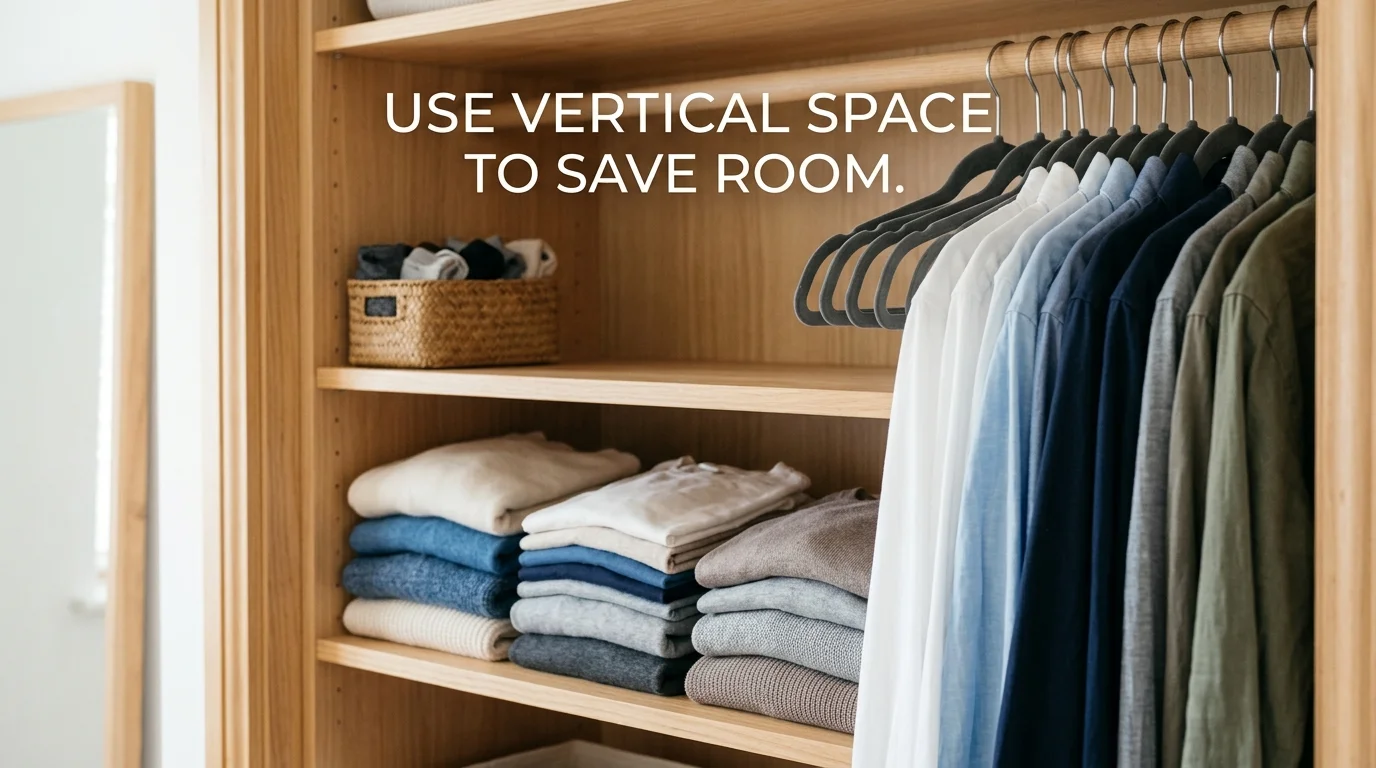
Most people only use the hanging rod and the floor of their wardrobe. This leaves a huge amount of empty air in the middle. We call this “dead space.”
To maximize storage, you must look up. Use the very top shelf for things you don’t need every day. This includes out-of-season items like heavy coats or beach bags.
If you don’t have a top shelf, you can add one easily. Or, use stackable clear bins to build your own “shelf” system. Clear bins are great because you can see what is inside without opening them.
Hanging organizers are a life-saver for small wardrobes. These are fabric shelves that hang directly from your closet rod. They are perfect for folded sweaters, hats, or even shoes.
Don’t forget the back of the wardrobe door. This is a secret storage goldmine. You can hang an over-the-door rack for your shoes, scarves, or belts.
By moving items to the door or the top shelf, you free up the main rod for your daily clothes. It makes the closet feel much larger than it actually is.
Think of your wardrobe like a puzzle. If you only put pieces on the bottom, the puzzle is never finished. You have to fill the whole frame to see the big picture.
Using vertical space is like adding an extra floor to a house. It gives you more room without changing the footprint of the furniture.
Step 3: Invest in Slim Hangers for Instant Space
One of the biggest mistakes people make is using bulky plastic or wooden hangers. These take up double the space of slim velvet hangers.
If you have twenty thick hangers, you are losing inches of rod space. Switching to “space-saving” hangers can give you up to 50% more room immediately.
Velvet hangers are also great because clothes don’t slip off them. No more finding your silk blouse in a heap on the floor.
Try to keep all your hangers the same color and style. This sounds like a small detail, but it makes a huge difference. It removes visual clutter and makes the closet look professionally organized.
When your hangers match, your eyes focus on the clothes, not the messy hooks. It creates a calm feeling every time you open the door.
You can also use “hanger connectors” or “cascading hooks.” these allow you to hang one hanger off another. This is perfect for sets, like a blazer and the matching trousers.
By hanging clothes vertically in layers, you use the height of the closet rod. This is a pro trick that many small-space experts use.
Imagine your closet rod is a highway. Thick hangers are like big trucks taking up all the lanes. Slim hangers are like motorcycles that let more people get through.
Step 4: The Power of Better Folding Techniques
Folding clothes the old way creates tall, unstable stacks. When you pull a shirt from the bottom, the whole pile falls over. This is why closets get messy so fast.
Instead, try the “file folding” method. This involves folding clothes into small, firm rectangles that can stand on their own.
When you place these rectangles in a drawer or on a shelf, you stand them up vertically. It looks just like a file cabinet for your clothes.
This way, you can see every single t-shirt you own at once. You don’t have to dig through a pile to find the one you want. You just pull it out, and the others stay in place.
This method works for jeans, t-shirts, workout gear, and even socks. It saves a massive amount of space because you are compressing the air out of the fabric.
If you have open shelves, use shelf dividers to keep these rows straight. Dividers prevent the “leaning tower of clothes” from happening.
Good folding is like a secret weapon for small wardrobes. It allows you to fit two times as many clothes in the same drawer.
It also keeps your clothes in better shape. They don’t get crushed under the weight of other items, so you spend less time ironing.
Step 5: Categorize by Color and Type
Once you have the right tools and folding, you need a system for where things go. Group your clothes by category first.
Put all your long-sleeve shirts together, all your short-sleeve shirts together, and all your trousers together. This makes it easy to know exactly where to look.
Within those categories, organize them by color. Go from light to dark or follow the colors of the rainbow.
This might seem like extra work, but it actually saves you time. If you know you want to wear a black top, you only have to look at one small section.
Color coding also helps you see what you have too much of. If you see ten navy blue shirts, you might realize you don’t need to buy any more for a while.
It gives your small wardrobe a sense of order and beauty. Even a tiny closet can look like a luxury boutique when the colors are lined up.
This system is very easy to maintain. When you do laundry, you just put the item back in its color “zone.” It takes two seconds but keeps the closet looking perfect.
Think of your wardrobe as a library. Books are easier to find when they are organized by subject and author. Your clothes are the same.
Step 6: Use the Floor Wisely
The floor of a small wardrobe is often a “dumping ground” for shoes and dirty laundry. This is a waste of valuable real estate.
Instead of a messy pile, put a small shoe rack on the closet floor. A two-tier rack can hold six to eight pairs of shoes in the same space as three pairs.
If you don’t like shoe racks, use stackable shoe boxes. Clear boxes are best so you can see which pair is inside without opening them all.
By lifting your shoes off the floor, you make the closet look cleaner. It also prevents your shoes from getting dusty or scuffed.
If you have space left, you can use a small basket for items like umbrellas or yoga mats. The key is to keep everything off the actual floor surface.
When the floor is clear or organized, the whole wardrobe feels more open. It creates a sense of “air” that stops the space from feeling cramped.
Every time you look down, you should see a neat system, not a pile of leather and laces.
Step 7: Seasonal Rotation Strategy
If your wardrobe is truly tiny, you cannot keep all your clothes in it all year round. You must learn the art of the “Seasonal Swap.”
During the summer, your heavy wool sweaters and winter coats should not be in your main closet. They are taking up space you need for t-shirts and shorts.
Get some vacuum-seal bags. Put your off-season clothes inside and suck the air out with a vacuum cleaner. These bags become very flat and can be stored under your bed.
Using Modern Tools to Reclaim Your Hidden Storage
Now that you have cleared out the clutter, it is time to use some smart tools. Many people think they need a bigger room to feel organized. In reality, a living room layout feels cramped for the same reason a closet does: poor use of space. You can fix this by looking at the small details.
One secret to a great wardrobe is lighting. Most small closets are dark and deep. This makes it very hard to see what is in the back. When you can’t see an item, you never wear it.
I suggest using motion-sensor LED strips. You can stick these to the underside of shelves or along the door frame. They turn on automatically when you open the wardrobe. This simple change makes your closet feel much more high-end and easier to use.
Next, think about using clear acrylic dividers. These are perfect for open shelves. They keep your folded piles of sweaters or jeans from falling over. Just like styling a coffee table without looking cluttered, the goal is to keep items separated and visible.
If your shelves are very high, use pull-down rods. These allow you to hang clothes way up near the ceiling. When you need a shirt, you just pull the handle and the whole rod comes down to your level. This uses space that most people leave totally empty.
You should also look at the bottom of your hangers. You can buy small clips to attach your boots to hangers. This keeps your boots off the floor and prevents them from getting bent or creased. It is a great way to keep your floor space open for other things.
For smaller items like belts and ties, use sliding racks. These can be mounted to the side walls of your wardrobe. They take up almost zero room when they are pushed back. But they make it very easy to pick out your accessories in the morning.
Expert Habits for a Forever Organized Closet
Getting organized is only half the battle. Staying organized is where the real work happens. You need a system that is easy to follow every single day.
The most famous expert secret is the Reverse Hanger Strategy. Start by turning all your hangers so the hooks face toward you. This is the “wrong” way to hang them. When you wear an item and put it back, turn the hanger the “right” way.
After six months, look at your closet. Any hanger that is still facing the wrong way holds a piece of clothing you did not wear. This is a very clear, visual sign that you don’t need those items. It takes the guesswork out of decluttering.
Another great rule is the One-In, One-Out Rule. This means for every new piece of clothing you buy, one old piece must leave. This stops your wardrobe from slowly getting stuffed again. It forces you to think carefully before you spend money on new fashion.
You should also set a weekly five-minute tidy. Choose a day, like Sunday evening, to fix any messy piles. Just like you would spend time hiding messy cables around your TV cabinet, a few minutes of maintenance prevents a huge mess later.
Try to use labeled bins for things like workout gear or swimwear. Labels help everyone in the house know exactly where things go. It removes the excuse of “I didn’t know where to put it.” Small, clear labels make the whole system look very professional.
Think about the scent of your wardrobe too. Use small cedar blocks or lavender sachets. This keeps your clothes smelling fresh and also keeps moths away. A good-smelling closet makes the experience of getting dressed much more pleasant.
Finally, treat your wardrobe like a working space. It should change as your life changes. If you start a new job or a new hobby, your storage needs will shift. Don’t be afraid to move shelves or change your bins to fit your current life.

Common Mistakes That Ruin Your Hard Work
Even with the best intentions, people often fall into the same traps. One big mistake is buying storage containers before decluttering. It is very tempting to go to the store and buy pretty boxes first. But if you don’t know what you are keeping, you will buy the wrong sizes.
You end up with boxes that don’t fit your shelves or your clothes. This creates more clutter instead of solving the problem. Always purge your clothes first, measure your space second, and buy tools last. This saves you both money and time.
Another common error is ignoring the height of your items. People often put shelves at equal distances apart. But your shoes need less height than your hanging dresses. If you have adjustable shelves, move them to fit your specific items.
Don’t leave big gaps of empty air above your shoes or boxes. Use every inch of that vertical space. According to experts at IKEA’s storage planning guides, using adjustable fittings can increase your storage by up to forty percent.
Many people also make the mistake of overstuffing their hanging rods. If you have to fight to pull a shirt out, you have too many things on that rod. This causes your clothes to get wrinkled and damaged. It also makes you feel stressed every time you look at the closet.
Give your clothes some breathing room. If the rod is full, it is time to do another round of decluttering. A good rule is to leave enough space so you can easily slide a finger between two hangers. This keeps your clothes looking new for a longer time.
Forgetting about the door is a huge missed opportunity. The back of your wardrobe door is a large, flat surface. If you aren’t using it for shoes, bags, or mirrors, you are wasting space. It is the perfect spot for things you use every single day.
Lastly, some people think they can organize once and never do it again. Wardrobes are high-traffic areas. You use them at least twice a day. Without small, regular updates, the mess will return. Treat your closet like a garden that needs a little bit of care every week.
If you ignore these small steps, the mess will grow back slowly. You will find yourself back in the same stressed state you were in before. Consistency is the secret to a peaceful and efficient home.
Your New Life Starts with a Clean Closet
Organizing a small wardrobe is about much more than just clothes. It is about creating a sense of peace in your most private space. When your room is tidy, your mind feels clearer and more focused.
You spend less time searching for things and more time enjoying your life. Your mornings will become calm instead of a race against the clock. You will feel more confident because you can always find an outfit that makes you look great.
Remember that you don’t need a huge house to live a big life. A small space can be perfect if it is managed with care. It is all about understanding the ideal distance between furniture and items to create a good flow in your room.
Start small if you feel overwhelmed. You don’t have to do the whole closet in one hour. Maybe today you just switch out your old hangers. Tomorrow, you could try the file-folding method for your socks.
Every small change adds up to a big result. You will be surprised at how much extra space you actually have. Most of it was just hidden under piles of things you didn’t really need.
Take a deep breath and look at your wardrobe with new eyes. You have the tools, the plan, and the secrets to make it work. Don’t wait for a “better time” to start. The best time is right now.
Imagine how good it will feel to open your wardrobe tomorrow morning. Everything is in its place, the lighting is bright, and you can see all your favorite items. That feeling of control and beauty is worth the effort.