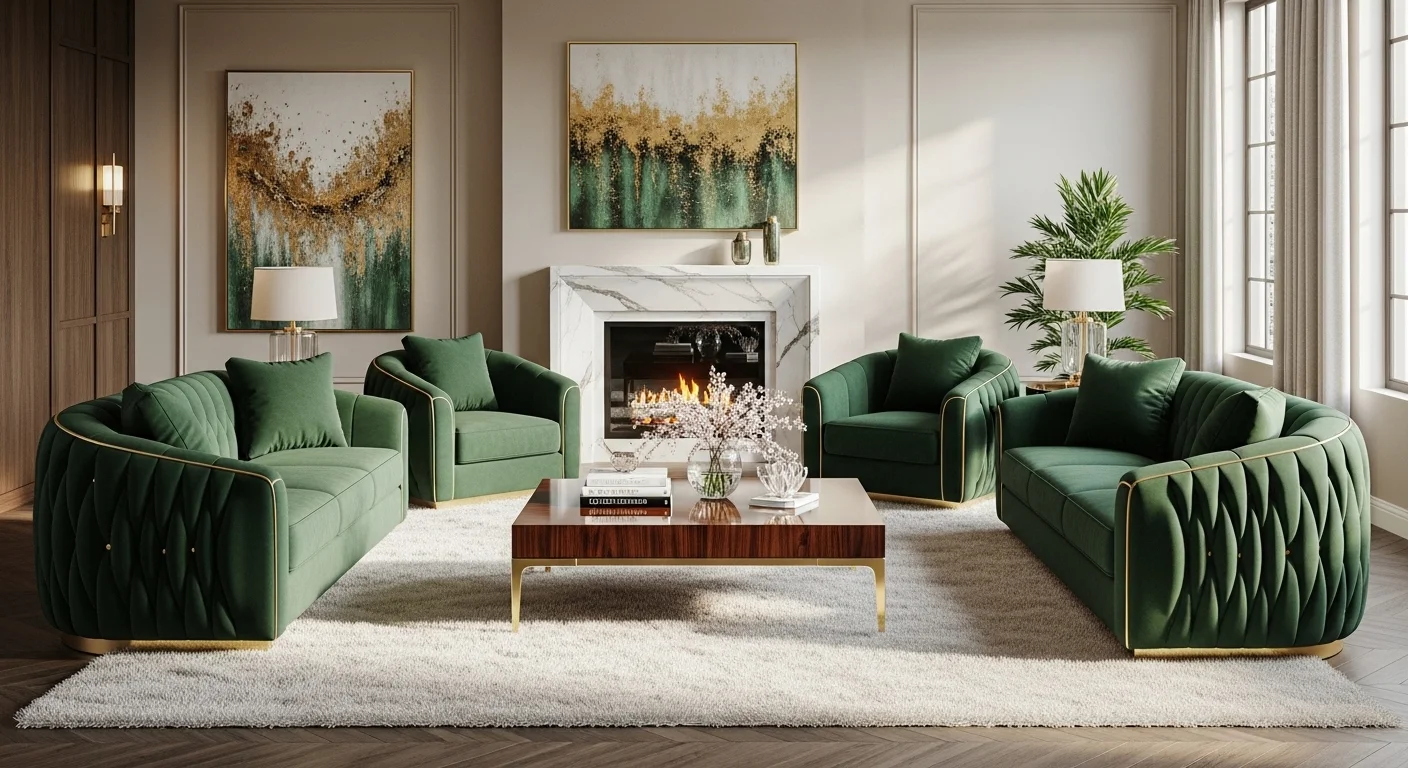
You walk into your living room. Something just feels… off. The space looks empty, cold, uninviting. Your guests sit awkwardly on mismatched chairs. Your kids sprawl on the floor because there’s no comfortable place to sit together.
Sound familiar?
A great sofa set changes all of that. It becomes the heart of your home—the place where stories are told, movies are watched, naps are stolen, and memories are made. But here’s the problem: most people walk into a furniture store, get overwhelmed by a thousand options, and end up with something that looks wrong, fits wrong, or falls apart in two years.
That’s exactly why this guide exists. Let’s fix that.
What Is a Sofa Set, Really?
Simple answer: a sofa set is a collection of matching seating furniture designed to work together in one room. Usually it includes a large sofa (the main piece), a loveseat or a couple of armchairs, and sometimes an ottoman or chaise.
But here’s what most people miss—a sofa set isn’t just furniture. It’s the anchor of your entire living room.
Get it right, and everything else in the room falls into place. Get it wrong, and no amount of fancy rugs or wall art will save you.
Why the Right Sofa Set Matters More Than You Think
Let me be straight with you.
Most people spend more time choosing a smartphone than a sofa set. But they’ll use that sofa every single day for the next 7 to 15 years. That’s thousands of hours of sitting, lounging, talking, and relaxing.
The right sofa set does three things at once:
- It defines your living room’s personality — modern, cozy, luxurious, minimalist.
- It sets the comfort standard for everyone in your home.
- It communicates your taste to every guest who walks through your door.
So yeah. This decision matters. A lot.
Types of Sofa Sets: Which One Is Actually Right for You?
There’s no one-size-fits-all here. Let’s break it down honestly.
1. The Classic 3-Piece Set (3+2+1 or 3+1+1)
This is the most common setup you’ll see—a three-seater sofa, a two-seater loveseat, and a single armchair. Or sometimes two armchairs instead of the loveseat.
Best for: Medium to large living rooms, families, people who entertain guests regularly.
The honest truth: This setup is timeless and versatile. If you’re unsure what to get, start here.
2. Sectional Sofa Set
A sectional is one large L-shaped or U-shaped piece that wraps around a corner. It looks impressive and seats a lot of people. Some sectionals come with a built-in chaise lounge or recliner.
Best for: Large rooms, open-plan spaces, families with kids, movie lovers.
The honest truth: Sectionals are amazing for comfort and capacity. But they’re hard to move and can overwhelm a small room. Measure twice before you buy.
3. Loveseat Set (2+2 or 2+1)
Two loveseats facing each other, or a loveseat paired with armchairs. Compact but still elegant.
Best for: Smaller apartments, couples, minimalist homes.
The honest truth: If your living room is under 150 square feet, this is probably your best bet.
4. Recliner Sofa Set
These are sofa sets where one or more seats recline back. Some even have built-in footrests, USB charging ports, and cupholders.
Best for: Home theater lovers, people with back pain, those who just love maximum comfort.
The honest truth: Incredibly comfortable. But they’re usually bigger and heavier, and the mechanism can wear out over time if not well-made.
5. Modular Sofa Set
Modular sofas are made of individual sections you can rearrange however you want. Want an L-shape today and a U-shape next month? Done.
Best for: People who love flexibility, renters who move often, design-conscious buyers.
The honest truth: The best option for adaptability. Just make sure all the pieces connect well and the fabric matches consistently over time.
Sofa Set Materials: What You’re Actually Sitting On
The material of your sofa set determines how it looks, feels, and lasts. Let’s talk about the real options.
Fabric Upholstery
Fabric sofas are soft, come in hundreds of colors and textures, and are usually more affordable than leather. Microfiber, linen, velvet, polyester blends—there’s a huge range.
- Pros: Comfortable, breathable, wide variety, budget-friendly.
- Cons: Stains more easily, may fade over time, can be harder to clean.
Pro tip: If you have kids or pets, look for tightly woven, stain-resistant microfiber fabrics. They’re your best friends.
Leather Upholstery
Real leather sofas scream sophistication. They’re durable, easy to wipe clean, and actually get more beautiful with age (genuine leather develops a patina).
- Pros: Extremely durable, easy to clean, luxurious look.
- Cons: Expensive, can feel hot in summer, may crack if not conditioned.
The difference between full-grain and bonded leather: Full-grain leather is the real deal—thick, durable, expensive. Bonded leather is scraps of leather stuck together with polyurethane. It looks fine for a year or two, then starts peeling. Always ask which one you’re getting.
Faux Leather (PU Leather)
Synthetic leather that mimics the look of real leather at a fraction of the price.
- Pros: Affordable, easy to clean, animal-friendly.
- Cons: Doesn’t breathe as well, not as durable as real leather, can peel after a few years.
Velvet
Velvet sofas have exploded in popularity recently, and honestly? For good reason. They’re visually stunning—rich, deep colors that photograph beautifully and feel amazing.
- Pros: Gorgeous texture, feels luxurious, great for formal living rooms.
- Cons: Shows impressions and pet hair easily, requires more care.
Sofa Set Frame and Structure: The Hidden Stuff That Matters
Here’s something most buyers completely ignore—the internal frame of the sofa.
A beautiful-looking sofa with a weak frame is a disaster waiting to happen. Within a year, it starts sagging. Within two, it’s creaking. Within three, you’re shopping again.
What to look for:
- Solid hardwood frame (kiln-dried is best—it resists warping). Oak, beech, and maple are excellent choices.
- Avoid: Particleboard or plastic frames. They won’t last.
- Corner blocks: Check if the corners are reinforced with wooden blocks glued and screwed into place. This is a sign of quality craftsmanship.
The sit test: When you sit on a sofa in a store, push down hard on the arms and the front corners. If you feel any wobble or hear creaking, walk away.
Cushion and Comfort: What Makes a Sofa Actually Feel Good
Looks get you in the door. Comfort keeps you there.
Cushion Fillings Explained
High-density foam: Firm, supportive, holds its shape well over time. Best for everyday use.
Memory foam: Molds to your body. Comfortable but can feel too soft and warm for some people.
Down/feather filling: Extremely plush and luxurious. But it needs regular fluffing and costs more.
Spring-down combination: Springs for support + down wrapping for softness. The gold standard of sofa comfort.
How firm should your sofa be? This depends on how you use it.
If you sit upright to talk, work, or eat—firmer is better. It keeps your posture right.
If you’re a lounger who likes to sink in and watch TV for hours—a medium-soft cushion is your paradise.
Sofa Set Sizes: The Measurement Mistake Everyone Makes
This is where people go wrong constantly. They fall in love with a sofa at the store, buy it, and then… it doesn’t fit through the door. Or it takes over the entire room. Or it’s so small it looks lost.
Don’t be that person.
Before You Go Shopping, Measure These Three Things:
1. Your room size: Measure the length and width. Also note where windows, doors, and power outlets are.
2. Your doorways and hallways: Measure every door, hallway, and staircase the sofa will need to pass through during delivery.
3. The sofa itself: Length, depth (front to back), and height (floor to top of back). The depth matters most for comfort—most people don’t realize this.
General Sizing Guidelines:
| Room Size | Recommended Sofa Length |
|---|---|
| Small (under 150 sq ft) | 72–84 inches |
| Medium (150–250 sq ft) | 84–96 inches |
| Large (over 250 sq ft) | 96–120 inches or sectional |
The golden rule: Leave at least 18 inches between your sofa and the coffee table, and at least 36 inches for walking paths around the furniture.
Sofa Set Colors and Styles: Matching Your Home’s Personality
Color choice feels personal, but there are some smart rules to follow.
Neutral Colors (Beige, Gray, Cream, Charcoal)
These are the safest and most versatile choices. They work with almost any décor style and don’t go out of fashion.
Best for: People who redecorate often, rental homes, families with kids (lighter neutrals show stains, darker ones hide them).
Bold Colors (Navy, Forest Green, Mustard, Burgundy)
A bold-colored sofa set makes a statement. It becomes the focal point of the room.
Best for: Confident design choices, minimalist rooms where the sofa is the star.
Warning: Bold colors are harder to match with other furniture and décor. If you’re not sure, go neutral and add color through throw pillows and rugs.
Style Matching
- Modern/Contemporary: Clean lines, low profiles, solid colors, minimal ornamentation.
- Traditional/Classic: Curved arms, tufted backs, rich fabrics, dark wood legs.
- Scandinavian: Light wood legs, neutral tones, functional simplicity.
- Mid-Century Modern: Tapered legs, geometric shapes, warm tones.
- Industrial: Dark leather, metal frames, raw textures.
Pick a style that matches the rest of your home. Mixing too many styles creates visual chaos—unless you really know what you’re doing.
How to Set a Sofa Set Budget (Without Wasting Money)
Let’s be real about money.
You can spend $300 or $30,000 on a sofa set. The difference is massive—in quality, comfort, and longevity.
Here’s a rough breakdown:
Under $500: Budget territory. Expect lighter frames, lower-density foam, and shorter lifespan (2–4 years). Fine for a temporary setup or a rarely-used guest room.
$500–$1,500: The sweet spot for most buyers. Decent quality, good variety, will last 5–8 years with proper care.
$1,500–$4,000: Quality jumps significantly here. Solid hardwood frames, high-density foam, better upholstery options. Expect 10+ years of comfortable use.
$4,000+: Premium and luxury territory. Handcrafted pieces, top-grain leather, heirloom quality. These sofas can last decades.
The rule: Spend as much as you comfortably can. A quality sofa set is not the place to penny-pinch. The cost-per-day of a well-made sofa that lasts 12 years is remarkably low.
Caring for Your Sofa Set: Make It Last
Buying a great sofa set is only half the battle. Keeping it in great shape is the other half.
Weekly:
- Fluff and rotate cushions to prevent uneven wear.
- Vacuum fabric sofas with a brush attachment to remove dust and pet hair.
Monthly:
- Check for loose joints or screws and tighten them.
- Condition leather sofas with a quality leather conditioner.
For spills:
- Act immediately. Blot (never rub) with a clean cloth.
- Use upholstery cleaner appropriate for your fabric type.
- Never use harsh chemicals on delicate fabrics like velvet or linen.
Long-term:
- Keep your sofa out of direct sunlight to prevent fading.
- Avoid eating messy foods on it regularly (I know, easier said than done).
- Use armrest covers or throws in high-traffic areas.
Red Flags When Shopping for a Sofa Set
Watch out for these warning signs that signal a low-quality product:
- Price that seems too good to be true — it almost always is.
- Salespeople who can’t tell you what the frame is made of — this is basic information. If they don’t know, that’s a red flag.
- No return or exchange policy — quality furniture companies stand behind their products.
- Fabric that pills or snags immediately — test it by running your fingernail across it gently.
- A sofa that wobbles when you push on the arm — structural weakness from day one only gets worse.
- Cushions that don’t spring back after you press them — low-density foam will sag within months.
Where to Buy a Sofa Set: Your Options
Furniture showrooms and stores: You get to sit on and touch the sofa before buying. Worth the trip for a major purchase.
Online furniture retailers: Often better prices, more variety. But you can’t test comfort. Look for companies with generous return policies and good customer reviews.
Secondhand/thrift stores: Incredible value if you’re willing to hunt. Focus on solid-frame pieces in good structural condition—reupholstering is always an option.
Direct from manufacturers: Sometimes possible, especially for custom orders. Can be cost-effective but takes longer.
My honest advice: For a sofa set, try to see it in person first if at all possible. Sofa comfort is deeply personal. What feels perfect for one person might feel terrible for another.
The Best Sofa Set for Different Lifestyles
For families with young kids: Stain-resistant microfiber or performance fabric, darker colors (navy, charcoal, dark gray), firm cushions, easy-to-clean legs (avoid fabric-skirted bottoms).
For pet owners: Tight weave fabrics that don’t trap pet hair, scratch-resistant materials, removable and washable cushion covers.
For small apartments: Compact loveseat sets or a small sectional with a chaise. Lighter colors to make the space feel bigger. Choose sofas with legs (not floor-hugging ones) to create a sense of openness.
For home theater rooms: Recliners, deep-seat sectionals, cup holders—maximum comfort is the goal here.
For formal living rooms: Tufted velvet or leather in a classic 3-piece set. Clean lines or traditional detailing. Statement colors work well here since the room sees less daily wear.
Final Thoughts: Your Perfect Sofa Set Is Out There
Here’s the thing. There’s no single “best” sofa set. There’s only the best sofa set for you—your room, your lifestyle, your budget, your family.
Take your time. Measure your space. Test it in person when you can. Ask questions about the frame and cushion materials. Don’t let anyone rush you into a decision.
And when you finally bring that perfect sofa set home and sink into it for the first time? You’ll know you made the right call.
Your living room is about to get a whole lot better.
FAQ: Sofa Set Questions People Actually Ask
1. How long should a good sofa set last?
A well-made sofa set with a solid hardwood frame and high-density foam cushions should last anywhere from 7 to 15 years with proper care. Budget sofas may start showing wear within 2–4 years. The frame is the most important factor—it’s expensive to replace, unlike cushions which can be restuffed.
2. What’s the best sofa set material for families with kids?
Performance microfiber fabrics are the top choice for family homes. They’re tightly woven, stain-resistant, durable, and easy to clean. Look for fabrics with a “performance” label or those rated for heavy use. If you prefer leather, genuine full-grain leather is surprisingly kid-friendly—it’s easy to wipe clean and gets better with age.
3. How do I choose the right sofa set size for my living room?
Start by measuring your room and making note of doorways, pathways, and focal points. As a rule of thumb, your sofa should take up about two-thirds of the available wall space. Leave 18 inches between the sofa and the coffee table for comfortable legroom. Always measure delivery routes—doorways, hallways, and stairwells—before purchasing.
4. Is a sectional sofa better than a traditional sofa set?
It depends on your room and lifestyle. Sectionals offer more seating in a single piece and are great for large families and open-plan rooms. Traditional sofa sets (with separate pieces) offer more flexibility—you can rearrange them and replace individual pieces more easily. For small or irregularly shaped rooms, a traditional set is usually more practical.
5. How do I know if a sofa set is good quality before buying?
Look for these signs of quality: a solid hardwood frame (ask the salesperson directly), high-density foam cushions that spring back after pressing, eight-way hand-tied springs or sinuous springs in the seat, reinforced corner blocks, and smooth seam stitching with no loose threads. Sit on it, push the arms, bounce slightly—quality shows itself in zero wobble and solid feel.
Always remember: the best sofa set is the one that fits your space, suits your lifestyle, and brings genuine comfort to everyone who sits in it. Take your time, do your research, and invest wisely.