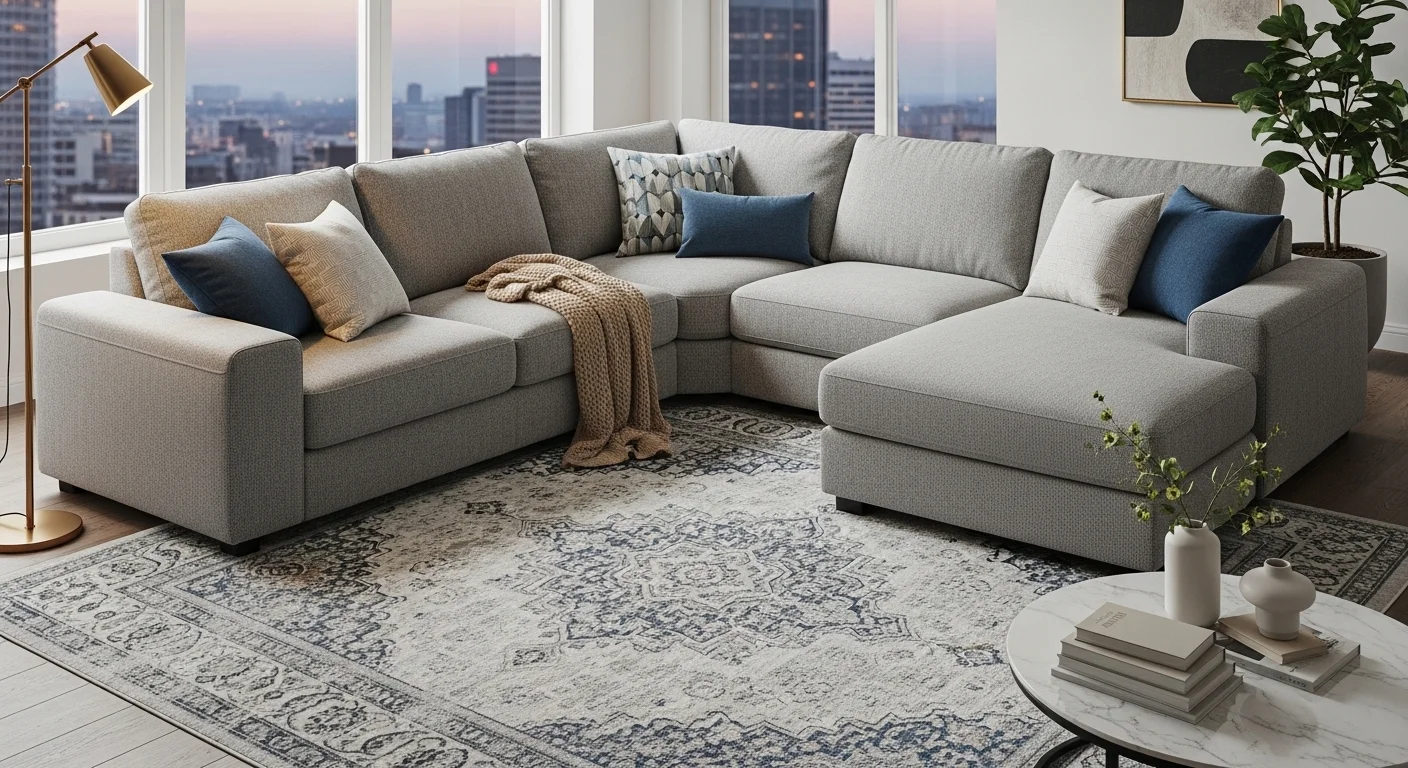
You walk into your living room. There’s that sad, lonely two-seater pushed against the wall. The cushions are flat. The armrest is basically falling apart. And every time someone visits, half the people end up sitting on the floor.
Sound familiar?
That’s exactly the moment most people start Googling “sectional sofa.” And honestly? It’s one of the best furniture decisions you can make — if you do it right. Do it wrong, and you’re stuck with a couch that barely fits through your door or looks completely wrong in your space.
So let’s talk about everything. Types, sizes, fabrics, what to watch out for, and how to pick the one that’ll actually make your living room feel like home.
What Even Is a Sectional Sofa?
Okay, quick reality check — not everyone is clear on what makes a sofa “sectional.”
A sectional sofa is basically a big sofa made up of multiple pieces (or sections) that you put together to fit your space. Think of it like building blocks for grown-ups. You might have an L-shaped piece, a chaise lounge on one end, a corner piece, and maybe even a recliner section.
The beauty? You can configure it however you want.
Got a long living room? Stretch it out. Got an awkward corner you never use? Fill it up. Got a family of six who all want to sprawl out on movie night? A sectional sofa has your back — literally.
Why People Are Ditching Regular Sofas for Sectionals
This isn’t just a trend. There are real, practical reasons why sectional sofas have become the go-to choice for modern homes.
More seating without looking cramped. A regular sofa might seat 3 people comfortably. A mid-sized sectional? Easily 5–7. And it doesn’t feel like you’re squeezing everyone in — it feels intentional and cozy.
It defines your space. Open floor plans are everywhere now. A sectional sofa acts like a room divider, creating a clear “living area” without putting up walls.
Versatility is insane. Most sectionals today are modular, meaning you can rearrange the sections if you move to a new place or just get bored of the layout.
Nappers, rejoice. The chaise end of a sectional is basically a built-in nap station. Once you experience it, going back to a regular sofa feels like a downgrade.
The Different Types of Sectional Sofas (And Which One is For You)
Not all sectionals are the same. Let’s break this down simply.
L-Shaped Sectional
This is the most popular one. It looks like the letter “L” — one long section and one shorter section at a 90-degree angle.
Perfect for: Corner spaces, medium-to-large rooms, people who want a clean, structured look.
It gives you plenty of seating while keeping things neat. Most L-shaped sectional sofas work great as a focal point in the room.
U-Shaped Sectional
This one wraps around on three sides, like a big hug. You’ve got two arms and a deep center.
Perfect for: Large rooms, families, anyone who hosts a lot of people or loves a full movie night setup.
The downside? U-shaped sectionals are big. Like, really big. Measure your room twice before considering this one.
Curved Sectional
Instead of sharp corners, this one flows in a gentle curve. It’s got a more sophisticated, artistic vibe.
Perfect for: Round rooms, open-plan living areas, people who want something that stands out visually.
Fair warning though — curved sectional sofas can be tricky to style around because of their shape. They’re beautiful, but they demand attention.
Modular Sectional
This is the Swiss Army knife of sofas. Individual pieces — ottomans, armless chairs, corner units — that you combine however you like.
Perfect for: People who move often, renters, or anyone who loves to rearrange their furniture every season.
Modular sectional sofas are a smart investment because they adapt with your life.
Chaise Sectional
One end has a chaise lounge — a long, extended seat where you can stretch out your legs completely.
Perfect for: Anyone who watches a lot of TV, reads, or just loves lounging. (Basically everyone.)
Sizes: Don’t Skip This Part — Seriously
This is where most people mess up. They fall in love with a sectional in the store, bring it home, and then… it doesn’t fit.
Before you even start shopping, here’s what you need to know:
Measure your room, not just the wall. You need to account for traffic flow — the space people walk through. Leave at least 18 inches between the sofa and any coffee table, and at least 30 inches for walking paths.
Small rooms (under 12×12 feet): Stick to a compact L-shaped sectional. Look for pieces under 100 inches on each side.
Medium rooms (12×15 to 15×18 feet): You’ve got options. A standard L-shaped or a smaller U-shaped sectional will work great.
Large rooms (over 18×18 feet): Go big. A full U-shaped sectional or a long modular setup will fill the space properly and not look lost.
Door width matters. Most sofas come in pieces, so this is less of an issue with sectionals — but double-check that individual sections can get through your hallway and door.
One more thing: draw it out on paper or use tape on your floor to visualize the footprint before you buy. It sounds old-school, but it saves you a massive headache.
Fabric Choices: What’s Actually Worth It
The fabric of your sectional sofa changes everything — how it looks, how long it lasts, and how easy it is to maintain.
Microfiber
This is the most practical pick for most families. It’s soft, it’s stain-resistant, and it holds up against pets and kids. It’s not the most luxurious-looking fabric, but it’s a workhorse.
Velvet
Velvet sectional sofas are stunning. Rich color, incredible texture, super comfortable. They’ve had a huge comeback in home design recently.
The catch? They require a bit more care. Sunlight can fade them, and they show pet hair. Worth it if you’re willing to put in the maintenance.
Leather and Faux Leather
Leather sectional sofas are classic and easy to wipe clean. Real leather ages beautifully. Faux leather is more budget-friendly and still looks sharp.
They can feel cold in winter and sticky in summer, depending on your climate. But for a sleek, modern look? Hard to beat.
Performance Fabric
This is the newer category, and it’s worth knowing about. Performance fabrics like Crypton or Sunbrella are engineered to resist stains, moisture, fading, and wear.
If you have young kids or pets — and you want something that looks nice, not just functional — performance fabric is your best friend.
Linen and Cotton Blends
These look gorgeous and feel breathable. Great for warmer climates. But they stain easily and may not hold up as well in high-traffic homes.
Frame and Cushion Quality: The Stuff Nobody Talks About
You can have the most beautiful fabric in the world, but if the frame is garbage, your sectional sofa is going to sag and wobble within a year.
Here’s what to look for:
Frame: Kiln-dried hardwood is the gold standard. It doesn’t warp or crack. Avoid softwood frames (like pine) and anything that uses a lot of particleboard.
Suspension: The best sectionals use eight-way hand-tied coil springs. They’re expensive but incredibly durable. Sinuous spring systems are okay — they’re more common and decent for the price. Avoid units that just use flat webbing.
Cushion fill: High-density foam (1.8 lb/cubic foot or higher) holds its shape. Down-blend cushions are cloud-soft but need regular fluffing. Many sectionals now use a hybrid — foam core wrapped in down — which is a great middle ground.
Sit on the sofa in the store. Sit on it for a few minutes, not just 10 seconds. If the cushion bottoms out quickly and you feel the frame, walk away.
How to Style a Sectional Sofa: Making It Look Like a Magazine
A sectional is a big commitment space-wise. Done right, it elevates your entire room. Done wrong, it makes the room feel cramped and chaotic.
Face it toward the focal point. That might be a TV, fireplace, or a great view. The sectional should anchor the seating area toward whatever draws your eye first.
Use a rug to define the space. In an open floor plan, a rug under the sectional literally “draws a circle” around the living area. Make sure the rug is big enough — at least the front legs of the sectional should rest on it.
Balance with other furniture. A huge sectional can swallow a room if everything else is tiny. Use a substantial coffee table. Add a couple of accent chairs. Don’t let the sectional fight alone.
Add pillows — but not too many. Three to five throw pillows, mixed in sizes and textures, hit the sweet spot. Don’t pile on twelve pillows nobody ever moves.
Lighting matters. A floor lamp at the corner of the sectional adds warmth and makes the whole setup feel intentional. Overhead lighting alone makes even great furniture look flat.
Price Ranges: What You’re Actually Getting
Let’s be real about budget, because this is where expectations and reality often clash.
Under $800: Entry-level sectionals. Okay for a first apartment or temporary situation. Frame quality and fabric durability won’t be great, but they’ll do the job short-term.
$800–$1,500: This is the sweet spot for most people. You start getting better frame construction, more fabric options, and more reliable cushion quality. Brands like Ashley Furniture, Wayfair, and IKEA (Vimle series) live here.
$1,500–$3,000: Mid-range to premium. You’re getting solid hardwood frames, better suspension, and real quality control. This is where the sectional starts to feel like a long-term investment.
$3,000 and above: High-end and luxury territory. Brands like West Elm, Crate & Barrel, Article, and Restoration Hardware operate here. You’re paying for exceptional craftsmanship, better fabric options, and often customization.
The honest advice? Don’t buy cheap if you want it to last. But also don’t assume expensive automatically means better. Read reviews. Look up the frame material. Ask questions.
Common Mistakes to Avoid When Buying a Sectional Sofa
People make the same mistakes over and over. Skip these:
- Not measuring the doorways. Sections come apart, but they still need to fit through the entrance.
- Ignoring the chaise orientation. Most chaise sectionals come in “left-facing” or “right-facing” options. Order the wrong one and you’ve just created a traffic problem in your own living room.
- Buying based on photos alone. Colors and textures look different in real life. If possible, see it in person or order fabric swatches before committing.
- Overlooking the return policy. Large furniture returns are complicated. Know the policy before you buy, especially online.
- Choosing style over comfort. It looks amazing in the showroom. But will you actually want to sit on it every day? Comfort should never be sacrificed for aesthetics.
Top Brands Worth Knowing About
You don’t have to shop blind. These brands have solid reputations:
- Article – Modern designs, good quality-to-price ratio, ships fast.
- Joybird – Customizable, mid-century modern vibes, made-to-order.
- IKEA (Söderhamn, Vimle) – Budget-friendly, modular, easy to clean with slipcovers.
- West Elm – Stylish, higher-end, great fabric options.
- Crate & Barrel – Classic quality, wide range of styles.
- Lovesac – The ultimate modular sectional. Pricey but almost indestructible.
Before You Hit “Add to Cart” — A Quick Checklist
Use this before you finalize any purchase:
- [ ] Measured room dimensions (including traffic paths)
- [ ] Checked doorway and hallway widths
- [ ] Decided on left-facing or right-facing chaise
- [ ] Chosen fabric based on lifestyle (kids? pets? heavy use?)
- [ ] Checked frame material (hardwood preferred)
- [ ] Read at least 20–30 reviews
- [ ] Understood the return/exchange policy
- [ ] Confirmed delivery timeline
Conclusion: Take Your Time — Your Sofa Will Be There Every Single Day
Here’s the thing about a sectional sofa: it’s not just furniture. It’s where you watch movies with your family. It’s where you crash on Sunday mornings. It’s where your dog curls up even though you told them not to. It becomes part of your life.
So yes, take the time to get it right. Don’t rush. Don’t just go with whatever’s on sale. Think about how you actually live in your space — not how you wish you lived, but how you actually do.
The right sectional sofa won’t just fill a corner of your room. It’ll make the whole room feel alive.
FAQ
Q1: What is the average size of a sectional sofa?
Most sectional sofas range from 95 to 130 inches on the longer side. U-shaped sectionals can go up to 170 inches across. Always measure your room first and leave adequate walking space around the sofa.
Q2: Is a sectional sofa good for small rooms?
Yes, but you need to be strategic. A compact L-shaped sectional under 100 inches per side can work beautifully in a small room. Look for designs with exposed legs — they make the sofa look lighter and less bulky visually.
Q3: How long does a sectional sofa last?
A well-made sectional sofa with a hardwood frame and high-density cushions can last 10–15 years or more. Cheaper models with softwood frames or low-density foam typically start showing wear within 3–5 years.
Q4: Can you separate a sectional sofa into individual pieces?
Yes! Most sectionals are held together by connecting hooks or clips, making them easy to separate. This is especially useful when moving to a new home or reconfiguring your space.
Q5: What fabric is best for a sectional sofa with kids and pets?
Performance fabric is your best bet — it’s engineered to resist stains, spills, and general chaos. Microfiber is also a solid, budget-friendly choice. Avoid light linen or velvet if durability is a priority.