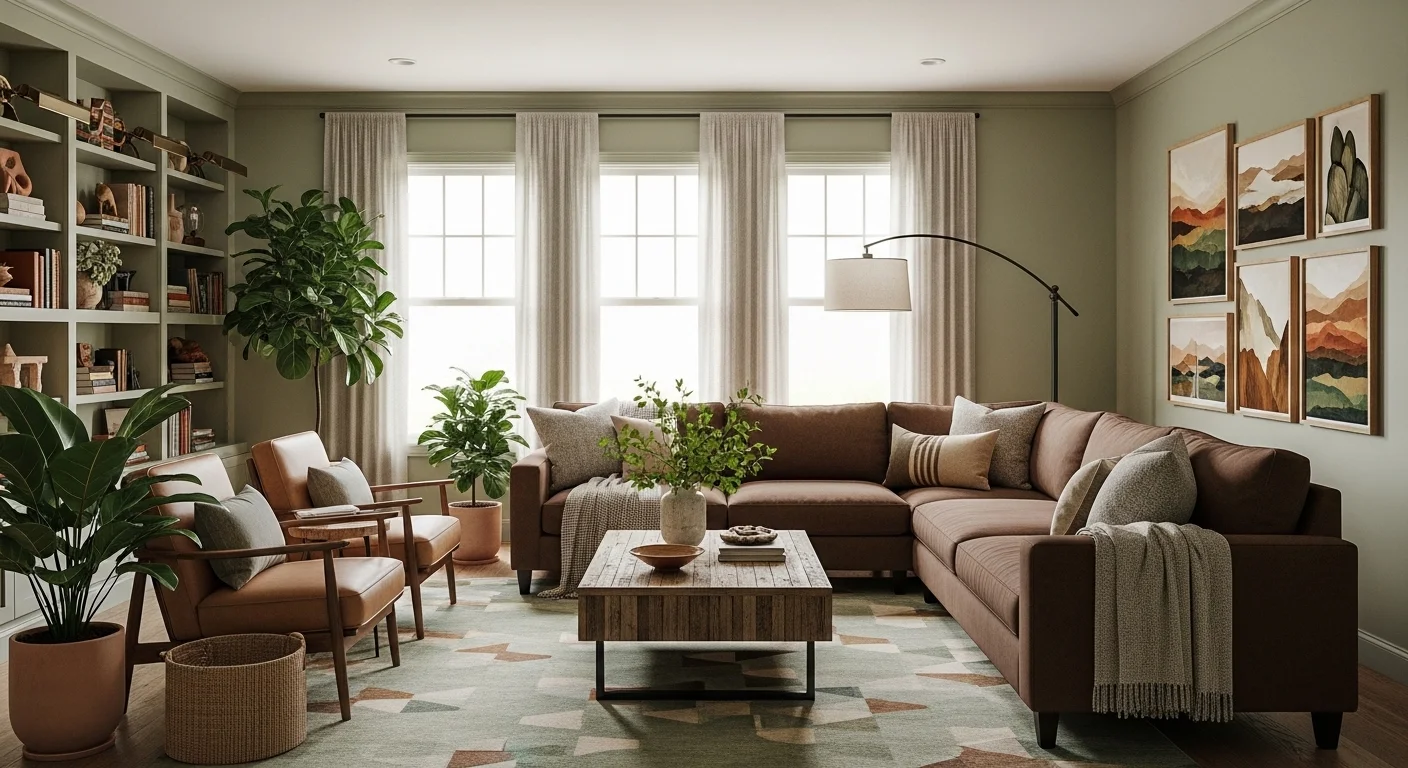
You know that feeling when you walk into a room and instantly feel calm? Like your shoulders drop, you take a slow breath, and everything just feels… right?
That’s what a sage green and brown living room does to people.
It’s not some trendy color combo that’ll look outdated in two years. It’s rooted in nature — think mossy forest floors, warm wooden logs, dried herbs on a sunlit windowsill. This palette has been making homes feel like sanctuaries for decades, and right now, it’s having a massive moment in interior design circles.
But here’s the thing — getting it right takes more than just slapping some green paint on the wall and tossing a brown couch in the corner. There’s a rhythm to it. A balance. And once you understand that, your living room will look like it came straight out of a design magazine.
Let’s talk about how to actually pull this off.
Why Sage Green and Brown Work So Well Together
Before we dive into the how, let’s quickly understand the why.
Sage green is a muted, greyish-green — it’s not the loud, screaming green of a crayon box. It’s soft. Sophisticated. It has this quiet confidence about it. And brown? Brown is the earth itself. It’s warmth, stability, and comfort all rolled into one.
When you put them together, something clicks.
The green brings freshness and a little bit of life into the space without overwhelming it. The brown grounds everything and keeps it from feeling too cool or sterile. Together, they create a living room that feels both alive and restful — which is honestly the exact vibe most people want when they come home after a long day.
Interior designers often describe this combination as “biophilic” — meaning it connects you to nature even when you’re sitting indoors. And research actually backs this up: natural color palettes reduce stress and improve mood. So it’s not just pretty, it’s genuinely good for you.
Choosing the Right Shade of Sage Green
Not all sage greens are created equal, and this is where a lot of people go wrong.
Some sage greens lean more blue-grey. Others pull warm and golden. The one you pick needs to work with your brown tones, not fight against them.
Here’s a simple rule: If your browns are warm (think caramel, honey, terracotta-adjacent), go with a sage that has warm undertones — something slightly golden or olive-adjacent. If your browns are cooler (walnut, dark espresso, greyed-out wood tones), a sage with grey or blue undertones will feel more balanced.
Some popular sage green paint colors that designers swear by:
- Farrow & Ball Mizzle — a complex, earthy sage that practically glows in natural light
- Benjamin Moore Pale Sage — soft and airy, great for smaller rooms
- Sherwin-Williams Clary Sage — slightly golden, pairs beautifully with warm wood tones
- Behr Salamander — deeper and moodier if you want drama
- Dulux Sage Advice — clean and fresh without being too sharp
Test your shortlisted colors in your actual space before committing. Paint a large swatch (at least 12″x12″) and look at it morning, afternoon, and evening. Colors shift dramatically under different lighting.
The Brown Spectrum: Which Browns Work Best?
Brown isn’t just brown. There’s a whole world in there.
For a sage green and brown living room, you’ve got several directions you can take:
Warm Honey and Caramel Browns
These are probably the most popular choice. Think golden wood floors, honey-toned oak furniture, caramel leather sofas. They add warmth and make the sage green feel rich and inviting rather than cold.
This combination — warm honey browns with sage — feels like the inside of a Scandinavian café where everything is just so cozy and you never want to leave.
Mid-Tone Walnut and Chestnut Browns
Walnut furniture gives a room more sophistication and weight. It’s not as casual as honey oak, but it’s also not as formal as dark mahogany. Paired with sage green walls, walnut creates a space that feels grown-up and put together — the kind of living room where you’d have friends over for wine and good conversation.
Dark Espresso and Chocolate Browns
These are bold choices. Dark brown furniture with sage green walls creates a strong contrast — almost a masculine, moody aesthetic. If you love the idea of a rich, dramatic living room that still feels earthy and grounded, this is your combo.
Just be careful not to go too dark in a small room without good natural light, or things can feel heavy.
Terracotta-Adjacent Browns
Terracotta sits at the crossroads of brown and orange, and it loves sage green. Clay pots, rust-colored cushions, warm tile — these terracotta tones create a Mediterranean or Southwestern feel alongside sage green that is absolutely beautiful.
Furniture: Building the Foundation
Your furniture is where you make the biggest commitment, so let’s think through this carefully.
Sofa first. The sofa is the biggest piece in the room, and it sets the tone. For a sage green and brown living room, you’ve got a few great options:
- A brown leather sofa is the classic move. It’s timeless, it ages beautifully, and it anchors the room with that earthy, organic energy perfectly.
- A sage green sofa can absolutely work — but if you’re going green sofa, keep the walls more neutral (cream, warm white, or light tan) and bring in the brown through wood accents, rugs, and accessories.
- A cream or oatmeal sofa is a third option that plays nicely in between — it lets your sage green walls breathe and allows you to bring in both green and brown through throws, pillows, and decor.
Wood furniture is non-negotiable. In a sage green and brown scheme, you want wood — real wood, or at least wood-look finishes. A wooden coffee table, side tables, bookshelves, or a media console will tie everything together and reinforce that natural, earthy feeling.
Don’t go all metal and glass. It’ll feel cold and disconnected from the palette.
Rugs: The Most Underrated Element
A rug can make or break this color scheme. No exaggeration.
In a sage green and brown living room, the rug is often where the two colors literally meet — and it’s also a great place to introduce pattern and texture.
Best rug options for this space:
- Jute or sisal rugs — natural fiber rugs are a perfect fit. They’re inherently earthy, they have beautiful texture, and they add that organic, grounded feel without competing with anything else.
- Persian or Oriental rugs in rust and green tones — these can be absolutely stunning in this color palette. The faded, vintage look of a traditional Persian rug brings warmth and character.
- Geometric wool rugs in cream, brown, and green — modern and stylish, especially if you’re going for a more contemporary or Bohemian vibe.
- Striped cotton rugs — casual and relaxed, great for family rooms or less formal spaces.
Size matters too. Go bigger than you think you need. A rug that barely fits under the coffee table looks lost. Ideally, the front legs of your sofa and chairs should sit on the rug.
Walls: To Paint or Not to Paint (And What Else to Consider)
Yes, sage green walls are the obvious choice — and they’re obvious for good reason. A sage green accent wall (or all four walls, if your room can handle it) is a stunning backdrop for brown furniture.
But there are other ways to bring sage green into the room without painting all the walls:
Wallpaper. Sage green botanical or textured wallpaper on one feature wall adds incredible depth and personality. There are so many gorgeous options right now — think maximalist leaf prints, subtle linen-texture wallpapers in sage, or even hand-painted mural-style designs.
Sage green on the ceiling. This is a design-forward choice that not enough people try. Painting your ceiling sage green (while keeping walls lighter) creates a cocooning effect — like the room is wrapping around you. It’s bold, but it works brilliantly in rooms with good natural light.
Wainscoting or paneling in sage. Paint the lower third of your walls sage green (with paneling or beadboard) and keep the upper portion cream or white. This is a classic, cottage-style approach that looks beautiful and is easier to live with than full sage walls.
Lighting: Getting the Glow Right
This part gets overlooked, but lighting can completely change how sage green and brown read in your room.
Natural light is your best friend. Both sage green and warm brown tones look incredible in daylight. Maximize natural light wherever possible — keep window treatments light and airy, use sheer curtains instead of heavy drapes, and place mirrors strategically to bounce light around.
Warm artificial light (bulbs with a color temperature around 2700K-3000K) makes sage green look warmer and more golden, and makes brown furniture glow beautifully. Avoid cool white or daylight bulbs — they’ll make sage look bluish and flat.
Layer your lighting. Don’t just rely on overhead lights. Add:
- A floor lamp in the corner for ambiance
- Table lamps on side tables for warmth
- A statement pendant or chandelier over the sitting area
- Candles or LED candle alternatives for the coziest evenings
Brass and bronze fixtures are perfect for this color scheme. They reinforce the warm, earthy aesthetic and look stunning against sage green walls.
Accessories and Decor: The Details That Bring It to Life
This is the fun part — layering in the details that make the room feel personal and complete.
Cushions and Throws
Mix textures generously here. Think:
- Terracotta and rust-colored cushions (they’ll pop beautifully against both sage and brown)
- Cream and oatmeal textured cushion covers
- A chunky knit throw in caramel or sand tones
- A velvet cushion in deep olive or forest green for depth
Plants
You simply cannot do a sage green and brown living room without plants. They complete the nature story.
Snake plants, fiddle-leaf figs, trailing pothos, olive trees — any of these look stunning in this palette. Put them in terracotta pots or brown ceramic planters and they’ll look intentional and gorgeous.
Art and Wall Decor
Botanical prints, landscape art, abstract pieces in earthy tones — all wonderful. Vintage oil paintings with warm brown frames also look incredible against sage walls.
Woven wall hangings, macramé, and rattan mirrors are other beautiful options if you want texture on the walls.
Books and Objects on Shelves
If you have open shelving or a bookcase, style it with intention. Mix brown and green objects — brown leather-bound books, green glass vases, small terracotta sculptures, natural stone bookends. Add a trailing plant for life.
Small Sage Green and Brown Living Room? Here’s How to Handle It
Smaller rooms need a slightly adjusted approach. Here’s how to make a sage green and brown scheme work in a compact space:
- Use sage on just one wall (the focal wall, usually behind the sofa or TV) and keep other walls light cream or white.
- Choose lighter wood tones — honey oak and natural pine feel less heavy than dark walnut in small rooms.
- Use a light-colored sofa (cream or sand) and bring in the brown through smaller elements.
- Mirrors are essential. A large mirror in a warm brown or gold frame will bounce light and make the space feel bigger while fitting perfectly into the palette.
- Keep furniture legs visible — pieces with legs (as opposed to furniture that sits flush on the floor) make a room feel more open and airy.
A Real-Life Example: How One Family Transformed Their Living Room
A friend of mine, Alicia, had a living room that she described as “sad beige.” Cream walls, beige carpet, brown sofa. Everything matched but nothing felt alive.
She repainted one wall — just one — in Sherwin-Williams Clary Sage. Added a jute rug over the carpet. Replaced her throw pillows with rust and cream ones. Put a fiddle-leaf fig in the corner in a terracotta pot. And hung a vintage botanical print in a walnut frame.
Total cost? Under $400.
The transformation? People who come into her home now immediately comment on how beautiful and calming it feels. She says it’s her favorite room in the house now.
That’s the power of a sage green and brown living room done right. You don’t have to gut the whole room. Sometimes a few intentional changes are all it takes.
Sage Green and Brown Living Room Style Variations
This color palette works across multiple interior design styles. Here are a few directions you can take it:
Boho Style
Layer lots of textures — macramé, rattan, woven baskets, mixed patterns. Go maximalist with plants. The result is warm, eclectic, and deeply personal.
Scandinavian/Nordic Style
Keep it clean and minimal. Simple wood furniture, a neutral sofa, sage green on one wall. Let the negative space breathe. Add a chunky knit and a single beautiful plant.
Traditional/Classic Style
Dark walnut furniture, a Persian rug, sage green walls with white crown molding and baseboards. Add a leather sofa and brass lighting fixtures. Elegant and timeless.
Modern Farmhouse
Shiplap or wood paneling in cream, sage green accents, linen upholstery, and warm wood tones. Cozy, casual, and very welcoming.
Cottagecore
Botanical wallpaper, vintage furniture in muted brown, dried flowers, wicker baskets, soft sage green everywhere. Pure, dreamy coziness.
Common Mistakes to Avoid
Let’s save you some headaches:
- Using too many competing patterns. One or two statement patterns is enough. After that, it starts feeling chaotic rather than layered.
- Going too matchy-matchy. If everything is the exact same shade of green and the same brown, it looks flat. Vary your tones and shades — some lighter, some darker.
- Ignoring the ceiling. A bright white ceiling can look stark against sage green walls. Consider a warm white (like Benjamin Moore Chantilly Lace) or even a very light tint of the sage color to make the room feel cohesive.
- Skipping the warm lighting. Cool daylight bulbs will kill the vibe of this color scheme every single time. Always go warm.
- Forgetting texture. Color alone isn’t enough. You need rough and smooth, matte and shiny, soft and hard — texture is what makes a room feel rich and layered.
Final Thoughts: Your Sage Green and Brown Living Room Is Waiting
If you’ve been dreaming about a living room that feels like a retreat — warm, calm, effortlessly beautiful — this is the palette for you.
Start with the walls or one key furniture piece. Build from there. Trust the process. The sage green and brown living room you’re imagining? It’s absolutely achievable, and once you have it, you’ll wonder why you ever lived with anything else.
Take it one step at a time, stay patient with the process, and don’t be afraid to layer in elements gradually. Good rooms are built slowly, with intention.
Frequently Asked Questions (FAQ)
Q1: Does sage green go with dark brown furniture? Yes, absolutely. Dark brown furniture — walnut, espresso, or mahogany tones — creates a beautiful, moody contrast with sage green. It gives the room a sophisticated, grounded feel. Just make sure you have enough natural light so the room doesn’t feel too dark and heavy.
Q2: What accent colors work well in a sage green and brown living room? The best accent colors for this palette are terracotta/rust, cream, oatmeal, warm gold or brass tones, and dusty pink. Black works as a grounding accent in small doses (lamp bases, picture frames). Avoid cool greys, bright white, or jewel-toned blues — they tend to clash with the warm, earthy vibe.
Q3: What type of flooring looks best with a sage green and brown living room? Warm wood-toned flooring — whether real hardwood, engineered wood, or luxury vinyl plank in honey or walnut tones — looks stunning. Light wood floors keep the space airy and fresh; darker wood floors create a richer, more dramatic feel. Both work well. Avoid grey-toned wood floors — they tend to conflict with the warm earthy palette.
Q4: Can I use sage green and brown in a living room with low natural light? You can, but you’ll need to be strategic. Opt for lighter sage greens (avoid very deep or grayed-out versions) and lighter wood tones. Use warm artificial lighting generously and add mirrors to bounce what light you do have. A cream or white sofa will also help keep things feeling open.
Q5: How do I keep a sage green and brown living room from looking too outdated or country? Keep the lines of your furniture clean and modern. Avoid ornate, fussy furniture shapes. Mix in some contemporary elements — a geometric rug, sleek pendant lighting, abstract art. The sage green and brown palette is naturally timeless, and with modern furniture shapes, it reads as fresh and current rather than country or dated.