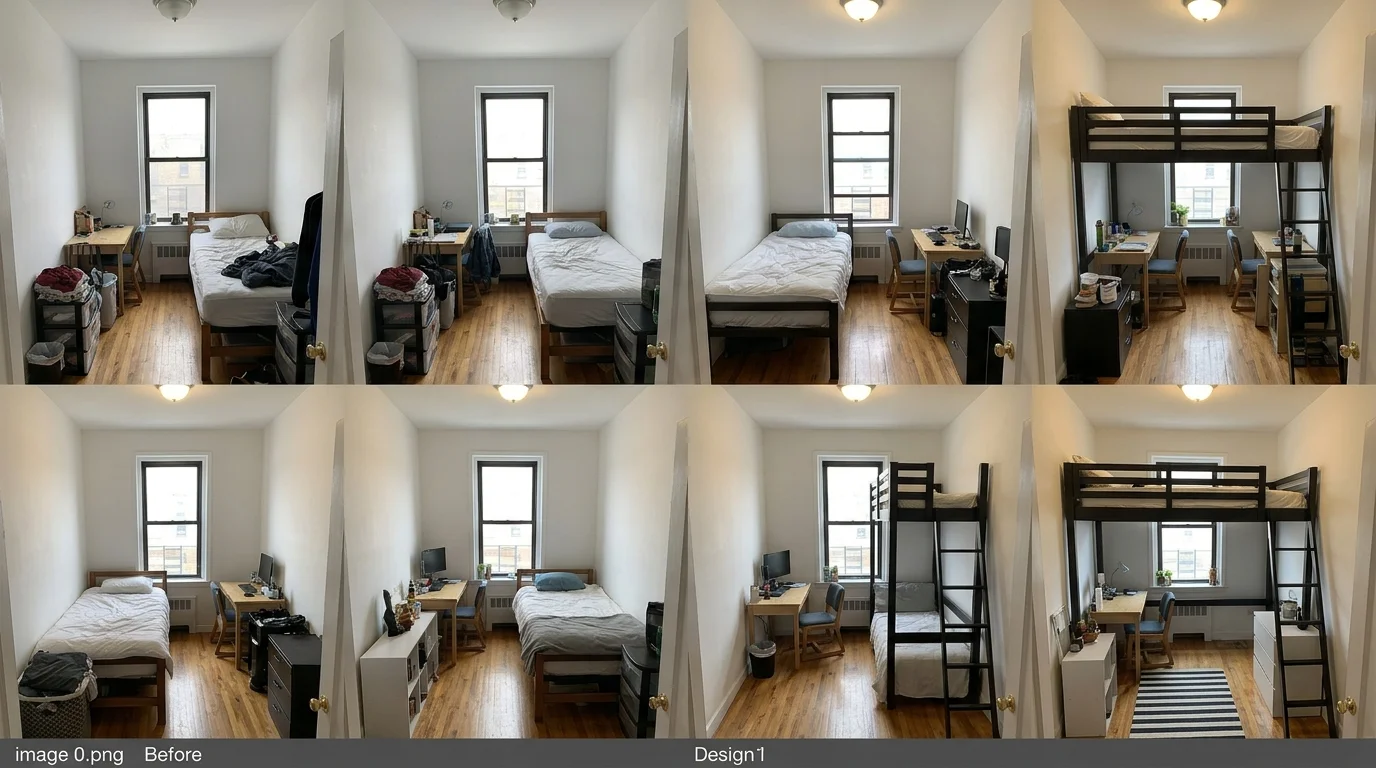
You know that feeling when you walk into your bedroom and it already feels full — before you’ve even added a desk, a dresser, or a place to sit?
Yeah. That’s the small room problem.
And the worst part? You can’t knock down walls. You can’t magically add square footage. But here’s the thing — you don’t have to.
A low loft bed might be the single smartest move you can make in a small room. It lifts your sleeping space off the floor and hands you back a whole chunk of usable area underneath. That’s not decorating. That’s architecture on a budget.
Let’s talk about how to make it work, what ideas are actually worth it, and how to avoid the mistakes most people make.
What Is a Low Loft Bed, Exactly?
A regular loft bed sits up high — we’re talking ceiling-scraping territory. Great for tall rooms. Not great for normal apartments or kids’ rooms with standard 8-foot ceilings.
A low loft bed is different. It sits lower — usually around 4 to 5 feet off the ground. That’s high enough to create a usable space underneath, but low enough that you’re not bumping your head every time you sit up in bed.
Think of it like a bunk bed without the bottom bunk. Instead of another bed down there, you get open space. That open space is where the magic happens.
Why Low Loft Beds Work So Well in Small Rooms
Here’s the honest answer: vertical space is the most wasted real estate in a bedroom.
Most people use the floor. They put their bed on the floor, their desk on the floor, their shelves on the floor. And then they wonder why the room feels cramped.
When you go vertical, everything changes.
A low loft bed takes your sleeping area — which typically eats up the biggest chunk of floor space — and moves it up. Suddenly you have 35 to 50 square feet of usable floor space that didn’t exist before.
That’s room for a desk. A couch. A reading nook. A closet. A mini home office. Whatever you actually need.
15 Low Loft Bed Ideas for Small Rooms That Actually Work
1. The Classic Study Setup Underneath
This is the most popular combination, and honestly, it earns that title.
Slide a compact desk right under the loft. Pair it with a good chair, add a small lamp, and you’ve just built a dedicated workspace without using a single extra inch of floor space beyond what the bed was already taking up.
This works especially well for students, remote workers, or anyone who needs a place to focus but doesn’t have a separate office.
Pro tip: Mount a pegboard or floating shelves on the wall beside the desk for even more organization.
2. A Cozy Reading Nook Underneath
Not everyone needs a workspace. Some people just need a place to breathe.
Add a small loveseat or a comfy floor cushion under the loft, hang some string lights above it, throw in a small side table for your coffee or book — and now you have a little hideaway inside your own bedroom.
It feels like a tree house for adults. Warm, private, and completely charming.
3. Built-In Wardrobe or Closet
No closet in the room? Or a closet that’s just not cutting it?
The space under a low loft bed is the perfect spot for a built-in wardrobe. You can either buy a freestanding wardrobe that fits the dimensions or have one custom-built into that alcove.
You get full-height hanging space, shelves for folded clothes, and a place for shoes. All without using any “extra” floor space because that space was always there — it was just occupied by dead air before.
4. Low Loft Bed with Stairs That Double as Storage
Most loft beds use a ladder. Ladders are fine. But stairs are better — especially if you design them with drawers built into each step.
Each stair tread becomes a drawer. You get easy, safer access to the bed, and you gain a whole column of hidden storage for clothes, books, toys, or anything else that tends to pile up.
This is a fantastic low loft bed idea for small rooms because it solves two problems at once: access and storage.
5. Mini Living Room Setup
In a studio apartment or a dorm, your bedroom IS your living room.
So why not make the space under your low loft bed work like one? A small sofa or loveseat, a tiny coffee table, and a mounted TV on the wall facing it — now you have a legitimate sitting area that doesn’t fight for floor space with your bed.
It’s like having two rooms in one. And honestly, it looks intentional and cool, not cramped.
6. The Murphy Bed Alternative: Low Loft + Convertible Furniture
If you want maximum flexibility, pair your low loft bed with a convertible desk underneath — one that folds flat against the wall when not in use.
During the day? Clear open space. In the evening? Pull the desk down and work. The room literally transforms based on what you need at any given moment.
This is especially useful in urban micro-apartments where every square foot has to work overtime.
7. Low Loft Bed with Built-In Shelving on the Frame
Some low loft bed frames come with shelving built directly into the structure — on the sides, at the head, or along the footboard.
This is brilliant for books, plants, alarm clocks, glasses, chargers — all the stuff that ends up in a pile on your nightstand or scattered on the floor.
Integrated storage keeps the room looking clean without requiring any additional furniture.
8. L-Shaped Desk and Loft Combo
If you need serious desk space — say, you’re a designer, a student with multiple monitors, or someone who just refuses to work on a tiny surface — go for an L-shaped desk under the loft.
The loft naturally forms a sort of canopy over the desk, which actually helps with focus. It feels like a dedicated zone, separate from the “bedroom” energy just a few feet away.
9. Low Loft Bed for Kids: Play Space Underneath
For a child’s room, the space under a low loft bed becomes a play den.
It’s naturally the right height for kids. You can add a small play table and chairs, build in a little reading corner with bean bags, or just leave it open as imaginative space. Kids love having their own little “house within a house.”
Bonus: You can hang curtains from the loft frame to give them a sense of privacy and make the space feel even more special. This is one of those low loft bed ideas for small rooms that kids will actually love waking up in.
10. Rolling Drawers and Under-Loft Storage Carts
If you’re not ready for a built-in setup, rolling storage carts and drawers are a flexible, budget-friendly option.
Roll them under the loft when you need storage. Roll them out when you need access. No tools, no commitment, no carpenter fees.
This works especially well if you’re renting and can’t make permanent changes to the space.
11. Low Loft Bed in a Gender-Neutral Teen Room
Teenagers are notoriously hard to design for — their style preferences change every 18 months and they want their room to feel like theirs.
A low loft bed with a clean, minimal frame in white, black, or natural wood is a great base because it’s style-neutral. The teen can customize what goes underneath — a gaming setup this year, a music corner next year. The loft itself doesn’t dictate the vibe.
12. Hanging Plants and Greenery Underneath
This one is for the people who look at a room and think: “Yes, but where do my plants go?”
The space under a low loft bed can be styled like an indoor garden. Low-light plants like pothos, snake plants, and peace lilies do well in these spaces. Add a small stool or plant stand, and it becomes a genuinely beautiful little green corner.
It brings life into the room without competing for desk or floor space.
13. Minimalist Setup: Just the Bed + Clear Space Below
Not every low loft bed needs to be loaded with stuff underneath.
Sometimes the best move is to keep it clean. A simple rug, a floor cushion, and nothing else. The open space itself becomes a visual breathing room. In a very small room, visual openness matters just as much as physical openness.
Don’t feel like you have to fill every inch. Sometimes space is the design.
14. Low Loft Bed with Curtains for Privacy
If you share a room — whether with a sibling, roommate, or partner — a low loft bed with curtains creates a private sleeping area.
Clip curtains directly to the bed frame or hang a track from the ceiling. Close them at night for total privacy, open them during the day to let the light in. It’s a surprisingly effective way to carve out personal space in a shared environment.
15. Floating Shelves + Loft Combo for a Bookworm’s Dream
Mount floating shelves on the walls around and beside the loft. Use them for books, framed photos, candles, little decorative pieces.
The shelves fill vertical wall space that would otherwise be blank. The loft and the shelves together turn a flat, empty room into something layered and interesting.
If you love books, this is your setup.
Choosing the Right Low Loft Bed Frame: What to Look For
Not all loft bed frames are equal. Here’s what actually matters:
Weight Capacity Make sure the frame can handle your weight comfortably. Most adult low loft beds support 200 to 300 lbs. Check the specs before you buy.
Material
- Solid wood: Durable, warm-looking, tends to be heavier and more expensive
- Metal: Sleek, strong, lighter, often more affordable
- Engineered wood (MDF): Budget-friendly but watch for wobble over time
Mattress Compatibility Most low loft beds work best with a thinner mattress — 6 to 8 inches. A thick 12-inch mattress will sit too high and you’ll be hitting your head every night.
Under-Clearance Height Measure carefully. If you want a desk chair under there, you need at least 4.5 to 5 feet of clearance. If it’s just storage, less is fine.
Rail Safety The guardrails on the sleeping surface need to be sturdy and at least 5 inches tall. This matters especially for kids and for anyone who moves around in their sleep.
Common Mistakes to Avoid
Buying the bed before measuring the room Sounds obvious. People skip it constantly. Measure your ceiling height, your floor space, and the clearance you’ll need under the loft before you order anything.
Going too high A low loft bed should be low. If you’re buying a frame that puts the sleeping surface at 6 feet, you’re in full loft territory — not ideal for standard rooms.
Ignoring the lighting The space under a loft tends to feel dark. Plan for it. A clip-on desk lamp, LED strip lights along the loft frame, or a small table lamp can completely change the feel.
Cluttering the space underneath You made all this room. Now don’t fill it with random stuff. Be intentional. Give that under-loft space one clear purpose and design it around that.
Real Room Transformation: A Quick Story
A friend of mine had a 10×10 bedroom. Bed in the corner, desk jammed against the wall, clothes on the floor because the closet was already overflowing. The room felt like a storage unit with a mattress.
She switched to a low loft bed with a built-in staircase and storage drawers. Slid a desk underneath. Added some floating shelves on the side wall.
Same room. Same square footage. Completely different feeling.
She told me the biggest change wasn’t even the extra space — it was that the room finally felt like it had been designed. Like someone had made intentional choices instead of just throwing furniture in and hoping for the best.
That’s what a low loft bed does. It forces intention. And intention is what makes a small room feel like home.
Final Thoughts: Start With One Good Idea
You don’t need to overhaul everything at once.
Pick one idea from this list that solves your biggest problem — whether that’s needing a workspace, more storage, or just more open floor — and start there.
A low loft bed is an investment, but it’s one that pays back every single day in the form of a room that actually works for you. And in a small space, a room that works is worth everything.
FAQ
Q1: What is the ideal height for a low loft bed? A low loft bed typically has a sleeping surface between 4 and 5.5 feet off the ground. This height creates usable space underneath while staying manageable in rooms with standard 8-foot ceilings.
Q2: Can a low loft bed work in a room with an 8-foot ceiling? Yes — that’s actually the sweet spot. With an 8-foot ceiling and a low loft bed at 4.5 feet, you still have comfortable headroom in bed (around 3.5 feet of clearance above the mattress) and usable space below.
Q3: What mattress thickness is best for a low loft bed? A 6 to 8-inch mattress is ideal. Thicker mattresses reduce the headroom above the sleeping surface, which can feel uncomfortably tight in a standard-ceiling room.
Q4: Are low loft beds safe for adults? Yes, as long as you choose a frame with an appropriate weight capacity (check the manufacturer’s specs), sturdy guardrails, and a secure ladder or staircase. Most well-made frames support 200–300 lbs for adult use.
Q5: What should I put under a low loft bed to maximize space? It depends on your needs. The most popular options are a compact desk and chair for a workspace, a wardrobe or dresser for clothing storage, a small sofa for a lounge area, or rolling storage drawers for flexible organization. Pick one primary function and design around it intentionally.