Let me ask you something real quick.
Have you ever walked into someone’s bedroom and just… stopped? Like your brain immediately said, “Wow. This feels amazing.” But when you try to figure out why, you just can’t put your finger on it?
Nine times out of ten, it’s the colors doing the heavy lifting.
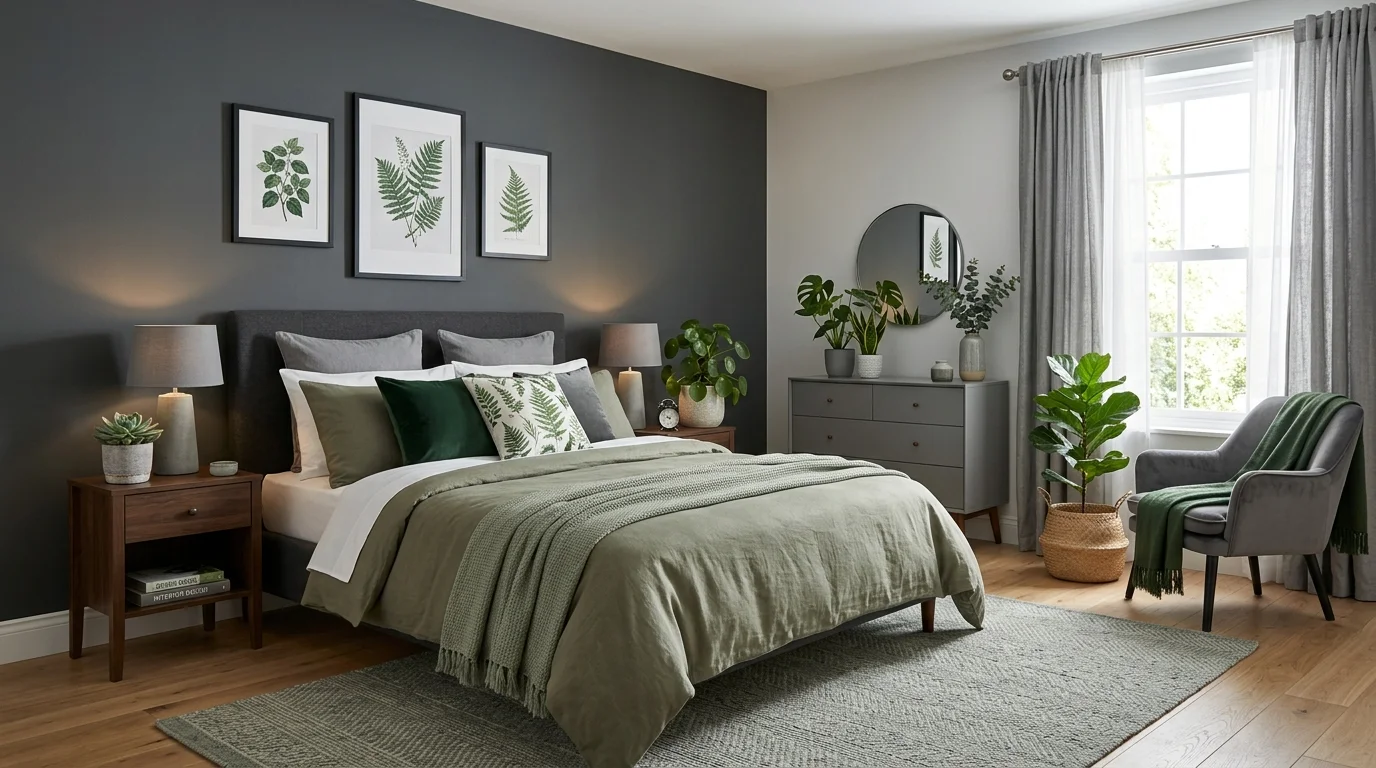
And right now, in 2025, the green and gray bedroom combo is quietly becoming one of the most loved, most pinned, and most searched bedroom palettes on the entire internet. Not loud. Not in-your-face. Just effortlessly beautiful.
So if you’ve been staring at your boring beige walls wondering “how do I make this room feel alive without making it look like a jungle threw up in here?” — you’re in the right place.
Let’s dig in.
Why Green and Gray? What’s the Big Deal?
Okay, here’s the honest truth. People used to think green was too bold for a bedroom. Too “nature-y.” Too risky.
And gray? People said it was cold. Depressing. The color of rainy Mondays.
But put them together?
Magic happens.
Green brings life, warmth, and a sense of the outdoors into your room. Gray grounds everything — it’s the anchor that keeps green from feeling overwhelming. Together they create this incredible balance of calm and energy.
Psychologists who study color actually back this up. Green is proven to reduce stress and anxiety. It’s connected to nature, growth, and restoration. Gray, on the other hand, is associated with sophistication, neutrality, and mental clarity.
So when you sleep in a green and gray bedroom, your brain is literally being told: “Relax. Everything is fine. You’re safe here.”
Honestly? That’s what a bedroom is supposed to do.
The Different Shades — Because “Green” and “Gray” Are Not Just One Thing
This is where a lot of people mess up. They hear “green and gray” and go buy one green paint and one gray paint. Then they wonder why their room looks like a hospital waiting area.
Here’s the thing — there are DOZENS of versions of this combo, and each one creates a completely different vibe.
Sage Green + Light Gray
This is the softest, most soothing version of the green and gray bedroom look.
Sage green is muted, almost dusty. It doesn’t scream green — it whispers it. Pair it with a warm light gray (not a cold stark gray) and you get a room that feels like a cozy Sunday morning. Think linen bedding, wooden furniture, maybe a few dried flowers in a vase.
This combo works especially well in smaller bedrooms because neither color feels heavy. The room breathes.
Best for: People who want a calm, minimal, cottagecore-meets-Scandi vibe.
Forest Green + Charcoal Gray
Now we’re talking drama.
Forest green is deep and rich — the color of pine trees and old library walls. Charcoal gray is its perfect partner. Dark, grounded, and seriously sophisticated.
A bedroom with forest green walls and charcoal gray bedding feels like something out of a luxury boutique hotel. Add brass or gold accents — like bedside lamps or drawer handles — and you’ve got a room that looks intentionally expensive.
Best for: People who want their bedroom to feel bold, moody, and dramatic. Also great for rooms with good natural light (the darkness won’t feel overwhelming).
Mint Green + Cool Gray
This one leans more fresh and modern.
Mint green has a slight blue undertone that gives it that crisp, clean feeling. Pair it with a cool-toned gray (think silver-ish) and your room instantly feels light, airy, and contemporary.
This combo is extremely popular for teen bedrooms and young adult spaces. It’s playful without being childish. Clean without being sterile.
Best for: Modern apartments, small rooms, people who like that fresh, bright feeling.
Olive Green + Warm Greige (Gray + Beige)
This is the earthy, organic version of the trend.
Olive green feels grounded and natural. “Greige” — that beautiful mix of gray and beige — feels warm and welcoming. Together they create a bedroom that feels like a retreat from the outside world.
Throw in some terracotta accents, wicker baskets, and a chunky knit throw, and you’ve got a room that’s so cozy it practically hugs you when you walk in.
Best for: People who love earthy, boho-meets-organic aesthetics.
How to Actually Design a Green and Gray Bedroom (Step by Step)
Alright, enough dreaming. Let’s talk about how to actually make this happen.
Step 1: Decide What’s Green and What’s Gray
This is the most important decision you’ll make, and a lot of people skip it.
You need to decide which color is dominant and which is secondary. Here’s a simple rule:
- If you want a calm, restful room: Make gray the dominant color (walls, large furniture) and use green as accents (pillows, plants, art, curtains).
- If you want a bold, statement room: Flip it. Make green the star of the show — paint an accent wall or all four walls green — and let gray be the anchor in your furniture and textiles.
Don’t try to do 50/50. That usually ends up looking confused.
Step 2: Choose Your Specific Shades — Test Before You Commit
Paint a small sample on your wall first. Seriously. Colors look completely different on a tiny chip versus a large wall.
And here’s something nobody tells you: the light in your room changes everything. A green that looks perfect in the afternoon might look completely different at night under artificial lighting.
Do this: paint two large swatches (at least 12″x12″) of the colors you’re considering. Look at them in the morning light, afternoon light, and at night with your lamps on. Only then make your final call.
Step 3: Build Your Palette Around Those Two Colors
Once you’ve locked in your green and your gray, you need a third color to complete the palette. This is called an accent color, and it ties everything together.
Here are the best accent colors for a green and gray bedroom:
- White/Cream — For a clean, fresh look. Works with every version of this combo.
- Gold/Brass — For a warm, luxurious feel. Especially gorgeous with deep green and charcoal.
- Terracotta — For an earthy, organic vibe. Perfect with olive green and greige.
- Navy Blue — For a sophisticated, almost masculine feel. Works beautifully with sage green.
- Blush Pink — For a soft, romantic feel. Surprisingly gorgeous with sage or mint green.
Pick ONE accent color and be consistent. If you go gold, your lamp should be gold, your picture frames should be gold, your decorative hardware should be gold. Consistency is what separates a “designed” room from a “random stuff I bought” room.
Step 4: Layer Your Textures
Color is only half the story. Texture is what makes a room feel rich and lived-in.
In a green and gray bedroom, try to include:
- Linen or cotton bedding (matte, natural)
- A chunky knit throw or velvet pillow
- Wooden furniture or wooden accents (raw or light wood for soft combos, dark walnut for bold ones)
- A plush area rug (especially in gray or cream)
- Wicker, rattan, or jute elements for earthy warmth
When you mix textures, your eye has interesting things to look at. The room feels layered and intentional, not flat.
Step 5: Bring in the Green Through Plants
This is an absolute game-changer that costs almost nothing.
Real plants — even just two or three — add a layer of life to a green and gray bedroom that no amount of paint or pillows can replicate.
Some easy, low-maintenance options:
- Pothos — Nearly impossible to kill. Long trailing vines look gorgeous on shelves.
- Snake plant — Tall, architectural, and survives in low light.
- Peace lily — Beautiful white flowers, loves shade.
- ZZ plant — Dark green, shiny leaves. Looks expensive. Is very forgiving.
Put one large plant in the corner, a small one on your nightstand, and maybe a trailing one on a shelf. Done. Your room just got 10x more alive.
Green and Gray Bedroom Furniture: What Works
Let’s talk furniture, because the wrong pieces can completely ruin even the best color scheme.
Bed Frame
For a soft sage/gray combo: Go with a light wood (oak, ash) or an upholstered bed frame in cream, greige, or light gray.
For a bold forest/charcoal combo: Go dark. Walnut wood, black metal, or a deep charcoal upholstered frame.
Nightstands
Keep them simple. The nightstand is where most people over-complicate things. A clean wooden nightstand with a drawer works in almost every version of this palette.
Wardrobe/Dresser
If you have a built-in wardrobe: consider painting the interior a complementary green. It’s a small detail that looks absolutely incredible.
If you have a standalone dresser: wood tones always work. Avoid white furniture unless you’re going for a very minimal, Scandi look.
Lighting: The Underrated Element That Transforms Everything
Here’s a secret that interior designers don’t always share: the wrong lighting will ruin even the most beautiful color scheme.
Green and gray are both sensitive to light. Cool lighting (white/blue tones) makes green look harsh and gray look cold. Warm lighting (yellow/amber tones) makes green look rich and inviting and gray look cozy and warm.
For a green and gray bedroom, always go with warm-toned bulbs. Look for 2700K or 3000K on the packaging.
Add layers of light:
- An overhead light (for general illumination)
- Bedside lamps (for that warm, cozy glow when you’re reading)
- Fairy lights or a LED strip (for ambiance and a touch of magic)
The combination of warm light + green + gray at night? It’s genuinely breathtaking.
Small Green and Gray Bedroom? No Problem.
Many people think bold color combos only work in large rooms. That’s completely wrong.
A small green and gray bedroom can look incredibly elegant if you do these things:
- Go lighter — Use light gray walls and sage green accents rather than dark colors.
- Use mirrors — A large mirror on one wall makes any room feel twice as big.
- Keep furniture low and sleek — Low-profile bed frames and floating shelves open up visual space.
- Avoid clutter — In a small room, every surface matters. Keep decor minimal and intentional.
- Add vertical elements — Tall curtains hung close to the ceiling (even in rooms with low ceilings) draw the eye up and make rooms feel taller.
Accent Wall vs. All Four Walls: Which Is Better?
Great question. And honestly, it depends on what you’re going for.
Accent wall (just one green wall, usually behind the headboard): This is the safer, more subtle approach. It creates a focal point without overwhelming the room. Great for beginners or people who aren’t ready to fully commit.
All four walls in green: This feels more immersive and enveloping. Done right, it’s stunning. The key is to balance it with lighter furniture and bedding so the room doesn’t feel like a cave.
Two-tone walls: Paint the bottom half one color and the top half another (separated by a chair rail or a strip of wood trim). This is a more sophisticated, editorial approach that looks incredible in a green and gray scheme.
Real-Life Inspiration: Three Different Looks
Let’s make this real. Here are three different green and gray bedroom setups based on actual design scenarios.
Look 1: The Peaceful Retreat Sage green walls. Light gray linen bedding. Wooden nightstands. A rattan pendant light. A large fiddle leaf fig in the corner. White curtains that reach the floor. The whole room costs maybe $800 to put together — and looks like it came out of a design magazine.
Look 2: The Moody Luxury Deep forest green accent wall behind the bed. Charcoal gray bedding with a velvet throw. A brass bedside lamp. Dark walnut furniture. Abstract art in a gold frame. Small monstera on the dresser. This one feels expensive and bold — perfect for someone who wants their bedroom to make a statement.
Look 3: The Modern Fresh Mint green one wall, white on the rest. Silver-gray furniture. White and gray bedding with a single green pillow. A geometric rug in gray and white. Clean, sleek, and current. This one feels like a breath of fresh air every morning.
Common Mistakes to Avoid
Before you run off and start painting, let me save you from some very painful (and expensive) mistakes.
- Don’t use too many colors. Green + gray + accent = done. Adding four or five different colors makes the room look chaotic.
- Don’t use the wrong undertones. A yellow-green with a cool blue-gray will clash. Make sure your undertones are compatible.
- Don’t forget the ceiling. A simple white ceiling works with everything. But a soft gray ceiling in a green room? Surprisingly beautiful.
- Don’t skip the rug. A bare floor in a green and gray bedroom feels unfinished. A rug ties everything together and adds warmth.
- Don’t buy everything at once. Layer your room slowly. Live in it for a few weeks after painting before buying all the furniture. Your eye will tell you what it needs.
A Quick Word on Budget
You don’t need to spend a fortune to create a beautiful green and gray bedroom.
Here’s what actually matters (spend here): Paint, bedding, one good rug, lighting.
Here’s what doesn’t need to be expensive: Decorative pillows, plants, throw blankets, small decor items.
You can find incredible pieces at IKEA, HomeGoods, Target, and even Facebook Marketplace. The secret is consistency in your color palette, not the price tag on individual pieces.
Conclusion: Your Green and Gray Bedroom Awaits
Look, at the end of the day, your bedroom should feel like yours.
But if you want a space that’s calm, sophisticated, and genuinely beautiful — a space that feels like a retreat from the chaos of the world — the green and gray bedroom combo is one of the best choices you can make.
Start with one change. Paint one wall. Buy one green pillow. Add one plant. See how it feels. Then keep going.
You might be surprised how quickly a room can transform when you give it the right colors to breathe.
FAQ
Q1: What shades of green go best with gray in a bedroom? Sage green, forest green, olive green, and mint green all pair beautifully with gray. The key is matching the undertones — warm greens pair best with warm grays, and cool greens pair best with cool or neutral grays.
Q2: Is a green and gray bedroom too dark for a small room? Not if you choose the right shades. Lighter combinations like sage green with soft gray or mint with light gray work beautifully in small rooms. Just balance dark accents with plenty of light and mirrors.
Q3: What accent colors work best with green and gray? Gold/brass, white, terracotta, navy blue, and blush pink all work wonderfully. Choose just one accent color and use it consistently throughout the room for a cohesive look.
Q4: Should I paint all four walls green or just one? It depends on the shade and your confidence. Lighter greens can work on all four walls. Deeper, bolder greens often look best on just one accent wall (usually behind the headboard) to create a focal point without overwhelming the space.
Q5: How do I make my green and gray bedroom look more luxurious without spending a lot? Focus on texture and layering. Add a velvet or linen throw, swap out cheap curtains for longer floor-to-ceiling ones, upgrade your lighting to warm-toned bulbs, and add a few real plants. These small changes have a massive impact on how the room feels.