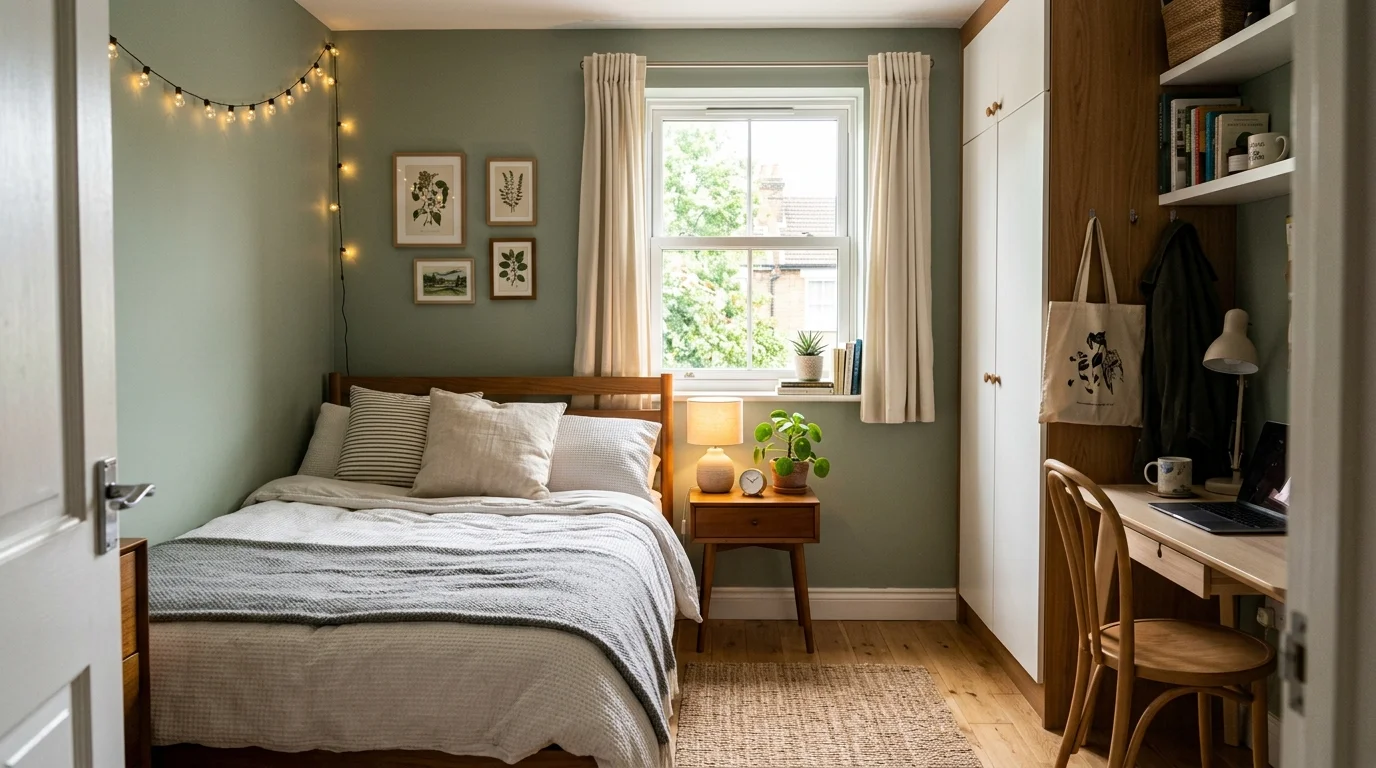
You know that feeling when you walk into your bedroom and it just feels… suffocating?
Like the walls are slowly closing in. Stuff everywhere. No room to breathe. You sit on the edge of your bed and think, “Why does my room feel like a storage closet with a mattress?”
Been there. A lot of people have.
But here’s the thing — a small bedroom doesn’t have to feel small. With the right tricks, the right furniture, and a little creativity, even a tiny roo
can feel like something straight out of a Pinterest board.
No magic wand needed. Just some smart thinking.
Let’s get into it.
Why Small Bedrooms Feel Even Smaller Than They Are
Before we fix the problem, let’s understand it.
Most people make their small bedroom worse without even realizing it. Dark paint on all four walls? That’ll make it feel like a cave. Too much bulky furniture? You’re basically building walls inside your room. Clutter everywhere? Your brain reads that as chaos — and chaos feels cramped.
The good news? Every single one of these problems is fixable.
A small bedroom is really just a space that hasn’t been optimized yet. Think of it like a phone with 100 apps running in the background — slow, messy, overwhelming. Close the unnecessary ones and suddenly it runs smooth and fast.
Your room is the same way.
The #1 Rule: Stop Buying Furniture First
Most people’s first instinct is to run to IKEA or scroll through furniture websites. And then they wonder why nothing fits.
Measure your room first. Always.
Get a measuring tape. Write down the exact dimensions — length, width, and ceiling height. This number will save you so much money and frustration.
A bed that looks compact in a showroom can eat up half your room at home. A wardrobe that seems “slim” online might block your window entirely.
Measurements first. Shopping second. This simple rule changes everything.
Choosing the Right Bed for a Small Bedroom
The bed is the biggest piece of furniture in any bedroom. So this is where you need to think the most.
Go for a Bed with Storage Underneath
This is honestly one of the best hacks for a small bedroom. A bed with built-in drawers underneath gives you massive hidden storage. Blankets, off-season clothes, shoes — all tucked away, out of sight.
No under-bed mess. No visible clutter. Just clean, calm space.
Consider a Platform Bed
Platform beds sit low to the ground. When your eye line is lower, the ceiling feels higher. The room feels taller. It’s a psychological trick, but it genuinely works.
They also tend to look sleek and modern, which automatically makes any space feel more intentional.
Murphy Beds — Yes, They’re Still a Thing
If your bedroom is extremely small, a Murphy bed (the kind that folds up into the wall) can be a total game-changer. During the day, your room becomes a mini living space or home office. At night, you pull down the bed.
It sounds extreme, but people who use them absolutely swear by them.
The Color Trick That Makes Any Room Feel Bigger
Here’s something interior designers know that most people don’t:
Light colors make a room feel open. Dark colors make it feel enclosed.
For a small bedroom, you want light, airy tones. Think:
- Soft white
- Warm cream
- Light grey
- Pale sage green
- Dusty blush pink
These colors reflect light around the room and trick the eye into seeing more space than there actually is.
Now, does this mean your room has to be boring? Absolutely not.
You can use one accent wall — paint just one wall a deeper, richer color. This adds personality without making the whole room feel heavy. A deep forest green or terracotta accent wall behind your bed can look absolutely stunning without closing in the space.
What About Wallpaper?
Vertical stripes on wallpaper (or even painted stripes) make ceilings look higher. Horizontal stripes make walls look wider.
Used correctly, wallpaper in a small bedroom can be a weapon, not a mistake.
Lighting: The Most Underrated Tool in Any Small Bedroom
Bad lighting destroys a room. Great lighting transforms it.
Most small bedrooms rely on a single ceiling light. That’s the first mistake.
Layer your lighting. You want at least three types:
- Ambient lighting — the main overhead light. This sets the general brightness.
- Task lighting — a bedside lamp or reading light. Practical and warm.
- Accent lighting — fairy lights, LED strips behind your headboard, a small lamp on a shelf. This adds depth and mood.
When you have multiple light sources at different heights, the room feels dynamic and dimensional. It doesn’t feel flat or boxy.
And if you can, go for warm white bulbs over cool white. Warm light feels cozy and welcoming. Cool light feels clinical and harsh.
Furniture Placement: The Game Most People Get Wrong
Where you put things matters just as much as what you put in.
Keep the Path Clear
Always keep a clear walkway through your small bedroom. The moment someone has to squeeze sideways to get to the bathroom, the room feels like a puzzle — not a sanctuary.
At least 24 inches of walking space between furniture pieces is the general rule. Stick to it.
Float the Furniture Away from Walls
This one feels counterintuitive, but hear me out.
Most people push all their furniture against the walls, thinking it’ll free up the center. But floating a piece — like your bed — slightly away from the wall actually creates visual breathing room and makes the room feel larger.
Try pulling your bed just a few inches from the wall. The difference is surprisingly noticeable.
Use Vertical Space Like Your Life Depends on It
Your walls go up, but are you using that space? Probably not.
Tall, narrow bookshelves. Floating shelves near the ceiling. Wall-mounted nightstands instead of bulky bedside tables. A pegboard for accessories and small items.
When you go vertical, you free up your floor. And more visible floor space = a room that feels bigger.
Storage Solutions That Don’t Look Like Storage
The secret to a beautiful small bedroom is hiding your mess — not eliminating it (because let’s be real, life is messy).
Here are some sneaky storage ideas:
- Ottoman at the foot of the bed: Opens up for storage. Also gives you a place to sit while putting on shoes.
- Hollow headboard with shelves: Replaces your nightstand AND gives you extra shelf space.
- Over-the-door organizers: Behind your closet door or bedroom door — you’d be shocked how much fits there.
- Under-bed rolling bins: Even if your bed doesn’t have built-in storage, flat rolling bins slide right under and hold a ton.
- Mirrored wardrobe doors: Store your clothes AND reflect light. Double win.
The goal is storage that doesn’t announce itself. Guests walk in and see a beautiful room — not a room desperately trying to hide how much stuff you own.
Mirrors: The Oldest Trick in the Book (and Still the Best)
A large mirror in a small bedroom is practically cheating.
Mirrors reflect light and create an illusion of depth. A full-length mirror on one wall can make a room feel almost double its size. It’s not magic — it’s just light physics. But the effect is genuinely remarkable.
Some ideas:
- Lean a large mirror against the wall beside your wardrobe
- Hang a full-length mirror on the back of your door
- Use a mirrored wardrobe (kills two birds with one stone)
- Place a mirror directly opposite a window to bounce natural light deeper into the room
The more natural light your mirror catches, the more dramatic the effect.
Decluttering: The Hard Part Nobody Wants to Talk About
Okay, real talk time.
No amount of clever furniture or paint tricks will save a small bedroom if it’s absolutely packed with stuff you don’t need.
Clutter is the enemy of space. Full stop.
Every few months, go through your bedroom with ruthless honesty:
- When did I last wear this?
- Do I actually use this?
- Does this even belong in a bedroom?
If the honest answer is “not recently,” “not really,” or “no” — it goes. Donate it, sell it, or throw it out.
This isn’t about minimalism or living like a monk. It’s about only keeping things in your bedroom that actually serve you. Your bedroom should be a place of rest and calm. It can’t do that job if it’s also functioning as a second wardrobe, a filing cabinet, and a garage sale.
How to Style a Small Bedroom Without It Looking Cheap
Being strategic with space doesn’t mean your room has to look bare or boring.
Here’s how to add personality without adding clutter:
Pick a theme and stick to it. Boho? Minimalist? Cozy cottage? Modern sleek? Choose one direction and let every piece serve that vision. A mismatched room always feels chaotic and cramped regardless of size.
Use textiles to add warmth. A chunky knit throw blanket, some textured cushions, a soft area rug — these add richness without taking up physical space. Textiles make a room feel lived-in and cozy without adding visual clutter.
Go for quality over quantity. One beautiful piece of art on the wall beats fifteen random prints. One meaningful plant beats a forest of tiny succulents on every surface. Less, but better.
Let natural light in. Heavy, dark curtains are a small bedroom’s enemy. Sheer curtains or light linen panels let daylight flood in and make the room feel alive and open. Keep your window area as unblocked as possible.
Small Bedroom Ideas by Room Size
Under 100 Square Feet
This is serious small-space territory. You’re probably looking at a single bed (or a loft bed to free up floor space), one small wardrobe, and maximum use of wall-mounted storage. Every inch counts. Murphy beds or fold-down desks might genuinely be worth the investment here.
100-150 Square Feet
You have a bit more flexibility. A double bed with under-bed storage, a slim wardrobe, a floating desk setup, and a couple of wall shelves — this is very workable. Focus on keeping the floor as clear as possible and using vertical storage.
150-200 Square Feet
Now we’re talking. A queen bed is possible. You can afford a small dresser, a proper bedside table setup, and maybe even a reading nook in a corner. The key at this size is still intentional furniture placement — don’t just fill the space because you can.
The Mindset Shift That Changes Everything
Here’s the thing people miss when they think about a small bedroom.
Small doesn’t mean bad.
Small bedrooms are actually easier to keep warm. They feel more intimate and cozy. They’re faster to clean. They encourage you to be intentional about what you keep and how you live.
Some of the most beautiful, most photographed rooms in the world are tiny. Japanese design philosophy — which is built around small, intentional spaces — produces some of the most calming, stunning interiors you’ve ever seen.
Your small bedroom isn’t a problem to solve. It’s a creative challenge to embrace.
And honestly? Once you nail the layout, the storage, and the lighting — you might even start to love it.
Wrapping Up: Your Small Bedroom Can Be Your Favorite Room
You started this article feeling like your small bedroom was working against you.
By now, you know it doesn’t have to.
Light colors. Smart storage. The right bed. Vertical thinking. Mirrors that double your space visually. Lighting that adds warmth and depth. And most importantly — letting go of stuff that doesn’t deserve space in your life (or your room).
Start with one change. Just one. Move your furniture around. Paint an accent wall. Add a mirror. Put up a floating shelf.
Small rooms respond fast to small changes. You’ll feel the difference within a week.
FAQ — Small Bedroom Questions People Actually Ask
Q1: What is the best color to make a small bedroom look bigger?
Soft whites, light greys, and warm creams work best. They reflect natural light and make the walls feel like they’re further away than they actually are. If you want color, use it on just one accent wall.
Q2: How do I maximize storage in a small bedroom without it looking cluttered?
Use hidden storage — under-bed drawers, ottomans, hollow headboards. Go vertical with wall-mounted shelves. Use the back of doors. The goal is storage that disappears into the room’s design rather than announcing itself.
Q3: Is a queen bed too big for a small bedroom?
It depends on the dimensions. In a room that’s 10×10 feet or smaller, a queen can feel overwhelming. In a 10×12 or 10×14 room, it’s very manageable — especially with a platform bed that sits low and doesn’t dominate the visual space.
Q4: Do mirrors really make a small bedroom look bigger?
Yes, genuinely. A large mirror reflects light and creates visual depth, making the room appear more spacious. Position it across from a window to maximize the effect.
Q5: How do I make a small bedroom feel cozy rather than cramped?
Layer your lighting (don’t rely on one overhead light). Use warm, soft textiles. Keep surfaces relatively clear. Choose a consistent color palette and style. Cozy and cramped are both small — the difference is intentionality and warmth.