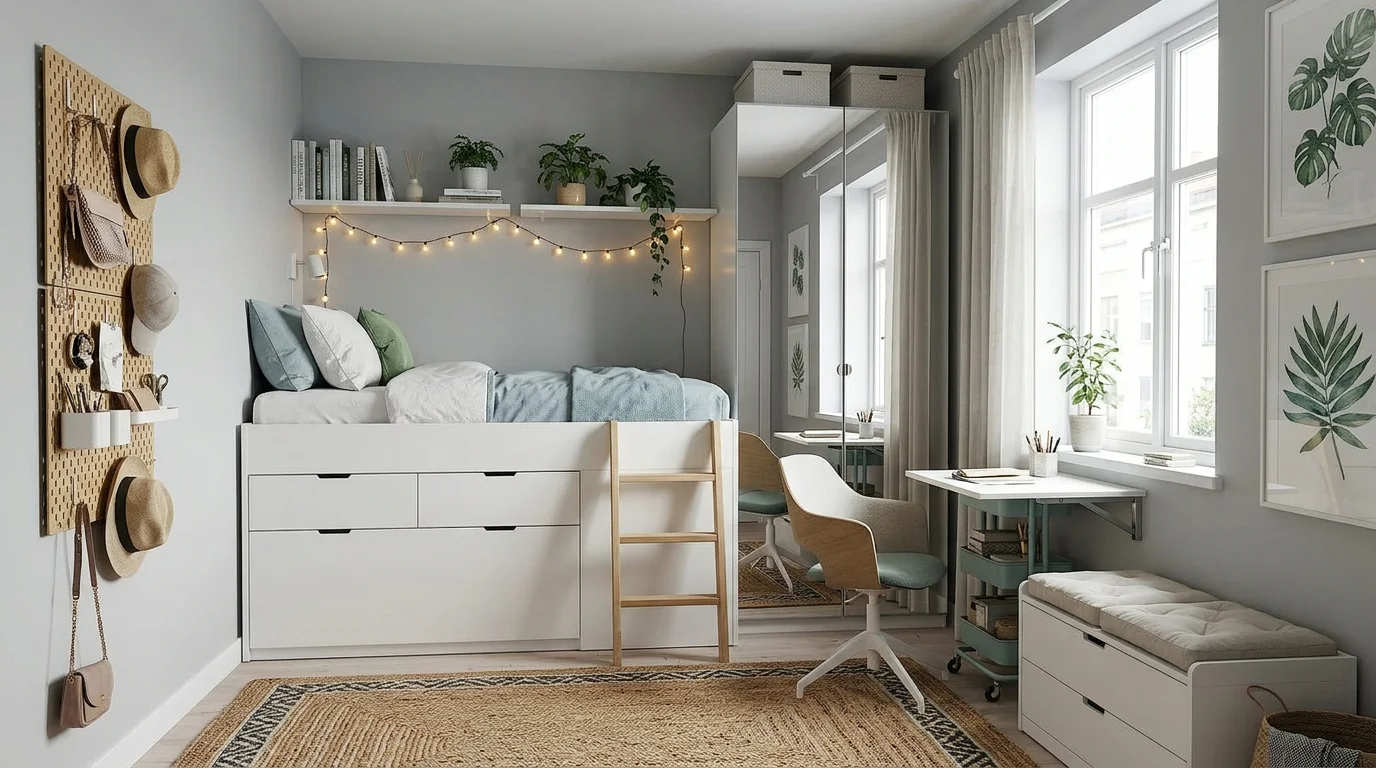
Let me be real with you for a second.
You open your bedroom door, look around, and think — “Is this a bedroom or a closet with a bed in it?” Sound familiar?
A small bedroom can feel suffocating. There’s stuff everywhere. The bed takes up half the room. You can barely open the wardrobe without hitting the wall. And every time a friend visits, you quietly pray they don’t ask for a tour.
But here’s the thing nobody tells you — small rooms aren’t a problem. They’re just waiting to be designed properly.
I’ve spent years helping people transform cramped, cluttered spaces into rooms they actually want to spend time in. And trust me, the difference isn’t always about money. Sometimes it’s just one clever idea that changes everything.
So grab a coffee. Let’s fix your bedroom.
Why Small Bedrooms Feel Smaller Than They Actually Are
Before we jump into the solutions, let’s talk about the real enemy — clutter and poor layout choices.
Most people walk into a small bedroom and immediately try to squeeze in as much furniture as possible. Big mistake. Every oversized piece of furniture you add is basically stealing your breathing room.
The second culprit? Dark walls and heavy curtains. Your room might actually be a decent size, but dark colors absorb light instead of reflecting it — which makes the space feel like a cave.
And then there’s the floor. If you can’t see much floor space, your brain automatically reads the room as “small.” It’s just psychology.
Now that we know what’s working against us, let’s work against it.
Bedroom Ideas for Small Rooms: The Foundation First
1. Choose the Right Bed Size (And Placement)
Your bed is probably the biggest piece of furniture in your room. So this decision matters a lot.
Don’t automatically go for the biggest bed you can fit. A queen bed in a room that barely fits it will make everything feel cramped. Sometimes a full-size bed with a few extra feet of walking space feels infinitely more comfortable.
As for placement — push the bed against a wall or into a corner if possible. This frees up circulation space and makes the room feel more open.
Also? Under-bed storage is your best friend. Get a bed frame with built-in drawers or simply use flat storage bins under there. You’d be surprised how much junk you can hide in plain sight.
2. Go Vertical — The Walls Are Yours
Most people only think horizontally when designing a room. Big mistake.
Your walls go all the way up to the ceiling. Use them.
- Install floating shelves high up on the wall to store books, plants, or decor without using floor space.
- Use tall, narrow wardrobes instead of wide, low ones.
- Mount your TV on the wall instead of putting it on a dresser.
- Add wall-mounted bedside lamps instead of table lamps — this frees up your nightstand completely.
Going vertical is one of the most underrated bedroom ideas for small rooms and it costs very little to implement.
3. Light Colors = Instant Space Illusion
Here’s a simple trick interior designers use every single time with small rooms — go light on the walls.
White, cream, soft grey, pale beige — these colors reflect light back into the room and create an airy, open feeling. You don’t have to make the whole room white (unless you want to). Even just painting the main wall a light color and keeping the rest neutral makes a noticeable difference.
Thinking about an accent wall? Go for it — but keep the color soft. A dusty blue or sage green accent wall can look absolutely stunning in a small bedroom without closing the space in.
Smart Storage Solutions for Small Bedrooms
4. The Floating Nightstand Trick
Traditional nightstands take up floor space. Floating shelves mounted at bedside height do the same job — and free up the floor.
This is such a simple swap but it visually opens up the room immediately. Add a small drawer unit on the wall if you need storage, and you’ve basically created a nightstand that takes up zero floor real estate.
5. Ottoman With Hidden Storage
If you have a small seating area or a bench at the foot of the bed, make sure it does double duty.
An ottoman with a removable lid can store extra blankets, pillows, off-season clothes — whatever’s cluttering up your space. It looks clean and polished from the outside. Nobody knows you’ve hidden a small mountain of stuff inside. Genius, right?
6. Use the Back of Doors
The back of your bedroom door is basically free storage space that most people completely ignore.
- Over-the-door organizers for accessories and small items
- Hooks for bags, jackets, or tomorrow’s outfit
- A small mirror on the back of the door (which also makes the room feel bigger)
One door. Multiple problems solved.
7. Built-In Wardrobes vs. Freestanding — What Works Better?
In a small room, built-in wardrobes that go floor to ceiling almost always win.
Why? Because they use every inch of vertical space, they don’t have gaps on top where dust collects, and they can be customized to fit your exact needs. Yes, they cost more upfront. But the amount of storage you gain is worth every penny.
If built-ins aren’t in the budget, go for a tall freestanding wardrobe and add a shelf above it to use that wasted space near the ceiling.
Design Tricks That Make Small Bedrooms Look Bigger
8. Use Mirrors Strategically
Mirrors are magic in small spaces. A large mirror on one wall can literally make a room look twice its size — no joke.
The best placements:
- A floor-length mirror leaning against the wall
- A large framed mirror above your dresser
- Mirrored wardrobe doors (these are incredibly effective)
The mirror reflects light and creates a sense of depth. It tricks the eye into thinking there’s more space than there actually is. Works every single time.
9. Let the Light In — All of It
Natural light is the number one weapon against a small room feeling cramped.
- Swap heavy curtains for light, sheer panels that let sunlight flood in
- Keep window sills clear of clutter
- If privacy is a concern, use frosted window film instead of thick curtains
The more natural light you have, the bigger your room will feel. It’s that simple.
And for artificial lighting? Skip the harsh single overhead light. Use layered lighting — a ceiling fixture, bedside lights, and maybe a small floor lamp in the corner. This creates warmth and depth in the room.
10. Continuity in Color and Materials
Here’s a designer secret — the more visual “breaks” a room has (different colors, different textures, different materials everywhere), the smaller it feels.
When everything is fighting for attention, the eye gets confused and the room feels busy and small.
The fix? Choose a consistent color palette and stick to it. Two or three colors, maximum. Let your furniture and decor speak the same visual language.
For example: white walls, natural wood tones, and one accent color (say, terracotta or forest green). Simple, cohesive, and it makes the room feel calm and spacious.
Furniture Ideas for Small Bedrooms
11. Multi-Functional Furniture Is Non-Negotiable
In a small bedroom, every piece of furniture needs to earn its place. If it only does one job, think hard about whether you really need it.
Some brilliant multi-functional pieces:
- Murphy beds (fold-up wall beds) — transform your bedroom into a mini living space during the day
- Desks that fold into the wall — perfect if you work from home
- Storage benches at the foot of the bed
- Beds with built-in bookshelves in the headboard
This is especially useful for bedroom ideas for small rooms that also need to function as a home office or study space.
12. Choose Furniture With Exposed Legs
This sounds like a weird tip but it works beautifully.
Furniture that sits directly on the floor with no gap underneath creates a visual “block” that makes the room feel heavier and more closed in.
But furniture with slim, visible legs — like a bed frame on legs, a nightstand on legs, even a sofa with thin legs — lets you see the floor underneath. This creates a sense of continuity and openness. The room breathes.
It’s the kind of trick you don’t notice until someone points it out — and then you can’t unsee it.
13. Avoid Bulky, Overstuffed Pieces
That big, cushy armchair you love? In a small bedroom, it might be eating up 20% of your usable floor space.
Go for slim, streamlined furniture. A simple wooden chair takes up a fraction of the space of an overstuffed armchair. A simple bed frame looks less overwhelming than a massive upholstered one with a giant headboard.
Minimalism in furniture choice doesn’t mean your room has to feel cold or empty. It means every piece gets to breathe — and so do you.
Small Bedroom Decor: The Finishing Touches
14. Plants — But Not Too Many
Plants bring life into a bedroom in a way that no other decor element can. They make a room feel fresh, alive, and calming.
But in a small room, go for tall, slender plants (like a snake plant or a small fiddle leaf fig) or hanging plants rather than wide, bushy ones that take up shelf and floor space.
One or two well-placed plants is all you need. Don’t go overboard — remember, we’re fighting clutter.
15. Rugs Define Space (And Add Coziness)
A rug under the bed — even just extending out from the sides and foot of the bed — does something magical to a small bedroom.
It defines the sleeping zone, adds warmth and texture, and makes the whole room feel more intentional and pulled-together.
For small bedrooms, go for a lighter-colored rug to keep the floor feeling open. And make sure it’s big enough — a tiny rug that barely pokes out from under the bed actually makes the room look smaller.
16. Curtain Height Hack
Here’s one of the easiest and cheapest bedroom ideas for small rooms that makes an enormous visual difference.
Hang your curtains as high as possible — ideally right at the ceiling — even if your window is much lower.
This draws the eye upward, creates the illusion of taller ceilings, and makes the whole room feel grander and more spacious. It’s a designer trick that costs nothing extra (you just need longer curtain panels).
17. Keep the Floor As Clear As Possible
I said it before and I’ll say it again — visible floor space = perceived room size.
Do a lap of your room. What’s on the floor that doesn’t need to be? Bags? Shoes? Boxes? A pile of “I’ll deal with it later” stuff?
Clear the floor and you’ll immediately feel like you have more space. No renovation needed.
Room Layouts That Work for Small Bedrooms
18. The Diagonal Layout Trick
Most people put their bed parallel to the wall. But sometimes, placing the bed at a slight diagonal can actually create a more interesting flow in a small room and make better use of corner space.
This works especially well in rooms that are more square than rectangular.
19. Create Zones in Your Small Bedroom
Even in a tiny room, you can create distinct “zones” — a sleeping zone, a study zone, a dressing area. This makes the room feel more thought-out and functional.
How to create zones without walls:
- Use a rug to define the sleeping area
- Use a small bookshelf or curtain as a divider between a study nook and the bed
- Use different lighting for different zones — task lighting at the desk, softer ambient lighting by the bed
20. Declutter Ruthlessly — Then Decorate
I’ve saved the most important one for last.
No design trick in the world will save a bedroom that’s drowning in stuff. Before you buy anything new, before you paint a single wall, declutter.
Go through your clothes. Donate what you haven’t worn in a year. Clear out the stuff that’s been sitting in the corner “temporarily” for six months.
A clutter-free small room will always feel better than a bigger room full of junk. Always.
Once the clutter is gone, then start applying these ideas. You’ll be shocked at what you actually have to work with.
Real Talk: My Favorite Small Bedroom Transformation
A friend of mine had a bedroom that was genuinely tiny — maybe 9 by 10 feet. He had a full-size bed, a huge wardrobe, a desk, and a chair crammed in there. It felt like a storage unit.
We swapped the wardrobe for a built-in unit that went floor to ceiling. Moved the desk to a fold-down wall-mounted version. Painted the room a warm white. Added floating shelves and bedside lights. Threw in a light-colored rug.
Same room. Same square footage. Completely different feeling.
He told me it felt like a hotel room now. And honestly? It kind of did.
That’s what good design does. It doesn’t change the size of the walls — it changes how you experience the space.
Quick Recap: Top Bedroom Ideas for Small Rooms
- ✅ Choose the right bed size and push it to a wall
- ✅ Go vertical with shelving and tall furniture
- ✅ Use light colors on walls and floors
- ✅ Install floating nightstands and wall-mounted lights
- ✅ Use multi-functional furniture wherever possible
- ✅ Add a large mirror to create depth
- ✅ Let in as much natural light as possible
- ✅ Keep the floor as clear as possible
- ✅ Hang curtains high to fake taller ceilings
- ✅ Declutter before you decorate
Your Small Bedroom Can Be Your Favorite Room
Here’s what I want you to take away from all of this.
A small bedroom doesn’t have to feel like a compromise. With the right furniture choices, smart storage, good lighting, and a bit of design thinking — it can become the coziest, most personal space in your entire home.
You don’t need to knock down walls. You don’t need a massive budget. You just need a plan.
Start with one idea from this list. Just one. See how it changes the feel of your room. Then try another. Small changes add up fast, and before you know it, you’ll be looking at your bedroom differently — not as a problem to solve, but as a space you genuinely love.
Frequently Asked Questions (FAQ)
Q1: What is the best color for a small bedroom? Light, neutral colors work best — white, cream, soft grey, or pale beige. These colors reflect natural light and make the room feel more open and airy. If you want some color, use it as an accent on one wall and keep the rest light.
Q2: How do I maximize storage in a small bedroom? Think vertical first — tall wardrobes, floating shelves up high, wall-mounted organizers. Then use hidden storage: under-bed drawers, ottomans with storage, and the backs of doors. The goal is to keep the floor as clear as possible.
Q3: What size bed is best for a small bedroom? It depends on your room dimensions, but a full or double bed often works better than a queen in a truly small room. The extra walking space makes a huge psychological difference. If you need a larger bed, make sure the rest of the furniture is scaled down to compensate.
Q4: How can I make my small bedroom look bigger without renovating? Use light colors, add a large mirror, hang curtains from ceiling height, use furniture with visible legs, maximize natural light, and most importantly — declutter. These changes cost very little but make a dramatic difference in how spacious the room feels.
Q5: Is a Murphy bed (wall bed) worth it for a small bedroom? Absolutely, especially if your room needs to serve multiple purposes. A Murphy bed folds up into the wall during the day, giving you back the entire floor space. It’s a bigger investment upfront but transforms how you use a small room completely.