The Heart-Stopping Moment a Glass Pan Shatters
Imagine you just finished baking a beautiful, golden-brown lasagna. The smell fills your home, and your family is gathered around the table.
You pull the steaming glass dish out of the oven and set it near the sink. To speed up the cleanup, you turn on the tap and splash some water onto the hot pan.
Suddenly, a loud “CRACK” echoes through the kitchen. In an instant, your dinner is covered in tiny shards of glass.
This is a nightmare that happens to thousands of home cooks every single day. It turns a happy meal into a dangerous and messy disaster.
People often feel confused and frustrated when their trusted glassware fails them so suddenly. Most of us grew up seeing these dishes as “indestructible” tools that can handle any heat.
Why Common Kitchen Habits Lead to Disaster
Many people struggle with this because they lack the right information about how modern glass reacts to temperature changes. Here is why things go wrong:
-
Trusting old labels: Many people think “oven-safe” means the dish can handle anything, including sudden cold.
-
The rush to clean: We all want to get the kitchen clean quickly, so we soak pans while they are still piping hot.
-
Wet countertops: Setting a hot dish on a damp towel or a cold stone counter is a mistake many people make without thinking.
-
Hidden damage: Small, invisible scratches from metal spoons make the glass much weaker over time.
-
Misleading TV ads: Old commercials showed glass going from the freezer to the oven, which is rarely safe today.
When these mistakes happen, the glass doesn’t just crack; it can literally explode. This leaves you feeling scared to use your favorite kitchen tools.
The Mental Toll of Kitchen Accidents
Dealing with broken glass is more than just a physical mess to clean up. It affects your confidence and your peace of mind in several ways:
-
Loss of Confidence: You might start to feel nervous every time you hear a small noise in the kitchen.
-
Wasted Effort: Hours of prep work and expensive ingredients end up in the trash in a single second.
-
Safety Fears: The thought of tiny glass pieces hiding in your kitchen floor or, worse, in your food, is deeply stressful.
-
Guilt over Costs: Replacing high-quality baking dishes is expensive and feels like a waste of money.
-
Cooking Anxiety: Instead of enjoying the process, you spend your time worrying about “what if” something breaks.
You deserve to feel safe and relaxed while you cook for your loved ones. Understanding the “why” behind this problem is the first step to taking back control.
The Science of Why Hot Glass Hates Cold Water
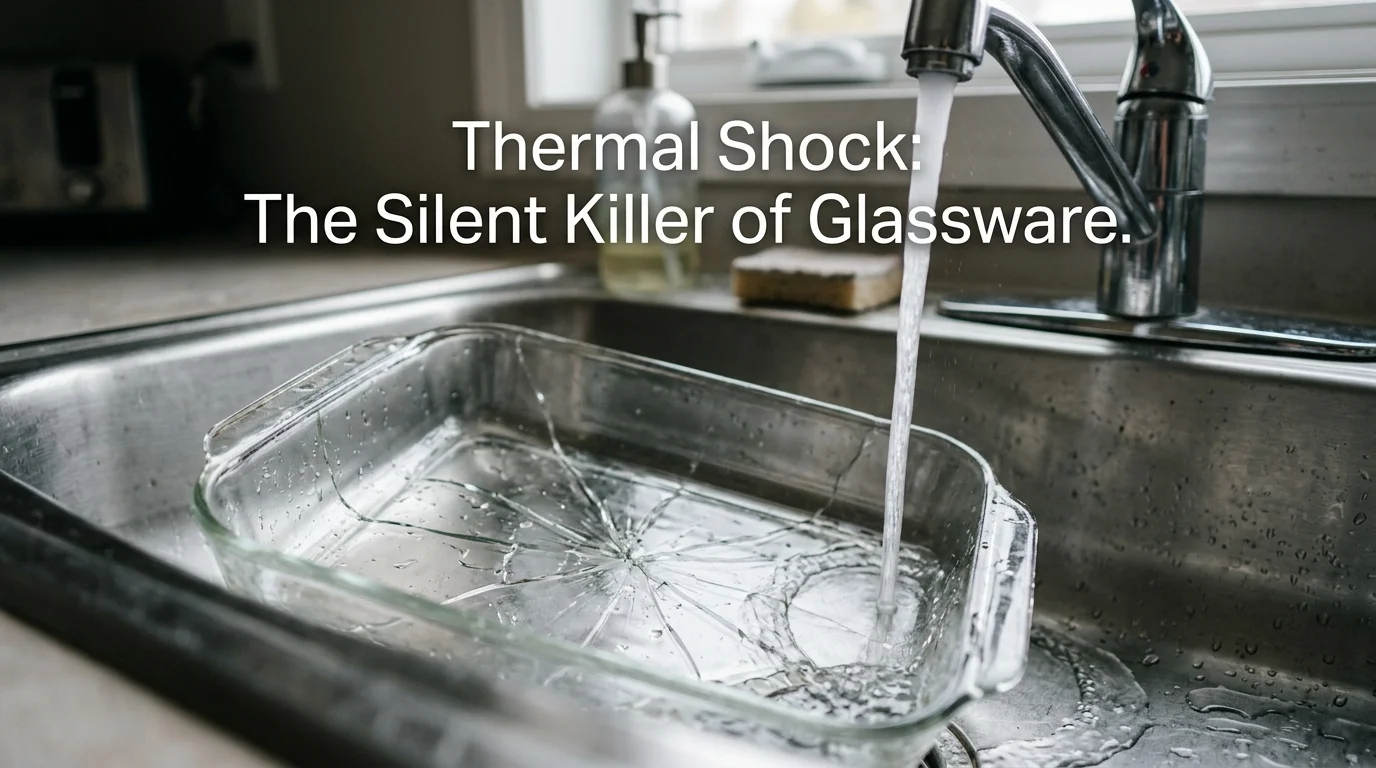
To truly fix this problem, we need to look at what is happening inside the glass itself. It all comes down to something called thermal shock.
When glass gets hot, the molecules inside it begin to move and expand. This is a natural physical process that happens to almost every material.
When you suddenly hit that hot, expanded glass with cold water, the molecules on the surface try to shrink instantly. However, the glass inside is still hot and expanded.
This creates an massive amount of internal tension. The outside is pulling in, while the inside is pushing out.
Glass is a very rigid material, so it cannot “stretch” to handle this stress. Instead of bending, it simply snaps or shatters to release the energy.
Think of it like a rubber band that is frozen solid. If you try to pull it suddenly, it won’t stretch; it will just break into pieces.
The same thing happens to your baking dish, but with much more force. This is why you should never, ever let cold water touch a hot glass pan.
Your Guide to Keeping Glass Baking Dishes Safe
Now that we understand the danger, let’s talk about how to prevent it. You can keep your dishes in perfect shape for years if you follow these simple steps.
Step 1: The Golden Rule of the Cooling Period
The most important thing you can do is give your glass dish time to “rest.” This is the easiest step, but it is the one most people skip.
When you take a dish out of the 400-degree oven, it needs to reach room temperature slowly. Never rush this process.
I recommend waiting at least 30 to 60 minutes before even thinking about putting water in the dish. This allows the molecules to settle back down gradually.
You might be tempted to soak it to make cleaning easier later. Don’t do it.
The bits of stuck-on food are much easier to deal with than a thousand pieces of broken glass. Let the dish sit on a safe surface until it is cool to the touch.
If you can’t touch the sides of the dish comfortably with your bare hand, it is still too hot for water. Patience is your best friend here.
Step 2: Choose the Right Landing Spot
Where you put your dish after it leaves the oven is just as important as how you clean it. Many people make a huge mistake right here.
Never place a hot glass dish directly on a granite or marble countertop. These stone surfaces stay very cold and will pull heat out of the glass too fast.
This creates the same thermal shock as cold water, even without any liquid involved. The bottom of your pan could fall right off.
Also, make sure the surface is completely dry. A single drop of water on the counter can cause a “point of failure” where the crack starts.
Always use a dry wooden cutting board or a thick, dry cloth potholder. Wood is a great insulator and won’t shock the glass.
Make sure your potholders or trivets are not damp. Even a slightly wet towel can cause a temperature drop that leads to a disaster.
Step 3: Use Lukewarm Water for Stubborn Stains
Once the dish has cooled down enough to touch, you might still have some burnt-on food. You want to soak it, but you must be careful.
Always use warm or lukewarm water for the first soak. Never use ice-cold water from the fridge or even a cold tap.
By using warm water, you keep the temperature change very small. This keeps the glass stable and happy.
If the food is really stuck, you can use a bit of dish soap and warm water. Let it sit for twenty minutes.
You will find that the food comes off easily without any risk to the glass. You don’t need to use cold water to “shock” the food off.
Slow and steady is the way to go when dealing with glassware. Your pans will thank you by lasting a lifetime.
Understanding Different Types of Glass
Did you know that not all glass baking dishes are made of the same material? This is a huge factor in why some break faster than others.
In the past, most baking dishes were made of borosilicate glass. This type of glass is very good at resisting thermal shock.
However, many modern brands now use soda-lime glass because it is stronger against being dropped. The downside is that it is much more sensitive to temperature changes.
Since you might not know which type you have, it is best to treat every dish with extreme care. Always assume your dish is sensitive to cold water.
Treating your glassware with respect means you won’t have to worry about what brand it is. The rules of safety are the same for everyone.
Real-Life Scenario: The Thanksgiving Disaster
Let’s look at a story from a home cook named Sarah. She was hosting her first big holiday dinner for ten people.
She had a beautiful glass dish full of roasted vegetables. When they were done, she moved the dish to the sink to clear space.
She didn’t even turn the water on. She just set the hot dish in a sink that had a little bit of leftover cold water in the bottom.
BOOM. The dish exploded, and glass flew across her kitchen.
Not only was the side dish ruined, but she had to spend an hour cleaning the floor while her guests waited. She felt embarrassed and stressed.
This happened because the sink was a “cold zone.” If she had simply placed the dish on a wooden board on the table, the night would have been perfect.
We can learn a lot from Sarah’s mistake. It shows that even a tiny bit of cold water in the wrong place can ruin a whole day.
How Scratches Make Things Worse
You might wonder why your dish survived cold water once but broke the second time. The answer often lies in micro-scratches.
Every time you use a metal fork or a wire scrub brush, you create tiny scratches in the glass. You might not even see them.
These scratches act like “stress points.” When the glass expands or shrinks, the stress concentrates in these little grooves.
Eventually, the glass can’t take it anymore and it breaks at one of those spots. This is why using plastic or wood tools is a great idea.
Soft sponges are also better than harsh metal pads. Keeping the surface of your glass smooth helps it handle heat better.
By protecting the surface, you are protecting the structural integrity of the entire dish. It is a simple habit that makes a big difference.
The Importance of Dry Hands and Tools
Safety starts before the dish even enters the oven. Always make sure your hands are dry when handling glassware.
If you have wet hands, you might lose your grip. But more importantly, you might leave moisture on the glass.
As that moisture heats up in the oven, it can create uneven spots of steam. This is rare but can lead to weakness.
Always use completely dry oven mitts. If your mitts are wet, the heat from the dish will turn that water into steam instantly.
This can burn your hands, causing you to drop the dish. A dropped glass dish is just as bad as a shattered one.
Keeping everything dry ensures that the heat stays where it belongs—inside the oven and inside the food.
Final Thoughts on Kitchen Safety Habits
Building these habits doesn’t take much extra time. It only takes a little bit of mindfulness.
Start by checking your counter space before you even turn on the oven. Make sure you have a “landing zone” ready.
Tell your family members about the dangers of cold water on hot glass too. Sometimes, a helpful spouse tries to “help” by washing a dish too early.
When everyone knows the rules, the kitchen becomes a much safer place. You can focus on the joy of cooking instead of the fear of cleaning up.
In the next part, we will look at more ways to keep your kitchenware in top-notch shape. We will also cover what to do if a dish actually does break.
Master the Art of Glassware Longevity
To keep your kitchen running smoothly, you need more than just the basics. Understanding the deep science of how your tools work will save you money and prevent scary accidents.
When you use glass pans, you are dealing with a material that is both strong and fragile. According to safety experts at Healthline, kitchen burns are a leading cause of home injuries, often caused by shattering glass or hot liquids.
By learning these pro-level secrets, you will become a much more confident cook. You will know exactly how to handle your pans from the moment they enter the oven until they are back in the cupboard.
Proper care is not just about the cooling process. It starts with how you prep your food and even how you store your dishes.
Step 4: Mastering the Oven Environment
One of the biggest secrets to glassware safety happens while the food is still cooking. Never add cold liquids to a hot glass dish while it is inside the oven.
If you are roasting a chicken and notice the pan is getting dry, you might be tempted to pour in some cold broth. This is a recipe for disaster.
The sudden drop in temperature where the liquid hits the glass can cause a crack immediately. This is similar to why you should learn how to properly season a cast iron skillet for the first time to ensure your cookware stays in top shape.
If you must add liquid, make sure it is very hot or boiling. This keeps the temperature of the glass stable and prevents any sudden “shocks” to the material.
Also, pay attention to where you place your dish inside the oven. Avoid placing glass pans too close to the heating elements, especially in smaller ovens.
Extreme direct heat can cause one part of the glass to expand much faster than the rest. This uneven heating can weaken the structure of the pan over time.
Always place your glass dishes on the middle rack for the most even heat distribution. This simple habit will help your pans last for many years without any hidden damage.
Step 5: Advanced Cleaning and Storage Secrets
After your dish has cooled down completely, how you clean it matters just as much as how you cool it. Avoid using any abrasive metal pads or harsh chemical cleaners on glass.
These tools create tiny “micro-scratches” on the surface. While they look harmless, these scratches are actually the starting point for future breaks.
Think of a scratch like a small “fault line” in the earth. When the glass gets hot next time, the pressure will focus right on that scratch.
Instead, use soft sponges and gentle dish soap. If food is really stuck, let it soak in warm water with a little bit of baking soda for an hour.
When it comes to storage, don’t just stack your glass pans on top of each other. Metal pans or other glass dishes can chip the edges of your favorite pans during storage.
If you have a small space, you should look into ways to organize a small kitchen pantry for maximum storage to keep your items safe and separated. Using felt liners or even paper towels between stacked pans can prevent scratches and chips.
Taking care of your kitchen tools is a form of self-care. It makes your cooking experience more enjoyable and much less stressful.
Checking for “Stress Lines” Before You Bake
A pro-tip that many experts use is a “pre-bake inspection.” Before you put a glass dish in the oven, hold it up to a bright light.
Look for any small cracks, deep scratches, or chips around the rim. If you see any of these signs, it is time to retire the dish.
Using a damaged dish in a hot oven is like driving a car with a cracked windshield. The heat will only make the damage worse, and eventually, the whole thing will give way.
It is much better to buy a new dish than to deal with an explosion later. You can find excellent care tips on the official Pyrex website to understand exactly what your specific brand can handle.
Remember, glassware does not last forever. Even with perfect care, the constant expanding and shrinking will eventually wear it out.
By doing a quick ten-second check before every use, you protect yourself and your family. This is the mark of a truly professional home cook.

Mistakes That Can Destroy Your Kitchenware
Even the most careful cooks can fall into bad habits. Let’s look at the most common mistakes people make so you can avoid them entirely.
1. Setting Hot Glass on a Wet Surface
This is perhaps the most common mistake in the kitchen. You pull the pan out of the oven and set it on a towel that you just used to wipe the counter.
Even a slightly damp towel can cause the glass to shatter. The water on the towel turns to steam and pulls heat away from the glass at an incredible speed.
Always ensure your “landing spot” is 100% bone-dry. If you are unsure, use a wooden trivet or a dry cutting board.
2. Going Directly from the Freezer to the Oven
Many people prepare meals in advance and freeze them in glass dishes. While this is convenient, it is also very dangerous if not done right.
Never take a glass dish straight from the freezer and put it in a hot oven. The temperature jump is too massive for the glass to handle.
Always let the dish thaw in the refrigerator for at least 24 hours. Once it is thawed, let it sit on the counter for 30 minutes to lose its chill before baking.
This slow transition is the only way to keep the glass from cracking. Planning ahead is the key to safe meal prepping.
3. Using Glass Under the Broiler
Most glass baking dishes are not designed for the broiler. The broiler creates intense, direct heat that can exceed 500 degrees Fahrenheit.
This intense heat can cause glass to fail almost instantly. Even if the pan says “oven-safe,” that usually does not include the broiler setting.
If a recipe calls for broiling to brown the top, transfer the food to a metal pan first. It might be an extra step, but it keeps your glass pans in one piece.
4. Overlooking Small Chips on the Rim
A small chip on the edge might seem like a cosmetic issue. However, in the world of physics, a chip is a “point of high stress.”
Every time you heat a chipped pan, that chip grows slightly deeper. You might not notice it until the day the pan breaks in half while you are carrying it.
Don’t take the risk. If the rim is chipped, use that pan for cold storage only, or recycle it if possible.
5. Cleaning While the Pan is Still Hissing
If you hear a “hissing” sound when you put a pan in the sink, you are already in the danger zone. That sound is the glass screaming from the temperature change.
Stop immediately if you hear that sound. Leave the pan alone and let it finish cooling on its own.
Don’t try to “save it” by adding warm water once the cold water has already touched it. At that point, the damage might already be done, and you should move away for safety.
Your Path to a Safer and Smarter Kitchen
Managing a kitchen is all about the little details that keep your home running. Just as you might spend time learning how to style a coffee table without looking cluttered, you should also spend time mastering your cooking tools.
Taking care of your glassware is a simple way to show respect for your home and your budget. When you follow these steps, you are doing more than just preventing a mess.
You are creating a safe environment where you can focus on the flavors and the people you love. No one wants their special dinner ruined by a avoidable accident.
Start today by clearing a dedicated “cooling spot” in your kitchen. Make sure everyone in the house knows that hot glass is “hands-off” until it is cool.
Teach your kids or your partner about the dangers of cold water. It is a great way to build a culture of safety and awareness in your home.
You now have all the expert knowledge you need to be a glassware master. You can bake, roast, and serve with total peace of mind.
Your kitchen should be a place of joy, not a place of worry. By making these small changes, you ensure that every meal you make is a success.
Keep your pans dry, keep your cooling slow, and keep your kitchen safe. You have the power to protect your home one dish at a time.
If you found this guide helpful, consider looking at other ways to improve your home life. You might enjoy understanding the ideal distance between a sofa and a coffee table to make your living space just as functional as your kitchen.