The Frustrating Reality of a Clogged Dishwasher and Why It Matters
You spent a lot of money on a high-quality dishwasher to make your life easier. You expect it to take the grease off your plates and the spots off your glasses.
But lately, something feels wrong. You open the door after a long cycle, and instead of a fresh scent, you smell something sour and damp.
You look at your “clean” plates, and they are covered in tiny food particles or a weird greasy film. It is a nightmare because now you have to wash them all over again by hand.
This is a common struggle for millions of homeowners. Most people think their dishwasher is broken or that their detergent is cheap.
The truth is usually much simpler. Your dishwasher filter is likely clogged with old food, hair, and bacteria.
Why Most People Fail to Keep Their Kitchen Truly Clean
Many people try to fix this by using “extra-strength” pods or running the machine on the hottest setting. These are just temporary fixes that do not touch the root of the problem.
-
People often trust “self-cleaning” labels that are not 100% true for every part of the machine.
-
Most manuals are lost or too boring to read, so owners never learn where the filter is.
-
There is a lot of bad advice online suggesting you use harsh chemicals that can actually damage your machine’s seals.
-
Waiting until the dishwasher smells like a trash can is the biggest mistake you can make.
How a Dirty Filter Steals Your Peace of Mind and Health
When your dishwasher is not performing well, it adds an extra layer of stress to your daily routine. You lose confidence in the tools you use to keep your family safe and fed.
-
You start worrying about bacteria and mold growing where you wash your baby’s bottles or your dinner plates.
-
The sight of cloudy glasses makes you feel embarrassed when guests come over for a meal.
-
The extra time spent re-washing dishes takes away from your rest and family time.
-
Seeing your hard-earned money go toward a machine that isn’t working right creates constant mental irritation.
Think of your dishwasher filter like a lung. If the lung is clogged with dust, the body cannot breathe or function.
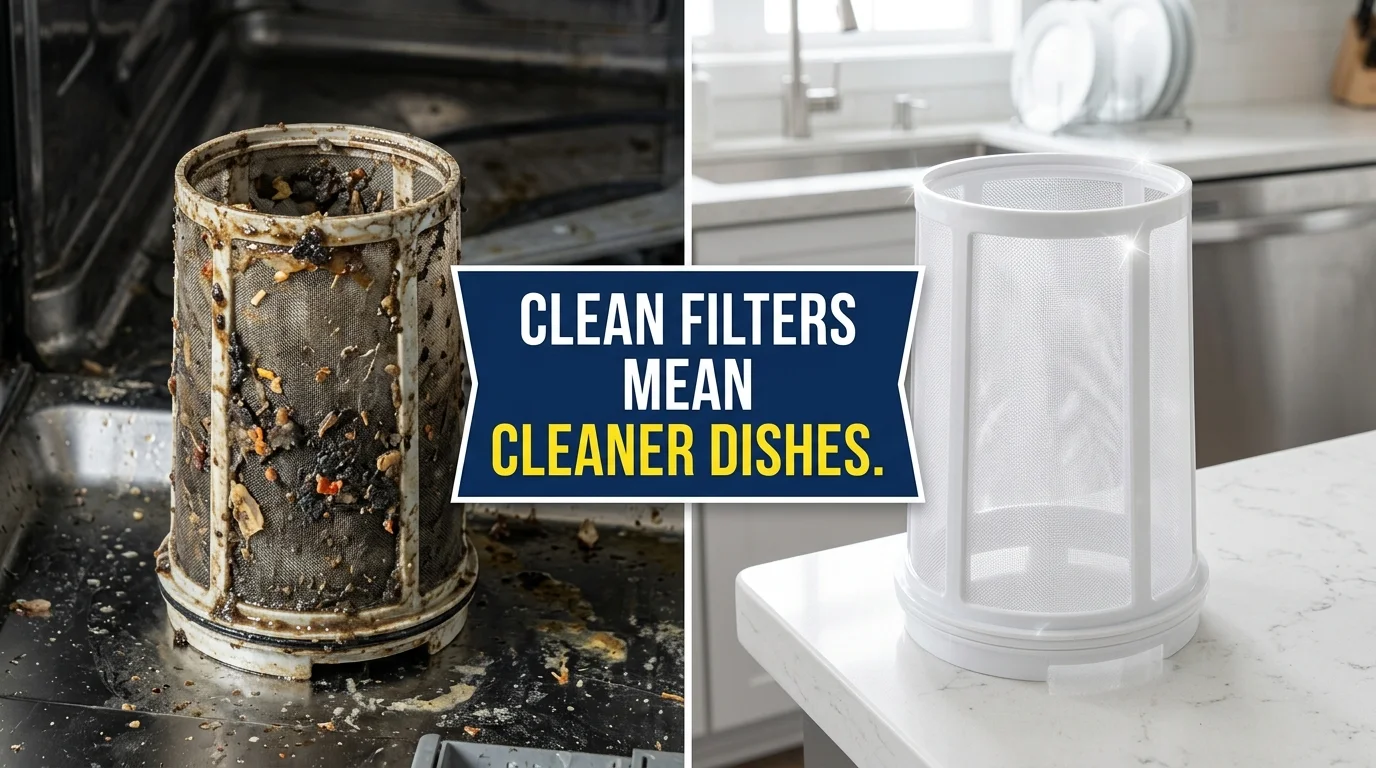
Your dishwasher is currently “choking” on old grease and food scraps. When the filter is full, the machine just recycles dirty water back onto your plates.
This means you are essentially bathing your dishes in a “soup” of old food particles. No amount of expensive soap can fix a filter that is physically blocked by slime and debris.
Cleaning this filter is not just about maintenance. It is about reclaiming your time and ensuring your kitchen is a truly hygienic space for your loved ones.
A Simple Guide to Restoring Your Dishwasher’s Power and Shine
Now that we understand the problem, let’s fix it. You do not need to be an expert plumber to do this.
It only takes about ten minutes of your time. If you follow these steps, your dishes will come out sparkling and smelling fresh every single time.
Step 1: Finding and Safely Removing the Filter Assembly
The first thing we need to do is get to the heart of the machine. Most modern dishwashers have a manual filter located at the very bottom.
Start by pulling out the bottom rack of your dishwasher. This gives you a clear view of the floor of the machine.
Look for a circular plastic piece, often near the base of the spray arm. This is your filter.
You usually just need to twist it counter-clockwise to unlock it. Once it clicks, you can lift it straight up.
Some machines have a flat metal screen around the circular filter. If yours does, lift that out as well.
Do not be surprised if it looks gross or feels slimy. This is exactly what we are here to fix!
Step 2: The Gentle Deep Soak for Total Grime Removal
Once you have the filter in your hand, take it to your kitchen sink. Do not start scrubbing it with a hard brush immediately.
The mesh on these filters is very delicate. If you push too hard, you might tear a hole in it.
Instead, fill a bowl with warm water and a few drops of dish soap. Let the filter soak for about five minutes.
This helps break down the hardened grease and “biofilm” that builds up over weeks of use. Biofilm is a sticky layer where bacteria love to hide and grow.
While it soaks, look inside the hole where the filter was. Use a damp paper towel to wipe away any large food chunks you see there.
Be careful not to drop anything down the drain while the filter is out. This is a great time to ensure the drainage path is clear.
Step 3: Gentle Scrubbing and Rinsing for a Like-New Finish
After soaking, the grime should be soft. Now, use an old soft toothbrush or a sponge to gently clean the mesh.
Pay close attention to the bottom and the inside of the cylinder. This is where the most hidden debris stays.
Rinse it under a steady stream of hot water. You will see the water start to flow through the mesh easily once it is clean.
If you see white, crusty spots, that is likely calcium buildup from hard water. You can dip your brush in a little white vinegar to dissolve those spots.
Vinegar is a natural cleaner that is safe for your machine and great for removing bad smells. Once the filter looks white or clear again, give it one final rinse.
Hold it up to the light. If you can see through the mesh clearly, you have done a great job.
Why This Science-Based Approach Works Better Than Chemicals
By physically removing the gunk, you are doing what no “cleaner tablet” can do. Tablets are good for the pipes, but they cannot remove a physical block of food.
When the filter is clean, the pump can pull water through the system much faster. This creates higher water pressure in the spray arms.
Higher pressure means the water can actually reach every corner of your plates. This is why a clean filter is the secret to spot-free glasses.
You are also removing the source of the bad smell. Bacteria thrive in the wet, warm environment of a clogged filter.
By cleaning it, you are breaking the cycle of germ growth. This makes your kitchen safer and your dishes truly hygienic for your family.
We are just getting started with the maintenance routine. In the next parts, we will discuss how to prevent this buildup from happening again and how to clean the rest of the machine.
Keeping a small schedule for this task will save you hundreds of dollars in repair bills. A clean machine lasts much longer because the motor doesn’t have to work twice as hard to pump water.
Take a moment to look at your clean filter. It feels good to know that your next load of dishes will be the cleanest one yet.
You are now in control of your kitchen’s hygiene. No more guessing why the dishes are dirty; you have the solution in your hands.
Keeping Your Dishwasher in Top Shape for the Long Run
Now that you have removed the gunk from your filter, you are already ahead of most people. But a clean filter is only one part of the story.
To get that factory-fresh performance, we need to look at how the water moves inside the machine. If the water cannot reach the filter, the dirt stays on your plates.
Step 4: Clearing the Spray Arms for Better Water Flow
The spray arms are the spinning plastic bars that shoot water at your dishes. Over time, the tiny holes in these arms get plugged with small seeds or hard water minerals.
When these holes are blocked, the water pressure drops significantly. You might notice that dishes in the corners of the rack stay dirty while the middle ones are clean.
Take out the spray arms if your model allows it; most just pop off or have a simple plastic nut. Use a toothpick or a small needle to poke into each hole and clear out any debris.
Run water from your sink through the center of the arm to flush everything out. You will be surprised at how much sand-like grit comes out of those tiny openings.
This simple step ensures that your newly cleaned filter can actually do its job. For more tips on keeping your kitchen workspace tidy, check out these ways to organize a small kitchen pantry for maximum storage.
Step 5: The Natural Deep Clean with Vinegar and Baking Soda
Even after cleaning the filter, there might be grease hiding in the pipes. This grease acts like a magnet for new food particles and bad smells.
Instead of buying expensive chemical cleaners, you can use two simple items from your pantry. Place a dishwasher-safe bowl filled with white vinegar on the top rack.
Run a full cycle on the hottest setting without any other dishes or detergent. The vinegar is an acid that breaks down the oily film left behind by meat and butter.
Once that cycle is over, sprinkle a cup of baking soda across the bottom of the machine. Run a short, hot cycle one more time.
The baking soda acts as a mild abrasive and a deodorizer to kill any remaining bacteria. This two-step process is a secret used by professional cleaners to make old machines look and smell new.
Just like learning how to properly season a cast iron skillet for the first time, taking care of your kitchen tools is a skill that saves you money. According to experts at Good Housekeeping, doing this once a month keeps your machine running for many years.
Setting a Maintenance Schedule That Actually Works
Most of us forget to clean things until they break or smell bad. The best way to avoid a kitchen disaster is to stay ahead of the mess.
I recommend checking your filter once a week if you use your dishwasher every day. If you only run it twice a week, then a monthly check is usually enough.
Mark a specific day on your calendar, like the first Saturday of the month. It only takes five minutes, but it prevents hours of scrubbing dishes by hand later.
Think of it like an oil change for your car. You wouldn’t wait for the engine to smoke before adding oil, right?
Your dishwasher is a mechanical workhorse that needs the same level of respect. When you keep it clean, you are protecting your health and your wallet at the same time.
Regularly wiping down the rubber seals around the door is another great habit. These seals trap moisture and are a favorite spot for black mold to grow.
A quick wipe with a damp cloth every time you empty the dishwasher makes a huge difference. This keeps your kitchen smelling fresh and prevents leaks that could ruin your floor.
Keeping a clean home is about more than just the kitchen; even small details like understanding the ideal distance between a sofa and a coffee table can help you create a more functional and relaxing living space. Organizations like The Spruce often suggest that small, consistent cleaning habits lead to a much happier home life.

Mistakes That Can Ruin Your Dishwasher or Your Health
While cleaning is good, doing it the wrong way can cause permanent damage. I have seen people make simple errors that ended up costing them hundreds of dollars in repairs.
The most common mistake is using bleach inside the dishwasher. If your machine has any stainless steel parts, bleach will eat through the metal and cause rust.
Bleach can also damage the rubber gaskets that keep the water inside the machine. Stick to vinegar or mild dish soap to be safe and effective.
Forcing the Filter Back into Place
When you put the filter back in, it should click or lock easily. Many people try to force it when it isn’t aligned properly.
If you break the plastic tabs on the filter, it won’t sit flush against the bottom. This allows large food chunks to bypass the filter and go straight into the pump.
A broken pump is one of the most expensive parts to fix. If the filter feels stuck, take it out and try again rather than pushing harder.
Over-Cleaning Your Dishes Before Loading
This might sound strange, but you should not pre-rinse your dishes until they are perfectly clean. Modern dishwashers have sensors that “smell” how dirty the water is.
If the water is too clean, the machine will run a shorter, weaker cycle. This means the grease won’t fully melt, and it will eventually clog your filter faster.
Just scrape off the big chunks of food and let the machine do the heavy lifting. This actually helps the detergent work better because the enzymes have something to grab onto.
Ignoring the Bottom Spray Arm Area
Most people clean the filter but ignore the “sump” area underneath it. If there is a piece of broken glass or a plastic tie trapped down there, it will eventually damage the motor.
Always do a quick visual check with a flashlight when the filter is out. If you see something that doesn’t belong there, carefully remove it with a pair of tongs.
Leaving a hard object in that area can lead to a very loud grinding noise. That noise is the sound of your machine’s motor slowly dying.
Using the Wrong Amount of Detergent
Using too much soap creates an “oversuds” situation. These extra bubbles carry grease into places it shouldn’t go, including the high-up areas of your filter.
This soap scum builds up over time and creates a sticky grey sludge. It is much harder to clean than regular food debris.
Always follow the instructions on your detergent package. Usually, a small amount is more than enough to get everything sparkling.
A Fresh Start for Your Kitchen and Your Family
Taking the time to clean your dishwasher filter is a small act with a big reward. You are not just cleaning a machine; you are ensuring your family eats off truly safe plates.
Imagine the feeling of opening your dishwasher and being greeted by a clean, fresh scent. No more re-washing, no more cloudy spots, and no more worries about hidden germs.
You now have the exact steps to keep your appliance running like it is brand new. This knowledge gives you peace of mind and saves you from unnecessary stress.
A clean home is a happy home, and the kitchen is the heart of it all. When your tools work perfectly, cooking and cleaning become a joy rather than a chore.
Don’t wait for the next “smelly” load to take action. Go to your kitchen right now and check that filter; your future self will thank you for it.
Just like finding simple ways to style a coffee table without looking cluttered, small improvements in your home routine add up to a beautiful life. You have the power to make your home more hygienic and efficient starting today.
Keeping Your Dishwasher in Top Shape for the Long Run
Now that you have removed the gunk from your filter, you are already ahead of most people. But a clean filter is only one part of the story.
To get that factory-fresh performance, we need to look at how the water moves inside the machine. If the water cannot reach the filter, the dirt stays on your plates.
Step 4: Clearing the Spray Arms for Better Water Flow
The spray arms are the spinning plastic bars that shoot water at your dishes. Over time, the tiny holes in these arms get plugged with small seeds or hard water minerals.
When these holes are blocked, the water pressure drops significantly. You might notice that dishes in the corners of the rack stay dirty while the middle ones are clean.
Take out the spray arms if your model allows it; most just pop off or have a simple plastic nut. Use a toothpick or a small needle to poke into each hole and clear out any debris.
Run water from your sink through the center of the arm to flush everything out. You will be surprised at how much sand-like grit comes out of those tiny openings.
This simple step ensures that your newly cleaned filter can actually do its job. For more tips on keeping your kitchen workspace tidy, check out these ways to organize a small kitchen pantry for maximum storage.
Step 5: The Natural Deep Clean with Vinegar and Baking Soda
Even after cleaning the filter, there might be grease hiding in the pipes. This grease acts like a magnet for new food particles and bad smells.
Instead of buying expensive chemical cleaners, you can use two simple items from your pantry. Place a dishwasher-safe bowl filled with white vinegar on the top rack.
Run a full cycle on the hottest setting without any other dishes or detergent. The vinegar is an acid that breaks down the oily film left behind by meat and butter.
Once that cycle is over, sprinkle a cup of baking soda across the bottom of the machine. Run a short, hot cycle one more time.
The baking soda acts as a mild abrasive and a deodorizer to kill any remaining bacteria. This two-step process is a secret used by professional cleaners to make old machines look and smell new.
Just like learning how to properly season a cast iron skillet for the first time, taking care of your kitchen tools is a skill that saves you money. According to experts at Good Housekeeping, doing this once a month keeps your machine running for many years.
Setting a Maintenance Schedule That Actually Works
Most of us forget to clean things until they break or smell bad. The best way to avoid a kitchen disaster is to stay ahead of the mess.
I recommend checking your filter once a week if you use your dishwasher every day. If you only run it twice a week, then a monthly check is usually enough.
Mark a specific day on your calendar, like the first Saturday of the month. It only takes five minutes, but it prevents hours of scrubbing dishes by hand later.
Think of it like an oil change for your car. You wouldn’t wait for the engine to smoke before adding oil, right?
Your dishwasher is a mechanical workhorse that needs the same level of respect. When you keep it clean, you are protecting your health and your wallet at the same time.
Regularly wiping down the rubber seals around the door is another great habit. These seals trap moisture and are a favorite spot for black mold to grow.
A quick wipe with a damp cloth every time you empty the dishwasher makes a huge difference. This keeps your kitchen smelling fresh and prevents leaks that could ruin your floor.
Keeping a clean home is about more than just the kitchen; even small details like understanding the ideal distance between a sofa and a coffee table can help you create a more functional and relaxing living space. Organizations like The Spruce often suggest that small, consistent cleaning habits lead to a much happier home life.
Image Here—————–
Mistakes That Can Ruin Your Dishwasher or Your Health
While cleaning is good, doing it the wrong way can cause permanent damage. I have seen people make simple errors that ended up costing them hundreds of dollars in repairs.
The most common mistake is using bleach inside the dishwasher. If your machine has any stainless steel parts, bleach will eat through the metal and cause rust.
Bleach can also damage the rubber gaskets that keep the water inside the machine. Stick to vinegar or mild dish soap to be safe and effective.
Forcing the Filter Back into Place
When you put the filter back in, it should click or lock easily. Many people try to force it when it isn’t aligned properly.
If you break the plastic tabs on the filter, it won’t sit flush against the bottom. This allows large food chunks to bypass the filter and go straight into the pump.
A broken pump is one of the most expensive parts to fix. If the filter feels stuck, take it out and try again rather than pushing harder.
Over-Cleaning Your Dishes Before Loading
This might sound strange, but you should not pre-rinse your dishes until they are perfectly clean. Modern dishwashers have sensors that “smell” how dirty the water is.
If the water is too clean, the machine will run a shorter, weaker cycle. This means the grease won’t fully melt, and it will eventually clog your filter faster.
Just scrape off the big chunks of food and let the machine do the heavy lifting. This actually helps the detergent work better because the enzymes have something to grab onto.
Ignoring the Bottom Spray Arm Area
Most people clean the filter but ignore the “sump” area underneath it. If there is a piece of broken glass or a plastic tie trapped down there, it will eventually damage the motor.
Always do a quick visual check with a flashlight when the filter is out. If you see something that doesn’t belong there, carefully remove it with a pair of tongs.
Leaving a hard object in that area can lead to a very loud grinding noise. That noise is the sound of your machine’s motor slowly dying.
Using the Wrong Amount of Detergent
Using too much soap creates an “oversuds” situation. These extra bubbles carry grease into places it shouldn’t go, including the high-up areas of your filter.
This soap scum builds up over time and creates a sticky grey sludge. It is much harder to clean than regular food debris.
Always follow the instructions on your detergent package. Usually, a small amount is more than enough to get everything sparkling.
A Fresh Start for Your Kitchen and Your Family
Taking the time to clean your dishwasher filter is a small act with a big reward. You are not just cleaning a machine; you are ensuring your family eats off truly safe plates.
Imagine the feeling of opening your dishwasher and being greeted by a clean, fresh scent. No more re-washing, no more cloudy spots, and no more worries about hidden germs.
You now have the exact steps to keep your appliance running like it is brand new. This knowledge gives you peace of mind and saves you from unnecessary stress.
A clean home is a happy home, and the kitchen is the heart of it all. When your tools work perfectly, cooking and cleaning become a joy rather than a chore.
Don’t wait for the next “smelly” load to take action. Go to your kitchen right now and check that filter; your future self will thank you for it.
Just like finding simple ways to style a coffee table without looking cluttered, small improvements in your home routine add up to a beautiful life. You have the power to make your home more hygienic and efficient starting today.