Why Your Living Room Centerpiece Feels Like a Messy Junk Drawer
You walk into your living room after a long day of work. You want to relax and enjoy a quiet moment. But as soon as you sit down, your eyes land on the coffee table. Instead of a beautiful focal point, you see a pile of old mail, three different remotes, and a half-empty water bottle.
It feels heavy. It feels messy. It makes your whole house feel disorganized even if the floors are clean. This small piece of furniture has a huge impact on how you feel. When it is cluttered, your brain feels cluttered too. You want that magazine-look, but you end up with a dumping ground.
Why Most People Fail at Styling Their Space
Many of us try to fix the mess, but we often make it worse. Here is why the “quick fix” usually fails:
-
Buying too much stuff: We see a cute item at the store and think it will fix the table, but it just adds to the noise.
-
Copying photos blindly: You see a photo online and copy it, but it doesn’t fit your actual life or the size of your furniture.
-
Ignoring function: We put so many decorations on the table that there is no room left for a cup of coffee.
-
Lack of a system: Without a clear plan, items just “land” on the table and stay there for weeks.
-
Fear of empty space: We feel the need to cover every inch of the surface, which is the fastest way to create a mess.
The Hidden Cost of a Cluttered Coffee Table
When your main living space is messy, it does more than just look bad. It actually affects your mental health and your pride in your home.
-
Increased Stress: Research shows that visual clutter increases cortisol levels, making it harder for you to truly relax.
-
Social Anxiety: You might feel embarrassed to invite a friend over for coffee because the table looks like a disaster zone.
-
Loss of Focus: It is hard to read a book or watch a movie when a pile of “to-do” items is staring you in the face.
-
Decision Fatigue: Every time you look at the mess, your brain subconsciously tries to figure out how to clean it, draining your energy.
This table is the heart of your seating area. It is where you host guests and where you rest your feet. When this one spot is organized and beautiful, it changes the energy of the entire room. You deserve a space that feels like a retreat, not a storage unit. Let’s look at how we can turn this struggle into a source of daily joy.
Start With a Blank Canvas to Clear Your Mind
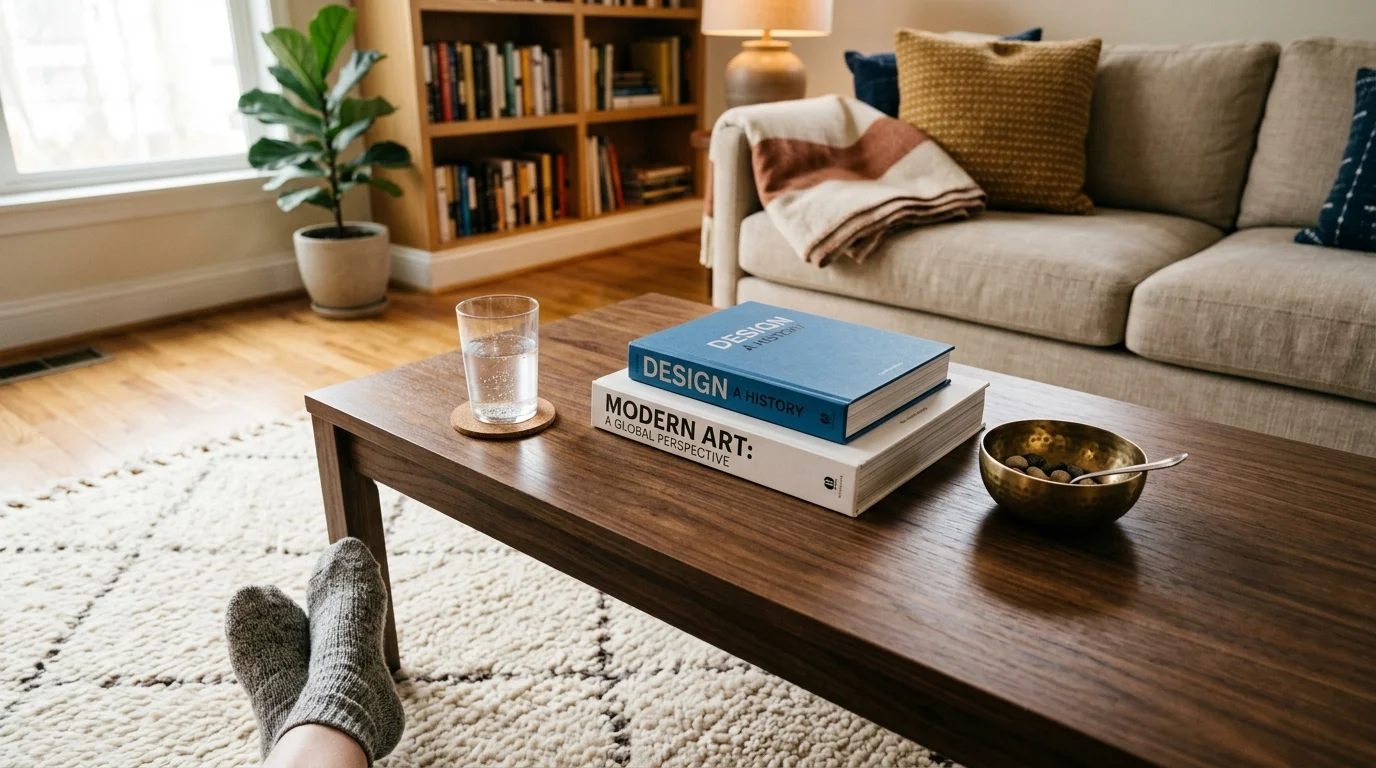
Before you add anything new, you must clear the deck. Take every single item off your coffee table right now. Put the remotes in a drawer and throw away the old papers. Wipe the surface until it shines.
Looking at a completely empty table might feel strange at first. But this is the only way to see the true shape and size of your furniture. It allows your brain to reset. You are no longer trying to hide a mess. You are now building a masterpiece from scratch.
Think of your coffee table like a small stage. Every item you put back on it needs to have a reason to be there. If it doesn’t add beauty or serve a real purpose, it doesn’t get a seat on the stage.
The Magic of Using a Decorative Tray
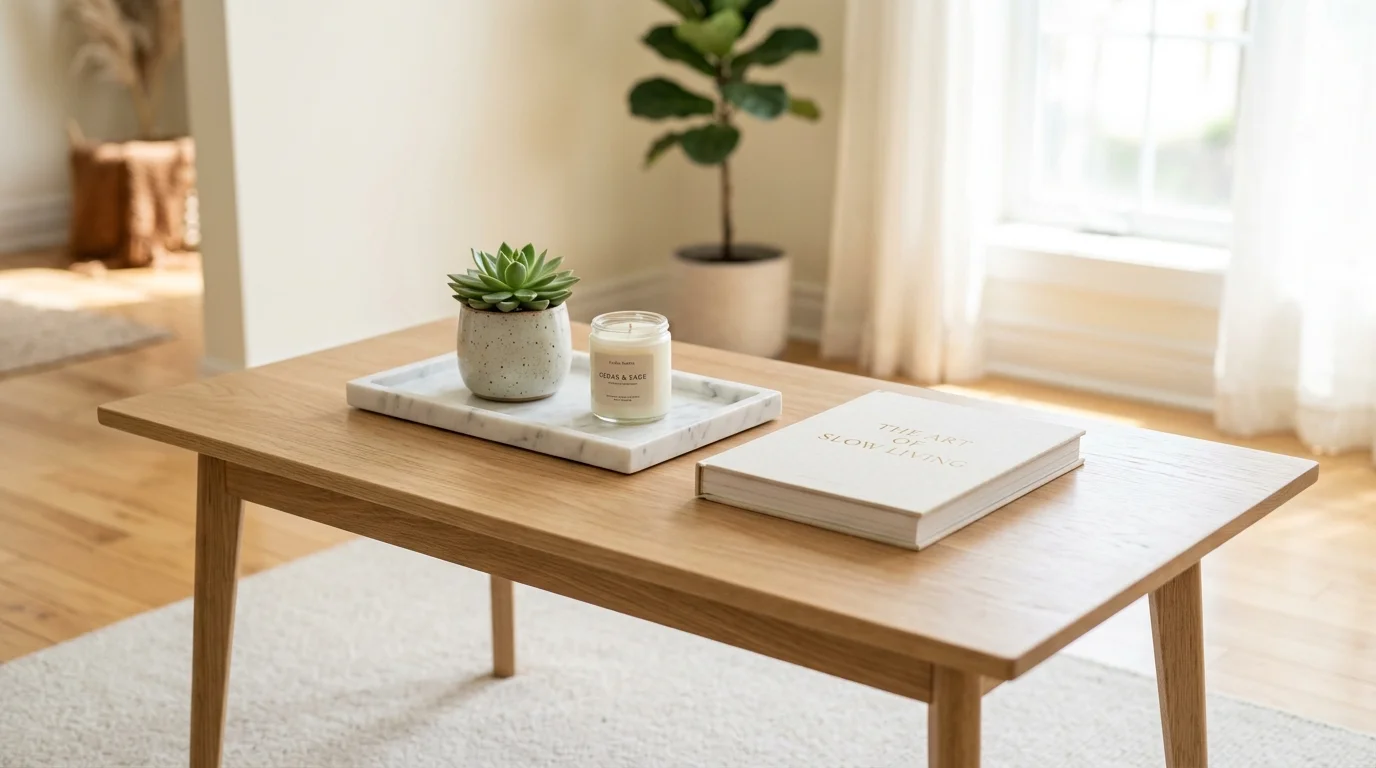
The number one secret to stopping clutter is using a tray. A tray acts as a “frame” for your items. It tells the eye that everything inside the tray is part of a planned look.
When you group small items like a candle, a small plant, and a remote on a tray, they look like one single unit. Without the tray, those same items look like scattered junk. It is a simple psychological trick that works every time.
Choose a tray that contrasts with your table material. If you have a wooden table, try a metal or marble tray. This adds a layer of visual interest without adding more “stuff.” Plus, if you need to use the full table for a board game or snacks, you can just lift the tray and move it in one second.
Create Levels Using Your Favorite Books
A flat table with flat objects looks boring and unfinished. To make it look professional, you need height. The easiest way to get this is by stacking two or three books.
Don’t just grab any random books. Pick ones with beautiful covers or topics you actually enjoy. Large “coffee table books” work best because they have a big footprint. Stack them from largest on the bottom to smallest on the top.
This stack creates a pedestal. Now, you can place a small object, like a decorative bowl or a brass figure, on top of the books. This simple move adds a vertical element that draws the eye upward. It makes the table look styled instead of just “filled.”
Bring the Outdoors in With Greenery
Every table needs a touch of life. A small plant or a vase of flowers instantly makes a room feel fresh and expensive. It breaks up the hard lines of the table and the books.
You don’t need a giant forest. A simple succulent or a single branch in a clear glass vase is enough. The green color is naturally calming to the human eye. It makes the space feel breathable.
If you don’t have a green thumb, a high-quality faux plant works too. The goal is to add an organic shape. Nature is never perfectly square or round. That “imperfection” is what makes your coffee table look inviting and cozy rather than cold and stiff.
The Rule of Three for Perfect Balance
When you are placing items, keep the “Rule of Three” in your mind. This is a classic design trick. Things arranged in odd numbers look more natural and appealing to our brains than even numbers.
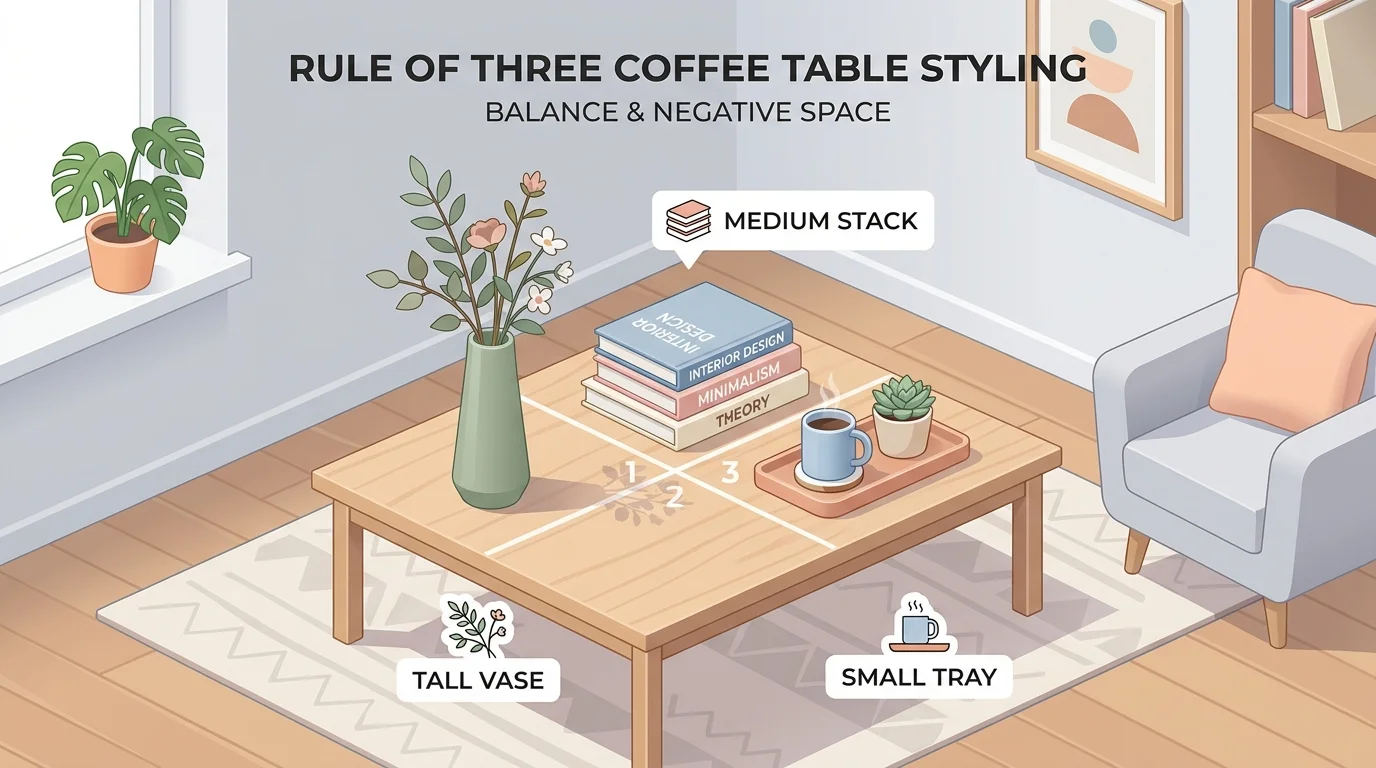
Try grouping three items of different heights. For example, you could have one tall vase, one medium stack of books, and one small candle. This creates a triangle shape that is very pleasing to look at.
It prevents the table from looking too symmetrical or “matchy-matchy.” When things are too perfect, they feel like a museum. When you use the rule of three, it feels like a stylish home. It gives your decor a sense of rhythm and flow that keeps the clutter away.
Leave Some Room to Breathe
One of the biggest mistakes is covering the entire surface. You must leave empty space. In design, we call this “white space” or “negative space.”
This empty area allows the eye to rest. It also makes the items you do choose to display stand out more. If everything is crowded, nothing is special.
Leaving about 40% to 50% of the table empty is a good rule of thumb. This ensures you still have a place to put your phone, a TV remote, or a cup of tea. A table that is too full is not a functional table—it’s just a shelf. True style is about finding the balance between beauty and use.
Choose Items That Tell Your Story
Your coffee table should not look like a furniture store display. It should look like your home. Pick one or two items that have a personal meaning to you.
Maybe it’s a small stone you found on a beach trip. Or perhaps it’s a vintage brass bell from your grandmother. These “soulful” items give the space character. They are great conversation starters when you have guests.
Just be careful not to overdo it. One special item is a highlight. Ten special items are a collection that looks like clutter. Keep it simple. Let one unique piece take the spotlight. This makes your styling feel authentic and warm instead of fake and forced.
Think About Different Textures
To make a simple setup look high-end, you need to mix textures. If everything is smooth and shiny, the table will feel cold. If everything is rough and woody, it might look too rustic.
Try to mix it up. If you have a glass table, add a woven basket or a soft wooden bowl. If your table is dark wood, use a shiny ceramic vase or a smooth metallic tray.
Mixing materials like glass, wood, metal, and fabric creates a rich feeling. It adds depth to the look without needing to add more items. This is the secret to a “rich” look on a budget. Texture does the work that “more stuff” can’t do. It makes the simple things look much more interesting.
Keep It Functional for Your Daily Life
At the end of the day, your coffee table is there to serve you. If you have kids or pets, don’t put a fragile glass sculpture in the middle. If you eat dinner there while watching TV, make sure your decor is easy to move.
Style should never get in the way of living. If a setup looks good but makes your life harder, it won’t stay that way for long. You will eventually push the decor to the side to make room, and the clutter cycle will start again.
Mastering the Art of Visual Weight and Balance
Now that you have the basics down, it is time to think like a professional designer. One secret that experts use is called Visual Weight. This refers to how much “space” an object seems to take up in your mind, not just its physical size.
A heavy, dark wooden box feels “heavier” than a clear glass vase of the same size. To avoid a cluttered look, you need to balance these weights. If one side of your table has a large, dark stack of books, the other side needs something to balance it out.
You don’t need a matching item on the other side. Instead, use something with a similar visual impact. For example, a bright green plant can balance a dark book stack because the color “pops” and catches the eye. This creates a sense of harmony that makes the table look intentional rather than messy.
The Secret Triangle Method for 360-Degree Beauty
Most people style their table looking from just one side. But in a living room, people see the table from the sofa, the doorway, or the dining area. This is where the Triangle Method comes in.
Imagine a triangle sitting on your table. You want to place your objects at the points of this triangle. This ensures that no matter where you stand, the arrangement looks balanced.
Use three main focal points of different heights. Maybe a tall vase is the peak, a medium-sized bowl is the second point, and a small candle is the third. By staggering them in a triangular shape, you create a path for the eyes to follow. It prevents the items from looking like they are standing in a straight line, which often feels stiff and boring.
Adapting Your Style to Your Table Shape
Not all coffee tables are made the same, and your styling should reflect that. If you have a round coffee table, you should focus on the center. Use a round tray to mimic the shape of the table, or use a square tray to create a bold contrast.
For rectangular or oval tables, you have more “real estate” to work with. You can split these tables into two or three “zones.” Place a tray in one zone and a stack of books in another.
The key is to leave “breathing room” between these zones. This prevents the long surface from looking like one big, continuous mess. By breaking the table into smaller sections, you make the task of styling feel much less overwhelming. It is much easier to style two small squares than one giant rectangle.
Staying Ahead of the Clutter Creep
The hardest part of home decor is not the styling itself. It is keeping it that way after a busy week. We call this “Clutter Creep.” This happens when “homeless” items like mail, hair ties, or loose change start to land on your beautiful table.
To fight this, you need a dedicated “catch-all.” A small, beautiful decorative bowl can serve as the home for small items like keys or remotes. This keeps them off the main surface and inside a designated spot.
Make it a habit to do a 30-second reset every night before you go to bed. Take anything that doesn’t belong on the table and put it away. Because you have already styled the table perfectly, you will notice immediately when something is out of place. This daily habit ensures your living room stays a place of peace instead of a source of stress.
Changing Your Look With the Seasons
You don’t need to buy new furniture to make your home feel fresh. You can simply swap out one or two items on your coffee table. This is the most cost-effective way to update your home’s vibe.
In the spring, use a clear glass vase with bright, fresh flowers. In the winter, swap the flowers for a warm-scented candle and a bowl of pinecones. This keeps the decor feeling alive and relevant.
It also gives you an excuse to rotate your favorite items. If you have too many cool decorations, don’t put them all out at once. Keep a small “decor box” in your closet and switch things out every few months. This keeps your table looking minimalist while still letting you enjoy all your favorite pieces over time.
The Hidden Trap of Small Objects
One of the most common mistakes is using too many tiny trinkets. People think that small items won’t look cluttered, but the opposite is true. Lots of little things look like “visual noise” and make the table feel messy.
Instead of ten small items, try using three medium-sized items. Larger pieces have more authority and look cleaner. They make a statement rather than just taking up space.
If you have a collection of small items you love, don’t scatter them. Group them together inside a tray or on top of a book. This turns a group of small items into one single visual unit. It is the difference between a collection and a mess.
Forgetting the “Bird’s Eye View”
We often style our tables while standing up and looking down. But most of the time, you will be looking at the table while sitting down on the sofa.
Always check your styling from a seated position. Is that tall vase blocking your view of the TV? Is that large candle hiding the person sitting across from you?
A coffee table should never be a barrier to conversation. If your decor is so high that you can’t see your friends, it is too much. Keep your tallest items off to the side rather than directly in the center to maintain a clear line of sight.
Overlapping Without a Plan
There is a fine line between “layered” and “crowded.” Some people try to overlap their items to look like a pro, but they end up hiding the beauty of each piece.
Every item on your table should have its own “personality.” If you place a bowl on top of a book, make sure the book is still visible. If you put a tray down, don’t cover 100% of the tray’s surface.
Think of it like a puzzle where every piece needs some breathing room. When objects are squeezed together, they lose their impact. Give each item an inch or two of space to “breathe,” and the whole table will feel much more expensive.
Ignoring the Color Palette
A coffee table can quickly look cluttered if there are too many clashing colors. If your books are bright red, your tray is neon blue, and your vase is orange, the eye won’t know where to look.
Try to stick to a consistent color story. Pick two or three main colors that already exist in your living room. For example, if your sofa is gray and your pillows are navy, use those tones in your table decor.
You can add one “pop” of a different color, like the green from a plant or the gold from a candle wick. But keeping the majority of the items in a similar color family creates a sense of calm. It makes the table look like it belongs in the room rather than being an accidental pile of stuff.
Using the Table as a Storage Unit
The biggest mistake is forgetting that a coffee table is furniture, not a shelf. When we start using it to store things like half-finished projects, bills, or old magazines, the styling is lost.
If you truly need storage near your sofa, consider a coffee table with a hidden drawer or a bottom shelf. Keep the top surface strictly for decor and your current drink.
When you treat the top of the table as a “display only” zone, you respect the space more. You become more careful about what you put there. This mindset shift is the most important part of keeping a clutter-free home. Your home should work for you, not make you feel like you are always cleaning.
Your Journey to a More Beautiful Home
Creating a styled coffee table is about more than just looking good for guests. It is about creating a peaceful environment for yourself. When you take the time to organize this small corner of your world, you are telling yourself that your comfort matters.
Don’t feel like you have to get it perfect today. Start with one tray or one stack of books. See how it feels to look at a clean, intentional space. You will likely find that the calmness of the table starts to spread to the rest of the room.